
In This Article
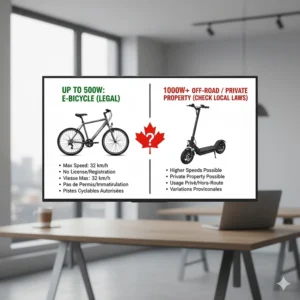
You’re shopping for a powerful electric scooter and keep seeing those tempting 1000W models promising 40+ km/h speeds and incredible hill-climbing ability. But here’s the reality check most retailers won’t tell you upfront: a true continuous 1000W electric scooter is illegal for public road use in most of Canada.
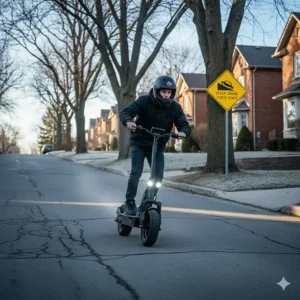
Before you close this tab in disappointment, there’s actually good news. The electric scooter market in Canada offers brilliant alternatives that deliver similar performance while staying within legal boundaries. Understanding the difference between peak power and continuous power opens up a world of high-performance options you can legally ride across Ontario, British Columbia, Quebec, and Alberta.
The confusion around 1000W electric scooter Canada legal status stems from manufacturers advertising peak power ratings rather than continuous output. Most provinces limit electric scooters to 500 watts continuous power, but many models feature “1000W peak” motors that comply with regulations. This guide cuts through the marketing noise to show you exactly which powerful scooters you can legally own and ride in 2026.
Whether you’re commuting through Toronto’s busy streets, exploring Vancouver’s seawall, or tackling Montreal’s hills, I’ll show you the best high-wattage options that balance performance with legal compliance. Plus, you’ll discover where true 1000W continuous power scooters are actually permitted and whether they’re worth the investment.
Quick Comparison: Top Legal High-Power Scooters for Canada
| Model | Motor Power | Top Speed | Range | Price (CAD) | Legal Status |
|---|---|---|---|---|---|
| Segway MAX G3 | 2000W peak | 45 km/h | 80 km | $1,899-$2,199 | Legal (500W continuous) |
| Apollo Phantom 2.0 | 1750W peak (dual) | 70 km/h | 80 km | $3,099 | Private property only |
| NAVEE GT3 | 1000W peak | 32 km/h | 75 km | $899-$1,299 | Legal Ontario/BC/AB |
| iScooter iX6 | 800W peak | 28 km/h | 37 km | $699-$849 | Legal most provinces |
| Hiboy S2 Pro | 500W peak | 30 km/h | 40 km | $549-$699 | Legal nationwide |
💬 Just one click – help others make better buying decisions too! 😊
Top 7 1000W Electric Scooter Canada Legal Options: Expert Analysis
1. Segway Ninebot MAX G3 – Best Premium Legal Option
The Segway Ninebot MAX G3 represents the sweet spot between legal compliance and serious performance. While advertised with a 2000W peak motor, its continuous output stays within the 500W legal limit for most Canadian provinces, making it street-legal in Ontario, British Columbia, Alberta, and Quebec pilot program areas.
Key Specifications:
- Motor: 2000W peak, ~500W continuous rear hub
- Top Speed: 45 km/h (28 mph) unlocked via app, 32 km/h default
- Range: Up to 80 km in ECO mode
- Battery: High-capacity lithium-ion with 3.5-hour fast charging
This flagship model from Segway delivers vehicle-grade performance with 11-inch self-sealing tubeless tires, dual hydraulic suspension, and an IPX6 water resistance rating. The smart TFT display provides turn-by-turn navigation, and the Apple Find My integration means you’ll never lose track of your scooter.
Canadian riders particularly appreciate the hill-climbing capability—handling grades up to 30% without breaking a sweat. The 130 kg weight capacity accommodates larger riders comfortably.
Canadian Customer Feedback: Toronto commuters report excellent winter performance with proper tire pressure adjustments. The self-sealing tires have proven reliable on pothole-filled streets, though some Vancouver riders recommend additional fenders for wet weather protection.
✅ Pros:
- Legally compliant while delivering high performance
- Excellent range and build quality
- Available warranty service across Canada
❌ Cons:
- Premium price point
- Heavy at 24.6 kg
Price Range: $1,899-$2,199 CAD Availability: Amazon.ca, Segway Canada authorized dealers
2. Apollo Phantom 2.0 (52V) – Ultimate Power for Private Use
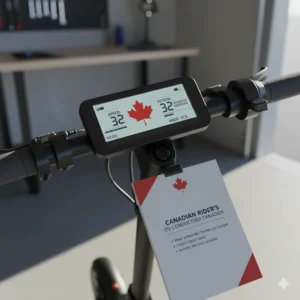
The Apollo Phantom 2.0 delivers true high-wattage performance with dual 1750W peak motors (3500W combined peak), but exceeds legal limits for public roads in most provinces. This Canadian-designed scooter is intended for private property, off-road use, or Newfoundland where higher wattage is permitted.
Key Specifications:
- Motor: Dual 1750W peak (1200W continuous each)
- Top Speed: 70 km/h with LUDO mode
- Range: 80 km maximum
- Battery: 52V high-capacity with MACH 2 controller
Featuring 11×4-inch PunctureGuard tires, the Phantom 2.0 handles everything from city streets to light trails. The aerospace-grade aluminum frame supports riders up to 330 lbs, with a deck spacious enough for size 14 shoes. The proprietary quadruple suspension system and dual hydraulic disc brakes provide confidence at high speeds.
The DOT 2.0 display offers anti-glare visibility in direct sunlight, while NFC unlocking and the Apollo app add convenience. With Apple Find My integration, you’ll always know where your scooter is parked.
Canadian Customer Feedback: Western Canadian buyers using these on private acreages report phenomenal performance. The 360° Apollo Beam lighting system is particularly praised for visibility during darker months. However, some riders note the scooter’s legal limitations make it impractical for urban commuting.
✅ Pros:
- Incredible acceleration and power
- Premium Canadian brand with local support
- 60+ certified service centers across Canada
❌ Cons:
- Not legal for public roads in most provinces
- Expensive at $3,099 CAD
Price Range: $3,099 CAD Availability: Apollo Scooters Canada, select retailers
3. NAVEE GT3 1000W – Best Value Legal Alternative
The NAVEE GT3 offers legitimate 1000W peak power that remains legal in Ontario, British Columbia, and Alberta thanks to its ~500W continuous rating. This model delivers impressive specifications at a mid-range price point, making it accessible for riders seeking performance without breaking the bank.
Key Specifications:
- Motor: 1000W peak, 500W continuous
- Top Speed: 32 km/h (compliant with most provincial limits)
- Range: 75 km maximum
- Battery: 48V 15Ah
The 10-inch pneumatic tires and dual suspension system handle Canadian road conditions admirably. Available on Amazon.ca, this scooter includes front and rear lights, multiple riding modes, and a UL2272 safety certification that many Canadian municipalities require.
Canadian Customer Feedback: Quebec riders appreciate the scooter’s ability to maintain speed on Montreal’s hills. The 75 km range makes it viable for longer suburban commutes, though actual range decreases significantly in winter temperatures below -10°C.
✅ Pros:
- Legal in most major provinces
- Excellent value for performance
- Long range for daily commuting
❌ Cons:
- Limited top speed compared to unlocked models
- Performance drops in cold weather
Price Range: $899-$1,299 CAD Availability: Amazon.ca
4. iScooter iX6 – Reliable Mid-Power Option
The iScooter iX6 features an 800W peak motor that delivers solid performance while staying well within legal limits. This scooter represents the middle ground between budget models and premium offerings, providing dependable transportation for Canadian riders.
Key Specifications:
- Motor: 800W peak, ~400W continuous
- Top Speed: 28 km/h
- Range: 37 km
- Battery: 48V 10Ah
With 10-inch solid honeycomb tires, you’ll never worry about flats—a significant advantage on glass-strewn urban bike lanes. The dual braking system combines electronic and mechanical brakes for reliable stopping power. The foldable design makes it practical for transit commuters who need to carry their scooter on buses or trains.
Canadian Customer Feedback: Ontario commuters report this model handles the Don Valley Trail system well. The solid tires eliminate puncture anxiety, though some riders find them less comfortable than pneumatic alternatives on rough pavement. Calgary buyers appreciate the maintenance-free tire design during winter storage.
✅ Pros:
- Never worry about flat tires
- Portable and transit-friendly
- Affordable price point
❌ Cons:
- Limited range for longer commutes
- Solid tires provide rougher ride
Price Range: $699-$849 CAD Availability: Amazon.ca
5. Hiboy S2 Pro – Best Budget Legal Scooter
The Hiboy S2 Pro delivers maximum value with its 500W peak motor that’s universally legal across all Canadian provinces. This entry-level performer doesn’t compromise on essential features, making it perfect for riders new to electric scooters or those on a budget.
Key Specifications:
- Motor: 500W peak, ~350W continuous
- Top Speed: 30 km/h
- Range: 40 km
- Battery: 36V 10Ah
The 10-inch pneumatic tires provide comfortable cushioning, while the dual braking system ensures safety. The app connectivity allows you to lock the scooter, track rides, and adjust settings. At only 15 kg, it’s one of the lighter models that still delivers decent range.
Canadian Customer Feedback: Vancouver riders praise the scooter’s hill-climbing ability on moderate inclines. The affordability makes it popular with students across Canadian universities. Some Toronto buyers note the range drops to around 25 km in cold weather, making it better suited for shorter commutes.
✅ Pros:
- Legal nationwide
- Excellent price-to-performance ratio
- Lightweight and portable
❌ Cons:
- Limited power for steep hills
- Basic feature set
Price Range: $549-$699 CAD Availability: Amazon.ca
6. 5TH WHEEL ES14 – Hidden Gem for Canadian Roads
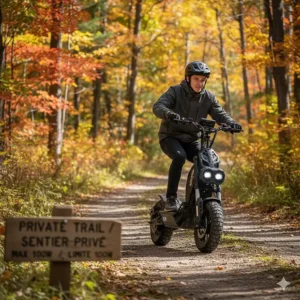
The 5TH WHEEL ES14 features an 800W peak motor with dual suspension and 10-inch solid tires, making it a capable all-rounder for Canadian conditions. This lesser-known brand offers competitive specifications at a reasonable price.
Key Specifications:
- Motor: 800W peak, ~450W continuous
- Top Speed: 32 km/h
- Range: 40 km
- Battery: 48V 10Ah
The ambient lighting system increases visibility during darker months—crucial for Canadian winters with limited daylight. App control allows customization of acceleration curves and speed limits. The dual suspension system handles expansion joints and rough pavement better than single-spring alternatives.
Canadian Customer Feedback: Alberta buyers report good cold-weather performance down to -15°C. The solid tires eliminate flat concerns during Calgary’s harsh winters. Some users wish for a larger battery, as the 40 km range becomes 25-30 km in real-world mixed riding.
✅ Pros:
- Good balance of features and price
- Solid build quality
- Effective lighting system
❌ Cons:
- Limited availability outside Amazon
- Average range
Price Range: $749-$899 CAD Availability: Amazon.ca
7. Gyrocopters Flash 6.0 – Compact Legal Performer
The Gyrocopters Flash 6.0 delivers 850W peak power in a compact package designed for urban Canadian riders. The 8.5-inch tires keep the weight down while maintaining adequate cushioning for city riding.
Key Specifications:
- Motor: 850W peak, ~400W continuous
- Top Speed: 30 km/h
- Range: 30 km
- Battery: 36V 7.5Ah
The smart anti-theft lock system via app provides security in high-theft urban areas. The cruise control function reduces hand fatigue on longer rides. UL2272 safety certification makes this model acceptable in stricter municipalities. The foldable design fits into small Toronto condos and Vancouver apartments easily.
Canadian Customer Feedback: Montreal riders appreciate the compact size for storing in small apartments. The anti-theft features provide peace of mind when locking outside metro stations. However, the smaller battery means frequent charging for daily commuters traveling more than 15 km each way.
✅ Pros:
- Very portable and space-efficient
- Advanced security features
- UL2272 certified
❌ Cons:
- Shortest range on this list
- Smaller wheels less stable on rough roads
Price Range: $649-$799 CAD Availability: Amazon.ca
✨ Don’t Miss These Exclusive Deals!
🔍 Take your electric scooter experience to the next level with these carefully selected products available in Canada. Click on any highlighted item to check current pricing and availability on Amazon.ca. These models will help you find the perfect balance between power and legal compliance for Canadian roads!
Understanding Motor Power Regulations in Canada
The confusion around 1000W electric scooter Canada legal status requires understanding how Canadian provinces regulate motor power. Federal guidelines classify power-assisted bicycles and scooters under specific wattage limits, but provincial and municipal regulations add complexity.
Federal Framework
Transport Canada doesn’t explicitly regulate electric scooters in federal law, leaving provinces to establish their own rules. However, the Motor Vehicle Safety Act sets manufacturing standards that indirectly affect what can be sold in Canada. Most provinces align their definitions with power-assisted bicycle regulations, capping continuous motor output at 500 watts.
According to Wikipedia’s overview of motorized scooters, electric kick scooters have evolved significantly since their introduction in the late 1990s, with modern models featuring sophisticated battery management and motor control systems that make power regulation more complex than simple wattage ratings suggest.
Provincial Power Limits
Ontario: Electric scooters must not exceed 500W continuous motor power under the pilot program regulations. Peak power can be higher, but the sustained output determines legality. Maximum speed is capped at 24 km/h, which most 500W motors can easily achieve.
British Columbia: The provincial pilot program limits scooters to 500W motors with a 24 km/h speed cap. Riders must be 16+ and wear helmets. Vancouver and Kelowna have active shared scooter programs operating within these parameters.
Quebec: The pilot program running through 2026 allows scooters up to 500W with a 25 km/h limit. However, Quebec implemented stricter enforcement in July 2024, banning non-compliant high-powered scooters from public roads and bike paths.
Alberta: Calgary and Edmonton permit 500W scooters on bike lanes and pathways. The 20 km/h speed limit applies in most areas, though local bylaws may vary.
Newfoundland and Labrador: This province is the exception, allowing up to 1,500W motors with speeds up to 50 km/h. If you’re looking for legal high-wattage performance, Newfoundland offers the most permissive regulations in Canada.
The Peak vs. Continuous Power Distinction
Here’s where marketing creates confusion. A scooter advertised as “1000W” might have:
- 1000W peak power: The maximum burst output for short acceleration
- 500W continuous power: The sustained output during normal riding
Most high-performance scooters legal in Canada use this dual rating system. The Segway MAX G3’s “2000W” rating refers to peak power, while continuous output remains around 500W—perfectly legal in most provinces.
According to research from industry experts and Transport Canada’s Motor Vehicle Safety regulations, continuous power determines legal compliance, while peak power affects real-world performance like acceleration and hill climbing. The distinction matters significantly when navigating provincial regulations.
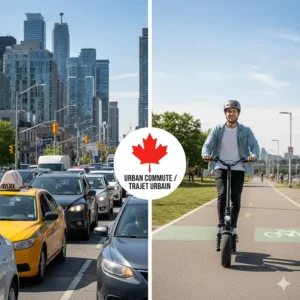
High Wattage Electric Scooter Comparison: Performance Metrics
When evaluating high wattage electric scooter comparison options for Canada, several factors beyond just motor power determine real-world performance. Understanding the relationship between wattage, controller specifications, and actual capabilities helps you choose the right scooter.
Wattage to Speed Ratio in Canadian Conditions
The wattage to speed ratio isn’t linear—doubling motor power doesn’t double top speed. Air resistance increases exponentially, meaning a 1000W motor might only provide 15-20% more top speed than a 500W motor. However, the performance difference becomes dramatic when climbing hills or carrying heavier loads.
A 500W continuous motor typically achieves:
- Flat ground: 25-32 km/h
- 10% grade: 15-20 km/h
- 20% grade: 8-12 km/h
A true 1000W continuous motor delivers:
- Flat ground: 35-45 km/h
- 10% grade: 25-30 km/h
- 20% grade: 15-20 km/h
For Canadian cities with significant elevation changes—like Vancouver, Montreal, or Calgary—the hill-climbing advantage of higher wattage becomes crucial. However, you can achieve similar performance with a 500W continuous motor that peaks at 1000W+, making it legally compliant.
Controller Amp Rating Impact
The controller amp rating determines how efficiently your motor converts battery power into mechanical output. A quality controller can make a 500W motor outperform a poorly controlled 750W motor.
Key controller specifications:
- Current rating: Higher amp controllers provide better acceleration
- Voltage compatibility: Must match your battery voltage (48V, 52V, 60V)
- Smart features: Temperature protection, regenerative braking, power curve customization
The Apollo Phantom’s MACH 2 and MACH 3 controllers demonstrate this principle—they maximize motor efficiency while providing intelligent power management. The Segway MAX G3 uses proprietary controller technology that balances performance with battery longevity.
Battery Capacity and Range Relationship
Motor power means nothing without adequate battery capacity. A 1000W motor drains batteries faster than a 500W motor at the same speed. Canadian riders need to consider:
Cold weather impact: Lithium-ion batteries lose 20-40% capacity below 0°C. A scooter with 40 km summer range might only achieve 25 km in January.
Battery sizing: Look for minimum 15Ah capacity at 48V+ for serious commuting. The Segway MAX G3’s high-capacity battery provides 80 km range because it’s properly matched to the motor’s power draw.
Charging infrastructure: Consider whether you can charge at work. Fast-charging capabilities become crucial for longer commutes.
Real-World Performance Factors
Several factors beyond motor power affect your riding experience:
Rider weight: Heavier riders see reduced range and lower top speeds. Most scooters rate performance for a 75 kg rider—add 10% weight and lose approximately 10% range.
Tire pressure: Underinflated tires increase rolling resistance dramatically. Maintain recommended pressure (typically 35-50 PSI) for optimal performance.
Wind resistance: Riding into 20 km/h headwinds can reduce range by 15-20%. Consider this for prairie provinces with consistent wind.
Terrain: Stop-and-go city riding consumes more energy than steady suburban cruising, even at the same average speed.
1500W Electric Scooter Review: When More Power Matters
Moving into 1500W electric scooter review territory, we enter performance levels that exceed legal limits in most Canadian provinces. However, understanding these models helps you appreciate what’s possible and where they’re appropriate.
Legal Status of 1500W Models
Newfoundland and Labrador only: This is the sole Canadian province where 1500W scooters are street-legal. The provincial regulations classify these as mopeds, requiring:
- Maximum speed under 50 km/h
- Maximum weight of 55 kg
- Bell or horn
- Front and rear lights
- Reflectors on each side
- Functional brakes
- Accelerator
All other provinces: 1500W continuous power exceeds legal limits for public roads. These scooters are restricted to:
- Private property
- Designated off-road areas
- Closed courses
- Indoor facilities
Performance Advantages
Why would Canadian riders consider 1500W models despite legal restrictions? The performance benefits are substantial:
Acceleration: 0-30 km/h in under 3 seconds compared to 6-8 seconds for 500W models. This acceleration advantage proves crucial when merging with traffic or clearing intersections quickly.
Hill climbing: Tackle 30%+ grades while maintaining 20+ km/h speeds. Essential for Vancouver’s North Shore or Calgary’s river valley escarpments.
Payload capacity: Carry groceries, cargo, or a passenger without performance degradation. Most 1500W scooters support 130-150 kg total weight.
Sustained high-speed cruising: Maintain 35-40 km/h without overheating the motor, whereas 500W motors operate near maximum capacity at these speeds.
Top 1500W Options for Canadian Buyers
While not legal for public roads in most provinces, these models represent the pinnacle of electric scooter engineering:
Apollo Phantom Stellar (60V): Dual 1750W motors (3500W peak total) deliver 85 km/h top speeds. The $3,999 CAD price reflects premium components including dual hydraulic suspension and aerospace-grade aluminum construction.
NAVEE ST3: 1350W motor provides 45 km/h speeds with 75 km range. More affordable at $1,499-$1,799 CAD while delivering serious performance.
Dual-motor configurations: Many 1500W scooters use dual 750W motors instead of a single 1500W unit. This configuration provides better traction control and redundancy.
Private Property Use Considerations
If you have access to private land, a 1500W scooter opens new possibilities:
Rural properties: Navigate large acreages efficiently for checking fences, feeding livestock, or property maintenance.
Private roads: Gated communities with private roads aren’t subject to provincial traffic regulations.
Recreational facilities: Some outdoor adventure parks permit high-powered scooters on designated trails.
Winter alternatives: In Newfoundland, 1500W scooters provide legitimate transportation during harsh winters when other options prove impractical.
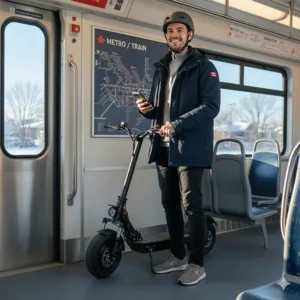
2000W Electric Scooter for Adults: Maximum Performance Analysis
The 2000W electric scooter for adults category represents the extreme end of consumer electric scooters. These machines blur the line between scooters and electric motorcycles, delivering performance that rivals small displacement gas scooters.
Legal Reality in Canada
Across Canada: No province except Newfoundland permits 2000W continuous power scooters on public roads. Even there, the 1500W limit means true 2000W models exceed legal thresholds.
Classification challenges: At 2000W continuous, these vehicles typically require:
- Motorcycle license
- Vehicle registration
- Insurance coverage
- License plates
- Compliance with motorcycle safety standards
Most manufacturers don’t engineer their scooters to meet Transport Canada motorcycle standards, making them legally gray even where high wattage is theoretically allowed.
The Peak Power Loophole
Many “2000W” scooters sold in Canada actually feature:
- 500-700W continuous power
- 2000W peak power output
This distinction keeps them technically legal while providing impressive burst performance. The Segway MAX G3 exemplifies this approach—marketed as 2000W but legal under provincial regulations.
Performance Characteristics
True 2000W continuous scooters deliver:
Top speeds: 50-70 km/h depending on gearing and controller programming
Range: 40-80 km with appropriately sized batteries
Acceleration: 0-50 km/h in under 4 seconds
Hill climbing: 35%+ grades without speed loss
These specifications put them on par with 125cc gas scooters for urban performance, while offering advantages like:
- Silent operation
- Zero emissions
- Lower maintenance costs
- Home charging convenience
- Instant torque delivery
Who Should Consider 2000W Models
Despite legal restrictions, certain Canadian riders have legitimate reasons to consider 2000W scooters:
Newfoundland residents: Where higher wattage is legal (up to 1500W) and infrastructure supports alternative transportation.
Large property owners: Ranchers, farmers, or acreage owners using scooters for work purposes on private land.
Off-road enthusiasts: Those with access to private trails, motocross tracks, or dedicated riding areas.
Future-proofing: Some riders purchase high-powered scooters anticipating regulatory changes that might increase legal limits.
Recommended 2000W Models
Apollo Phantom 2.0 Stellar: Canadian-designed with 60+ service centers across Canada. Dual 1750W motors provide 3500W peak output. $3,999 CAD.
Segway MAX G3: While marketed as 2000W peak, the continuous rating keeps it legal. Best choice for riders wanting maximum legal performance. $1,899-$2,199 CAD.
Dualtron Thunder: International favorite with 2700W continuous power (5400W peak). Not legal for Canadian roads but popular with private property users. ~$4,500 CAD.
Motor Power Regulations: Provincial Guide for 2026
Understanding motor power regulations across Canadian provinces prevents costly mistakes and potential legal issues. Each province takes a slightly different approach to electric scooter legislation.
Ontario: Extended Pilot Program
Ontario’s electric scooter pilot program runs through November 27, 2029, giving municipalities flexibility to establish local rules.
Provincial requirements:
- Maximum motor output: 500 watts
- Maximum speed: 24 km/h
- Maximum weight: 45 kg (including battery)
- Maximum wheel diameter: 17 inches
- Minimum age: 16 years
- Helmet mandatory for riders under 18
Municipal variations: Toronto prohibits privately owned scooters on public roads (only shared rental programs). Ottawa, Windsor, and Waterloo actively permit private scooters. Always verify local bylaws before riding.
Penalties: Violations carry fines from $250 to $2,500. Police classify scooters exceeding specifications as motorcycles, requiring registration and insurance.
For official regulations, visit Ontario.ca.
British Columbia: Four-Year Extension
BC’s pilot program extended through 2028, allowing municipalities to opt in.
Provincial standards:
- Motor power: 500 watts maximum continuous
- Speed limit: 24 km/h
- Mandatory helmets for all riders
- Minimum age: 16 years
- Lights required for night riding
- Bell or horn mandatory
Participating municipalities: Vancouver, Kelowna, Richmond, and several smaller cities permit scooters on bike lanes and roads with ≤50 km/h speed limits.
Unique feature: BC introduced “light e-bikes” category in April 2024 for riders 14+ with similar power limits.
Visit BC Government Transportation for current regulations.
Quebec: Pilot Through 2026
Quebec’s cautious approach includes strict enforcement of specifications.
Provincial rules:
- Motor power: 500 watts maximum
- Speed limit: 25 km/h
- Mandatory helmets for all riders
- Minimum age: 14 years (18 for high-power models)
- Lights and reflectors required
- Registration required for some models
July 2024 enforcement: Quebec banned non-compliant scooters (those resembling mopeds without federal safety marks) from public roads. This crackdown specifically targeted overpowered models masquerading as compliant scooters.
Check SAAQ for official Quebec regulations.
Alberta: City-by-City Approach
Alberta grants municipalities significant control over scooter regulations.
Calgary:
- Motor limit: 500 watts
- Speed: 20 km/h maximum (15 km/h in some areas)
- Minimum age: 16 years (19+ for rentals)
- Helmets recommended but not mandatory for adults
- Permitted on bike lanes and pathways
Edmonton:
- Only approved shared scooters currently permitted
- Private scooters restricted pending further regulation
- Same 500W and 20 km/h limits when permitted
- Minimum age: 18 years
Newfoundland and Labrador: Most Permissive
The exception to Canadian conservatism regarding motor power.
Provincial regulations:
- Motor power: Up to 1,500 watts
- Maximum speed: Under 50 km/h
- Maximum weight: 55 kg
- License required: Ages 14-17 need special permission; 18+ need registration
- Helmet mandatory for all riders
This makes Newfoundland the only province where high-wattage electric scooters approach legal parity with gas mopeds.
Enforcement and Future Changes
Provincial regulations continue evolving. Recent trends suggest:
Increased enforcement: Police across Canada increasingly ticket non-compliant scooters, particularly those exceeding speed limits in bike lanes.
Standardization attempts: Federal government discussions about nationwide standards may bring consistency by 2027-2028.
Technology requirements: Some provinces considering mandatory GPS geofencing to prevent speeding in restricted areas.
Insurance frameworks: Provincial insurance corporations exploring coverage options for high-powered scooters, potentially enabling legal use of 750-1000W models with proper registration.
Stay informed through provincial transportation ministry websites and local cycling advocacy groups who track regulatory changes.
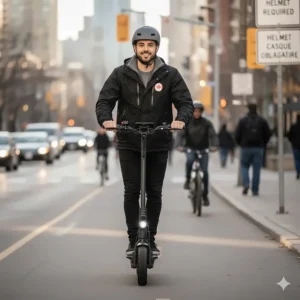
How to Choose Legal High-Performance Scooters for Canada
Selecting the right electric scooter that balances legal compliance with performance requires evaluating several factors specific to Canadian conditions.
1. Verify Continuous vs. Peak Power Ratings
Always check the continuous power rating, not just the advertised “peak” wattage. Reputable manufacturers clearly state both specifications.
Where to find accurate specs:
- Manufacturer technical specifications
- UL certification documents
- Transport Canada compliance labels
- Detailed product manuals
Red flags: Scooters listing only “1000W” without specifying peak or continuous likely exceed legal limits. Quality brands transparently state “1000W peak, 500W continuous.”
2. Confirm Provincial Compliance
Match scooter specifications to your province’s requirements:
Speed capability: Ensure the scooter can be speed-limited via settings to match your province’s maximum (typically 24-25 km/h).
Weight restrictions: Ontario’s 45 kg limit eliminates many high-performance dual-motor models that weigh 50-60 kg.
Wheel size: Ontario restricts wheels to 17 inches diameter maximum, while other provinces don’t specify this dimension.
3. Evaluate Canadian-Specific Features
Look for features that address Canadian riding conditions:
Cold weather battery: Some batteries use heating elements to maintain performance below 0°C. Essential for year-round commuting in Prairie provinces.
Water resistance: Minimum IPX4 rating for rain protection. IPX6 or higher better handles spring slush and road spray.
Lighting systems: 360° visibility crucial during dark Canadian winters. Look for automatic headlights and side reflectors.
Tire options: Pneumatic tires for comfort, solid tires for winter reliability. Some models offer both options.
4. Calculate Total Cost of Ownership
Purchase price represents only part of the investment:
Initial cost: Budget models: $500-$800 CAD; Mid-range: $800-$1,500 CAD; Premium: $1,500-$3,500 CAD
Insurance: Some provinces require insurance for higher-powered models. Expect $200-$400 annually.
Maintenance: Budget $100-$200 yearly for tire replacements, brake pads, and general servicing.
Winter storage: If storing indoors isn’t possible, expect battery degradation. Replacement batteries cost $200-$500.
Accessories: Helmet ($50-$150), lock ($30-$100), lights if not included ($40-$80).
5. Range Requirements for Canadian Distances
Canadian cities sprawl more than European counterparts. Calculate your range needs:
One-way commute distance × 2.5 = minimum rated range
The 2.5 multiplier accounts for:
- Cold weather capacity loss (20-30%)
- Battery degradation over time (10-15%)
- Hills and headwinds (10-20%)
- Safety margin to avoid deep discharge
Example: 15 km commute requires minimum 37.5 km rated range. Choose scooters rated for 40+ km.
6. Warranty and Service Availability
Canadian winter conditions stress components. Prioritize brands offering:
Warranty coverage: Minimum 12 months on major components (motor, battery, controller). Premium brands offer 24 months.
Local service centers: Apollo Scooters operates 60+ Canadian service locations. Segway has authorized dealers across major cities.
Parts availability: Verify replacement parts ship from Canadian warehouses, not overseas. International shipping adds weeks to repairs.
7. Community and Support
Canadian electric scooter communities provide invaluable local knowledge:
Online forums: Reddit’s r/ElectricScooters has active Canadian members sharing experiences with specific models.
Facebook groups: Province-specific groups discuss local regulations, riding routes, and winter maintenance.
Local shops: Specialty electric vehicle stores offer test rides and expert advice tailored to your area’s conditions.
✨ Don’t Miss These Exclusive Deals!
🔍 Take your electric scooter knowledge to the next level with these carefully curated resources. Click on any highlighted product to check current pricing and availability on Amazon.ca. Make an informed decision that balances performance with legal compliance for Canadian roads!
Frequently Asked Questions
❓ Can I legally ride a 1000W electric scooter in Toronto?
❓ What's the difference between 1000W peak and 1000W continuous power?
❓ How much does a good 1000W electric scooter cost in Canada?
❓ Will a 1000W electric scooter work in Canadian winter?
❓ What's the fastest legal electric scooter I can ride in BC?
Conclusion: Finding Your Perfect Legal Performance Scooter
The search for a 1000W electric scooter Canada legal option reveals a nuanced landscape where marketing meets regulation. While true 1000W continuous power scooters remain illegal for public roads in most provinces, the market offers brilliant alternatives that deliver comparable performance within legal boundaries.
The key insight? Focus on peak power ratings and quality engineering rather than chasing continuous wattage numbers. A well-designed scooter with 1000W peak/500W continuous power, like the Segway MAX G3, provides the acceleration and hill-climbing ability most riders seek while remaining street-legal across Ontario, British Columbia, Alberta, and Quebec’s pilot areas.
Canadian riders face unique challenges—harsh winters, sprawling cities, varying provincial regulations—that demand careful scooter selection. Prioritize cold-weather battery performance, water resistance, and local service availability alongside raw power specifications. The Apollo Phantom 2.0, while exceeding legal limits for public roads, demonstrates what’s possible for private property use or future regulatory environments.
For most Canadian commuters, the sweet spot sits between 800-1000W peak power with 400-500W continuous ratings. These scooters deliver satisfying performance, remain legally compliant, and cost $700-$1,500 CAD—striking the perfect balance between capability and affordability.
The electric scooter market continues evolving rapidly. Provincial pilot programs will conclude in coming years, potentially bringing more permissive regulations or stricter enforcement. Monitor your provincial transportation ministry for updates, engage with local riding communities, and choose scooters from manufacturers committed to Canadian compliance and support.
Whether you’re tackling Vancouver’s hills, cruising through Calgary’s pathways, or navigating Montreal’s bike lanes, a legally compliant high-performance electric scooter opens new transportation possibilities. Focus on the right specifications, understand your local regulations, and join the growing community of Canadian riders discovering that electric scooters represent more than just a trend—they’re a practical, sustainable solution for urban mobility in 2026 and beyond.
Recommended for You
- Dual Motor vs Single Motor Scooter: 7 Best Picks Canada 2026
- 7 Best Dual Motor Electric Scooters in Canada 2026: Top Picks
- 7 Best All Terrain Electric Scooter Pneumatic Tires Canada 2026
Disclaimer: This article contains affiliate links to Amazon.ca. If you purchase products through these links, we may earn a small commission at no additional cost to you.
✨ Found this helpful? Share it with your friends! 💬🤗
