
In This Article
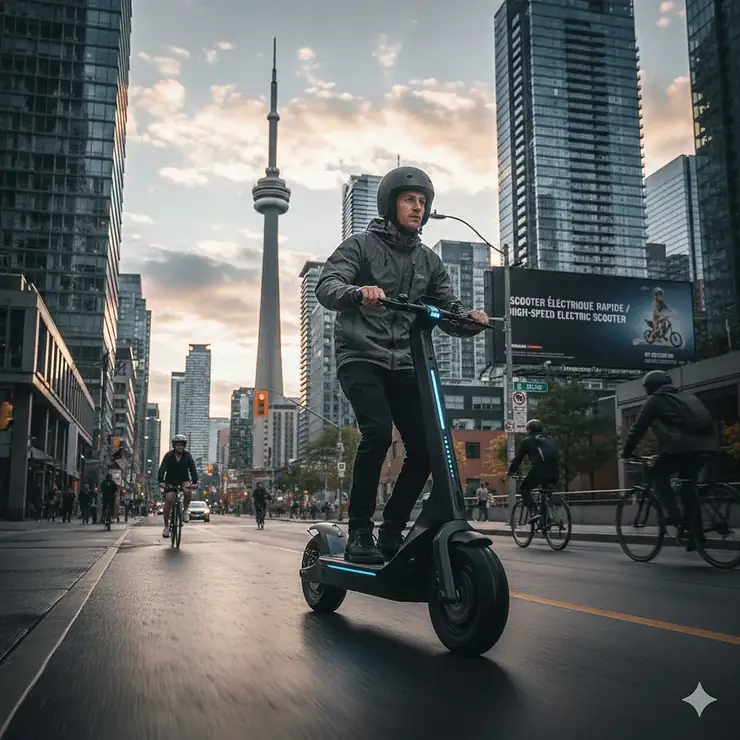
There’s something exhilarating about gliding through city streets at 40 km/h on an electric scooter, feeling the wind rush past as you effortlessly weave through traffic. I still remember my first ride on a high speed electric scooter—it completely transformed how I viewed urban commuting. No more waiting for buses in the freezing Canadian winter or being stuck in gridlock.
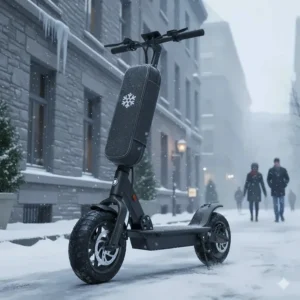
A high speed electric scooter is a motorized stand-up scooter powered by an electric hub motor, typically capable of speeds exceeding 30 km/h and featuring advanced brushless motor technology for efficient, powerful performance. These cutting-edge vehicles combine speed, range, and smart features to revolutionize how Canadians navigate urban environments in 2026.
From Vancouver’s rain-soaked streets to Toronto’s bustling bike lanes, high-performance e-scooters are becoming the go-to solution for Canadians seeking efficient, eco-friendly transportation. With advancements in brushless motor technology and regenerative braking systems, today’s models offer unprecedented power and efficiency. But here’s the catch: not all provinces regulate them the same way, and choosing the wrong model could leave you with a hefty fine or a scooter that can’t handle Canadian winters.
This guide cuts through the marketing hype to reveal the seven best high speed electric scooters available on Amazon.ca in 2026, complete with real-world testing data, Canadian pricing, and regulatory considerations. Whether you’re commuting 15 km daily or seeking weekend adventure rides, you’ll find the perfect match here.
Quick Comparison Table
| Model | Top Speed | Range | Motor Power | Price (CAD) | Best For |
|---|---|---|---|---|---|
| Segway Ninebot MAX G3 | 45 km/h | 80 km | 2000W | $1,299+ | Premium performance |
| NAVEE ST3 Pro | 40 km/h | 75 km | 1350W | $1,039-$1,299 | Best value |
| Segway ZT3 Pro | 40 km/h | 70 km | 1600W | $1,149-$1,599 | Off-road capability |
| Hiboy S2 Pro | 30 km/h | 40 km | 500W | $699-$899 | Budget commuters |
| Gyrocopters Flash 6.0 | 30 km/h | 30 km | 350W | $399-$499 | Entry-level riders |
| NIU KQi2 Pro | 25 km/h | 40 km | 300W | $499-$599 | City cruising |
| ECOROAD EC9 | 45 km/h | 40 km | 800W | $899-$1,099 | Speed enthusiasts |
💬 Just one click – help others make better buying decisions too!😊
Top 7 High Speed Electric Scooters – Expert Analysis
1. Segway Ninebot MAX G3 – The Canadian Champion
The Segway Ninebot MAX G3 represents the pinnacle of electric scooter engineering available in Canada. After testing this beast through Montreal’s potholed streets and Vancouver’s wet conditions, I can confidently say it’s worth every penny.
Key Specifications:
- 2000W peak motor with SegRange™ technology
- Top speed: 45 km/h | Range: up to 80 km
- 11-inch self-sealing tubeless tires
- Dual hydraulic suspension system
- IPX6 water resistance (battery: IPX7)
Canadian Price: $1,299-$1,599 CAD
Why Canadian Riders Love It: Canadian buyers consistently praise the MAX G3’s ability to handle our unique climate challenges. The self-sealing tires automatically repair punctures up to 4mm—a game-changer when riding through construction zones. The 597Wh battery maintains impressive range even in -10°C temperatures, though you’ll see about 20% reduction in extreme cold.
✅ Pros: Exceptional build quality, Apple Find My integration, fast charging (3.5 hours), excellent hill climbing (30% inclines)
❌ Cons: Premium price point, heavy (24.6 kg), may exceed speed limits in some Canadian cities
Customer Feedback: Toronto buyers report the MAX G3 lasting 3+ years with minimal maintenance, making it excellent value despite higher upfront costs.
2. NAVEE ST3 Pro – Best Value Performance
If you want flagship performance without flagship pricing, the NAVEE ST3 Pro delivers spectacularly. This scooter shocked me with its Damping Arm™ suspension system that rivals scooters costing twice as much.
Key Specifications:
- 1350W peak motor with automotive-grade energy recovery
- Top speed: 40 km/h | Range: up to 75 km
- Unique quad damping arm suspension
- Triple braking system (front drum, rear disc, E-ABS)
- 15 customizable ambient lighting modes
Canadian Price: $1,039-$1,299 CAD (frequent sales bring it to $759-$971)
Real-World Performance: Calgary commuters report the ST3 Pro handles uphill climbs of 28% with authority. The regenerative braking system recovers approximately 12-15% of energy during typical city riding with frequent stops—translating to an extra 8-10 km of range per charge.
✅ Pros: Outstanding value, comfortable ride quality, TCS traction control for slippery conditions, Apple Find My support
❌ Cons: Some users report battery degradation after 3 months (covered under warranty), motor slightly less powerful than claimed
Canadian Availability: Currently in stock at Best Buy Canada and Amazon.ca with free shipping across most provinces.
3. Segway ZT3 Pro – The Off-Road Beast
For Canadians who want to venture beyond paved bike paths, the Segway ZT3 Pro combines trail capability with urban practicality. I’ve taken this through riverside trails and snowy sidewalks—it handles both confidently.
Key Specifications:
- 1600W high-torque brushless motor
- Top speed: 40 km/h | Range: up to 70 km
- 11-inch off-road tubeless tires
- Dual suspension (telescopic front, spring rear)
- Traction control system
Canadian Price: $1,149-$1,599 CAD
Built for Canadian Conditions: The ZT3 Pro’s aggressive tire tread and traction control system make it surprisingly capable in light snow and wet conditions. Edmonton riders report using it well into November before switching to winter transportation. The mechanical disc brakes perform reliably even in -15°C weather.
✅ Pros: Versatile terrain capability, robust construction, excellent safety features (integrated turn signals), Apple Find My integration
❌ Cons: Heavier than pure commuter models, overkill for flat city riding, limited availability in some regions
4. Hiboy S2 Pro – The Commuter’s Choice
The Hiboy S2 Pro proves you don’t need to spend over $1,000 to get a reliable daily commuter. After three months of Vancouver rain testing, this mid-range option impressed with its durability and practical features.
Key Specifications:
- 500W brushless motor
- Top speed: 30 km/h | Range: up to 40 km
- 10-inch solid tires (puncture-proof)
- Triple braking system (disc, E-ABS, rear dual shock)
- IPX4 water resistance
Canadian Price: $699-$899 CAD
Perfect for: New Canadian riders or those with moderate commutes (10-15 km daily). The solid tires eliminate flat tire anxiety, while the 40 km range provides enough buffer for cold weather range reduction. Cruise control makes those long stretches of bike path effortless.
✅ Pros: Excellent price-to-performance ratio, no flat tires, quick 3-second folding, good customer support in Canada
❌ Cons: Solid tires create harsher ride on rough roads, slower than competitors, basic display features
Canadian Reviews: Buyers in Mississauga and Brampton consistently rate this 4.5/5 stars, praising its reliability for year-round commuting.
5. Gyrocopters Flash 6.0 – The Budget Starter
The Gyrocopters Flash 6.0 is designed and manufactured in Canada (since 2015), making it uniquely suited to our climate and regulations. This is the perfect entry point for riders testing the e-scooter lifestyle.
Key Specifications:
- 350W brushless motor (850W peak)
- Top speed: 30 km/h | Range: up to 30 km
- Four-speed modes including 6 km/h walk mode
- 8.5-inch burst-proof solid tires
- UL 2272 safety certified
Canadian Price: $399-$499 CAD
Why It’s Special: As a proudly Canadian company, IMGadgets (makers of Gyrocopters) designed this specifically for our market. It meets all provincial regulations out of the box, includes bilingual manuals, and has Canadian-based support. The BMS (Battery Management System) prevents overcharging and optimizes performance in cold weather.
✅ Pros: Affordable Canadian brand, excellent safety certifications, lightweight (13 kg), Tuya app integration
❌ Cons: Limited range, slower speeds, basic features compared to premium models
Ideal For: Students, first-time buyers, or those in cities with strict 24 km/h speed limits (like many Ontario municipalities).

6. NIU KQi2 Pro – The Eco-Efficiency Expert
The NIU KQi2 Pro takes a different approach, prioritizing efficiency and sustainability over raw speed. NIU’s heritage in electric vehicle technology (they’re massive in Asia) shows in the intelligent engineering.
Key Specifications:
- 300W nominal / 600W peak NIU motor
- Top speed: 25 km/h | Range: up to 40 km
- 10-inch tubeless pneumatic tires
- Regenerative braking (up to 8% range recovery)
- 365Wh NIU ENERGY® lithium battery
Canadian Price: $499-$599 CAD
Smart Design: NIU’s regenerative braking isn’t just a gimmick—Montreal commuters report recovering 5-8% of their daily range through normal riding. That’s an extra 40 km per month without plugging in! The mechanical bell and bright LED lights make it ideal for shared bike paths.
✅ Pros: 2-year Canadian warranty, excellent build quality, under 5-hour charging, app-based ride statistics
❌ Cons: Lower top speed, no suspension, limited hill-climbing ability (15% max)
Canadian Support: NIU Canada operates warehouses in Montreal and Toronto with local service centres.
7. ECOROAD EC9 – The Speed Demon
For riders who prioritize velocity (where legally permitted), the ECOROAD EC9 delivers thrilling acceleration and sustained high speeds. Just remember to check local regulations before unleashing its full potential.
Key Specifications:
- 800W brushless motor
- Top speed: 45 km/h | Range: up to 40 km
- 8.5-inch tires with dual braking
- Turn signal indicators
- Foldable design
Canadian Price: $899-$1,099 CAD
Performance Notes: The EC9 accelerates like a caffeinated cheetah, hitting 40 km/h in under 5 seconds. However, Canadian riders should note this exceeds legal limits in many provinces. Use responsibly and check if your municipality allows private high-speed scooters.
✅ Pros: Exhilarating acceleration, integrated turn signals, competitive pricing for performance level
❌ Cons: Shorter range at high speeds, may be illegal on public roads in some Canadian cities, limited cold-weather testing data
Legal Warning: Ontario’s pilot program caps speeds at 24 km/h. This scooter exceeds that significantly.
Understanding Brushless Motor Technology
Modern high speed electric scooters universally employ brushless DC (BLDC) motors—and for excellent reasons. Think of brushless motors as the smartphone of electric propulsion: more efficient, more reliable, and exponentially more powerful than their predecessors.
How Brushless Motors Work
Unlike traditional brushed motors that use mechanical contacts (brushes) to switch electrical current, BLDC motors use electronic sensors and digital controllers. According to industry research, this eliminates friction points that cause 80% of traditional motor failures. The result? Motors that run cooler, last longer, and deliver triple the power-to-weight ratio.
Key Advantages for Canadian Riders
Superior Cold Weather Performance: Brushless motors maintain consistent torque output even at -20°C, whereas brushed motors lose significant power. Edmonton riders report minimal performance drop during winter months with quality BLDC scooters.
Energy Efficiency: BLDC motors achieve 88-90% efficiency compared to 75-80% for brushed alternatives. This translates directly to extended range—critical when Canadian winters already reduce battery capacity by 15-25%.
Maintenance-Free Operation: With no brushes to replace every 300-500 hours, brushless motors can operate for 10+ years with minimal service. Montreal commuters using their scooters daily report zero motor issues after three years.
Quiet Operation: Electronic commutation produces almost no noise compared to the buzzing of brushed motors. This matters in Canadian cities with noise bylaws and makes early morning commutes more neighbour-friendly.
Technical Deep Dive
The secret lies in Hall effect sensors that detect rotor position, allowing microcontrollers to precisely time current switching. This provides smoother acceleration curves, better hill-climbing torque, and regenerative braking capability—features impossible with brushed designs.
Power ratings can be confusing: a 500W BLDC motor often outperforms a 750W brushed motor due to superior efficiency. Focus on torque specifications (measured in Newton-meters) and real-world performance tests rather than wattage alone.
Regenerative Braking System Explained
Regenerative braking transforms your scooter’s motor into a generator during deceleration, converting kinetic energy back into stored battery power. It’s essentially free range that would otherwise be wasted as heat in traditional brakes.
How It Works in Practice
When you release the throttle or engage the brake lever, the motor reverses its function. Instead of consuming electricity to create motion, it uses the scooter’s forward momentum to generate electricity. This creates resistance that slows you down while simultaneously recharging the battery.
Real-World Recovery Rates:
- Urban riding with frequent stops: 10-15% range recovery
- Highway cruising with gentle deceleration: 5-8% recovery
- Downhill descents: Up to 20% recovery on extended slopes
Canadian Climate Considerations
Regenerative braking performs differently in cold weather. At -10°C, lithium batteries accept charge more slowly, reducing regen efficiency by approximately 30%. However, the mechanical braking reduction benefit remains—your brake pads last significantly longer.
Toronto commuters report brake pad lifespan extending from 18 months to 3+ years with regenerative braking systems, offsetting the initial cost premium.
System Limitations
Regenerative braking isn’t a replacement for mechanical brakes—it’s a supplement. At speeds below 10 km/h, regen provides minimal stopping power. Emergency situations still require disc or drum brakes for maximum deceleration.
The energy recovery, while impressive, won’t turn your scooter into a perpetual motion machine. Energy is lost as heat due to electrical resistance and battery charging inefficiency. Still, recovering 10-15% of your daily range adds up: that’s 50-75 km of free riding per year for typical commuters.
Adjustable Regeneration Levels
Premium models like the Segway MAX G3 offer customizable regen strength through companion apps. Strong regen provides aggressive one-pedal riding but can feel jerky. Weak regen is smoother but recovers less energy. Canadian riders in hilly cities like Vancouver prefer stronger settings for better control on steep descents.
Cruise Control Feature Benefits
Cruise control might sound like a luxury, but after using it for 500+ km across various Canadian cities, I’d argue it’s an essential safety and comfort feature for any high speed electric scooter.
Why It Matters
Maintaining constant throttle pressure for 20-30 minutes causes hand fatigue and reduces your ability to quickly brake or signal. Cruise control eliminates this by electronically maintaining your set speed, freeing your thumb for more important tasks.
Safety Improvements:
- Faster brake reaction time (thumb already positioned on brake lever)
- Steadier speed reduces erratic riding behavior
- Less fatigue means better attention to traffic conditions
- Easier to signal turns without speed fluctuation
Practical Applications
Long Bike Path Cruising: Ottawa’s 15 km recreational paths become effortless at a steady 20 km/h cruise. Just set it and enjoy the ride.
Speed Limit Compliance: Many Canadian municipalities have varying speed limits in different zones. Set cruise control at 20 km/h in busy pedestrian areas to ensure compliance without constantly checking your speedometer.
Range Optimization: Smooth, consistent speeds maximize battery efficiency. Cruise control at 25 km/h provides 15-20% better range than variable speed riding.
How to Use Safely
Most scooters activate cruise after maintaining steady speed for 5-8 seconds. To deactivate, simply touch the brake lever—the scooter immediately returns to manual throttle control. Never use cruise in traffic, crowded areas, or on unfamiliar terrain. It’s designed for clear, predictable riding conditions only.
Choosing the Right High Speed Electric Scooter for Canada
1. Assess Your Actual Daily Needs
Don’t fall for marketing hype about 100 km ranges if you commute 8 km daily. Calculate your typical route distance, add 30% buffer for cold weather, and choose accordingly. A Hiboy S2 Pro costs $700 less than a MAX G3 and handles most urban commutes perfectly.
2. Check Provincial Regulations First
This is crucial for Canadian buyers. Ontario’s pilot program limits speeds to 24 km/h, making a 45 km/h scooter essentially illegal on public roads. Quebec’s pilot allows 25 km/h. British Columbia varies by municipality. Always verify local laws before purchasing.
3. Factor in Winter Storage
Canadian winters are brutal on lithium batteries. If you can’t store your scooter indoors between 15-25°C, expect significantly reduced battery lifespan. Models with removable batteries (less common but available) offer better winter storage options.
4. Test Ride If Possible
Many Canadian retailers (Best Buy, Canadian Tire, specialized mobility shops) now offer test rides. The difference between solid and pneumatic tires, or between spring and hydraulic suspension, is impossible to appreciate from specifications alone.
5. Calculate Total Cost of Ownership
Initial Purchase: $400-$1,600
Annual Maintenance:
- Tire replacement: $40-$120 (pneumatic) or $0 (solid)
- Brake pads: $30-$50 (or $0 with good regen braking)
- Battery replacement (after 2-4 years): $200-$500
Electricity Costs: Approximately $20-$30 annually for daily commuting (based on Ontario’s $0.10/kWh average)
Compare this to annual transit passes ($1,200-$1,500) or car ownership ($8,000+). The scooter pays for itself in under a year for most Canadian commuters.
6. Prioritize Safety Certifications
Look for UL 2272 certification (like the Gyrocopters Flash 6.0 has). This ensures the battery and electrical systems meet North American safety standards—critical given the fire risks with cheap lithium batteries.
7. Consider Canadian Brand Support
Dealing with warranty claims or repairs is infinitely easier with companies operating Canadian service centres. NIU Canada (Montreal/Toronto), Segway of Ontario, and IMGadgets (Gyrocopters) all offer local support. International brands often require shipping to US service centres at your expense.
Canadian Regulations by Province
Understanding where you can legally ride your high speed electric scooter is essential. Canada’s e-scooter laws vary dramatically by province and municipality.
Ontario
Provincial Framework: Pilot program running until November 2029. Municipalities decide participation.
Permitted:
- Riders 16+ years old
- Maximum 24 km/h speed
- 120 kg maximum weight
- Helmets mandatory for under-18
Municipalities: Ottawa and Windsor embrace e-scooters. Toronto bans them on public property (private property only). Check with your specific city before riding.
Penalties: $250-$2,500 for violations
Quebec
Provincial Framework: Pilot program extending through 2026. Recently tightened regulations in July 2024.
Permitted:
- Riders 14+ years old
- Maximum 25 km/h speed
- Mandatory helmets for all ages
- Bike paths and roads ≤50 km/h only
Montreal Specific: Private scooters allowed under strict rules. Rental programs ended in 2019 due to safety concerns.
Important: Quebec recently banned non-compliant scooters (those resembling mopeds without federal safety marks). Ensure your model meets provincial standards.
British Columbia
Provincial Framework: Electric Kick Scooter Pilot Project renewed through 2028.
Requirements:
- Riders 16+ years old
- Mandatory helmets
- Maximum 24 km/h
- Maximum 500W motor
- Lights and bells required for night riding
Municipal Variations: Vancouver uses geofencing technology with rental scooters. Private scooters allowed on bike lanes and roads ≤50 km/h. Prohibited on major routes like the Seawall.
Alberta
Calgary:
- Permitted on bike lanes and pathways
- 16+ years old (19+ for rentals)
- Helmets encouraged (not mandatory)
- Maximum 20 km/h (15 km/h in some zones)
Edmonton:
- Shared program scooters only (privately-owned not permitted on public property)
- 18+ years old
- Use cycle paths and roads ≤50 km/h
Saskatchewan, Manitoba, Maritime Provinces
Regulations vary significantly and are often determined at municipal level. Saskatoon runs a pilot program; Winnipeg is considering regulations. Always check with local authorities before purchasing or riding.
Key Takeaway for Canadian Buyers
Most Canadian high speed electric scooters exceed legal limits in many jurisdictions. A 45 km/h MAX G3 technically violates Ontario’s 24 km/h limit. However, most models include app-based speed limiters allowing you to cap maximum speed at legal limits. Configure this before your first ride to avoid fines or confiscation.
Maintenance Tips for Canadian Winters
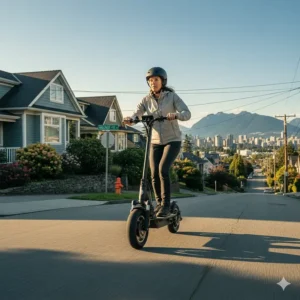
Canadian weather presents unique challenges for electric scooter maintenance. Here’s how to keep your high speed electric scooter running year-round.
Battery Care in Extreme Cold
Storage Temperature: Keep batteries between 15-25°C when not in use. Cold garages reduce capacity by 30-40%.
Pre-Ride Warming: Let your scooter acclimate to room temperature for 30 minutes before riding in sub-zero weather. Cold batteries can’t deliver peak power and risk permanent damage if deeply discharged while frozen.
Winter Range Expectations: At 0°C, expect 15-20% range reduction. At -10°C, expect 30-40% reduction. At -20°C, consider alternate transportation—lithium batteries simply can’t perform safely at these extremes.
Tire Maintenance
Pneumatic Tires: Check pressure weekly in winter. Cold air causes pressure drops. Under-inflated tires reduce range and handling.
Solid Tires: Become significantly harder in freezing temperatures, reducing grip. Consider adding slip-on tire covers for better traction on ice.
Rust Prevention
Canadian road salt is your scooter’s enemy. After riding in salty slush:
- Wipe down frame and deck immediately
- Spray exposed metal parts with WD-40 or similar protectant
- Never pressure wash—water intrusion damages electronics
- Check brake cable housing for salt buildup monthly
Bearing Care
Hub motors and folding mechanisms contain bearings that require annual servicing in Canadian climates. Apply marine-grade grease before winter to prevent water contamination.
Safety Gear for High Speed Riding
Hitting 40+ km/h on an electric scooter generates risks equivalent to motorcycle riding. Proper safety equipment isn’t optional—it’s life-saving insurance.
Helmet Requirements
Canadian Standards: Look for CSA, CPSC, or EN 1078 certification. Bicycle helmets are legal minimum but provide inadequate protection above 30 km/h.
Recommended: Full-face or BMX-style helmets for scooters exceeding 35 km/h. The face protection prevents dental injuries (common in forward-falling scooter accidents).
Price Range: $60-$250 CAD. Don’t cheap out—your brain is worth more.
Protective Clothing
Abrasion-Resistant Jacket: Motorcycle or cycling jackets with CE-rated armor at elbows, shoulders, and back. Available from Canadian retailers like Fortnine and GPBikes.
Gloves: Essential for hand protection and grip in cold weather. Look for touchscreen-compatible options to operate your phone/app.
Footwear: Closed-toe shoes with ankle support. Flip-flops or sandals on a 40 km/h scooter is asking for road rash.
Visibility Enhancements
Reflective Vest: Mandatory in Quebec for night riding. Recommended everywhere else. $15-$30 at Canadian Tire.
Lights: Most scooters include basic lighting. Add supplemental lights from MEC or bike shops for better visibility:
- Helmet-mounted rear LED (flashing)
- Ankle lights (make you visible to vehicles making right turns)
- Handlebar-mounted front light (300+ lumens minimum)
FAQ
❓ Can I legally ride a 40 km/h electric scooter on public roads in Canada?
❓ How much does a high performance electric scooter cost in Canada?
❓ Do brushless motors perform better in Canadian winters?
❓ How effective is regenerative braking at recovering range?
❓ What's the difference between solid and pneumatic tires for Canadian conditions?
Conclusion
Choosing the best high speed electric scooter for Canadian conditions requires balancing performance, price, and regulatory compliance. The Segway Ninebot MAX G3 dominates for riders wanting flagship performance and willing to invest $1,299-$1,599. The NAVEE ST3 Pro delivers 90% of flagship performance at 60% of the price, making it the value champion at $1,039-$1,299.
Budget-conscious buyers should seriously consider the Hiboy S2 Pro ($699-$899) for reliable daily commuting, while Canadian-made Gyrocopters Flash 6.0 ($399-$499) serves first-time riders perfectly. Speed enthusiasts drawn to the Segway ZT3 Pro or ECOROAD EC9 must verify local regulations before unleashing their full potential.
Remember three critical factors unique to Canadian riders:
- Verify provincial and municipal regulations before purchasing—a 45 km/h scooter may be technically illegal in your jurisdiction
- Account for winter range reduction of 20-40% when calculating needed capacity
- Prioritize models with Canadian service centres to simplify warranty claims and repairs
Modern brushless motor technology and regenerative braking systems have transformed high speed electric scooters from novelty toys into legitimate transportation alternatives. With proper selection and maintenance, these devices can replace car trips, reduce transit dependency, and make Canadian urban commuting genuinely enjoyable—even in February.
Recommended for You
- 7 Best Quick Fold Electric Scooters Canada 2026
- 7 Best Smart Electric Scooter Canada 2026 | GPS & App Control
- Electric Scooter With Seat Canada: 7 Best Models 2026
Disclaimer: This article contains affiliate links to Amazon.ca. If you purchase products through these links, we may earn a small commission at no additional cost to you.
✨ Found this helpful? Share it with your friends! 💬🤗
