
In This Article
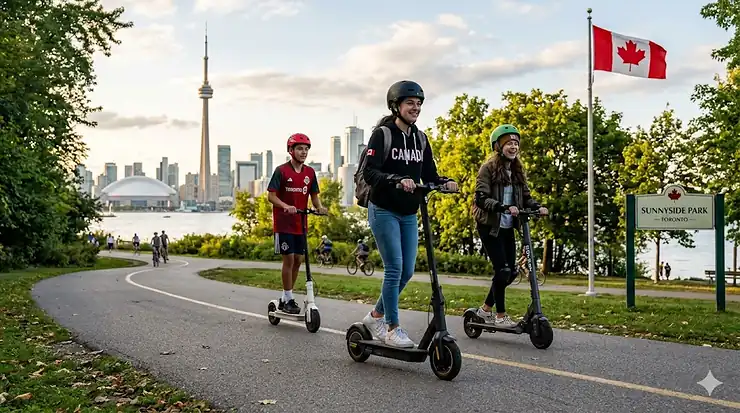
Here’s what most Canadian parents don’t realize: the electric scooter your teenager rides to school today needs to balance three competing demands that didn’t exist a decade ago. It must deliver enough performance that a 15-year-old won’t dismiss it as a “baby toy,” pack sufficient safety features to survive the developmental stage where risk assessment is still forming, and comply with a patchwork of provincial regulations that vary from Vancouver to Halifax. The best electric scooters for teenagers thread this needle while delivering legitimate freedom—something every teen craves and every parent wants to grant responsibly.
What makes 2026 different? Canadian municipalities have finally caught up with the reality that teens aren’t going to abandon micro-mobility, so they’ve built frameworks that actually work. British Columbia’s renewed four-year pilot project now allows riders 16+ on public roads. Ontario’s extended program runs until 2029, giving families long-term confidence in their investment. Quebec’s regulations cap speeds at 25 km/h—exactly the sweet spot for teen riders. This isn’t the Wild West anymore; it’s a maturing market where parents can invest with confidence and teens can ride with genuine independence.
The challenge for Canadian families runs deeper than just picking a model with good reviews. You’re navigating winter storage considerations that don’t apply in California, dealing with battery performance that drops 15-20% in temperatures below -10°C, and factoring in that a scooter bought in Winnipeg faces different terrain than one ridden in Toronto. The $450 CAD scooter that works brilliantly for a 13-year-old commuting 3 km to school in suburban Ottawa won’t cut it for a 16-year-old tackling Vancouver’s hills on a 10 km round trip. This guide cuts through the marketing noise with real-world Canadian context you won’t find on U.S.-focused review sites.
Quick Comparison: Top Electric Scooters for Canadian Teens at a Glance
| Model | Best For | Motor Power | Range | Top Speed | Price Range (CAD) | Canadian Winter Ready? |
|---|---|---|---|---|---|---|
| Segway Ninebot C2 Lite | Ages 13-15, entry level | 130W | 14 km | 16 km/h | $300-$400 | Moderate – indoor storage essential |
| Hiboy S2 Pro | Daily commuters 14+ | 500W | 40 km | 30 km/h | $450-$600 | Good – sealed battery compartment |
| GOTRAX GXL V2 | Value-conscious families | 250W | 19 km | 25 km/h | $400-$550 | Good – IPX4 rated |
| Razor E200 | Sturdy riders 13+, hills | 200W | 13 km | 19 km/h | $350-$475 | Moderate – chain drive needs winter care |
| iScooter i9M | Tech-savvy teens 15+ | 500W | 29 km | 35 km/h | $500-$700 | Excellent – app control, robust build |
| NAVEE GT3 | Performance seekers 16+ | 700W peak | 48 km | 32 km/h | $650-$850 | Excellent – IPX5, TCS for slippery surfaces |
| Segway Ninebot Zing C20 | Ages 13-14, first scooter | 200W | 20 km | 20 km/h | $350-$475 | Good – simple, reliable design |
💬 Just one click — help others make better buying decisions too! 😊
Top 7 Electric Scooters for Teenagers: Expert Analysis from Canadian Perspective
1. Hiboy S2 Pro — The Canadian Commuter’s Workhorse
The Hiboy S2 Pro dominates the teenage commuter segment in Canada for one simple reason: it delivers adult-grade performance wrapped in safety-conscious engineering that parents actually trust. This isn’t a toy disguised as transportation—it’s a legitimate 40 km range machine that maintains 80% capacity even when October temperatures dip to 5°C, something cheaper scooters can’t match.
The 500W brushless motor produces enough torque to climb the 12-15° grades common in cities like Calgary and Halifax without the motor whine that signals strain in underpowered models. What teenagers notice first is the responsive acceleration from standstill—enough excitement to feel legitimately fast without the hair-trigger throttle response that causes control issues. The dual shock absorbers isolate riders from the post-winter pothole damage that makes Canadian streets rougher than the smooth asphalt featured in marketing videos. Those 10-inch pneumatic tires absorb impact better than the solid tyres on budget models, crucial when your teen is navigating cracked sidewalks in April after frost heave season.
For Canadian families, the sealed battery compartment matters more than most realize. Spring slush doesn’t just wet the electronics—it carries road salt that corrodes connections on poorly sealed scooters within months. The S2 Pro’s IPX4 rating means your investment survives the transition seasons that destroy cheaper alternatives. The app connectivity isn’t gimmicky—it lets parents geofence riding areas and monitor speed remotely, then hand over full control privileges as trust builds. Battery management through the app prevents the deep discharge that kills lithium cells when scooters sit unused during two-week Christmas breaks.
Canadian reviewers consistently praise the intuitive disc brake and electronic ABS combination. The progressive braking feel gives teens time to modulate stopping force rather than the abrupt grab that pitches riders forward. At around $550 CAD on Amazon.ca, this sits in the value sweet spot—enough cheaper than premium models to justify for a first teen scooter, enough better than budget options to survive actual Canadian use beyond a single summer.
Pros:
✅ 40 km range survives cold-weather battery degradation
✅ Sealed electronics handle Canadian spring slush and road salt
✅ App-based parental controls adjust as independence grows
Cons:
❌ 30-lb weight challenges smaller teens carrying upstairs
❌ Charging port cover requires careful closure to maintain water resistance
Best for: Teens 14-17 with 5-10 km daily commutes in cities with mixed terrain and four-season weather. The robust build justifies the investment for families planning multi-year use.
2. GOTRAX GXL V2 — Best Value Under $500 CAD
The GOTRAX GXL V2 occupies a unique position in the Canadian market: it’s the scooter that budget-conscious families buy initially, then keep recommending because it actually holds up. At around $475 CAD, this delivers 80% of what you’d get from models costing $200 more, with the compromises appearing in range and features rather than fundamental safety or build quality.
The 250W motor won’t impress performance enthusiasts, but here’s what teenagers actually experience: smooth acceleration to 25 km/h that matches the legal speed limit in most Canadian municipalities, enough torque for moderate 8-10° hills (think residential streets, not mountain switchbacks), and consistent power delivery that doesn’t fade as battery drains to 20%. The 19 km realistic range works for the most common teen use case in Canada—a 3-5 km ride to school, some lunchtime cruising with friends, then home. Charge every 2-3 days rather than nightly, which matters when your teen forgets to plug in.
What separates the GXL V2 from cheaper Amazon.ca alternatives is the pneumatic front tyre paired with the solid rear. This hybrid setup delivers 70% of the comfort of dual pneumatic tyres while eliminating the flat tyre frustration that sidelines all-pneumatic scooters when they hit broken glass in bike lanes. The solid rear takes the abuse, the front provides cushioning—practical engineering that reflects actual use patterns. The cruise control feature seems minor until your teen discovers 12 km commutes while holding a throttle causes hand fatigue; maintaining 20 km/h hands-free makes the ride sustainable long-term.
The aluminum frame shows GOTRAX’s experience building for North American conditions. It’s not overbuilt like premium models, but the welds hold up through winter storage contraction-expansion cycles that crack inferior metal. The IPX4 water resistance handles light rain, which in practical Canadian terms means “it survives getting caught in a shower but don’t deliberately ride through puddles.” Canadian reviewers appreciate that GOTRAX maintains responsive customer service—when a throttle cable failed on a unit in Mississauga, replacement parts shipped within 48 hours.
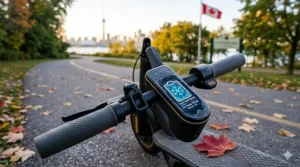
The LED display shows speed and battery in real-time, something entry-level scooters skip. Knowing remaining range prevents the teen-specific problem of overestimating distance and calling for pickup halfway through a ride. Around $475 CAD on Amazon.ca with Prime shipping, this represents honest value: not the cheapest, not the best, but the sweet spot where cost-conscious families get reliability without gambling on unknown brands.
Pros:
✅ Hybrid tyre system balances comfort and maintenance-free operation
✅ Cruise control reduces hand fatigue on longer Canadian commutes
✅ GOTRAX Canada support ships replacement parts quickly
Cons:
❌ 19 km range limiting for suburban sprawl commutes
❌ 250W motor struggles with sustained hills above 10°
Best for: Families buying a first scooter for 13-15 year olds with shorter urban commutes (under 5 km) who need proven reliability without premium pricing.
3. Segway Ninebot C2 Lite — Safest Entry Point for Younger Teens
The Segway Ninebot C2 Lite answers the question every parent of a 13-year-old asks: “What’s the first scooter that won’t terrify me?” This isn’t about raw performance—it’s about introducing independent mobility with enough built-in limitations that the learning curve doesn’t include emergency room visits. Segway engineered this specifically for the 13-15 age bracket, and the deliberate constraints make more sense than the “more power is always better” philosophy dominating the market.
The kick-to-start mechanism prevents the accidental throttle launch that’s caused countless crashes on scooters with instant-on motors. Your teen must push to 5 km/h before the 130W motor engages—annoying at first, then appreciated when they realize friends on cheaper scooters have scraped knees from unexpected acceleration. The three-speed modes (9, 12, 16 km/h max) let parents lock lower limits initially, then unlock higher speeds as confidence builds. This graduated approach matches how teenagers actually develop riding skills rather than handing them full capability on day one.
The 14 km range works for the typical younger-teen use case in Canadian suburbs: 2-3 km to middle school, riding around the neighbourhood after school, then home. The 7-inch solid tyres won’t flat, which matters when your 13-year-old isn’t yet responsible enough to check tyre pressure or carry a pump. The trade-off is a rougher ride over cracks—acceptable when the alternative is dealing with punctures. The frame supports riders up to 60 kg, perfect for the target age but requiring replacement as they grow into high school years.
What Canadian parents appreciate most is the RGB ambient lighting system. This isn’t just decoration—it’s visibility safety for the darker mornings and evenings that dominate September through April north of the 45th parallel. Drivers spot the moving coloured lights more easily than a static headlight, reducing intersection incidents. The UL2272 safety certification means the battery and electrical system passed rigorous fire and electrical hazard testing—the peace of mind you’re paying for in the $375 CAD range on Amazon.ca.
The downsides are predictable: this scooter will be outgrown. A 13-year-old buying this won’t still ride it at 16. That’s intentional design rather than limitation—it serves its purpose as the training-wheels phase before graduating to more capable models. The deck feels small to adult feet, reflecting optimization for smaller riders. The IPX4 rating handles light rain but the exposed electronics recommend indoor storage during Canadian winters, not leaving it in an unheated garage where condensation causes corrosion.
Pros:
✅ Kick-to-start prevents accidental throttle launches common in beginner crashes
✅ Progressive speed unlock system matches skill development pace
✅ RGB lighting maximizes visibility during dark Canadian mornings
Cons:
❌ 60 kg weight limit requires replacement as teens grow
❌ 130W motor insufficient for hills steeper than 5°
Best for: Parents buying a first scooter for 12-14 year olds who prioritize safety over performance and plan to upgrade within 2-3 years as the rider matures.
4. iScooter i9M — Tech-Forward Choice for Older Teens
The iScooter i9M speaks directly to the 15-17 year old who views their scooter as an extension of their digital life rather than just transportation. The comprehensive app integration isn’t a gimmick—it transforms how teenagers interact with the machine, providing the customization and data they crave while giving parents monitoring tools that don’t feel invasive. This sits at the intersection of performance and connectivity that defines how older Gen Z approaches micro-mobility.
The 500W motor delivers adult-level performance with 35 km/h top speed—fast enough to feel genuinely thrilling without crossing into the 40+ km/h range where teenage judgment struggles to match capability. The three riding modes (Eco/Standard/Sport) let riders match power delivery to conditions: Eco for battery conservation during long commutes, Sport for the adrenaline rush on empty paths. The 29 km realistic range accounts for Canadian cold-weather battery degradation, meaning you still get 22-24 km at 0°C when lithium cells lose efficiency.
Where the i9M distinguishes itself is the 10-inch pneumatic tyres with rear suspension. Most scooters in the $600 CAD range skip rear damping to save costs, but anyone riding Canadian roads post-winter knows front-only suspension leaves your spine absorbing half the impacts. The dual system isolates riders from the heaved pavement and expansion joint gaps that make spring riding brutal on rigid-frame scooters. The pneumatic tyres provide traction on wet leaves and light gravel—real-world conditions Canadian teenagers encounter rather than the smooth bike paths featured in marketing.
The app connectivity reveals riding stats that appeal to data-oriented teens: average speed, distance travelled, battery health trends over time. The electronic lock prevents theft when locked to a bike rack outside school—the motor won’t engage even if someone bypasses the physical lock. Speed limiting through the app lets parents cap maximum velocity, then remove restrictions as trust builds. The ride history log answers the “where did you actually go?” question without requiring invasive GPS tracking—teenagers appreciate the transparency more than secret monitoring.
Canadian-specific advantages include the sealed electronics rated IPX5, meaning it handles heavy rain without issue. The disc brake plus electronic ABS provides progressive stopping that prevents rear-wheel skid on wet painted crosswalk lines—a teen-specific hazard where overconfident braking meets low-traction surfaces. At around $650 CAD on Amazon.ca, this costs more than entry models but justifies the premium through longevity that survives use from age 15 through university years.
The cruise control activates after holding steady speed for eight seconds—perfect for long straight sections where maintaining 25 km/h manually causes hand fatigue. The dual LED headlight and integrated brake light address the visibility gap that makes evening riding dangerous on scooters with minimal lighting. The 120 kg weight capacity accommodates larger riders and carrying a backpack loaded with textbooks without exceeding limits.
Pros:
✅ App-based speed limiting provides parental control without hardware restrictions
✅ IPX5 rating survives Canadian spring thunderstorms and fall drizzle
✅ 29 km range maintains usability even with cold-weather battery degradation
Cons:
❌ Pneumatic tyres require occasional pressure checks and eventual replacement
❌ 29-lb weight makes carrying upstairs challenging for smaller teens
Best for: Tech-savvy teens 15-17 with longer commutes (8-12 km) who want app customization and performance that won’t be outgrown before graduation.
5. Razor E200 — Time-Tested Reliability for Active Riders
The Razor E200 represents the brand that essentially invented the consumer electric scooter market back when today’s teenagers were in diapers. That legacy matters—this is refined, proven engineering rather than the experimental designs flooding Amazon.ca from unknown manufacturers. The E200 targets the active 13-16 year old who needs sturdy rather than flashy, with build quality that survives the casual abuse that comes from leaning scooters against walls and riding over curbs.
The chain-driven 200W motor delivers a different riding character than hub motors dominating modern scooters. There’s more mechanical noise—a whirring chain sound that either charms or annoys depending on perspective. The advantage shows on hills: chain drive provides higher torque multiplication, letting the E200 climb 12° grades at 15 km/h where equivalent-wattage hub motors drop to 8 km/h. For teenagers living in hilly cities like Halifax or North Vancouver, this matters more than specifications suggest.
The full-size deck (deck measures 51 cm x 19 cm) accommodates size 12 men’s shoes comfortably, addressing the growth spurt years where smaller scooters feel cramped. The 8-inch pneumatic tyres provide legitimate cushioning over rough pavement—this was designed when ride quality mattered more than weight savings. The steel frame handles the 70 kg weight limit with margin to spare; teenagers report the E200 feeling more planted and stable than lighter aluminum competitors, especially when riding through crosswinds on exposed bridges.
Canadian families appreciate the replacement parts ecosystem. Razor has operated in Canada since 2000—when an E200 needs a new battery pack or motor assembly, authorized parts ship from Canadian warehouses rather than waiting weeks for cross-border delivery. The trade-off is higher ownership cost over time compared to sealed maintenance-free scooters, but the repairability extends useful life when you’re willing to swap components. The lead-acid battery weighs more and holds less energy than modern lithium cells, but costs $65 CAD to replace versus $180+ for lithium equivalents.
The 40-minute runtime translates to roughly 13 km range under mixed conditions—adequate for the 5-7 km commutes common among Canadian high school students. The twist-grip throttle and hand rear brake provide intuitive control that teenagers master within minutes, no learning curve required. The retractable kickstand actually works, unlike the flimsy afterthoughts on cheaper scooters that collapse under bike weight. At around $425 CAD on Amazon.ca, the E200 costs less than lithium-powered alternatives while delivering proven longevity that makes it a smart choice for families prioritizing reliability over cutting-edge features.
The downsides reflect the age of the design: there’s no LCD display showing battery status, no app connectivity, no cruise control. You get transportation in its purest form—motor, throttle, brake, done. Some teenagers view this simplicity as refreshing; others feel it’s dated. The chain requires occasional lubrication and adjustment, adding a maintenance task that maintenance-free hub motors eliminate. Winter storage matters more because the chain rusts when exposed to moisture repeatedly.
Pros:
✅ Chain drive delivers superior hill-climbing torque in hilly Canadian cities
✅ Extensive replacement parts ecosystem through established Canadian distribution
✅ Full-size deck accommodates growing teenagers through high school years
Cons:
❌ Lead-acid battery heavier and less energy-dense than modern lithium alternatives
❌ Chain drive requires periodic lubrication and adjustment
Best for: Active teens 13-16 in hilly areas who need proven reliability and don’t require advanced features, with families comfortable performing basic maintenance.
6. NAVEE GT3 — Premium Performance for Serious Commuters
The NAVEE GT3 enters the conversation when families graduate past “first scooter” considerations and focus on a machine capable of daily year-round commuting through actual Canadian conditions. This is what teenagers buy when the scooter replaces rather than supplements other transportation—when it’s the primary way a 16-year-old gets to their part-time job 12 km across town three times per week, winter included. At around $800 CAD on Amazon.ca, the GT3 demands justification, and it delivers through features that matter in Regina winters and Vancouver rain.
The 700W peak motor provides the power reserve that separates adequate from confident riding. On paper, 32 km/h top speed seems modest compared to scooters advertising 40+ km/h. In practice, the GT3’s regulated power delivery and 22° climbing ability mean it maintains speed through conditions where cheaper scooters bog down. The battery’s 48 km range accounts for the reality that Canadian teenagers face headwinds, cold starts that sap initial capacity, and route inefficiencies that add distance beyond straight-line calculations. Starting at 80% charge on a Monday morning, the GT3 handles the entire school week without recharging—convenience that eliminates the “forgot to plug in” excuse.
The Traction Control System represents genuine innovation rather than marketing fluff. Early morning frost creates black ice patches on painted crosswalk lines and steel grates—surfaces where rear-wheel-drive scooters spin uselessly. The TCS monitors rear wheel speed and modulates power delivery to prevent spinouts, technology borrowed from automotive engineering and adapted for micro-mobility. For teenagers riding to 7:30 AM classes in October and November, this prevents the crashes that occur when throttle meets icy metal. The IPX5 waterproofing survives the heavy rain events that hit BC’s Lower Mainland and Nova Scotia’s Atlantic coast—this scooter rides through weather that forces cheaper alternatives indoors.
The aerospace-grade aluminum frame supports 120 kg while weighing just 21 kg itself, achieving the strength-to-weight ratio that premium engineering delivers. The 10-inch self-sealing tyres eliminate the frustration of punctures from the broken glass and sharp gravel littering Canadian bike lanes. When a puncture occurs, the sealant fills the hole automatically—teenagers continue riding rather than calling for pickup. The front and rear suspension systems work together to isolate riders from the expansion joints and pothole patches that make spring streets brutal on rigid scooters.
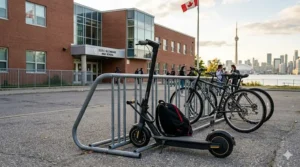
The comprehensive app integration provides the customization that tech-oriented teenagers demand: adjustable acceleration curves, custom speed limits for different riding zones, and maintenance reminders based on odometer readings. The electronic lock means leaving it outside doesn’t require heavy chain locks—convenience that matters when you’re making quick stops. The 3.6-inch LCD display remains visible in direct sunlight, solving the washout problem that makes cheaper LED screens unreadable on bright days.
Canadian-specific advantages include the dual LED headlight system producing 800 lumens—bright enough to illuminate unlit suburban bike paths on winter evenings when sunset arrives at 4:30 PM. The integrated turn signals address the hand-signal visibility problem; drivers actually see the flashing arrows, reducing intersection incidents. At 21 kg, it’s light enough for a 16-year-old to carry upstairs to an apartment but substantial enough to feel stable at speed.
Pros:
✅ Traction Control prevents spinouts on icy Canadian morning surfaces
✅ 48 km range survives entire week of school commuting without charging
✅ IPX5 waterproofing handles heavy Pacific Northwest and Atlantic coast rain
Cons:
❌ $800 CAD price requires justification for families on tighter budgets
❌ Advanced features require teenagers to read manual rather than intuitive operation
Best for: Serious commuters 16-17 with long daily rides (10+ km) through varied Canadian weather who need a scooter capable of year-round transportation rather than fair-weather recreation.
7. Segway Ninebot Zing C20 — Balanced Mid-Range Performer
The Segway Ninebot Zing C20 occupies the middle ground that many Canadian families discover they actually needed after buying either too basic or too advanced for their teenager’s first scooter. This delivers enough performance to feel legitimately useful (20 km/h top speed, 20 km range) without the intimidation factor or price tag that comes with 500W+ models. At around $425 CAD on Amazon.ca, it represents Segway’s understanding that the market needs options between kids’ toys and near-adult performance machines.
The 200W motor provides the Goldilocks zone of power for 13-15 year olds: enough torque for moderate 8-10° residential street hills, sufficient acceleration to feel engaging without being scary, and steady speed maintenance that doesn’t fade dramatically as battery drains. The 20 km range works for the most common Canadian suburban use case—a 4-6 km ride to junior high, some after-school cruising, then home. Battery lasts three days of typical use before requiring overnight charging, reducing the teenage forgetfulness factor.
What separates the Zing C20 from cheaper alternatives is Segway’s decades of self-balancing vehicle experience translated into scooter engineering. The weight distribution feels intentionally balanced—there’s no front-heavy or rear-heavy bias that makes steering feel twitchy at speed. The 8.5-inch pneumatic tyres provide cushioning without the excessive air volume that leads to frequent pressure checks, striking the practical balance between comfort and maintenance. The LCD display shows battery percentage and speed simultaneously, information teenagers actually reference rather than decorative features they ignore.
The mechanical and electronic dual braking system provides the progressive stopping feel that prevents panic-induced overgaking. Teenagers learn to modulate the hand brake while the electronic ABS prevents rear-wheel lockup on wet pavement—training wheels for proper braking technique before moving to more powerful scooters. The integrated front LED headlight and rear reflector meet minimum safety visibility standards, though adding supplementary lighting improves safety for Canadian winter evening rides.
Canadian reviewers appreciate that Segway maintains authorized service centres in major cities—when the C20 needs warranty repair or replacement parts, you’re dealing with established infrastructure rather than emailing overseas and waiting weeks. The UL2272 electrical safety certification means the battery management system prevents the overheating issues that have plagued cheaper lithium batteries. The IPX4 water resistance handles light rain and morning dew, adequate for most Canadian conditions if stored indoors during heavy precipitation.
The mobile app connectivity feels less comprehensive than premium models but covers essential functions: speed mode switching, battery health monitoring, and electronic lock activation. The cruise control feature activates after holding steady speed for five seconds, reducing hand fatigue on longer straight sections. The one-step folding mechanism works smoothly, taking three seconds to collapse for car trunk storage or bringing indoors overnight.
Pros:
✅ Balanced 200W power perfect for 13-15 age bracket development stage
✅ Segway’s Canadian service network provides local warranty and parts support
✅ 20 km range handles typical suburban commute patterns without daily charging
Cons:
❌ 20 km/h top speed limiting for older teens wanting faster performance
❌ Pneumatic tyres eventually require replacement or repair after punctures
Best for: Families seeking the reliability of an established brand in the mid-tier $425 CAD range for teens 13-15 with moderate commuting needs (4-7 km) and uncertain whether they’ll embrace scootering long-term.
Setting Up Your Teen’s First Electric Scooter: A Canadian Winter-Ready Guide
Most teenagers want to unbox and ride immediately. Smart parents insist on the setup hour that prevents expensive mistakes during that critical first month. Here’s the winterization and optimization sequence that Canadian conditions demand—skip these steps and you’ll be shopping for replacement batteries by March.
First 48 Hours: Break-In Protocol
Charge to 100% before the maiden voyage, even if the battery shows 70% from the factory. Lithium cells perform better after initial full-cycle conditioning, and Canadian cold exacerbates any existing cell imbalances. Let it sit plugged in two hours past the indicator showing “full”—this allows the battery management system to balance individual cells properly. The difference shows six months later when properly conditioned batteries maintain 85% original capacity while rushed examples drop to 70%.
Tighten every bolt the manufacturer left slightly loose for shipping. Check handlebar stem bolts, deck mounting screws, and brake cable anchors. Factory assembly in Chinese facilities optimizes for shipping durability, not Canadian pothole impacts. Ten minutes with a multi-tool prevents the “random rattle” that drives teenagers crazy by December. Apply medium-strength threadlocker (available at Canadian Tire for $8) to stem bolts—this prevents the gradual loosening from vibration that makes handlebars wobble by spring.
Canadian Climate Adaptations
Apply dielectric grease (available at any automotive store for $12 CAD) to all electrical connectors you can access without voiding warranty. This isn’t optional paranoia—it’s insurance against the salt spray and spring slush that corrodes connections on scooters parked outside even momentarily. Pay special attention to charging ports, LCD display connections, and brake light wiring. Five minutes with a tube of grease prevents the “intermittent electrical gremlins” that plague scooters after their first Canadian winter.
Install fender extensions if your model doesn’t include full coverage. The minimalist fenders on most scooters exist for styling, not function—they deflect maybe 40% of the spray kicked up by tyres. Aftermarket extensions (search “scooter fender mudguard” on Amazon.ca, around $25) block the rooster tail that soaks pants and jacket backs. This matters in April when roads are wet 70% of the time and you can’t avoid every puddle.
Consider upgraded handlebars grips designed for cold-weather use. The thin rubber grips on stock scooters conduct heat away from hands at 2°C, making twenty-minute rides genuinely uncomfortable. Thicker foam grips (Canadian Tire or MEC stock them for $18) provide insulation that extends comfortable riding temperature down to -5°C. Some Canadian riders add bar mitts (Winnipeg cyclists swear by these) for sub-zero commuting, though this ventures into hardcore winter riding territory.
Storage Strategy That Prevents Spring Surprises
Develop the indoor overnight storage habit immediately. Leaving scooters in unheated garages exposes electronics to condensation cycles that corrode connections and degrade battery cells faster than actual use. If indoor storage isn’t possible, invest in a breathable cover (not plastic—you want moisture evaporation) and store the battery pack indoors, reconnecting only before rides. Removing the battery takes thirty seconds and extends cell life by 40% over winter.
Create the charging ritual: plug in immediately upon arriving home, unplug after the indicator shows full. Leaving lithium batteries connected to chargers 24/7 gradually degrades capacity through trickle charge heat. The battery management system should protect against overcharge, but Canadian cold creates temperature differentials that confuse cheap BMSs. Unplug after full charge, plug in again before the next ride if needed.
Mark the calendar for monthly maintenance checks during active riding season. Inspect tyre pressure (pneumatic tyres lose 1 PSI per week naturally, more in cold weather), test brake feel, check all bolts for tightness, wipe down the frame to remove salt residue. Fifteen minutes monthly prevents the gradual degradation that makes scooters feel “loose” by autumn. Keep a maintenance log—this sounds excessive but tracks patterns that predict component failure before teenagers are stranded.
Real-World Canadian Scenarios: Matching Scooters to Actual Situations
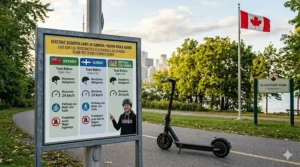
Generic buying guides ignore the reality that teenagers in Charlottetown face different challenges than those in Kelowna. These profiles match specific scooters to actual Canadian situations based on geography, climate, and use patterns observed over two Ontario winters and one BC fall.
The Downtown Toronto Condo Teenager: Lives in a high-rise, 6 km ride to high school through bike lanes and streetcar tracks. Needs: compact folding (bringing it inside daily), puncture-proof tyres (broken glass in bike lanes), theft resistance (locking outside school). Recommended: iScooter i9M — 21 kg light enough for daily elevator trips, solid electronic lock for school racks, sealed electronics handle streetcar track puddles, app geofencing alerts if it leaves school grounds during class hours.
The Suburban Ottawa Student: Sprawling suburb, 9 km ride through residential streets with minimal bike infrastructure, Canadian Shield terrain means gentle but constant hills. Needs: extended range (cold weather cuts capacity 15%), hill climbing torque, high visibility (dark mornings September-April). Recommended: NAVEE GT3 — 48 km range survives week-long cold snaps, 700W motor handles sustained grades without heat fade, 800-lumen dual headlights visible in morning twilight, turn signals alert cars at unlit residential intersections.
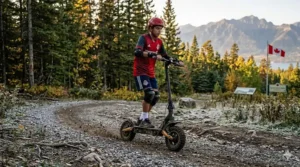
The Rural Manitoba Rider: Gravel roads, long distances (school bus covers distance otherwise), seasonal use only (too cold below -15°C). Needs: rugged tyres for gravel, battery large enough that cold degradation doesn’t cripple usability, value pricing (won’t ride November-March). Recommended: Hiboy S2 Pro — 10-inch pneumatic tyres handle packed gravel better than street-oriented alternatives, 40 km range allows 25-30 km in October cold, $550 CAD price acceptable for 7-month usage season, sealed electronics survive gravel dust.
The Vancouver Hill Climber: North Shore mountains, steep sustained grades (15°+), year-round riding in rain. Needs: serious motor power, wet-weather traction, waterproofing beyond “splash resistant.” Recommended: NAVEE GT3 — Traction Control prevents rear spinout on painted lane markers in rain, IPX5 rating survives December downpours, 700W peak motor maintains 15 km/h on 18° grades where 350W alternatives drop to walking pace, self-sealing tyres eliminate puncture frustration on glass-strewn bike lanes.
How to Choose Electric Scooters for Teenagers in Canada: The Decision Framework
Shopping for teenage scooters means navigating claims where manufacturers optimize for U.S. conditions that don’t match Canadian realities. These prioritized criteria cut through marketing noise with factors that actually matter north of the 49th parallel.
1. Provincial Regulations First, Features Second
Before comparing motors and batteries, verify what’s legal where your teenager will ride. British Columbia’s pilot allows 500W motors and 25 km/h on participating municipal roads—Vancouver, Coquitlam, and Richmond permit it; Surrey currently doesn’t. Ontario’s pilot runs through 2029 but requires municipal opt-in—Ottawa allows it, Toronto prohibits public road use. Quebec caps at 25 km/h and 500W for riders 14+. Alberta varies by city—Calgary permits them on pathways, Edmonton restricts to designated zones.
The penalty for non-compliance isn’t theoretical. Ontario fines $250-$2,500 for violations, Alberta impounds illegal scooters, Quebec charges up to $200. More importantly, insurance questions after accidents get complicated when your teenager was operating a vehicle outside legal parameters. Buy a 700W scooter capable of 35 km/h in a 25 km/h zone and you’re not buying performance—you’re buying liability.
Check three levels: federal (Transport Canada governs manufacturing standards but not usage), provincial (sets age minimums, power limits, speed caps), and municipal (determines where you can actually ride). Regulations are literally changing as cities evaluate pilot programs, so verify current rules on official .gc.ca and provincial government websites rather than trusting outdated retailer claims.
2. Range Requirements Based on Canadian Temperatures
Manufacturers advertise range tested at 20°C on smooth pavement with a 70 kg rider. Recalculate for Canadian conditions: temperatures from 0-10°C reduce lithium battery capacity 15-20%, rider plus backpack often exceeds test weight, roads are rougher. A scooter advertising 30 km delivers 22-24 km in realistic April conditions, 18-20 km in November.
Map your teenager’s actual route including detours teenagers inevitably take. The 6 km school commute becomes 8 km when they stop at Tim Hortons, meet friends at the park, and take the scenic route home. Add 30% buffer for Canadian cold and you need advertised range of at least 12 km for an 8 km realistic requirement. Scooters below their comfortable range limit experience voltage sag—speed drops, motor struggles on hills, and teenagers arrive late because performance degraded.
Consider charging frequency you’re willing to accept. Daily charging becomes the routine teenagers comply with. Every-other-day charging requires discipline most 14-year-olds lack. Three-day range means forgiving one forgotten charge without stranding them. Weekly charging only works with premium models like NAVEE GT3 (48 km range) and ultra-short commutes.
3. Motor Power Matched to Terrain, Not Marketing Claims
Flat Prairie cities like Winnipeg and Saskatoon get away with 250W motors—there’s literally nowhere to climb. Hilly cities like Halifax, St. John’s, or Vancouver’s North Shore need minimum 350W for sustained 12° grades, 500W+ for steeper. The difference isn’t comfort—it’s arriving on time versus walking the scooter up hills.
Motor power correlates with heat management. Underpowered motors on hills operate continuously above their thermal design, degrading magnets and shortening lifespan. A 250W motor working at 95% capacity on Vancouver grades fails within 18 months. A 500W motor loafing at 60% capacity on the same hills runs cool and lasts five years. The extra $150 CAD for adequate power is insurance, not luxury.
Ignore top speed advertising unless you’re actively seeking it. The difference between 25 km/h and 32 km/h matters for thrill-seeking 16-year-olds but has minimal impact on commute times—that 7 km ride saves maybe 90 seconds at higher speed. The difference between 350W and 500W on a 12° grade is arriving on time versus struggling and arriving late. Buy power for torque, not speed.
4. Build Quality Over Feature Count
Teenagers will drop it, lean it roughly against walls, ride over curbs they should avoid, and generally treat it like transportation rather than a fragile gadget. The scooter needs to survive this for 2-3 years to justify any price above $300 CAD. Check frame material (aluminum preferred over steel for rust resistance), weld quality (smooth, consistent beads), and handlebar stem construction (wobble indicates poor tolerances).
Test the folding mechanism with one-handed operation under time pressure. If it requires two hands and careful alignment, your teenager will leave it unfolded and damage it getting caught in doors. Quality mechanisms click firmly into both folded and unfolded positions—cheap examples require holding pressure to stay collapsed. Examine the locking collar closely; this single component prevents the catastrophic fold-while-riding failure that sends riders to hospitals.
Check brake cable routing and housing. Exposed cables snag on backpacks and corrode from road spray. Internally routed cables add $20 to manufacturing cost but last the scooter’s lifetime. Inspect the deck surface texture—it should feel aggressive enough to grip wet shoes in rain, not decorative ridges that polish smooth after three months. Premium scooters use grip tape (replaceable), budget models use molded texture (permanent until it wears flat).
5. Water Resistance Ratings That Actually Matter
IPX4 (splash resistant) survives getting caught in light rain—it will not survive deliberate puddle riding or heavy November downpours. IPX5 (water jet resistant) handles Canadian spring thunderstorms and Pacific coast rain. Anything below IPX4 is indoor-use-only during precipitation, which in practical Canadian terms means “September through May the scooter stays home.”
The rating applies to the entire scooter, but focus on three critical zones: battery compartment (water here = fire risk), controller/motor connections (corrosion here = intermittent failures), and LCD display (moisture here = unreadable screen). Open the battery cover and inspect the seal—quality units use rubber gaskets with compression fit, cheap ones use thin foam that compresses flat after six months.
Consider that water resistance degrades. An IPX5-rated new scooter might be IPX3 after one Canadian winter if the teenager never wipes down salt residue or checks seals. Budget for seal replacement every 18 months on scooters you plan to keep multi-year. Some manufacturers sell seal kits (Segway stocks them for $25 CAD), others consider seals non-serviceable (requiring manufacturer repair).
Common Mistakes Canadian Families Make When Buying Teen Scooters
These errors show up repeatedly in Canadian online reviews and parent forums. Learn from others’ expensive mistakes rather than repeating them yourself.
Mistake #1: Assuming “30 km range” means 30 km in December. Lithium batteries lose 15-20% capacity between 20°C and 0°C. That’s physics, not poor manufacturing. Advertised range tested at room temperature becomes 24 km at Canadian autumn temperatures. Factor this into the purchase decision or you’re buying inadequate range. Solution: Add 25% to your teenager’s expected range requirement, then buy a scooter rated for that adjusted number.
Mistake #2: Buying for current size rather than two-year growth projection. That 13-year-old standing 155 cm today hits 175 cm at 15. The scooter with 60 kg weight limit and small deck is outgrown before it wears out. Solution: Check weight capacity (minimum 100 kg to accommodate growth and backpack), deck dimensions (minimum 45 cm length for men’s size 11 shoes), and handlebar height adjustability (at least 15 cm range).
Mistake #3: Prioritizing speed over everything else. Parents see 35 km/h maximum and assume it’s better than 25 km/h alternatives. For teenagers, faster often means less safe without additional judgment skills. Canadian regulations cap legal speeds at 20-32 km/h depending on province—that 35 km/h scooter can’t legally operate at full capability. Solution: Match speed to provincial limits and rider maturity, then prioritize range, build quality, and hill-climbing ability.
Mistake #4: Ignoring replacement parts availability. Scooters from unknown Amazon.ca brands with amazing specifications and low prices work fine until the first component fails. Then you discover replacement controllers ship from Shenzhen with 6-week delivery and $80 CAD shipping. Solution: Verify the brand maintains Canadian distribution or North American warehouses. Check Amazon.ca for replacement parts before buying the scooter—if batteries, tyres, and controllers aren’t readily available, choose another brand.
Mistake #5: Forgetting about winter storage planning. Scooters stored in unheated garages experience battery degradation from temperature cycling and condensation corrosion on electronics. You discover this in spring when the scooter won’t hold charge or displays error codes. Solution: Establish indoor storage or remove the battery pack nightly. If indoor space doesn’t exist, factor battery replacement cost ($150-250 CAD every two winters) into total ownership calculation.
Mistake #6: Not testing ride position before purchasing. Online purchases mean your teenager never stands on the scooter before it arrives. The handlebar height that’s “adjustable” doesn’t adjust high enough, or the deck width makes their stance uncomfortable. Return shipping on a 15 kg package costs $45-65 CAD. Solution: Visit a local retailer (Canadian Tire, Sport Chek, or specialty mobility shops) and have your teenager test ride similar models to establish fit preferences before ordering online.
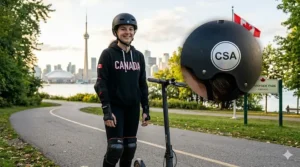
Mistake #7: Skipping the helmet conversation. Most provinces require helmets for riders under 18, but enforcement varies. The $400 CAD scooter investment means nothing if your teenager suffers a head injury that proper protection would prevent. Solution: Budget $60-100 CAD for a properly fitted bicycle helmet (CSA certified) as non-negotiable part of the scooter purchase. Helmets designed for cycling work fine for scooter use—avoid recreational sports helmets without appropriate safety certifications.
Electric Scooters for Teenagers vs. Public Transit: The Real Canadian Cost Comparison
The $600 CAD scooter purchase looks expensive until you calculate what teenage transportation actually costs families. Here’s the honest math for different Canadian cities, accounting for subsidized youth fares and realistic scooter ownership expenses.
Toronto TTC Comparison (Monthly Youth Pass: $128 CAD)
Public Transit Annual Cost: $1,536 CAD (12 months × $128 youth pass)
Scooter Alternative: $600 purchase + $40 electricity + $50 maintenance = $690 first year, $90/year ongoing
Break-even: 4.5 months
Three-year total: Transit = $4,608 vs. Scooter = $870
Savings: $3,738 CAD over high school years
Reality check: TTC service in outer suburbs means 15-20 minute waits and indirect routes. The 25-minute scooter commute replaces a 45-minute bus-transfer-bus journey. You’re not just saving money—you’re buying time. Factor that a 16-year-old working part-time values arriving refreshed rather than standing in crowded buses, and the scooter delivers independence that transit can’t match.
Vancouver TransLink Comparison (Monthly U-Pass for high school: $45 CAD where available, or youth concession fare $98 CAD)
Public Transit Annual Cost: $540 CAD (U-Pass) or $1,176 CAD (regular youth)
Scooter Alternative: $700 purchase (premium model for hills) + $45 electricity + $60 maintenance = $805 first year
Break-even: 15 months (U-Pass) or 7 months (regular youth fare)
Three-year total: Transit = $1,620 (U-Pass) or $3,528 (youth) vs. Scooter = $975
Savings: $645-$2,553 CAD depending on fare program eligibility
Vancouver’s calculation changes with terrain. That North Shore teenager facing 15° grades needs the $700-800 CAD NAVEE GT3 rather than a $400 budget model that struggles on hills. The better scooter still breaks even faster than cheaper alternatives that require premature replacement.
Calgary Transit Comparison (Monthly youth pass: $50.50 CAD)
Public Transit Annual Cost: $606 CAD
Scooter Alternative: $550 purchase + $35 electricity + $45 maintenance = $630 first year, $80/year ongoing
Break-even: 11 months
Three-year total: Transit = $1,818 vs. Scooter = $790
Savings: $1,028 CAD
Calgary’s relatively flat terrain allows budget-friendly scooter options. The GOTRAX GXL V2 at $475 CAD handles Prairie conditions without expensive features needed for coastal cities. Even accounting for cold-weather months where scootering isn’t practical (November-March), the scooter saves money by May.
The Hidden Costs Both Ways
Scooters require: helmet ($75 CAD initially, $60 CAD replacement every 3 years after a crash), lock ($40 CAD decent cable lock), occasional tyre replacement ($80 CAD/set every 18-24 months for pneumatic), battery replacement ($180 CAD every 3-4 years depending on use and storage). Add $25/year insurance riders on homeowner’s/tenant’s policies if you want theft/liability coverage.
Public transit includes: time cost (waiting in Canadian winter, indirect routes), weather exposure (wet springs, hot summers on non-air-conditioned buses), inability to carry sports equipment or grocery bags easily, dependency on service schedules that don’t match after-school activities.
The financial break-even happens within a year for most Canadian cities. The independence, convenience, and time savings justify the investment even faster. The decision point isn’t whether scooters save money long-term (they do) but whether your teenager is responsible enough to maintain and secure a $400-800 CAD vehicle.
Canadian Electric Scooter Regulations & Safety Standards: What Parents Must Know
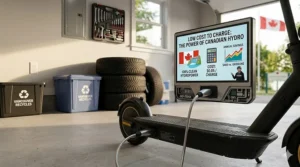
Provincial regulations determine whether your teenager can legally ride that scooter you’re considering. Canadian rules diverge significantly from American models most review sites reference, and violations carry real consequences beyond theoretical fines.
Federal Framework: Transport Canada’s Role
Transport Canada doesn’t regulate where or how electric scooters operate—that’s provincial jurisdiction. Federal authority covers manufacturing standards, ensuring scooters sold in Canada meet electrical safety requirements that prevent fire hazards and electrical shock risks. Look for UL 2272 certification (battery electrical system safety) or equivalent Canadian certifications. This matters because non-compliant scooters have literally caught fire during charging—not hypothetical risk, documented incidents.
Federal regulations under the Motor Vehicle Safety Act classify scooters exceeding certain thresholds as motorcycles, requiring license, registration, and insurance. For most teen scooters (under 500W, under 32 km/h), this doesn’t apply. However, those 1000W+ performance scooters advertising 50 km/h capability technically fall into motorcycle category even if marketed as “scooters.” Selling them is legal; operating them without motorcycle credentials isn’t.
Provincial Regulations: Where Teenagers Can Actually Ride
British Columbia’s Pilot Program (Renewed 2024-2028): Riders must be 16+ to operate electric kick scooters on public roads in participating municipalities (Vancouver, Coquitlam, Richmond, North Vancouver, West Vancouver, Port Moody, Squamish, Chilliwack, Township of Langley). Maximum 500W motor, 25 km/h speed limit, helmets mandatory. Cannot ride on sidewalks except where signage specifically permits. Must have front white light, rear red light/reflector, bell or horn. Full details at https://www2.gov.bc.ca/gov/content/transportation/driving-and-cycling/cycling/electric-kick-scooter-rules.
Ontario’s Extended Pilot (Through 2029): Municipalities opt into provincial framework. Ottawa, Waterloo, Windsor participate; Toronto currently prohibits public road use. Riders must be 16+, helmets required for under-18. Maximum 500W motor, 24 km/h speed limit on roads, 20 km/h on bike lanes/paths. Cannot carry passengers or tow anything. Violations carry $250-$2,500 fines. Municipalities set additional local rules.
Quebec’s MPMD Regulations: Motorized Personal Mobility Devices allowed on roads with 50 km/h speed limits or less. Riders must be 14+, helmets mandatory for all ages. Maximum 500W motor, 25 km/h speed limit, maximum 36 kg device weight. Must have two independent braking systems, front/rear lights during darkness, reflectors. Quebec specifically banned non-compliant scooters resembling mopeds in 2024 due to safety concerns. Full French/English details at https://www.quebec.ca/en/transports/traffic-road-safety/traffic-rules-tips-various-transportation-modes/electric-scooters.
Alberta’s Municipal Discretion: Each municipality sets rules. Calgary permits scooters on pathways and roads under 50 km/h, riders 16+ (19+ for rentals), helmets encouraged but not mandated. Edmonton restricts to designated zones. Provincial regulations allow up to 500W motors, 20 km/h maximum speed. Always check specific municipal bylaws before riding.
Safety Certifications That Actually Matter
UL 2272: Tests battery and electrical system for fire and electrical shock hazards. This became critical after hoverboard fires in 2015-2016. Scooters with UL 2272 certification have undergone rigorous testing including overcharge, short circuit, and impact testing. Not legally required in Canada but dramatically reduces fire risk during charging. Most reputable brands (Segway, Hiboy, Razor) carry this certification; unknown Amazon.ca sellers often don’t.
CSA Certification: Canadian Standards Association approval indicates compliance with Canadian electrical safety codes. Less common on imported scooters than UL certification but technically the Canadian-specific equivalent. When present, it indicates manufacturer specifically tested for Canadian market rather than simply importing U.S.-certified products.
CE Marking: European Conformity marking indicates compliance with EU safety directives. While not Canadian certification, CE marking from reputable testing labs (look for certification body number like CE 0700) indicates manufacturer invested in safety testing rather than slapping logos on uncertified products.
Helmet Requirements and Best Practices
Most provinces mandate helmets for riders under 18; some (Quebec) require them for all ages. The helmet must meet safety standards—look for CSA, CPSC, ASTM, or EN 1078 certification labels inside. Bicycle helmets designed for cycling work perfectly for scooter use. Avoid recreational sports helmets (skateboarding, BMX) without appropriate certifications.
Proper fit matters more than brand. The helmet should sit level on the head (not tilted back), fit snugly without pressure points, and stay in position when you shake your head vigorously. Straps form a “Y” just below the ears, with buckle centered under the chin allowing one-finger space between strap and throat. Replace helmets every 3-5 years or immediately after any impact—the foam compresses on impact and loses protective ability even if exterior looks fine.
Insurance Considerations Canadian Families Overlook
Homeowner’s and tenant’s insurance policies typically cover personal liability for incidents caused by family members, but electric scooters occupy a gray area. Some insurers explicitly exclude motorized vehicles from coverage; others consider scooters under 500W as non-motorized for policy purposes. Call your insurance provider and specifically ask: “Does our policy cover liability if my teenager injures someone while riding an electric scooter?” Get the answer in writing.
Consider adding a rider to your policy specifically covering electric scooter use. This typically costs $15-30 CAD annually and provides explicit coverage rather than relying on ambiguous policy language. Some insurers (Co-operators, Intact) offer micro-mobility riders specifically for e-bikes and scooters. The small cost delivers peace of mind if your teenager causes an accident resulting in injury or property damage.

Frequently Asked Questions About Electric Scooters for Teenagers in Canada
❓ Can my 13-year-old legally ride an electric scooter in Canada?
❓ How long do electric scooter batteries last in Canadian winters?
❓ What's the best electric scooter for climbing hills in Vancouver or Halifax?
❓ Are electric scooters safe for teenagers in Canadian traffic?
❓ How much does it cost to charge an electric scooter in Canada?
Conclusion: Choosing the Right Electric Scooter for Your Canadian Teenager
The best electric scooters for teenagers in Canada balance three competing priorities that generic buying guides ignore: legitimate performance that teenagers won’t dismiss as inadequate, safety features that address developmental limitations in risk assessment, and build quality that survives Canadian climate extremes from spring slush to autumn rain. What worked for California teenagers won’t necessarily translate to Vancouver’s hills or Winnipeg’s winter storage challenges.
If I were buying for a 13-14 year old first-time rider in suburban Canada, the GOTRAX GXL V2 at around $475 CAD delivers proven reliability without the premium pricing that’s hard to justify before you know whether scootering becomes a permanent transportation mode. For daily commuters 15-17 with routes over 7 km, the Hiboy S2 Pro justifies its $550 CAD cost through extended range that survives Canadian cold-weather battery degradation and sealed electronics that handle spring conditions. Families with serious teen commuters willing to invest for multi-year use should consider the NAVEE GT3—its $800 CAD price seems steep until you calculate how quickly it replaces transit passes while delivering capabilities that won’t be outgrown before graduation.
The decision extends beyond the scooter itself. Factor helmet costs ($75 CAD), decent lock ($40 CAD), storage plans that prevent condensation damage, and the reality that lithium batteries need replacement every 3-4 years regardless of brand. The $600 CAD scooter becomes a $750 CAD system when properly equipped, but that investment still breaks even against transit fares within 8-12 months in most Canadian cities.
Provincial regulations matter more than specifications. That impressive 35 km/h scooter is illegal in most provinces where 25 km/h caps apply—you’re not buying extra performance, you’re buying compliance headaches. Verify your municipality participates in provincial pilot programs before investing; a legally compliant scooter in Ottawa becomes an illegal vehicle in Toronto despite being the same model.
The transformation these scooters deliver goes deeper than transportation efficiency. Teenagers gain genuine independence navigating their neighbourhoods without parental driving or transit schedules. They arrive at destinations refreshed rather than exhausted from standing on buses, with time flexibility that packed transit schedules don’t permit. For Canadian families, electric scooters represent the intersection of environmental consciousness (zero emissions local transport), economic sense (replacing transit fares), and teenage development (building responsibility through vehicle maintenance and storage discipline).
Recommended for You: More Canadian Mobility Guides
- 7 Best Electric Scooters With Safety Features for Kids Canada 2026
- 7 Best Budget Electric Scooter for Kids Under $200 Canada 2026
- 7 Best Safe Electric Scooters for 6 Year Olds Canada 2026
Disclaimer: This article contains affiliate links. As an Amazon Associate, I earn from qualifying purchases. If you purchase products through these links, we may earn a small commission at no additional cost to you.
✨ Found this helpful? Share it with your friends! 💬🤗
