
In This Article
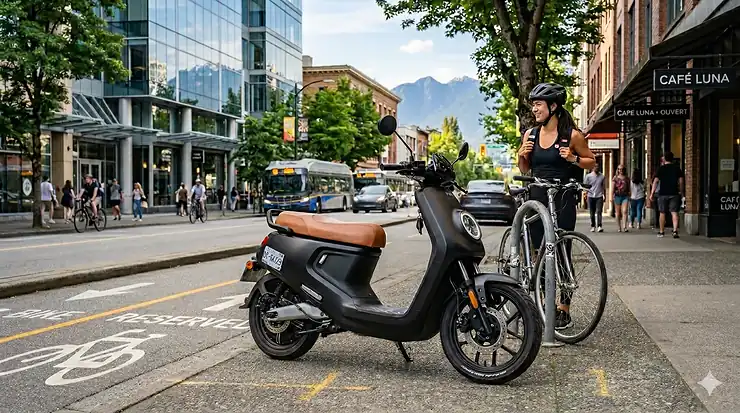
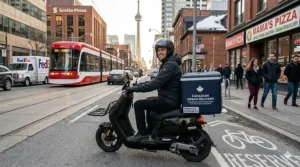
Picture this: you’re zipping through downtown Toronto on a crisp morning, bypassing gridlock while spending zero dollars on gas. That’s the reality for thousands of Canadians who’ve discovered moped style electric scooters. Unlike traditional kick scooters, these comfortable seated alternatives combine the convenience of a bicycle with the effortless ride of a moped, and they’re transforming urban commuting across Canada in 2026.
What makes moped style electric scooters so appealing? They offer a comfortable seated riding position, powerful motors that handle Canadian hills with ease, and enough range to cover your daily commute without breaking a sweat. Whether you’re navigating Vancouver’s bike lanes, cruising Ottawa’s pathways, or tackling Calgary’s urban sprawl, these electric moped scooter with seat options deliver a practical motorcycle alternative that’s both eco-friendly and budget-conscious.
But here’s what you really need to know before buying: not all models are created equal, and street legal moped scooter Canada regulations vary significantly by province. Some municipalities welcome these urban commuter moped vehicles with open arms, while others have stricter rules about where and how you can ride. This comprehensive guide cuts through the confusion, presenting seven thoroughly researched pedal-free electric scooter models available right now on Amazon.ca, complete with real Canadian pricing, specifications, and honest assessments of what works (and what doesn’t) in our unique climate and regulatory environment.
Quick Comparison Table
| Model | Motor Power | Top Speed | Range | Price (CAD) | Best For |
|---|---|---|---|---|---|
| SAY YEAH Electric Moped | 1000W | 40 km/h | 40-50 km | $1,299-$1,499 | Performance riders |
| SEHOMY Foldable E-Scooter | 450W | 25 km/h | 32 km | $899-$1,099 | Budget commuters |
| Beston Sports Electric Moped | 450W | 25 km/h | 30-35 km | $799-$949 | First-time buyers |
| TopMate ES35 3-Wheel | 350W | 20 km/h | 25-30 km | $1,199-$1,399 | Stability seekers |
| iScooter F3 1000W | 1000W | 45 km/h | 45-55 km | $1,599-$1,799 | Long-distance |
| ASKGO Dual Suspension | 1000W | 40 km/h | 55 km | $1,399-$1,599 | Premium comfort |
| Caroma Peak 1200W | 1200W | 32 km/h | 48 km | $1,699-$1,899 | Power enthusiasts |
💬 Just one click – help others make better buying decisions too! 😊
Top 7 Moped Style Electric Scooters: Expert Analysis
1. SAY YEAH Electric Scooter with Seat – Best Overall Performance
The SAY YEAH Electric Moped stands out as a powerhouse in the moped scooter for adults comparison market. This California-based brand has sold over 1 million units globally, and their seated model brings serious performance to Canadian roads.
Key Specifications:
- 1000W brushless motor with 40 km/h top speed
- 48V 12Ah lithium battery
- 10-inch air-filled pneumatic tires
- LED headlights and rear reflectors
Priced between $1,299-$1,499 CAD on Amazon.ca, this model delivers exceptional value for performance-oriented riders. Canadian buyers particularly appreciate the robust build quality and the fact that it ships from Canadian warehouses, eliminating customs headaches. One Edmonton reviewer noted: “This thing handles Alberta hills like a champ, even in -10°C weather.”
✅ Pros:
- Powerful motor tackles steep Canadian inclines
- Comfortable adjustable seat for riders up to 120 kg
- Dual disc braking system provides reliable stopping power
❌ Cons:
- Heavy at 36 kg, challenging for apartment dwellers
- Seat comfort could be improved for rides over 30 minutes
This SAY YEAH model excels as a street legal moped scooter Canada option in provinces with permissive regulations, though you’ll want to verify your municipality’s specific rules before purchasing.
2. SEHOMY Foldable Electric Scooter – Best Budget Option
For Canadians watching their wallets, the SEHOMY Foldable Scooter Electric delivers remarkable value. At $899-$1,099 CAD, this pedal-free electric scooter proves you don’t need to spend big for reliable urban transportation.
Key Specifications:
- 450W motor with 25 km/h maximum speed
- 8.0Ah battery providing 32 km range
- Foldable design for easy storage
- Rear carry basket included
This lightweight option (just 15.6 kg) makes it perfect for multi-modal commuting. A Halifax user shared: “I fold it up and take it on the ferry every morning – fits perfectly under my desk at work.” The included basket adds practical value for grocery runs, though it’s smaller than marketing photos suggest.
✅ Pros:
- Extremely affordable entry point into electric moped scooters
- Lightweight and truly portable
- Includes practical rear basket
❌ Cons:
- Hard seat requires cushion upgrade for comfort
- Limited hill-climbing ability with 450W motor
Canadian buyers report this SEHOMY model works well for flat city commutes but struggles on steeper grades found in cities like Montreal or Vancouver.
3. Beston Sports Electric Moped – Best for First-Time Buyers
The Beston Sports Light Weight Folding Electric Bike targets newcomers to electric mobility. Priced at $799-$949 CAD, it offers a gentle introduction to moped style electric scooters without overwhelming features.
Key Specifications:
- 450W motor delivering 25 km/h
- 40-cell 8.0Ah lithium-ion battery
- Accommodates riders up to 120 kg
- Simple three-button control system
Multiple Canadian reviews highlight its reliability over extended use. One Saskatchewan buyer noted using it weekly for over a year with minimal maintenance. The straightforward operation makes it ideal for seniors or those unfamiliar with electric vehicles.
✅ Pros:
- User-friendly controls require minimal learning curve
- Consistent performance over time
- Affordable maintenance costs
❌ Cons:
- Basic suspension makes rough roads uncomfortable
- Battery degradation noticeable after 12-18 months
This Beston Sports model serves as an excellent urban commuter moped for short-distance Canadian commuters, particularly in municipalities with well-maintained bike infrastructure.
4. TopMate ES35 3-Wheel Electric Trike – Best for Stability
The TopMate ES35 Powered Mobility Scooter takes a different approach with its three-wheel configuration. Priced at $1,199-$1,399 CAD, it prioritizes stability and safety over raw speed.
Key Specifications:
- 350W motor with 20 km/h cruising speed
- Removable 36V 7.8Ah battery (flight-approved)
- 10-inch pneumatic tires
- Extended 19.68-inch rear axle for enhanced stability
This motorcycle alternative appeals to riders who prioritize confidence over performance. The reverse function proves invaluable for tight parking situations common in Canadian condos. Canadian buyers over 60 particularly appreciate the stable platform and comfortable backrest seat.
✅ Pros:
- Exceptional stability from three-wheel design
- Removable battery allows indoor charging
- Includes reverse function for maneuverability
❌ Cons:
- Lower top speed limits commuting range
- Bulkier footprint than two-wheel models
The TopMate ES35 works brilliantly as a street legal moped scooter Canada option for seniors or those with mobility considerations, though it’s not ideal for speed-focused commuters.
5. iScooter F3 1000W – Best for Long-Distance Commuting
The iScooter F3 brings serious range to the electric moped scooter with seat category. At $1,599-$1,799 CAD, it’s an investment that pays dividends for longer Canadian commutes.
Key Specifications:
- 1000W powerful motor reaching 45 km/h
- Extended 45-55 km range on single charge
- 10-inch pneumatic tires
- Detachable, adjustable seat
One Winnipeg commuter reports: “I ride 22 km each way to work, and still have battery left for errands. Game-changer for avoiding winter parking fees.” The robust construction handles Canadian winters better than cheaper alternatives, though tire pressure monitoring becomes critical in freezing temperatures.
✅ Pros:
- Outstanding range eliminates mid-day charging anxiety
- Powerful motor handles cargo and passengers
- Well-supported customer service in North America
❌ Cons:
- Premium pricing puts it out of reach for budget buyers
- Heavier weight (40+ kg) complicates transport
This iScooter F3 excels as a moped scooter for adults comparison leader in the long-range category, particularly for suburban Canadian commuters.
6. ASKGO Electric Scooter Dual Suspension – Best Premium Comfort
The ASKGO Electric Scooter with dual suspension technology delivers cloud-like riding comfort. Priced at $1,399-$1,599 CAD, it justifies the premium with exceptional ride quality.
Key Specifications:
- 1000W peak motor with 40 km/h capability
- 48V 15Ah battery providing 55 km range
- Front and rear suspension system
- 14-inch pneumatic tires
Canadian riders on rough urban streets particularly benefit from the dual suspension setup. A Toronto reviewer noted: “Potholes that would rattle my teeth on other scooters barely register on this one.” The wider deck accommodates larger feet comfortably, addressing a common complaint with imported models.
✅ Pros:
- Superior ride comfort on varied terrain
- Impressive 55 km realistic range
- Wide deck and adjustable components fit diverse riders
❌ Cons:
- Complex folding mechanism requires practice
- Dual suspension adds maintenance complexity
The ASKGO model shines as a pedal-free electric scooter for Canadian riders who prioritize comfort and don’t mind paying extra for quality suspension engineering.
7. Caroma Peak 1200W – Most Powerful Option
The Caroma Peak Electric Scooter tops our power rankings with its 1200W motor. At $1,699-$1,899 CAD, it’s built for riders who demand maximum performance.
Key Specifications:
- 1200W peak motor (800W sustained)
- 32 km/h controlled top speed
- 48 km range with quality battery cells
- Key-start ignition system
This urban commuter moped brings motorcycle-like acceleration to the electric scooter category. The key-start feature adds security peace of mind in Canadian urban environments. Calgary riders appreciate the torque for navigating the city’s varied elevation changes.
✅ Pros:
- Unmatched hill-climbing capability in its class
- Key-start prevents theft in public parking
- Robust build quality withstands Canadian climate
❌ Cons:
- Highest price point in our comparison
- Power output may exceed some municipal regulations
The Caroma Peak works best as a street legal moped scooter Canada option in permissive jurisdictions, and riders should verify local power restrictions before purchase.
✨ Don’t Miss These Exclusive Deals!
🔍 Take your urban commuting to the next level with these carefully selected moped style electric scooters available in Canada. Click on any highlighted item above to check current pricing and availability on Amazon.ca. These vehicles will help you create a sustainable, cost-effective commuting solution your wallet will love!
Understanding Moped Style Electric Scooters: What Makes Them Different?
Moped style electric scooters occupy a unique space between traditional kick scooters and full electric motorcycles. The defining characteristic lies in the seated riding position combined with a step-through frame design borrowed from classic mopeds. According to research from Battery University, the low-slung seat position (typically 32-35 inches from ground) allows riders to sit upright with feet nearly flat, reducing fatigue on longer commutes.
The pedal-free electric scooter design eliminates the need for physical exertion while maintaining the compact footprint that makes these vehicles so practical for Canadian cities. Unlike e-bikes that retain bicycle geometry, moped style models prioritize comfort through wider saddles, swept-back handlebars, and relaxed riding posture. This design philosophy transforms a utilitarian commute into a genuinely enjoyable experience.
From a technical standpoint, most moped style electric scooters utilize hub motors integrated into the wheels, typically ranging from 450W to 1200W. The motor placement affects weight distribution and handling characteristics – front-hub motors pull you forward, rear-hub motors push, and dual-motor systems provide all-wheel drive capabilities increasingly popular in Canadian winter conditions.
Battery technology has evolved dramatically, with modern moped style electric scooters employing lithium-ion cells that maintain performance even in Canada’s challenging climate. Expect anywhere from 30-55 km of real-world range depending on battery capacity, rider weight, terrain, and temperature. Canadian riders should note that cold weather can reduce battery efficiency by 20-30% according to data from Transport Canada.
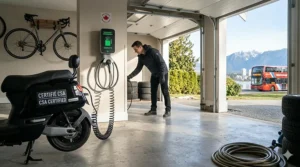
Street Legal Moped Scooter Canada: Provincial Regulations Explained
Federal Framework and Provincial Variations
Navigating Canadian electric scooter regulations requires understanding both federal guidelines and provincial differences. Transport Canada sets baseline safety standards, but provinces and municipalities implement actual usage rules. This creates a patchwork of regulations that can confuse riders.
At the federal level, power-assisted bicycles (which many moped style electric scooters fall under) must have motors of 500W or less and cannot exceed 32 km/h to qualify for simplified regulations. However, provinces interpret and enforce these standards differently.
Ontario’s Pilot Program
Ontario runs an extended pilot program through November 2029, allowing municipalities to opt in or out. According to the Ontario Government, participating municipalities can permit e-scooters on roads and bike lanes with these requirements:
- Riders must be 16 years or older
- Maximum speed of 24 km/h
- Helmets mandatory for riders under 18
- Prohibited on sidewalks
Toronto notably opted out of the pilot, banning e-scooters on public streets entirely, while Ottawa and Windsor embraced them. This means your street legal moped scooter Canada eligibility changes dramatically based on which GTA municipality you’re riding in.
British Columbia’s Approach
BC’s pilot program, extended through 2028, permits e-scooters on bike lanes and roads with speed limits of 50 km/h or less. Key BC requirements include:
- Maximum speed of 24 km/h
- Mandatory helmets for all riders
- Required lights and bells for night riding
- Riders must be 16 years or older
Vancouver and Kelowna have embraced shared scooter programs, and privately-owned models are also permitted under these restrictions.
Quebec’s Pilot Program
According to the Government of Quebec, their pilot program runs until 2026 with these specific rules:
- Riders must be 14 years or older
- Mandatory helmets for all ages
- Maximum weight of 36 kg
- Power limited to 500W
- Speed capped at 25 km/h
Montreal has some of Canada’s most developed e-scooter infrastructure, with designated lanes and widespread acceptance of these vehicles as legitimate transportation.
Alberta’s Permissive Stance
Calgary and Edmonton have integrated moped style electric scooters into their transportation networks more smoothly than many Canadian cities. While helmet use is encouraged, it’s not mandatory for adults. E-scooters are allowed on bike lanes and certain roads, with municipalities setting specific route restrictions.
Understanding these variations is crucial when selecting your urban commuter moped. A high-powered 1000W model might work perfectly in Calgary but could face restrictions in other provinces. Always verify local regulations before purchasing.
Moped Scooter for Adults Comparison: Key Features to Consider
Motor Power and Performance
Motor wattage directly impacts your riding experience, but bigger isn’t always better for Canadian conditions. A 450W motor handles flat urban commutes admirably while staying within most regulatory limits. Upgrade to 750-1000W if you’re tackling significant hills or carrying cargo regularly. The 1200W models like the Caroma Peak deliver motorcycle-like performance but may exceed some municipal power restrictions.
Real-world testing reveals that advertised wattage often represents peak output, not sustained power. A “1000W” motor might actually run at 600-700W continuously, with the higher number representing brief bursts during acceleration or hill climbing. Canadian buyers should prioritize motors from established brands with proven cold-weather reliability.
Battery Capacity and Range
Battery specifications tell two stories: capacity (measured in amp-hours) and voltage. A 48V 15Ah battery holds more energy than a 36V 15Ah configuration, translating to longer range. However, advertised ranges often assume ideal conditions – level ground, moderate speeds, average rider weight, and warm temperatures.
Canadian riders should expect 20-30% range reduction in winter months. A scooter rated for 50 km might deliver only 35-40 km when temperatures drop below -5°C. Removable batteries offer the advantage of indoor charging, which helps maintain battery health during Canadian winters.
Suspension Systems and Ride Comfort
Suspension technology separates pleasant rides from bone-jarring experiences on Canada’s often-rough streets. Entry-level models typically feature basic spring suspension or none at all, relying on pneumatic tires to absorb impacts. Mid-range options add front fork suspension, while premium models like the ASKGO incorporate dual suspension with adjustable damping.
For Canadian roads plagued by freeze-thaw potholes, invest in at least front suspension if your budget allows. The comfort difference becomes dramatic on rides longer than 15 minutes, and your joints will thank you after years of commuting.
Tire Selection: Pneumatic vs. Solid
Pneumatic (air-filled) tires provide superior comfort and traction, crucial for Canadian weather conditions. They absorb road imperfections effectively and offer better grip in rain. The downside? They require maintenance and can puncture, though modern puncture-resistant formulations have improved reliability significantly.
Solid tires eliminate flat worries but transmit every road imperfection directly to your body. For Canadian urban environments with variable road quality, pneumatic tires are worth the occasional maintenance hassle. Choose tire sizes of 10 inches or larger for better obstacle clearance over debris and snow remnants.
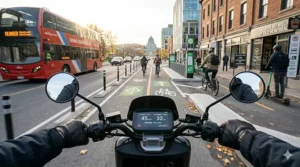
Electric Moped Scooter with Seat Reviews: What Canadian Buyers Are Saying
Canadian customer feedback reveals patterns that manufacturers’ marketing materials often overlook. The most consistent praise centers on convenience – riders love eliminating parking fees, reducing commute times, and avoiding public transit crowding. One Mississauga commuter calculated saving $3,200 annually by switching from driving to her ASKGO scooter for the 12 km commute to work.
Build quality concerns appear frequently in budget model reviews. Several Canadian buyers of sub-$800 scooters report premature battery degradation and loose components after 6-12 months. The sweet spot seems to be $1,000-$1,600 CAD, where quality components justify the investment through improved longevity.
Cold weather performance generates mixed reviews. Riders in Vancouver and Victoria report year-round usage with minimal issues, while those in Edmonton and Winnipeg typically store their scooters November through March. Battery performance drops noticeably below -10°C, and ice/snow create obvious safety concerns. Some determined prairie riders continue winter commuting by installing studded tires and limiting trips to cleared paths.
Customer service experiences vary dramatically by brand. Established companies like TopMate and SEHOMY maintain responsive Canadian support teams, while some lesser-known brands force buyers to navigate international shipping for warranty claims. This consideration should weigh heavily when comparing similar models at different price points.
Range anxiety proves real but manageable. Most Canadian commuters report needing 20-40 km of daily range, comfortably within most scooters’ capabilities. The recommendation from experienced riders: buy more range than you think necessary to account for battery aging, cold weather, and unexpected detours.
Pedal-Free Electric Scooter Safety Tips for Canadian Conditions
Essential Safety Gear
While helmet requirements vary by province, smart riders wear one regardless of legal obligations. Look for CSA-certified bicycle or motorcycle helmets – the standards ensure adequate impact protection. Many Canadian riders also invest in:
- High-visibility jackets or vests (crucial during shorter winter daylight)
- Gloves for hand protection and warmth
- Knee and elbow pads, especially while learning
- Weather-appropriate clothing layers
Navigating Canadian Weather
Rain creates slippery conditions that dramatically increase stopping distances. Pneumatic tires lose traction on wet painted lines and metal surfaces common at Canadian intersections. Reduce speed by 30-40% in rain and increase following distances substantially.
Early winter often proves most treacherous when first frost catches riders unprepared. Even small ice patches can cause falls. Most experienced Canadian riders stop using their moped style electric scooters once consistent frost appears, resuming once spring melt reveals dry pavement.
Understanding Braking Systems
Moped style electric scooters typically employ disc brakes, drum brakes, or regenerative braking systems. Disc brakes offer superior stopping power but require periodic adjustment and pad replacement. Canadian riders should have brakes professionally serviced before winter and after spring thaw, as temperature cycling can affect brake performance.
Regenerative braking recaptures energy during deceleration, extending range slightly while providing smooth speed reduction. However, it’s less effective at very low speeds and shouldn’t be your only braking method. Always test your brakes at the start of each ride, particularly after the scooter has sat unused for several days.
Battery Safety and Maintenance
Lithium-ion batteries require specific care in Canadian climates. Never charge batteries below 0°C – doing so can cause permanent damage. If you’ve ridden in cold weather, allow the battery to warm to room temperature before charging. Store batteries at 40-60% charge if you’re not using the scooter for extended periods.
Most Canadian apartment dwellers can safely charge scooter batteries indoors overnight using standard outlets. However, never leave charging batteries completely unattended for extended periods, and always use the manufacturer-supplied charger. Third-party chargers might work but can void warranties and pose fire risks.
Motorcycle Alternative: Cost Comparison and Environmental Impact
Financial Analysis
The total cost of ownership comparison between moped style electric scooters and traditional motorcycles strongly favours electric options for Canadian urban commuters. Consider a typical scenario:
Electric Scooter (3-Year Ownership):
- Initial purchase: $1,400 CAD
- Electricity cost (10,000 km): $45 CAD
- Maintenance (tires, brakes): $200 CAD
- Insurance: $0 (typically not required)
- Total: $1,645 CAD
Entry-Level Motorcycle (3-Year Ownership):
- Initial purchase: $4,500 CAD
- Fuel cost (10,000 km at 4L/100km): $640 CAD
- Maintenance (oil, tires, service): $900 CAD
- Insurance: $1,800 CAD
- Licensing: $150 CAD
- Total: $7,990 CAD
The electric scooter saves approximately $6,345 over three years, not counting parking fees that motorcycles pay but scooters often avoid. Even factoring in battery replacement around year three ($300-500), the economic advantage remains compelling.
Environmental Considerations
From an environmental perspective, moped style electric scooters significantly reduce urban carbon emissions. A typical Canadian generates about 0.15 kg of CO₂ per kilometre driven in a gasoline vehicle. Switching a 20 km daily commute to an electric scooter eliminates approximately 780 kg of CO₂ annually.
However, the complete environmental picture requires considering manufacturing impacts and electricity sources. Canadian provinces with hydroelectric power (BC, Quebec, Manitoba) offer cleaner charging profiles than provinces relying on fossil fuels. Battery production and eventual disposal also carry environmental costs, though recycling programs are improving across Canada.
The pragmatic reality: electric scooters aren’t perfectly green, but they’re dramatically better than single-occupancy vehicles for urban commuting. They also reduce noise pollution, tire particulate emissions, and parking infrastructure demands in Canadian cities.
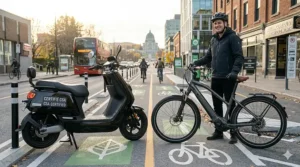
Urban Commuter Moped: Choosing the Right Model for Your Needs
Assessing Your Commute
Measure your actual commuting distance accurately before purchasing. Use Google Maps or similar tools to calculate your door-to-door distance, then add 20% for detours and errands. If your round-trip commute exceeds 30 km, prioritize models with 45+ km range to avoid mid-day charging anxiety.
Elevation changes matter significantly. Flat prairie cities like Regina allow smaller motors to perform adequately, while hilly cities like Vancouver or St. John’s demand 750W or more for comfortable climbing. Test ride if possible, particularly on routes similar to your actual commute.
Storage and Transport Considerations
Canadian apartment dwellers face unique challenges. Can you bring the scooter indoors for charging and security? Models weighing over 35 kg become burdensome for daily stair navigation. Foldable designs help, but verify the folded dimensions fit your elevator and storage space before purchasing.
If you’re combining transit with scootering, weight becomes critical. A 40 kg scooter might work brilliantly for riding but proves impractical for lifting onto bus racks or carrying through subway stations. The lightweight SEHOMY model shines in multi-modal commuting scenarios.
Climate Compatibility
If you live in Vancouver’s mild climate, year-round riding remains feasible with appropriate rain gear. Calgary through Winnipeg’s harsh winters make seasonal storage inevitable. Factor storage costs or space into your decision, and remember that batteries shouldn’t be stored in freezing garages – they need indoor temperature conditions.
Some Canadian riders purchase two scooters: a premium model for fair-weather commuting and a budget option willing to risk in sketchy parking situations or inclement weather. This strategy makes sense if your usage patterns justify the investment.
FAQ: Common Questions About Moped Style Electric Scooters
❓ How fast can moped style electric scooters legally go in Canada?
❓ What is the price range for moped style electric scooters in Canada?
❓ Do I need a license to ride a moped style electric scooter in Canada?
❓ Can moped style electric scooters handle Canadian winter conditions?
❓ What maintenance do electric moped scooters require in Canada?
Conclusion: Making Your Electric Moped Scooter Decision
Choosing the right moped style electric scooter for Canadian conditions involves balancing performance, budget, and regulatory compliance. The seven models reviewed represent genuinely available options on Amazon.ca, each excelling in different scenarios. The SAY YEAH delivers balanced performance for most urban commuters, while the SEHOMY proves you can enter electric mobility affordably.
For Canadian buyers prioritizing long-term value, investing in the $1,400-$1,600 range typically delivers the best balance of quality components, adequate range, and reliable cold-weather performance. Skimping on battery capacity or motor power often leads to disappointment once the novelty wears off and reality sets in.
The regulatory landscape continues evolving across Canada. What’s prohibited in Toronto today might be embraced tomorrow as municipalities observe successful implementations in cities like Ottawa and Montreal. Stay informed about local rules, advocate for sensible regulations that balance safety with mobility innovation, and always ride responsibly to preserve public goodwill toward these transformative vehicles.
The shift toward sustainable urban transportation isn’t a fleeting trend – it’s a fundamental reimagining of how Canadians navigate cities. Moped style electric scooters occupy a valuable niche: practical enough for daily commuting, affordable enough for average Canadians, and enjoyable enough that riders actually want to use them. Whether you’re cutting commute costs, reducing environmental impact, or simply seeking a better way to navigate urban sprawl, there’s never been a better time to join Canada’s electric mobility revolution.
Remember that your first electric scooter probably won’t be your last. Many riders start with budget models to test their commitment before upgrading to premium options. There’s no shame in starting small – the important step is starting. Your wallet, the environment, and your sanity in rush-hour traffic will thank you.
Recommended for You
- 7 Best Mobility Scooter for Outdoor Use in Canada 2026
- 4-Wheel vs 3-Wheel Mobility Scooter: 7 Key Stability Differences 2026
- 7 Best Heavy Duty Mobility Scooter 500 lbs Canada 2026
Disclaimer: This article contains affiliate links to Amazon.ca. If you purchase products through these links, we may earn a small commission at no additional cost to you.
✨ Found this helpful? Share it with your friends! 💬🤗
