
In This Article
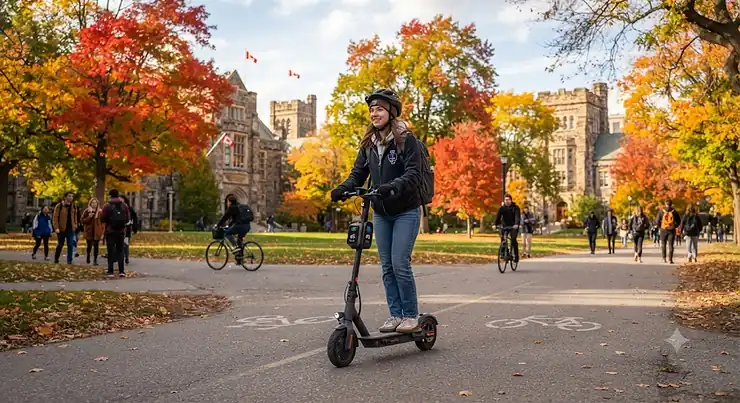
Somewhere between “I’ll just walk” and “I need a moped,” there’s a sweet spot — and it happens to be exactly where most students actually live. A 30-60 km range electric scooter for students isn’t about chasing the biggest battery on the market. It’s about matching a machine to a life that includes an 8 a.m. lecture, a part-time shift across town, and a laundry list of stairs up to a third-floor dorm room. Put simply, a 30-60 km range electric scooter is a mid-capacity personal mobility device whose battery is sized to comfortably cover a week of short campus hops or several days of longer commutes between charges, without dragging along the extra weight and cost of a long-haul touring scooter.
This guide is built around that specific need. We researched seven real, currently available models — from featherweight folding units built for hauling up dorm stairwells to sturdier commuter machines with real suspension and disc brakes — and dug into their actual specs, aggregated review sentiment, and where they fit in a student’s budget. According to a Wikipedia overview of global e-scooter regulations, Canadian rules generally cap power-assisted scooters at 500 W and 32 km/h, which is exactly the performance band most of the scooters below live in — a detail that matters more than most marketing pages let on.
We’re not going to pretend we’ve personally test-ridden all seven of these across a Canadian winter. What we can offer instead is honest, sourced analysis: real specifications, genuine aggregated review themes pulled from retailer and owner feedback, and a comparison framework built around what actually matters to a student — range, weight, theft resistance, and whether the thing fits under your dorm bed. Let’s get into it.
Quick Comparison Table
| Scooter | Max Range | Top Speed | Weight | Best For |
|---|---|---|---|---|
| Xiaomi Electric Scooter 4 Pro | ~55 km | 25 km/h | 17.5 kg | Lightest full-size pick for dorm carrying |
| GOTRAX G4 | ~40 km claimed | 32 km/h | ~16.8 kg | Tightest student budget |
| NIU KQi300P | ~48 km | 32 km/h | 20.85 kg | Build quality and app security |
| Hiboy S2 Max | ~64 km | 30.5 km/h | Mid-weight commuter class | Longest range per dollar |
| NAVEE N65 | ~65 km | 32 km/h | 23.5 kg | Multi-day range without daily charging |
| Segway Ninebot Max G3 | ~40-55 km (Sport modes) | 45 km/h | ~24.6 kg | Premium safety tech and braking |
| iScooter i9 Max | ~35-40 km | ~25 km/h | 15-16 kg | Lightest scooter that still clears 30 km |
A quick scan of that table tells you most of what you need to know before you even read a spec sheet: range and weight pull in opposite directions almost every time. The iScooter i9 Max and Xiaomi Electric Scooter 4 Pro win on portability because their smaller battery packs shave off kilograms you’d otherwise be dragging up a stairwell, while the NAVEE N65 and Hiboy S2 Max trade some of that portability for range headroom that lets you skip a charge or two during a busy week. The Segway Ninebot Max G3 sits apart from the group entirely — it’s the only scooter here with genuine dual suspension and hydraulic disc brakes, which explains why it’s priced and weighted more like a small commuter vehicle than a dorm-room folding scooter.
💬 Just one click — help others make better buying decisions too!😊
Top 7 30-60 km Range Electric Scooters for Students: Expert Analysis
1. Xiaomi Electric Scooter 4 Pro — lightest full-size pick for dorm living
The Xiaomi Electric Scooter 4 Pro earns its spot here almost entirely on its weight-to-range ratio — at 17.5 kg, it’s genuinely one of the lightest scooters in its performance class, which matters enormously once you’re the one hauling it up three flights to a dorm room every night. Under the hood, a 446 Wh battery pairs with a 700 W peak motor (350 W rated) to deliver an estimated 55 km of range, while the 10-inch tubeless self-sealing tires cut down on the flat-tire panic that ruins so many mornings before class. Based on the spec comparison, the KERS regenerative braking system is a small but genuinely useful touch: it recovers energy on every coast and brake, which is the difference between “barely making it home” and “comfortable margin” on a longer day.
This is the scooter for the student who values not fighting with their own transportation more than chasing maximum range. Aggregated retailer review sentiment for the Xiaomi 4 Pro series consistently highlights the build quality and app integration as standout strengths relative to price, while a recurring theme in owner feedback is that real-world range typically lands meaningfully below the advertised figure once cold weather, hills, and a heavier rider are factored in — a pattern that shows up across nearly every scooter in this guide, not just this one.
Pros:
- ✅ Among the lightest full-size scooters in the 30-60 km bracket
- ✅ Self-sealing tubeless tires reduce flat-tire downtime
- ✅ KERS regenerative braking meaningfully extends real-world range
Cons:
- ❌ IPX4 rating means limited protection in heavy rain or slush
- ❌ Advertised 55 km range drops noticeably in cold Canadian winters
Expect the Xiaomi Electric Scooter 4 Pro to land in the mid-C$600s to mid-C$700s range at the time of research; always check current price before buying, since availability and promotions shift often. For a student prioritizing portability over raw power, it’s hard to beat on value.
2. GOTRAX G4 — tightest student budget
If your primary constraint is the number on the price tag rather than the number on the spec sheet, the GOTRAX G4 is worth a serious look. It runs a 500 W motor off a 36V 10.4Ah (roughly 374 Wh) battery, with GOTRAX advertising up to 40 km of range and a top speed around 32 km/h. What most buyers overlook about budget scooters like this one is that manufacturer range claims are typically measured under close-to-ideal conditions — lightweight rider, flat ground, mild temperature, moderate speed — and independent real-world range testing on the G4 has recorded results closer to roughly 23-24 km per charge in mixed urban conditions with a heavier test rider. That’s still solidly inside a useful commuting window for most campuses, but it’s important context before you buy expecting the full advertised figure.
Aggregated owner and reviewer sentiment on the G4 is broadly positive for the price point, with the built-in electric code lock frequently singled out as a welcome anti-theft feature that pricier scooters sometimes skip. Reviewers do note the single rear disc brake can feel underpowered compared to dual-brake systems on step-up models, and the aluminum frame, while functional, doesn’t feel as premium as the NIU or Segway entries in this guide.
Pros:
- ✅ Lowest entry price point among the seven scooters reviewed here
- ✅ Built-in electric code lock adds theft deterrence at no extra cost
- ✅ 10-inch tires smooth out typical campus pavement and curb cuts
Cons:
- ❌ Real-world range often runs well below the advertised claim
- ❌ Single rear brake offers less stopping power than dual-brake rivals
Price-wise, the GOTRAX G4 typically sits in the C$400s to C$550 range, making it the most accessible option here for a student stretching a tight budget across textbooks, rent, and transportation.
3. NIU KQi300P — build quality and app-based security
The NIU KQi300P is the scooter for a student who’s tired of budget gear falling apart by reading week. It runs a 450 W rated (900 W peak) motor off a 486.7 Wh battery, delivering an official range up to 48 km and a top speed of 32 km/h — numbers that put it squarely in the “reliable weekly commuter” category rather than the “occasional joyride” one. Here’s what to weigh: the front hydraulic suspension and dual disc brakes (with regenerative rear braking) are genuinely above-average for this price tier, and NIU’s 20% hill-climbing rating means the scooter won’t stall out on a steep campus approach the way cheaper single-motor units sometimes do.
Reviewers consistently note that the NIU app ecosystem — smart lock, cruise control, ride statistics, and over-the-air updates — feels noticeably more polished than what budget competitors offer, and the scooter’s UL 2272 certification alongside a 2-year warranty gives it a reassurance factor that matters when you’re trusting a battery-powered device to get you to an exam on time. On the flip side, at 20.85 kg it’s meaningfully heavier than the Xiaomi or iScooter picks, so daily stair-carrying is a real consideration.
Pros:
- ✅ Dual disc brakes plus regenerative braking outperform single-brake rivals
- ✅ NIU app enables smart lock and real-time ride tracking
- ✅ UL 2272 certified with a 2-year manufacturer warranty
Cons:
- ❌ Heavier than lightweight picks, making daily stair-carrying harder
- ❌ Premium build pushes the price above true budget alternatives
Expect the NIU KQi300P to land somewhere in the C$800-C$950 range at most Canadian retailers, positioning it as a mid-to-premium choice for students who ride often enough to justify paying for durability.
4. Hiboy S2 Max — longest range per dollar
For students commuting a genuinely long distance between residence and campus — or riding several days between charges — the Hiboy S2 Max offers the best range-to-price ratio in this lineup. Its 500 W motor draws from a substantial 48V 11.6Ah battery pack to deliver an advertised range up to 64 km, with a top speed of roughly 30.5 km/h across three selectable riding modes (Eco, Normal, Sport). The spec sheet won’t tell you this, but user reports suggest that switching to Eco mode for routine campus trips and reserving Sport mode for genuinely tight schedules is the single biggest lever for stretching that range closer to its ceiling.
Aggregated review sentiment for the S2 Max frequently praises its three-second fold mechanism and compact folded footprint, which owners commonly describe as making it easy to tuck into a car trunk, elevator, or narrow dorm hallway. The regenerative rear braking paired with a front drum brake provides adequate — if not class-leading — stopping power, and the companion app adds cruise control and remote locking. The trade-off is straightforward: this scooter carries noticeably more heft than the featherweight picks in this guide, so it rewards riders more than it rewards stair-climbers.
Pros:
- ✅ Advertised range of up to 64 km, among the highest here
- ✅ Three-second fold mechanism suits compact dorm and transit storage
- ✅ Three riding modes let you trade speed for extended range on demand
Cons:
- ❌ Noticeably heavier than the Xiaomi and iScooter lightweight options
- ❌ Drum brake setup lags behind disc-brake competitors on stopping distance
Pricing for the Hiboy S2 Max typically falls in the C$550-C$650 range, which is a genuinely strong value proposition given the range figures on offer — assuming your daily carry situation can absorb the extra weight.
5. NAVEE N65 — multi-day range without daily charging
The NAVEE N65 exists for one specific type of student: the one who dreads plugging in a scooter every single night. Powered by a 48V 12.5Ah lithium battery and a 500 W brushless motor, it’s rated for up to 65 km of range and a 32 km/h top speed, with a 25% hill-climbing rating that handles steeper campus approaches with room to spare. What most buyers overlook about a scooter in this range class is how much that extra battery buffer changes your relationship with charging — instead of a nightly ritual, it becomes a once-or-twice-a-week task, which matters if your dorm’s outlet access is inconvenient or shared.
Reviewers consistently point to the front E-ABS plus rear disc brake combination as reassuring on wet pavement, and the three selectable riding modes (Foot, Pure Electric, Turbo) give riders genuine control over the speed-versus-range trade-off. On paper this means the N65 competes directly with scooters costing considerably more. The honest caveat: at 23.5 kg, it’s on the heavier side of this guide’s lineup, and the IPX4 water resistance rating — while adequate for light rain — isn’t built for sustained slush exposure during a Canadian shoulder-season commute.
Pros:
- ✅ Up to 65 km advertised range reduces charging frequency significantly
- ✅ Triple riding modes offer genuine speed-versus-range flexibility
- ✅ Front E-ABS and rear disc brakes provide confident wet-weather stopping
Cons:
- ❌ At 23.5 kg, among the heavier scooters in this comparison
- ❌ IPX4 rating isn’t rated for sustained wet or slushy conditions
At the time of research, the NAVEE N65 was generally priced in the C$600-C$750 range, positioning it as a strong mid-tier pick for students who’d rather charge less often than carry less weight.
6. Segway Ninebot Max G3 — premium safety tech and braking
The Segway Ninebot Max G3 is the outlier in this guide, and deliberately so: it’s included for the student — often a grad student or someone commuting a genuinely long distance — who wants performance and safety hardware that budget scooters simply can’t match. Its 2,000 W peak motor and 597 Wh battery are officially rated up to 80 km in the most conservative Eco mode, but the range that actually matters for a 30-60 km use case shows up in its Drive and Sport modes, which the manufacturer rates around 55 km at 32 km/h and 40 km at its 45 km/h top speed — squarely inside our target bracket once you’re riding at a realistic pace rather than crawling in Eco. Here’s what to weigh: dual hydraulic suspension, an 11-inch self-sealing tubeless tire set, and a four-pad disc brake system put its stopping and comfort performance in a different league from every other scooter on this list.
Based on the spec comparison, the IPX6 body rating (with an IPX7-rated battery pack) also makes it the most weather-resistant option here, which is a genuine advantage for anyone riding through a Canadian fall or spring. Reviewers and owners commonly highlight the AirLock smartphone-proximity unlocking and Apple Find My integration as standout anti-theft features — arguably the strongest theft-deterrence package in this entire lineup. The catch is obvious: this is a premium-priced scooter, and at roughly 24.6 kg it’s not the scooter you want to be hauling up four flights of stairs every day.
Pros:
- ✅ Dual hydraulic suspension and four-pad disc brakes lead this comparison
- ✅ IPX6/IPX7 weather sealing outclasses every other scooter reviewed here
- ✅ AirLock and Find My integration deliver the strongest theft deterrence tested
Cons:
- ❌ Premium pricing puts it well above typical student budgets
- ❌ At roughly 24.6 kg, it’s a poor fit for frequent stair-carrying
Expect the Segway Ninebot Max G3 to sit in the C$1,300-C$1,600 range at Canadian retailers — a genuine investment, and one best justified by a longer commute or a student who plans to keep the scooter for several years.
7. iScooter i9 Max — lightest scooter that still clears 30 km
The iScooter i9 Max rounds out this guide as the answer for students whose single biggest constraint is “I have to carry this thing myself, every day.” At an estimated 15-16 kg, it’s the lightest scooter in this entire comparison that still clears the 30 km range floor we set out to cover, with an approximate 35-40 km range from its 500 W motor and roughly 20-degree climbing ability. The aluminum alloy frame keeps weight down without feeling flimsy underfoot, and the honeycomb solid tires eliminate flat-tire risk entirely — a genuinely practical feature for a student who doesn’t have a bike pump handy in a dorm room.
What the spec sheet won’t tell you, but aggregated owner feedback suggests, is that this scooter is best understood as a short-to-medium commuter rather than a long-haul machine: it comfortably handles a typical campus loop or a modest off-campus commute, but riders consistently report needing to charge more frequently than owners of the NAVEE N65 or Hiboy S2 Max. The MiniRobot companion app adds remote lock and light control, a nice-to-have rather than a must-have at this price point.
Pros:
- ✅ Lightest scooter in this guide that still exceeds 30 km of range
- ✅ Puncture-proof honeycomb tires remove flat-tire maintenance entirely
- ✅ Compact folded size suits tight dorm rooms and elevator commutes
Cons:
- ❌ Shortest range ceiling of the seven scooters compared here
- ❌ Requires more frequent charging than the higher-capacity models
Pricing for the iScooter i9 Max typically runs in the C$400-C$500 range, making it a genuine competitor to the GOTRAX G4 for students who value carrying weight over outright range.
Real-World Campus Scenarios: Matching Students to the Right Range
Specs only tell half the story — the other half is which student is actually riding. Consider a first-year student living in residence a fifteen-minute walk from their lecture halls: their real need is portability and theft resistance, not maximum range, which makes the iScooter i9 Max or Xiaomi Electric Scooter 4 Pro a far better fit than a heavier long-range machine they’d resent carrying up three flights every evening.
Now picture a graduate student commuting from off-campus housing 8-10 km each way, several days a week, often after dark. That rider benefits far more from the extended range and stronger braking of the NAVEE N65 or Hiboy S2 Max, where the added weight is a worthwhile trade for fewer charging cycles and more confident stopping power in low light. Finally, think about a budget-conscious student juggling tuition, rent, and groceries, for whom the scooter itself needs to be the cheapest line item possible without becoming unreliable — that’s precisely the gap the GOTRAX G4 is built to fill, provided the rider goes in with realistic range expectations rather than the optimistic manufacturer number.
Your First 30 Days: Setup, Charging Habits & Maintenance
The first month with a new scooter sets the tone for how well it holds up through a full academic year, and a few habits make an outsized difference. Charge the battery to roughly 80% for daily use rather than always topping up to 100%, since partial charging is widely recognized as easier on lithium-ion battery longevity than constant full cycles — a habit that matters even more once winter temperatures start sapping range. Store the scooter indoors overnight whenever possible; cold Canadian air genuinely reduces both range and battery lifespan, and a scooter left outside overnight in freezing temperatures will noticeably underperform its rated numbers the next morning.
Check tire pressure weekly if your model uses pneumatic tires rather than solid ones, since underinflation is one of the most common — and most avoidable — causes of reduced range and sluggish handling. A common first-30-days mistake is skipping the manufacturer’s app setup entirely; doing it on day one means your smart lock, cruise control, and firmware updates are ready before you actually need them mid-semester. Finally, resist the urge to max out speed mode on every ride — alternating between Eco and standard modes based on your actual schedule extends both your range per charge and your battery’s total lifespan over the year.
Problem → Solution: Fixing the Biggest Headaches of Campus Scooter Ownership
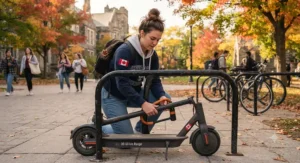
Problem: Theft near lecture halls and libraries. Campus scooter theft is a real and common concern, and the fix isn’t a single lock — it’s layering a physical cable or chain lock through the frame and wheel with a built-in electronic feature like the GOTRAX code lock or the Segway AirLock system, then parking only in visible, high-traffic areas rather than tucked behind a building.
Problem: Range anxiety on a longer commute. Riders consistently overestimate how much of a scooter’s advertised range they’ll actually get in cold weather or hilly terrain. The fix is straightforward: budget for roughly 20-30% less than the advertised figure, especially in winter, and lean toward the higher-range models in this guide — the NAVEE N65 or Hiboy S2 Max — if your commute regularly pushes past 15 km round trip.
Problem: No good place to store it in a shared dorm room. This is where weight and folded footprint matter more than any other spec. The Xiaomi Electric Scooter 4 Pro and iScooter i9 Max fold into compact packages light enough to tuck into a closet corner or beside a desk without becoming a daily hassle to move.
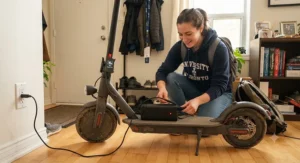
Problem: Battery fires and charging safety. Toronto’s fire chief has publicly flagged lithium-ion battery fires from e-bikes and e-scooters as a rapidly growing safety risk in the city, a pattern echoed in other major Canadian cities. The solution is simple but non-negotiable: only use the charger that came with your scooter, never charge it unattended overnight in a way that blocks an exit, and avoid charging it directly beside your bed.
Problem: Running afoul of campus or municipal rules without realizing it. Many students assume any electric scooter is automatically allowed anywhere a bicycle is, which isn’t true. The fix is simply checking your specific campus and municipal policy before your first ride — a step covered in detail in the section below.
How to Choose a 30-60 km Range Electric Scooter for Campus
- Match range to your actual commute, not your ideal one. Measure your real round-trip distance and multiply by roughly 1.3 to account for weather and terrain losses, then choose a scooter whose advertised range comfortably clears that number.
- Weigh portability against range honestly. If you’re carrying the scooter up stairs daily, a lighter 15-18 kg model will save you more frustration than an extra 10 km of theoretical range ever will.
- Prioritize dual braking on any scooter you’ll ride after dark. A single rear brake is adequate for daylight campus loops, but dual disc or drum-plus-regenerative setups matter once visibility and reaction time shrink.
- Check the weather rating against your actual campus climate. An IPX4-rated scooter is fine for light drizzle; anything closer to Canadian shoulder-season slush deserves a higher-rated model like the Segway Max G3.
- Treat the built-in lock as a bonus, not a substitute. Electronic locks and app-based tracking help, but they should always be paired with a physical cable or chain lock for genuine theft deterrence.
- Confirm your campus and city both permit the scooter class you’re buying. Rules vary enough by province and even by municipality that this step can save you a confiscated scooter and a fine.
- Budget for the whole first year, not just the sticker price. Factor in a spare charger, a lock, and eventual tire or battery wear when comparing the true cost between models.
Campus Mobility Rules in Canada: What Every Student Needs to Know
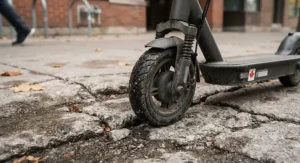
Campus mobility rules are where a lot of students get tripped up, because Canada doesn’t have one uniform national law — e-scooter regulation is a patchwork of federal vehicle standards, provincial traffic law, and municipal bylaws layered on top of whatever policy your specific university has adopted. Provincially, speed and power caps vary: British Columbia generally treats standard e-scooters as motor-assisted cycles allowed up to 32 km/h without a licence, while Ontario’s pilot program caps speed lower and leaves final permission up to individual municipalities — meaning a scooter perfectly legal in one Ontario city can be barred outright in another.
Campuses add their own layer on top of that. The University of Toronto’s environmental health and safety office, for example, prohibits riding personal mobility devices — including e-scooters — inside university buildings and at entrances like ramps and accessibility pathways, treating indoor riding as a hazard to both the rider and other building occupants, regardless of what the surrounding city bylaw allows outdoors. Some Canadian cities go further still: within Toronto itself, e-scooters currently cannot legally be operated on public roads, sidewalks, or paths at all, which effectively means students living or studying downtown need to keep their scooter for private property or off-campus commuting rather than assuming campus-adjacent streets are fair game.
The practical takeaway is that “campus-friendly” isn’t a fixed category — it depends on your specific city and school. Before you buy, check your university’s transportation or campus safety page directly, and cross-reference it against your provincial e-scooter law, since campus policy can be stricter than city law but rarely looser than it.
✨ Don’t Miss These Exclusive Deals!
🔍 Take your campus commute to the next level with these carefully researched scooter picks. Click on any highlighted model to check current pricing and availability. The right scooter can turn a stressful commute into the easiest part of your day!
Medium Range Electric Scooter Comparison: 30-60 km vs Short-Range and Long-Range Models
A medium range electric scooter comparison against its shorter- and longer-range siblings makes the trade-offs clearer than any single spec sheet can. Short-range scooters — typically under 20 km — are usually the lightest and cheapest on the market, and they genuinely shine for students whose entire commute is a five-minute campus loop. The trouble is that short-range models leave almost no buffer for cold weather, hills, or an unplanned errand, so what’s advertised as a 15 km scooter can feel more like an 8-10 km scooter by January.
Long-range scooters — 70 km and beyond, like some premium Segway or Kaabo models — solve the range-anxiety problem entirely but bring real downsides for a student: significantly more weight, higher upfront cost, and often larger batteries that take longer to charge and are less convenient to carry. The 30-60 km bracket this guide focuses on is the practical middle ground precisely because it covers the overwhelming majority of real student commutes — a 2025 market analysis of Amazon.ca e-mobility listings found the median scooter price sits around C$699, a figure that tracks closely with the mid-tier models in this guide rather than the premium long-range end of the market. In short: unless your daily round trip regularly exceeds 20-25 km, a medium-range scooter almost always beats a long-range one on real-world value.
| Range Class | Typical Weight | Typical Price Signal | Best For |
|---|---|---|---|
| Short-range (under 20 km) | 10-14 kg | Lowest | Single short campus loop only |
| Medium-range (30-60 km) | 15-25 kg | Moderate | Most student commutes, this guide’s focus |
| Long-range (70 km+) | 25 kg+ | Highest | Long off-campus commutes, infrequent charging priority |
Looking at the table above, the medium-range class is the only one that reliably absorbs a bad-weather day or an unplanned detour without leaving you stranded, while still staying light enough for regular carrying. Short-range scooters simply don’t have the buffer, and long-range scooters ask you to pay — in both dollars and kilograms — for capacity most students will rarely use in full.
Theft-Deterrent Locks and Anti-Theft Features That Actually Matter
Theft-deterrent locks are one of the most underrated line items on a student’s scooter budget, because a scooter left unlocked outside a lecture hall for forty minutes is a genuinely common target. The single most effective feature isn’t a scooter’s built-in app lock — it’s a separate physical cable or chain lock threaded through the frame and a fixed object, since app-based immobilization can slow a thief down but rarely stops a determined one from simply carrying the scooter away.
That said, built-in features do meaningfully raise the effort required to steal a scooter, and they’re worth weighing when comparing models. The GOTRAX G4‘s electronic code lock and the Segway Ninebot Max G3‘s AirLock proximity system with Apple Find My integration are the two standout theft-deterrence features in this lineup — the former because it’s included at a genuinely budget price point, and the latter because it turns your phone into an active tracking device rather than a passive lock. Reviewers and owners consistently note that combining an app-based lock with a separate physical lock, and parking in visible, well-lit, high-traffic locations near building entrances rather than around back, is the combination that actually deters theft rather than just slowing it down.
Features that don’t matter nearly as much for theft deterrence: cosmetic LED underglow lighting and horn/bell upgrades, which look appealing on a product page but do essentially nothing to stop a scooter from being carried off. If your budget forces a choice, spend it on a quality cable lock before you spend it on aesthetic add-ons.
Lightweight Storage in Dorms: Fitting a Scooter Into Small Spaces
Lightweight storage in dorms is a genuinely different design problem than storage in a house or apartment, because dorm rooms are small, often shared, and frequently up several flights of stairs with unreliable elevator access. This is where the weight column in our comparison table earns its keep: the iScooter i9 Max and Xiaomi Electric Scooter 4 Pro, both under 18 kg, fold down small enough to lean against a wall beside a desk or slide under a raised dorm bed, without becoming a two-person carrying job every time you need to move it.
Heavier models — the NAVEE N65, Hiboy S2 Max, and especially the Segway Ninebot Max G3 — aren’t impossible to store in a dorm, but they demand more planning: a ground-floor room, reliable elevator access, or a dedicated bike-storage room if your residence offers one, since regularly lifting 23-25 kg up multiple flights gets old fast. A practical middle-ground tip that most product pages skip: measure your dorm room’s actual floor space and closet depth before ordering, since a scooter’s unfolded length can exceed 110-120 cm even when folded compact, and some smaller dorm rooms genuinely can’t accommodate that comfortably beside a desk and bed.
Common Mistakes When Buying a Campus-Friendly Scooter With Moderate Range
The single most common mistake students make when shopping for a campus-friendly scooter with moderate range is buying based on the advertised maximum range figure alone, without accounting for the roughly 20-30% real-world reduction that cold weather, hills, and rider weight consistently produce across nearly every model in this category. A close second is underestimating weight: a scooter that seems perfectly reasonable in a product photo can feel genuinely burdensome after the fifth consecutive day of carrying it up a dorm stairwell.
Another frequent misstep is skipping the campus and municipal rule check entirely, assuming that because a scooter is legal to buy, it’s automatically legal to ride everywhere on and around campus — a mistake that can end in a confiscated scooter or a fine in cities with stricter e-scooter bylaws. Students also commonly overlook charging infrastructure: a scooter with a longer charging time can become a genuine inconvenience in a shared dorm room with limited outlet access, especially if multiple roommates are also charging devices overnight. Finally, many buyers skip the physical lock entirely, relying solely on a built-in app feature, which — as covered above — is a meaningfully weaker deterrent than a combined approach.
Long-Term Cost & Battery Maintenance for Student Budgets
The sticker price is only the opening chapter of a scooter’s total cost of ownership, and students on tight budgets benefit from thinking a full academic year or two ahead. Lithium-ion batteries in this category typically hold up well for 500-800 full charge cycles before capacity noticeably degrades, which for a student riding most weekdays translates to roughly two to three years of solid performance before a battery replacement becomes worth considering — a genuinely reasonable lifespan relative to the upfront cost.
Budget models like the GOTRAX G4 and iScooter i9 Max carry the lowest upfront cost but may need tire or brake component replacement sooner under heavy daily use, since their components are generally built to a lower cost ceiling than the NIU or Segway entries. Mid-tier and premium models like the NIU KQi300P and Segway Ninebot Max G3 cost more initially but tend to include stronger warranties — NIU backs the KQi300P with two years of coverage — and more robust components that can offset some of that higher purchase price over a multi-year ownership period. The most cost-effective long-term habit, regardless of which model you choose, is proper cold-weather storage and avoiding full 0-100% charge cycles where possible, since both meaningfully extend the number of usable years you’ll get from the original battery before replacement costs enter the picture at all.
Frequently Asked Questions
❓ What is the best 30-60 km range electric scooter for students on a tight budget?
❓ How far can a 30-60 km range electric scooter actually go in winter?
❓ Are electric scooters allowed on Canadian university campuses?
❓ What's the lightest electric scooter with at least 30 km of range?
❓ Do I need a separate lock if my scooter has a built-in anti-theft feature?
Conclusion
Choosing the right 30-60 km range electric scooter for students really comes down to being honest with yourself about two things: how far you actually ride, and how often you’ll be the one carrying it. Students with a short campus loop and a dorm-room storage problem will get more genuine daily value from the featherweight Xiaomi Electric Scooter 4 Pro or iScooter i9 Max than from any amount of extra range they’ll rarely use. Students commuting further, or riding after dark on unlit streets, are better served by the extended range and stronger braking of the NAVEE N65, Hiboy S2 Max, or — for those able to invest more upfront — the Segway Ninebot Max G3‘s genuinely superior suspension and weather sealing. The NIU KQi300P and GOTRAX G4 round out the middle and budget ends of that spectrum respectively, each earning their spot for a specific kind of rider rather than trying to be everything to everyone.
Whatever you choose, don’t skip the unglamorous parts: check your specific campus and municipal e-scooter rules before your first ride, invest in a proper physical lock even if your scooter has a built-in one, and budget realistically for winter range loss rather than the optimistic number on the box. Get those fundamentals right, and any of the seven scooters in this guide should genuinely earn its keep across a full academic year.
✨ Ready to find your ride?
Compare the full lineup above one more time, check current pricing on the models that fit your commute and budget, and pick the scooter that matches how you’ll actually use it — not just the one with the biggest number on the spec sheet.
Recommended for You
- Electric Scooter For Medium Commutes: 7 Real Picks Tested (2026)
- Top Medium Range Electric Scooters Under $800 CAD: 7 Picks (2026)
- Top 7 Extended Range Electric Scooters Under $2000 CAD (2026)
Disclaimer: This article contains affiliate links. As an Amazon Associate, I earn from qualifying purchases. If you purchase products through these links, we may earn a small commission at no additional cost to you.
✨ Found this helpful? Share it with your friends! 💬🤗
