
In This Article
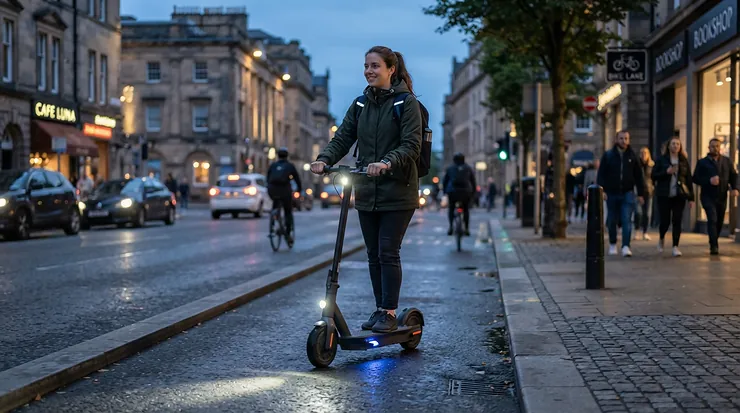
A speed limited electric scooter is an e-scooter whose top speed is capped by hardware, firmware, or a companion app, usually somewhere between 10 and 25 km/h, so a new, young, or cautious rider can’t outrun their own skills. The best ones add gentle acceleration, tiered riding modes, and parental controls on top of that ceiling.
Speed is the one dial on an e-scooter that you can’t take back mid-wobble. Physics is blunt about it: crash energy climbs with the square of speed, so a scooter capped at 16 km/h carries roughly 60% less energy than one doing 25 km/h. That is why a speed limited electric scooter is the sensible entry ticket for beginners, nervous adults, and families. It is also why the category now includes parental speed controls, app-based speed settings, and safety-focused riding modes that would have sounded like science fiction a few years ago.
Before we get to the shopping, here are two honest caveats. First, in most of Canada the legal riding age is 16. Ontario’s pilot, for example, requires riders to be at least 16 and helmeted if under 18, and municipalities decide where e-scooters may go at all. Second, the Canadian Paediatric Society advises against e-scooter use by children under 16. So the kid-oriented models below are best viewed as supervised, private-property tools, while the teen and adult models are for legal public riding where your municipality allows it.
One more note on method. I haven’t ridden any of these scooters. Everything here comes from manufacturer specs, Canadian retailer listings, independent spec databases, and published customer feedback, interpreted as honestly as I can. Prices appear as ranges, and for anything I couldn’t verify, I say so. If you’re hunting for a speed limited electric scooter under $500 CAD, this is your map.
Quick Comparison: 7 Speed Limited Electric Scooters at a Glance
| Scooter | Top Speed | How Speed Is Limited | Price Range (CAD) | Best For |
|---|---|---|---|---|
| Segway Ninebot eKickScooter C2 Lite | 16 km/h | 3 modes + app speed cap | Around C$250–C$300 | First-time young riders |
| Segway Ninebot eKickScooter C2 | 16 km/h | 3 modes + app speed cap | Around C$300 | Growing kids, all-rounder |
| Segway Ninebot eKickScooter C2 Pro | 20 km/h | 3 modes + app-set maximum | C$400–C$450 range | Tall kids and younger teens |
| NAVEE K100 Pro | ~16 km/h | App limits + E/D/S modes | Mid-C$300s to low-C$400s | Data-minded parents |
| NAVEE K100 Max | ~16–20 km/h (varies by region) | App limits + modes | C$450–C$550 range | Longer rides, Apple households |
| Hiboy S2 Lite | ~21 km/h | Two dashboard modes (~14 and ~21 km/h) | C$350–C$500 range | Light teens and adults |
| Segway Ninebot E2 Plus II | 25 km/h | 4-step mode ladder + app | Around C$400 on promotion | Legal-age commuters |
The table splits into three camps. The Segway Ninebot eKickScooter C2 Lite and C2 are the gentlest, with 16 km/h ceilings and app caps. The NAVEE K100 Pro and K100 Max lean on app-based speed settings and ride tracking. At the other end, the Hiboy S2 Lite and Segway Ninebot E2 Plus II serve older riders who need more pace but still want a ceiling. Notice that only some models give a parent real remote control, which is the difference between a speed limit and a suggestion.
💬 Just one click — help others make better buying decisions too!😊
Top 7 Speed Limited Electric Scooters: Expert Analysis
Each pick below gets the same treatment: what the specs mean in practice, who the scooter suits, what aggregated reviews say, and a value verdict. Check current price and availability on Amazon.ca before you buy, since stock and promotions move quickly.
1. Segway Ninebot eKickScooter C2 Lite — gentlest cap for first-timers
The Segway Ninebot eKickScooter C2 Lite is built around restraint, with a 16 km/h ceiling and deliberately softened acceleration.
On paper you get a brushless motor of roughly 120–130 W (listings differ), 7-inch solid tires, a mechanical drum brake, and a weight of about 7.8 kg (17.2 lb). In practice, solid tires mean no flats, the drum brake keeps a small hand’s squeeze progressive rather than grabby, and the light frame is easy to carry. Three riding modes switch with a double-click of the power button, and parents can set the maximum speed through the Segway-Ninebot app, which is the parental speed controls feature at its simplest.
Based on the spec comparison, this is the model for the smallest, most hesitant riders on a quiet driveway or path. I couldn’t find enough verified buyer text specifically for the Lite, so treat this as spec-driven analysis. Reviews for its sibling, the C2, praise the easy-to-read battery indicator and the kid-pleasing lights, and those features are shared here.
Pros:
- ✅ App-adjustable maximum speed for parents
- ✅ Puncture-proof solid tires, nothing to inflate
- ✅ Light enough for easy trunk loading
Cons:
- ❌ Older or taller kids outgrow it quickly
- ❌ Claimed range around 14 km is modest
Retailer pricing for the C2 family clusters near C$300, and the Lite usually sits at or below that. Check current price; for a true beginner it’s a sound value.
2. Segway Ninebot eKickScooter C2 — best all-rounder with three modes
If the Segway Ninebot eKickScooter C2 were a pair of shoes, it would be the sensible ones that still look cool.
It tops out at 16 km/h with a claimed range up to 11 km, and its three modes (Standard, Sport, and Power-Assisting) do more than rename the same speed. Power-assist mode lends a push at launch, which matters because the hardest moment for a beginner is the wobble in the first two metres. The adjustable handlebar covers roughly 120–160 cm riders, and the scooter weighs about 10.4 kg, so it’s meaningfully heavier than the Lite. Plan on carrying it with two hands.
Here’s what to weigh: the Segway Ninebot eKickScooter C2 spends your money on adaptability, not speed. Reviewers on a major Canadian retailer’s page describe it as great for kids, singling out the clear battery indicator and the lights children enjoy. One review prompted a response from Segway’s support team, so check recent feedback before buying.
Pros:
- ✅ Power-assist mode eases the wobbly launch
- ✅ Adjustable handlebar extends useful life
- ✅ App-based speed settings available to parents
Cons:
- ❌ Noticeably heavier than the C2 Lite
- ❌ 16 km/h may bore taller kids
Expect a price of around C$300 (check current price). That’s fair value if your child is mid-range in age and size.
3. Segway Ninebot eKickScooter C2 Pro — grows with kids up to 170 cm
The Segway Ninebot eKickScooter C2 Pro is the one to buy if you’re tired of shopping for scooters every eighteen months.
A 150 W motor pushes it to 20 km/h, and the stem adjusts to three heights (885, 960, and 1035 mm), covering riders roughly 115–170 cm. Segway rates the range at about 15 km, the weight is 10.7 kg, and the rated payload is 60 kg. Practically, 20 km/h is a lot of speed for a child, so the headline feature is that parents can set the maximum speed through the Segway-Ninebot app. You buy 20 km/h of headroom, then keep the leash short until skills catch up.
Reviewers describe a smooth ride and good looks, with the recurring note that it’s a little heavy and a little pricey. Aggregated review summaries also mention durability after months of regular use and a beginner-friendly cruise mode.
Pros:
- ✅ Handlebar adjusts across three heights
- ✅ Parent-set maximum speed through the app
- ✅ RGB lights and Bluetooth speaker kids love
Cons:
- ❌ Priciest of the C2 family
- ❌ Rated for only about 5% slopes
Plan on a C$400–C$450 range. The value verdict: worth it only if the long runway of growth matters to you.
4. NAVEE K100 Pro — gamified safe riding with ride history
The NAVEE K100 Pro has a clever hook: kids raise a virtual pet that thrives on safe riding, while parents get the dashboard.
Its 130 W motor (160 W peak) delivers about 15.9 km/h on a 9 kg frame, with 7-inch solid tires and a drum brake. Through the NAVEE app, parents can adjust speed limits (the European listing shows steps of 6, 12, and 16 km/h) and view ride history. Riding modes are E (power assist), D (steady cruise), and S (sport), and a kick-to-start launch blocks sudden take-offs. Those are exactly the safety-focused riding modes a cautious parent wants. The maximum rider load is about 50 kg (110 lb), so this one is for smaller kids.
An independent test from ERideHero confirmed the top speed but reported regular-riding range closer to 7 km than the claimed 14 km. That’s a useful reality check for school-run planning. Buyer-review volume for Canadian listings is thin, so I can’t summarize it with confidence.
Pros:
- ✅ App speed limits with ride history
- ✅ Kick-to-start prevents sudden launches
- ✅ Light 9 kg frame, easy to fold
Cons:
- ❌ Real-world range reported well under claims
- ❌ 50 kg load limit shortens its lifespan
Converted from U.S. launch pricing, expect the mid-C$300s to low-C$400s, so verify the current price. It’s good value for small riders, less so for growing ones.
5. NAVEE K100 Max — longest range plus Apple Find My
The NAVEE K100 Max doubles the battery and adds the thing every parent of a scooter-forgetting kid wants: Apple Find My support.
It carries a 150 W motor and a 110 Wh battery, twice the K100 Pro’s capacity. Range claims vary by listing (about 18 km in the global launch; up to 24 km at 12 km/h on the European page), but the practical takeaway is simple: it’s the pick for longer weekend rides rather than a loop around the block. A Bluetooth speaker and the same app-based speed settings round it out. One catch: the global launch lists a top speed near 20 km/h, while the European page lists 16 km/h as the maximum. Confirm the Canadian spec before ordering.
I couldn’t verify enough Canadian buyer reviews to summarize honestly. Based on the spec sheet, the extra capacity is the real upgrade, since bigger batteries mean fewer mid-ride dead scooters and fewer tired-kid carries.
Pros:
- ✅ Double the battery of the Pro model
- ✅ Find My helps locate a misplaced scooter
- ✅ App speed control plus ride tracking
Cons:
- ❌ Price creeps toward or past C$500
- ❌ Find My only helps Apple-device households
Expect roughly C$450–C$550, so it may not qualify as a speed limited electric scooter under $500 CAD. Check current price.
6. Hiboy S2 Lite — roomy for light teens and adults
The Hiboy S2 Lite is the odd one out: sturdier, faster, and honest about being a teen-and-adult scooter.
A 250 W rear hub motor and a 36V 5Ah (180 Wh) battery give it a claimed 17 km range. Two modes cap speed at roughly 14.5 km/h (Drive) and 21 km/h (Sport), switched with a button on the dashboard. It carries up to about 82 kg (180 lb), rolls on 6.5-inch solid tires, and adds rear rubber suspension, cruise control, and a kickstand. The manufacturer lists an electronic brake plus a rear foot brake.
Here’s what the spec sheet won’t tell you: an independent database lists no app connectivity for this model. That means the speed limit is only as strong as whoever’s thumb is nearest the button, so there are no remote parental speed controls here. Buyers on the manufacturer’s site note that the low maximum speed suits younger riders, while one owner of a sibling model called the Hiboy app glitchy.
Pros:
- ✅ Handles heavier riders up to about 82 kg
- ✅ Rear suspension and cruise control included
- ✅ Sport mode stays under Ontario’s 24 km/h cap
Cons:
- ❌ No app-based speed lock for parents
- ❌ Solid tires are harsher on broken pavement
Expect C$350–C$500 depending on promotions, which makes it a decent speed limited electric scooter under $500 CAD for adults and mature teens.
7. Segway Ninebot E2 Plus II — four-step mode ladder for legal-age riders
The Segway Ninebot E2 Plus II is the grown-up on this list, with a speed limiting system built like a staircase.
According to a European retailer’s listing for the E2 Plus line, the modes step through Walk (5 km/h), Eco (15), Standard (20), and Sport (25). That ladder is the point: a new rider can live in Eco for weeks. It has a 500 W maximum output, 8.1-inch inner hollow tires, an electronic front brake with a rear drum, a 2.8-inch dashboard, Bluetooth app support, and AirLock. Segway’s Canadian launch release says the II adds front suspension. Whether the app can cap top speed independently varies by model, so confirm in the app.
Legality matters here: 25 km/h exceeds Ontario’s 24 km/h definition, so Ontario riders should stay in Standard or below. Reviewers on a New Zealand retailer’s page describe setup via the app as easy and the value as strong compared with other Segway models.
Pros:
- ✅ Four distinct, easy-to-understand speed tiers
- ✅ Front suspension and 8.1-inch tires
- ✅ App and AirLock add control and anti-theft
Cons:
- ❌ Top mode exceeds Ontario’s 24 km/h cap
- ❌ Promotional pricing comes and goes
Launch promotions put it around C$400, while list price sits in the C$600 neighbourhood. Check current price, because the deal window decides whether it qualifies as a speed limited electric scooter under $500 CAD.
Setting Up Parental Speed Controls and App-Based Speed Settings: Your First 30 Days
Most people spend an hour choosing a scooter and about four minutes configuring it. Flip that ratio. Here’s a practical rollout that Amazon listings won’t give you.
Day 0: charge before riding. Use only the supplied charger, and charge in a clear spot, never a hallway or doorway. Pair the scooter with its app (Segway-Ninebot or NAVEE) over Bluetooth while it charges, and install any firmware updates.
Day 1: set the cap lower than feels necessary. On a NAVEE K100 model, that means starting at the lowest tier (6 km/h) and graduating to 12. On a Segway C2-series scooter, pick the gentlest mode and set a conservative maximum in the app. Parental speed controls only work if the account is yours: keep the login private and use a lock feature where available.
Week 1: parking lot only. Practise starts, stops, and wide turns on an empty surface. Teach braking before acceleration. A kick-to-start design helps because the child must push off first.
Weeks 2–3: raise the cap one step at a time. Move up only after clean, calm stops.
Week 4: inspection. Check the brake feel, the stem clamp, and the tire condition. Look for loose bolts after a few weeks of vibration.
Common first-30-day mistakes include raising the cap after a good ride rather than after a good month, riding in rain on models rated only IPX4, and charging overnight. Helmets go on every time, and the Canadian Paediatric Society’s guidance is that bicycle helmets are the correct type.
Real-World Scenarios: Matching a Speed Limited Electric Scooter to Your Life
Three profiles show how the analysis plays out.
Scenario 1: the cautious family with an 8-year-old. The setting is a quiet cul-de-sac and a private yard, with rides two or three times a week. The budget tops out around C$350. Based on the specs, the Segway Ninebot eKickScooter C2 Lite or C2 fits, since both cap at 16 km/h and offer app-based speed settings. A parent should supervise every ride and insist on a helmet, bearing in mind the Canadian Paediatric Society’s under-16 caution.
Scenario 2: a 16-year-old commuting 3 km to school in Ottawa. Ottawa opted into Ontario’s pilot with a stricter local cap of 20 km/h, so a scooter with a firm Standard mode is ideal. The Segway Ninebot E2 Plus II in Standard (20 km/h) matches the limit and keeps Sport in reserve. The budget is about C$400–C$600, with daily riding in mild weather.
Scenario 3: an adult first-timer with a 12 km round trip. A condo dweller wants a speed limited electric scooter under $500 CAD for dry-weather errands. The Hiboy S2 Lite fits the budget, caps at 21 km/h in Sport, and carries up to about 82 kg. Because it lacks remote app controls, the rider owns the discipline.
Buyer’s Decision Framework: If This, Choose That
Think of this as a short decision tree. Start with the rider, not the scooter.
- If the rider is under 10 and will ride only on private property, choose the Segway Ninebot eKickScooter C2 Lite, because the lowest ceiling and app cap matter most.
- If you want ride history and a reward system for safe riding, choose the NAVEE K100 Pro, because the app turns monitoring into a habit.
- If the rider is 9–14 and growing fast, choose the Segway Ninebot eKickScooter C2 Pro, because the handlebar and capped speed buy years of use.
- If you need range and location tracking in an Apple household, choose the NAVEE K100 Max.
- If the rider is 16 or older and weighs more than the kids’ models allow, choose the Hiboy S2 Lite or Segway Ninebot E2 Plus II.
- If your budget is firm at C$500, favour the Segway Ninebot eKickScooter C2, the Hiboy S2 Lite, or the NAVEE K100 Pro, and treat the K100 Max and E2 Plus II as promotion-dependent.
When two options tie, pick the one with remote control over speed. A limit you can change from your own phone beats a button on someone else’s handlebar.
How to Choose a Speed Limited Electric Scooter
What is the best way to choose a speed limited electric scooter? Match the speed ceiling to the rider’s age, confirm the limit is enforceable, check the weight and braking, and confirm local legality. Here are seven steps, each with the reasoning behind it:
- Confirm the rider’s legal and medical footing. Most provinces set 16 as the minimum age, and the Canadian Paediatric Society advises against use under 16. Start there.
- Pick the lowest top speed that still feels fun. For beginners, 16 km/h is plenty; 20–25 km/h belongs to experienced riders.
- Prefer limits you control remotely. Parental speed controls beat dashboard-only modes.
- Check the modes. Safety-focused riding modes should include a gentle start, a steady cruise, and a clear separation from sport.
- Check the load limit and fit. The NAVEE K100 Pro’s roughly 50 kg limit would exclude many kids who are growing fast.
- Inspect the brakes. A drum brake plus an electronic brake is a sensible pairing.
- Look for certification. UL 2272 is the standard Health Canada and Transport Canada reference for e-mobility devices.
Features That Actually Matter (And Those That Don’t)
Matter: a hard speed cap, soft acceleration, kick-to-start, brakes you can operate with small hands, solid or hollow tires for fewer flats, and visible lights. These are the features that prevent the situations parents fear.
Mostly don’t matter: RGB underglow, built-in Bluetooth speakers, and virtual pets. They’re fun, and they may keep kids engaged with the app, but they don’t change crash odds. The NAVEE pet mechanic is the one gimmick with a safety logic, since it rewards safe riding.
Quietly matter: IPX ratings. Most models here are IPX4, meaning splash resistant, which is not the same as rain-ready. Canadian puddles and slush deserve respect. Range matters less than it seems, too. A short real-world range keeps rides short, which is not always a bad thing for a new rider.
Finally, app-based speed settings deserve a sceptical eye. An app is only a safety feature if it is stable, secure, and used. One buyer called the Hiboy app glitchy, and I couldn’t verify app reliability across the board, so test the app in the store’s return window.
Safety, Regulations and Age Rules for Riding in Canada
The legal map is a patchwork, so check your own municipality before you buy.
Ontario’s pilot runs until November 27, 2029, and limits e-scooters to 24 km/h, with age and helmet rules set out by the province. The province’s regulation also requires a horn or bell plus front and rear lights, and violations carry fines of $250 to $2,500. British Columbia’s pilot runs to April 2028 with a 16+ rule; Vancouver sets a 25 km/h cap and requires helmets. Ottawa’s local limit is 20 km/h.
The health data is sobering. The Canadian Paediatric Surveillance Program reported that 10 children died in e-bike and e-scooter incidents in 2025, and the reporting noted that almost 80% of cases involved children under 16, below the age minimum in most provinces. A speed cap helps, but it doesn’t replace judgment, supervision, or a helmet.
So treat any speed limited electric scooter as a tool for supervised riding, not permission for independence. Sidewalk riding is banned in most places with e-scooter rules, so plan routes around bike lanes and quiet streets, and never ride impaired.
Speed Limited Electric Scooter vs Non-Electric Kick Scooter
| Factor | Speed Limited Electric Scooter | Non-Electric Kick Scooter | Best For |
|---|---|---|---|
| Typical top speed | 16–25 km/h | Rider-powered, usually well below | Electric: longer trips; Kick: beginners |
| Crash energy | Higher, even when capped | Lower | Kick: youngest riders |
| Effort | Motor assists | Full leg power | Electric: hills and distance |
| Battery fire risk | Present | None | Kick: apartment storage |
| Cost | Roughly C$250–C$600 | Far lower | Kick: tight budgets |
The table makes the trade-off plain. A non-electric scooter wins on safety, cost, and simplicity, which is exactly why the Canadian Paediatric Society calls non-motorized scooters the safer choice for children. The electric version wins on range and on convenience, especially for teens and adults covering real distance. If your rider is under 16, honestly consider whether a traditional scooter will deliver the same joy. If you do go electric, a speed limited electric scooter is the best version of that decision.
Price Range and Value Analysis: Speed Limited Electric Scooter Under $500 CAD
| Tier | Models | Typical Range (CAD) | Value Verdict | Best For |
|---|---|---|---|---|
| Entry | Segway Ninebot eKickScooter C2 Lite, Segway Ninebot eKickScooter C2 | C$250–C$330 | Strong for beginners | Young first-timers |
| Mid | NAVEE K100 Pro, Hiboy S2 Lite | C$350–C$500 | Good if you use the features | Data-minded parents; adults |
| Upper | Segway Ninebot eKickScooter C2 Pro, NAVEE K100 Max, Segway Ninebot E2 Plus II | C$400–C$600 | Worth it only with growth or range needs | Growing riders; commuters |
Several picks straddle the line, which is why the phrase “speed limited electric scooter under $500 CAD” is a moving target. Promotions on the Segway Ninebot E2 Plus II briefly pull it under the threshold, while the NAVEE K100 Max can drift above it. The smartest value play is the Segway Ninebot eKickScooter C2: its price sits near C$300, and its three modes and app caps cover the entire beginner window. Spend more only if growth or range genuinely matters, and never assume a link gets you a better price.
Common Mistakes When Buying a Speed Limited Electric Scooter
Mistake 1: trusting “speed limited” as a guarantee. A limit controlled by a dashboard button, as on the Hiboy S2 Lite, is a preference, not a barrier.
Mistake 2: buying for the child they’ll be, not the child they are. A scooter that’s too fast on day one invites trouble, and the Segway Ninebot eKickScooter C2 Pro only makes sense if you actually keep the cap low.
Mistake 3: ignoring weight limits. The roughly 50 kg limit on the NAVEE K100 Pro is a real constraint for growing kids.
Mistake 4: assuming legality. Municipal rules differ, and a scooter capable of 25 km/h may exceed Ontario’s 24 km/h definition.
Mistake 5: skipping the helmet budget. Add a properly fitted bicycle helmet to your total, because it matters more than any feature.
Mistake 6: sharing the app login. If a child can open your parental speed controls, they aren’t controls.
Long-Term Cost and Maintenance: What Ownership Really Looks Like
Upfront price is only the opening bid. Solid and hollow tires remove puncture repair, which is a genuine long-term saver on the Segway C2 series, the NAVEE K100 models, and the Hiboy S2 Lite. The costs that remain are the battery, the brakes, and your time.
Batteries age, and cold weather shortens range. Segway lists the Segway Ninebot eKickScooter C2 Pro‘s operating temperature as roughly -10 to 40°C, so a Canadian winter is outside its comfort zone. Store the scooter indoors at room temperature, and let a cold battery warm up before charging.
Battery safety deserves respect. Health Canada advises using only the original battery, stopping charging once full, and choosing devices compliant with ANSI/CAN/UL 2272. Modifying a battery to chase speed defeats the entire purpose of a speed limited electric scooter.
A simple annual plan: tighten the stem and axle bolts monthly, check brake feel before each ride, wipe the scooter dry after wet rides, and recycle old lithium-ion batteries at a proper depot rather than the trash. Over two or three seasons, a C$300 scooter that you maintain will outlast a C$450 one that you don’t.
Frequently Asked Questions
❓ Is a speed limited electric scooter legal for a 14-year-old in Canada?
❓ Can a child bypass parental speed controls on an e-scooter?
❓ How does cold weather affect a speed limited electric scooter?
❓ What helmet should I buy for a speed limited electric scooter?
❓ Is it safe to modify a speed limited electric scooter to go faster?
Conclusion: The Right Cap Beats the Right Colour
Strip away the RGB lights and the marketing, and a good speed limited electric scooter comes down to one idea: control. For young or nervous riders, the Segway Ninebot eKickScooter C2 Lite and C2 offer the gentlest ceilings with real app-based speed settings. If you want ride tracking and a motivational twist, the NAVEE K100 Pro is the data-friendly choice, while the NAVEE K100 Max adds range. Taller kids will grow into the Segway Ninebot eKickScooter C2 Pro, and legal-age riders on a budget should look hard at the Hiboy S2 Lite or the Segway Ninebot E2 Plus II, remembering that one lacks parental controls and the other peaks above Ontario’s limit.
Whatever you choose, remember that the safest scooter is the one paired with a helmet, supervision, and honest respect for the rules. Keep the cap low, raise it slowly, and let skills, not enthusiasm, set the speed.
✨ Ready to compare?
🔍 Click any highlighted scooter above to check current pricing and availability on Amazon.ca, and pick the speed limited electric scooter that fits your family. 🛴
Recommended for You
- High Speed Electric Scooter Comparison: 7 Honest Picks 2026
- 40 km/h Electric Scooters Under $2000 CAD: 7 Best Picks (2026)
- High Speed Electric Scooter For Experienced Riders: 7 Best Picks 2026
Disclaimer: This article contains affiliate links. As an Amazon Associate, I earn from qualifying purchases. If you purchase products through these links, we may earn a small commission at no additional cost to you.
✨ Found this helpful? Share it with your friends! 💬🤗
