
In This Article
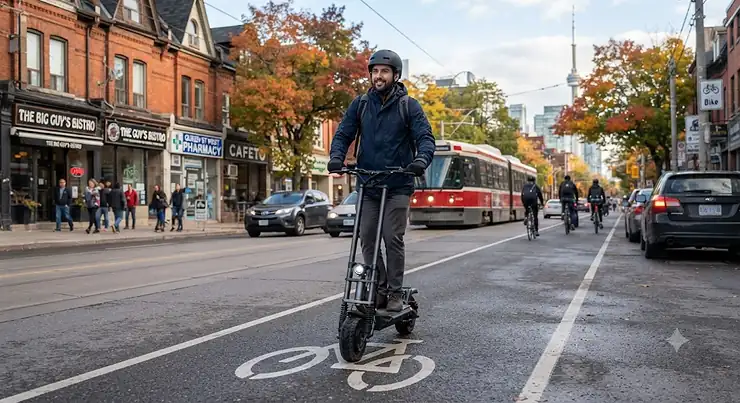
A 40 km/h electric scooter is a personal electric vehicle built around dual or high-torque motors capable of sustaining highway-adjacent speeds, typically paired with hydraulic or dual-disc braking systems designed to handle that extra momentum safely. If you’ve been shopping around for one, you’ve probably noticed something odd pretty fast: the fastest listings on Amazon.ca rarely agree with each other on units, mixing 40, 45, and 58 km/h claims into the same product title like it’s a garage sale.
That’s not an accident. Once a scooter crosses into “genuinely quick” territory, brands start leaning on peak numbers instead of the number you’ll actually see on your commute. A 40 km/h electric scooter sits right at that inflection point — fast enough to outrun most e-bikes on a flat stretch, but only manageable with the right motor configuration and brakes underneath you.
We spent time cross-referencing manufacturer spec sheets, independent teardown reviews, and aggregated owner feedback to sort out which models actually deliver on speed without cutting corners on stopping power. Whether you’re commuting across a Canadian city, tackling gravel trails on the weekend, or just tired of scooters that wheeze past 25 km/h, this guide walks through seven real machines worth your attention — budget, mid-range, and genuinely flagship.
One quick note before we dive in: nearly every province caps legal road speeds well under 40 km/h, so a chunk of this guide is really about understanding where and how these machines fit into your life, not just which one wins a drag race.
Quick Comparison: 40 km/h Electric Scooters at a Glance
| Model | Top Speed | Motor Setup | Braking | Price Range (CAD) |
|---|---|---|---|---|
| GOTRAX GX-Zero Dual Motor | 45 km/h | Dual 1000W | Front/rear disc | C$1,050–C$1,300 |
| Apollo Go | 45 km/h | Dual motor | Mechanical disc + regen | C$1,000–C$1,200 |
| GOTRAX GX1 | 48 km/h | 1200W single | Front/rear disc | C$1,450–C$1,600 |
| Kaabo Mantis 10 Lite Plus | ~50 km/h | Dual 500W x2 | Dual mechanical disc + regen | C$1,500–C$2,300 |
| Hiboy Titan Pro | ~50 km/h | Dual BOSCH, 2400W peak | Dual hydraulic | C$1,900–C$2,800 |
| Varla Eagle One | ~64 km/h | Dual 1000W hub | Dual hydraulic + ABS | C$2,200–C$2,600 |
| Segway Ninebot GT2 | 70 km/h | Dual 1500W AWD | Dual hydraulic + E-ABS | C$5,200–C$5,800 |
Looking at the spread above, there’s a clear split between “quick commuter” and “genuine performance machine,” and the gap isn’t subtle. The GOTRAX GX-Zero Dual Motor and Apollo Go both land close to true 40-45 km/h territory without asking you to spend flagship money, which makes them the sensible entry point for most Canadian riders. Once you climb into the Varla Eagle One and Segway Ninebot GT2, you’re paying for suspension travel, braking redundancy, and battery capacity that a casual rider genuinely doesn’t need — but that a serious daily commuter or off-road enthusiast will notice immediately.
💬 Just one click — help others make better buying decisions too!😊
Top 7 40 km/h Electric Scooters: Expert Analysis
1. GOTRAX GX-Zero Dual Motor — best budget dual-motor pick
What makes the GX-Zero interesting isn’t the top-line number, it’s that GOTRAX managed to squeeze genuine dual-motor traction into a price bracket usually reserved for underpowered single-motor commuters. The dual 1000W motor pairing pushes it to a claimed 45 km/h with a 35 km range, and it carries a 264 lb max payload, which is respectable for a scooter in this tier. In practice, dual motors at this price point usually mean better traction off the line and steadier climbing on inclines than a single-motor unit twice its wattage rating would suggest — the power is simply split more evenly across both wheels.
Based on the spec sheet, this is a scooter built for someone who wants to feel the difference dual motors make without committing to Kaabo or Segway money. It’s a reasonable pick for a confident commuter who mostly rides flat urban routes but occasionally needs a bit more push up a bridge ramp or driveway incline.
Independent, verifiable owner review data specifically for the GX-Zero is still thin since it’s a newer addition to the GOTRAX Canada lineup, so we’d rather say that plainly than invent sentiment that isn’t there yet. What we can say with confidence is that GOTRAX’s broader catalogue has a long track record of UL-adjacent battery safety compliance and responsive Canadian customer support through their own storefront.
Pros:
- ✅ Genuine dual-motor traction well under C$1,300
- ✅ 264 lb payload capacity is generous for the price tier
- ✅ Sold directly through a Canadian retailer with local support
Cons:
- ❌ Independent long-term review data is still limited
- ❌ Suspension and tire specs are lighter than pricier dual-motor rivals
At around C$1,050 to C$1,300, the GX-Zero represents strong value if your priority is dual-motor traction on a budget rather than outright top speed.
2. Apollo Go — best Canadian-built value pick
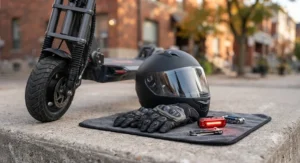
Apollo Scooters is one of the few personal electric vehicle brands actually headquartered in Canada, and that matters more than it sounds like on paper — warranty claims, replacement parts, and support tickets don’t have to cross a border. The Go is Apollo’s current entry-level dual-motor model, rated for up to 58 km of range and a 45 km/h top speed, and it comes backed by what the company describes as a frame warranty that never expires.
What most buyers overlook about entry-level dual-motor scooters like the Go is that the second motor isn’t primarily about raw speed, it’s about load distribution. Splitting torque across both wheels reduces strain on any single motor, which in theory extends component life compared to a single motor working twice as hard to hit a similar speed ceiling. That’s a meaningful difference if you’re using this as a genuine daily commuter rather than an occasional weekend toy.
Apollo has built a reputation over several product generations for scooters that punch above their price bracket on acceleration and stability, and the Go continues that pattern at a notably lower price than the brand’s higher-end Ghost and Phantom lines. Because this is a newer addition to Apollo’s lineup, broadly aggregated third-party review data specific to the Go is still building, so treat range and speed claims as manufacturer figures until independent long-term tests catch up.
Pros:
- ✅ Canadian company means simpler warranty and support logistics
- ✅ Frame warranty with no expiration date is unusual in this category
- ✅ 58 km claimed range is strong for a sub-C$1,200 dual-motor scooter
Cons:
- ❌ Fewer aftermarket parts and accessories than global mega-brands
- ❌ Independent long-term durability data is still limited on this specific model
Priced around C$1,000 to C$1,200, the Go is arguably the easiest recommendation in this whole list for a Canadian buyer who wants local accountability alongside dual-motor performance.
3. GOTRAX GX1 — best high-torque single motor for the price
The GX1 takes a different approach than the dual-motor scooters on this list: one 1200W motor instead of two smaller ones, chasing a claimed 48 km/h top speed with a 40 km range and a solid 330 lb max payload. On paper, a single high-torque motor can actually out-accelerate an underpowered dual-motor setup in a straight line, since all available current is funnelled through one drivetrain rather than split.
Here’s what the spec sheet won’t tell you outright: single-motor scooters typically handle wet pavement and moderate inclines less confidently than true dual-motor units, because there’s no second point of traction if the drive wheel starts to slip. That’s a real trade-off, not a dealbreaker — plenty of riders in flatter Canadian cities like Winnipeg or Regina will never notice the difference, while someone navigating Vancouver’s hillier neighbourhoods might.
The GX1 sits in GOTRAX’s Canadian catalogue as one of their “High-Performance” branded models, positioned above the GX-Zero on power but below true dual-motor flagship pricing. As with the GX-Zero, independently sourced, aggregated owner reviews specific to this newer GX1 model are still limited, so we’re relying primarily on manufacturer specifications here rather than claiming verified field data that doesn’t yet exist in volume.
Pros:
- ✅ 1200W single motor delivers strong torque for the price
- ✅ 330 lb payload capacity beats most scooters in this bracket
- ✅ 48 km/h claimed top speed nearly matches pricier dual-motor rivals
Cons:
- ❌ Single motor means less traction redundancy on hills or wet roads
- ❌ Long-term independent review data is still building for this model
Expect to pay somewhere in the C$1,450 to C$1,600 range, positioning the GX1 as a genuine middle ground between GOTRAX’s budget lineup and true dual-motor performance scooters.
4. Kaabo Mantis 10 Lite Plus — best all-round dual-motor commuter
Kaabo built its reputation on performance scooters, and the Mantis 10 Lite Plus is the brand’s answer to riders who want dual-motor flexibility without committing to their heavier Wolf Warrior lineup. Two 500W motors combine for a claimed 31 mph (roughly 50 km/h) top speed with a 37-mile range, and critically, you can toggle between single-motor efficiency mode for city riding and dual-motor mode for climbing — Kaabo rates it for 25-degree inclines in dual mode.
What most buyers overlook about switchable motor modes is how much this actually extends your usable range. Running single-motor mode on flat commutes conserves battery, while dual-motor mode is there specifically for the moments you actually need it — a steep driveway, a headwind, extra cargo weight. That’s smarter engineering than simply running both motors constantly regardless of terrain.
Reviewers consistently note that the Mantis line’s UL-certified 48V 13Ah battery and dual mechanical disc brakes with regenerative braking hold up well under real-world use, and independent testers at eRideHero have logged detailed specs confirming the 2200W peak power output across both motors. A common thread in aggregated owner feedback is that the 62 lb weight, while heavier than commuter-class scooters, still folds down reasonably well for car trunk storage.
Pros:
- ✅ Switchable single/dual motor modes extend real-world range
- ✅ UL-certified 48V battery with documented safety testing
- ✅ Dual mechanical disc brakes plus regenerative braking
Cons:
- ❌ At 62 lbs, it’s heavier than most budget commuter scooters
- ❌ Mechanical disc brakes trail hydraulic systems on stopping distance
Pricing for the Mantis 10 Lite Plus typically runs C$1,500 to C$2,300 depending on retailer promotions, putting it squarely in the mid-range performance category.
5. Hiboy Titan Pro — best off-road dual-motor build
The Titan Pro is Hiboy’s flagship, and it’s a genuinely different animal from the brand’s commuter-focused S-series scooters. The 2026 version offers an optional dual BOSCH in-hub motor configuration delivering up to 2400W combined peak power, pushing top speed to roughly 31 mph (around 50 km/h) while climbing up to 35% grades — a Red Dot Award winner for its industrial design, for what that’s worth to buyers who care about build quality signalling.
Based on the spec comparison against other scooters in this list, what stands out about the Titan Pro is its claimed 80-mile range on the flagship configuration, which is dramatically higher than most dual-motor competitors offer at a similar price. That range figure comes from a large 48V 36Ah battery pack, and while manufacturer range claims always deserve a skeptical eye, the raw battery capacity here genuinely dwarfs entry-level dual-motor scooters like the GX-Zero or Apollo Go.
The dual hydraulic brake system is a meaningful upgrade over the mechanical disc setups found on cheaper scooters in this guide — hydraulic systems require less maintenance adjustment over time and generally deliver more consistent stopping power in wet Canadian winters. Aggregated owner sentiment around Hiboy’s broader product line points to strong build quality and responsive customer support, though the Titan Pro’s dual-motor variant is priced meaningfully above its single-motor sibling.
Pros:
- ✅ Dual hydraulic brakes offer stronger, more consistent stopping power
- ✅ Claimed 80-mile range dwarfs most dual-motor competitors
- ✅ Red Dot Award-winning build with reinforced 6061 aluminum frame
Cons:
- ❌ Heavier off-road-focused build isn’t ideal for daily carrying or stairs
- ❌ Dual BOSCH motor version costs significantly more than the base model
The Titan Pro dual-motor configuration typically lands between C$1,900 and C$2,800, positioning it as a serious step up for riders who want off-road capability alongside speed.
6. Varla Eagle One — best long-range off-road performer
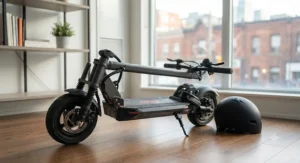
Varla built the Eagle One specifically around the idea that off-road capability and genuine speed don’t need to be separate categories. Dual 1000W hub motors provide 36 Nm of torque each, feeding a peak combined output of 3200W that pushes the Eagle One to a manufacturer-claimed 40 mph (around 64 km/h), while a 52V 18.2Ah battery is rated for up to 40 miles of range.
The high-torque dual motor setup here is genuinely purpose-built for hill climbing — Varla rates the Eagle One for 30-plus degree inclines, well beyond what most commuter scooters attempt. What that spec means in practice is the Eagle One handles grass, gravel, and moderate off-road terrain without the motor bogging down, something that’s simply not possible with the smaller single motors found on entry-level scooters in this guide.
Independent reviewers at outlets like The Gadgeteer and GoNomad have logged real-world top speeds in the 33-37 mph range depending on rider weight, which tracks reasonably close to Varla’s claimed figures once you account for normal real-world variance. A recurring theme in aggregated owner feedback across Varla’s own product pages and third-party reviews is that the dual hydraulic brakes with ABS inspire genuine confidence at speed, though the nearly 90 lb weight is consistently flagged as a portability drawback.
Pros:
- ✅ High-torque dual motors rated for 30-degree-plus hill climbs
- ✅ Dual hydraulic brakes with ABS for confident high-speed stopping
- ✅ Extensive real-world reviews confirm claimed performance figures
Cons:
- ❌ At nearly 90 lbs, it’s one of the heaviest scooters in this guide
- ❌ Single-charger charging time runs 8-9 hours
Expect to pay in the C$2,200 to C$2,600 range for the Eagle One, making it a premium off-road-focused investment rather than an everyday commuter grab.
7. Segway Ninebot GT2 — best flagship performance scooter
If the Eagle One is about off-road torque, the Segway Ninebot GT2 is about raw engineering ambition. This is Segway’s SuperScooter flagship: dual 1500W motors (3000W nominal, 6000W peak) delivering all-wheel drive, an 88 Nm peak torque figure per hub, and a genuinely startling claimed top speed of 70 km/h, backed by a massive 1512Wh battery rated for up to 90 km of range.
What the spec sheet doesn’t fully convey is how much engineering goes into making a scooter this fast actually rideable. Segway built in Segway Dynamic Traction Control specifically to manage power delivery on gravel or wet roads at high speed, alongside adjustable hydraulic front and rear suspension and dual hydraulic disc brakes paired with an electronic anti-lock braking system. The 0-48 km/h acceleration time of 3.9 seconds is genuinely close to entry-level motorcycle territory, which is exactly why the traction control and braking hardware matter so much here.
Based on the spec comparison against every other scooter in this guide, the GT2 isn’t really competing on value, it’s competing on capability ceiling. The transparent PMOLED display and Boost Mode feature are the kind of details aimed squarely at enthusiasts who want the absolute top of the category, not commuters looking for the most efficient dollar-per-kilometre ratio.
Pros:
- ✅ Class-leading 70 km/h top speed with true AWD dual motors
- ✅ Dynamic Traction Control system built for high-speed stability
- ✅ Dual hydraulic brakes plus E-ABS for serious stopping power
Cons:
- ❌ Price puts it well outside casual commuter budgets
- ❌ At roughly 53 kg, it’s the heaviest and least portable scooter here
Pricing typically sits between C$5,200 and C$5,800, reflecting genuine flagship positioning rather than incremental upgrades over cheaper dual-motor scooters.
Your First 30 Days: Setup, Break-In, and Maintenance for a High-Speed Scooter
Getting a high-speed scooter set up right matters more than with a slow commuter model, because mistakes compound faster when you’re moving quicker. Start by charging the battery fully before your first ride, even if it arrives with partial charge — most manufacturers recommend this to properly calibrate the battery management system from day one.
For the first week, resist the urge to hit top speed immediately. Riding in eco or single-motor mode lets you learn the scooter’s throttle response and braking feel at lower stakes, which matters enormously on dual-motor units like the Kaabo Mantis 10 Lite Plus or Varla Eagle One where full power delivery can genuinely surprise an unprepared rider. Check tire pressure weekly if you’ve got pneumatic tires, since underinflation is one of the most common causes of reduced range and sluggish acceleration that owners mistake for battery degradation.
A common first-30-days mistake is neglecting brake bedding on hydraulic systems — new pads need a short break-in period to reach full stopping performance, so budget extra stopping distance during week one. Wipe down exposed metal components after wet rides to prevent corrosion, particularly important given Canadian road salt exposure in winter months, and inspect fold-hinge bolts monthly since vibration from higher speeds loosens hardware faster than on slower scooters.
Real-World Scenarios: Who Actually Needs 40 km/h?
Picture a downtown Toronto commuter riding four kilometres to a subway station on mostly flat, paved routes. For this rider, something like the GOTRAX GX-Zero Dual Motor or Apollo Go makes more sense than the flagship options here — the extra top speed rarely gets used on short urban hops, and the lower weight makes carrying the scooter onto transit far more practical.
Now consider a suburban rider in Calgary or Edmonton commuting fifteen kilometres partly on private property and rural roads with real hills. This is where the Varla Eagle One or Hiboy Titan Pro earns its price tag — the high-torque dual motors handle inclines that would bog down entry-level scooters, and the longer range covers the extra distance without a mid-commute charge.
Finally, picture an enthusiast rider who treats their scooter as a genuine hobby vehicle, riding for recreation on private trails and closed courses rather than daily commuting. The Segway Ninebot GT2 is built for exactly this person — someone who values the engineering ceiling itself, and who understands that a 70 km/h top speed has no practical application on public Canadian roads under current provincial pilot rules.
The Decision Framework: Which Scooter Fits Your Ride?
If your commute is short, flat, and mostly urban, choose a dual-motor budget scooter like the GX-Zero or Apollo Go because you’ll rarely need more than 45 km/h and portability matters more than range. If your route includes real hills or gravel, choose a high-torque dual-motor scooter like the Titan Pro or Eagle One because single motors struggle with sustained climbing at speed. If you’re buying primarily for recreational riding on private property rather than commuting, choose the highest-capability option your budget allows, since legal road restrictions won’t limit how you actually use it. And if budget is your primary constraint, choose a high-torque single motor option like the GX1 over an underpowered dual-motor scooter, because raw torque from one strong motor often outperforms two weak ones.
✨ Don’t Miss These Exclusive Deals!
🔍 Take your search for the right ride to the next level with these carefully selected scooters. Click on any highlighted item to check current pricing and availability. These picks will help you find genuine speed and safety your commute will actually benefit from!
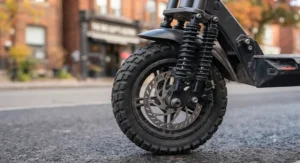
High-Torque Motors: What the Numbers Actually Mean for Your Ride
Wattage numbers on scooter listings are notoriously misleading because manufacturers mix nominal (continuous) and peak (burst) figures interchangeably. High-torque motors matter more for real-world performance than raw wattage alone — torque, measured in Newton-metres, determines how quickly a scooter accelerates from a stop and how well it climbs, while wattage mostly determines sustained top speed capability.
The Varla Eagle One‘s dual 1000W motors, for instance, are rated at 36 Nm of torque each — a figure that explains its genuine off-road hill-climbing ability far better than the wattage number alone would suggest. Compare that to a single 1200W motor like the one in the GOTRAX GX1, which trades torque redundancy for simplicity and lower weight. Neither approach is objectively better; it depends entirely on whether your riding involves sustained climbing or mostly flat terrain.
Dual-Motor Configurations vs Single-Motor: What’s the Real Difference
Dual-motor configurations split power delivery across both wheels, which improves traction, acceleration, and hill-climbing consistency compared to a single motor working alone. The trade-off is weight, cost, and complexity — every scooter on this list with dual motors weighs more and costs more than a comparable single-motor alternative.
| Factor | Dual-Motor Scooters | Single-Motor Scooters |
|---|---|---|
| Traction on hills/wet roads | Stronger, split across both wheels | Weaker, single point of contact |
| Acceleration | Faster with both motors engaged | Adequate but less responsive |
| Weight | Heavier (60-115+ lbs typical) | Lighter (35-45 lbs typical) |
| Price at comparable speed | Higher | Lower |
| Best For | Hills, off-road, heavier riders | Flat urban commutes, portability |
Looking at the comparison above, dual-motor scooters like the Kaabo Mantis 10 Lite Plus clearly win on capability, but the GOTRAX GX1‘s single high-torque motor proves you don’t strictly need two motors to hit respectable speeds on flatter terrain. Riders should weigh their actual commute conditions rather than defaulting to “dual motor is always better,” since the added weight has real downsides for portability and storage.
Advanced Braking Systems: Why Stopping Power Matters More Than Top Speed
Once a scooter can hit 40 km/h or beyond, braking technology stops being a minor spec and becomes the single most important safety consideration on the entire sheet. Advanced braking systems on scooters in this category typically fall into three tiers: mechanical disc brakes (found on the GOTRAX models), dual mechanical disc plus regenerative braking (Kaabo Mantis), and dual hydraulic disc brakes with electronic anti-lock systems (Hiboy Titan Pro, Varla Eagle One, Segway GT2).
Hydraulic systems require significantly less manual adjustment over time and deliver more consistent stopping distances in wet or cold conditions — a genuinely relevant consideration given Canadian winters. The Segway GT2’s addition of E-ABS is particularly notable at its 70 km/h top speed, since anti-lock braking prevents wheel lockup that could otherwise send a rider into an uncontrolled skid at speed.
What Is the Fastest Electric Scooter Available in Canada?
Among the scooters covered in this guide, the Segway Ninebot GT2 holds the fastest claimed top speed at 70 km/h, though it’s worth stressing this figure applies to controlled or private-property conditions rather than any legal Canadian road scenario. For riders searching specifically for the fastest electric scooter available in mainstream retail channels, the GT2 and Varla Eagle One (64 km/h) represent the genuine performance ceiling of what’s readily purchasable rather than imported through grey-market channels.
It’s worth noting that “fastest available” and “legally rideable at that speed” are two entirely different questions in Canada, and conflating them is one of the more common mistakes new buyers make.
How to Choose a 40 km/h Electric Scooter
- Determine your actual commute distance and terrain — flat short commutes need less range and torque than hilly longer ones.
- Check your province’s e-scooter speed regulations first — buying a 70 km/h scooter is pointless if your municipality caps legal use at 24-32 km/h.
- Prioritize braking system quality over top speed — hydraulic brakes with ABS matter more for safety once you’re above 40 km/h.
- Match motor configuration to your terrain — dual motors for hills and off-road, single high-torque motors for flat urban commuting.
- Factor in weight and portability honestly — a 90 lb scooter isn’t realistic if you’re carrying it up apartment stairs daily.
- Verify battery certification — look for UL 2272 or ANSI/CAN/UL 2272 compliance to reduce fire risk.
- Compare warranty and Canadian support options — a Canadian-based brand like Apollo simplifies claims versus importing parts internationally.
Common Mistakes When Buying a High-Speed Electric Scooter
A frequent mistake is buying based purely on top speed without checking whether that speed is even legal to use anywhere nearby — most Canadian provinces cap legal e-scooter speeds well below 40 km/h on public roads, which the province-by-province rules make clear vary considerably by region.
Another common error is underestimating weight until after purchase — a scooter that seemed reasonable on a spec sheet becomes a genuine burden if you’re regularly carrying it up stairs or onto transit. Buyers also frequently skip checking battery certification entirely, prioritizing range claims over safety testing, which matters enormously given the well-documented fire risks tied to uncertified lithium-ion packs. Finally, many first-time buyers assume higher wattage automatically means better performance, when torque and motor configuration often matter more for real-world usability than a bigger number on the box.
Safety, Regulations, and Where You Can Actually Ride in Canada
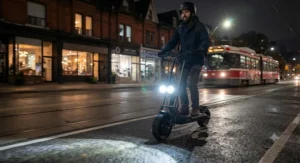
This is genuinely the section that matters most for a 40 km/h electric scooter, because in nearly every Canadian province, riding one at its full speed on a public road is currently illegal. Ontario’s five-year e-scooter pilot project caps legal operating speed at 24 km/h on participating municipal roads, while British Columbia’s pilot program limits riders to 25 km/h, and Nova Scotia sets its ceiling at 32 km/h. Quebec’s pilot similarly restricts e-scooters to 25 km/h on roads with posted limits of 50 km/h or less.
Newfoundland and Labrador stands out as an exception, classifying e-scooters as mopeds and permitting speeds up to 50 km/h with a 1,500-watt power cap — genuinely the most permissive framework in the country. Municipalities also retain significant discretion; Burnaby’s official e-scooter rules, for instance, restrict riders to roads with posted limits of 50 km/h or less and prohibit sidewalk use entirely.
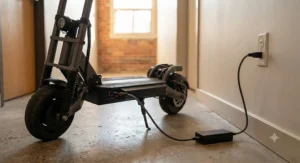
What this means practically is that most of the scooters in this guide are legally intended for private property use — driveways, private trails, closed courses — rather than full-speed public road riding. Toronto itself has wavered on participation in Ontario’s pilot, and coverage of the city’s deliberations shows just how unsettled municipal e-scooter policy remains even years into the provincial trial. Always check your specific municipality’s current bylaws before assuming any scooter’s rated top speed is something you can legally use on public roads. Beyond speed limits, look for UL 2272-certified batteries (or the ANSI/CAN/UL 2272 standard used in Canada), which test the complete electrical system rather than just the battery cells in isolation, meaningfully reducing fire risk.
Long-Term Cost & Maintenance
| Cost Factor | Budget Tier (GX-Zero, Apollo Go) | Premium Tier (Eagle One, GT2) |
|---|---|---|
| Replacement tires | Lower cost, widely available | Higher cost, specialty sizing |
| Brake maintenance | Simple disc pad swaps | Hydraulic bleeding/service |
| Battery replacement | Lower upfront cost | Significantly higher due to capacity |
| Best For | Cost-conscious daily riders | Riders prioritizing longevity over upfront savings |
Interpreting the table above, budget scooters cost less to maintain in isolated repairs but may need battery or motor replacement sooner under heavy daily use, while premium scooters like the Eagle One or GT2 carry higher individual repair costs but generally use higher-grade components rated for longer service life. Total cost of ownership over three years often narrows the gap between tiers more than the sticker price initially suggests.
Features That Actually Matter (And Those That Don’t)
Dual motors, hydraulic brakes, and UL-certified batteries genuinely matter for a scooter operating near 40 km/h — they directly affect safety and reliability. App connectivity, ambient RGB lighting, and cosmetic display upgrades like the GT2’s transparent PMOLED screen are enjoyable but don’t meaningfully affect how safely or capably the scooter performs. Buyers on a budget should prioritize the former category every time and treat the latter as a bonus rather than a deciding factor.
Frequently Asked Questions
❓ Is a 40 km/h electric scooter legal in Canada?
❓ What's the fastest electric scooter you can buy in Canada?
❓ Do dual-motor scooters really go faster than single-motor ones?
❓ How much does a good 40 km/h electric scooter cost in Canada?
❓ Are hydraulic brakes worth paying extra for on a fast scooter?
Conclusion
Choosing a 40 km/h electric scooter really comes down to being honest about how you’ll actually use it. If you’re commuting short urban distances, something like the GOTRAX GX-Zero or Apollo Go delivers genuine dual-motor performance without asking you to spend flagship money or haul around a 90-pound machine. If your route includes real hills or off-road stretches, the torque and braking hardware on the Hiboy Titan Pro or Varla Eagle One earn their higher price tags. And if you simply want the most capable machine money can buy for private-property riding, the Segway Ninebot GT2 sits at a genuine engineering peak most commuters will never need but some enthusiasts will absolutely appreciate.
Whatever you choose, the regulatory reality matters as much as the spec sheet — check your province’s current e-scooter rules before assuming that rated top speed translates into legal road use. Match the motor configuration and braking system to your actual terrain and commute, not just the biggest number on the listing, and you’ll end up with a scooter that fits your life rather than just impressing you in the parking lot.
Recommended for You
- 32 km/h vs 40 km/h Electric Scooters: 7 Picks Ranked 2026
- 32 km/h Scooter For City Riding: 7 Top Picks For 2026
- 7 Best 32 km/h Electric Scooters Under $1000 CAD (2026)
Disclaimer: This article contains affiliate links. As an Amazon Associate, I earn from qualifying purchases. If you purchase products through these links, we may earn a small commission at no additional cost to you.
✨ Found this helpful? Share it with your friends! 💬🤗
