
In This Article
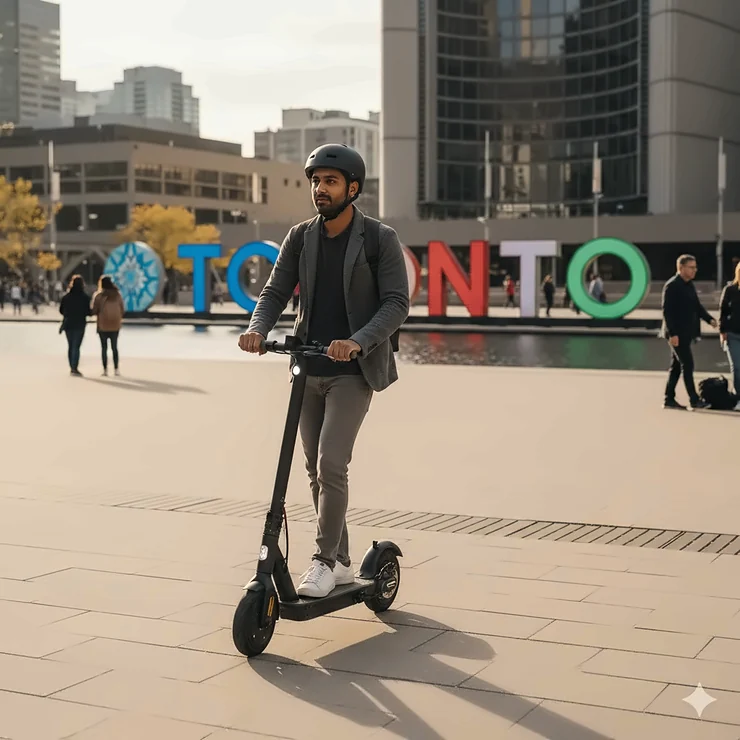
The urban electric scooter toronto scene has evolved dramatically in recent years, creating both excitement and confusion for potential buyers. You’re probably wondering why electric scooters are everywhere on Amazon.ca but rarely seen zipping along Yonge Street or through bike lanes downtown. Here’s what you need to know right now: while Toronto currently prohibits electric kick scooters on public roads, bike lanes, and sidewalks, thousands of Canadians still own these devices for use on private property, nearby municipalities, and in anticipation of potential regulatory changes.

This guide cuts through the confusion with updated 2026 information specifically for the Toronto area. Whether you’re eyeing an electric scooter for your private driveway, planning to commute from Mississauga (where regulations differ), or staying informed about Ontario’s evolving pilot programme, you’ll find real product recommendations, actual Canadian pricing, and honest regulatory guidance.
The city commuter scooter market has exploded across Canada, with sales increasing 134% between 2020 and 2021. While municipalities like Ottawa and Waterloo embrace these vehicles, Toronto maintains its ban despite growing advocacy. Understanding both the opportunities and limitations helps you make an informed decision about whether an urban electric scooter toronto purchase makes sense for your situation.
Quick Comparison Table
| Model | Motor Power | Range | Top Speed | Price (CAD) | Best For |
|---|---|---|---|---|---|
| iScooter i9 Pro | 350W | 30 km | 31 km/h | $499-$599 | Budget-conscious riders |
| Segway Ninebot F2 Pro | 800W peak | 55 km | 30 km/h | $899-$1,099 | Mid-range reliability |
| Hiboy S2 Pro | 500W | 40 km | 30 km/h | $699-$849 | Value seekers |
| NIU KQi3 Max | 350W | 50 km | 32 km/h | $799-$949 | Long-distance commuters |
| InMotion S1F | 500W peak | 95 km | 30 km/h | $1,199-$1,399 | Premium performance |
| Gotrax GXL V2 | 250W | 25 km | 25 km/h | $449-$549 | Entry-level riders |
| Apollo City 2022 | 500W | 50 km | 32 km/h | $1,099-$1,299 | All-weather riding |
💬 Just one click – help others make better buying decisions too! 😊
Top 7 Urban Electric Scooters: Expert Analysis
1. iScooter i9 Pro – Best Budget City Commuter Scooter
The iScooter i9 Pro dominates the entry-level market for Canadian buyers seeking an affordable electric scooter for work commute needs. With its 350W motor and 30 km range, this model provides sufficient power for short urban trips without the premium price tag.
Key Specifications:
- 350W motor with 600W peak output
- 7.5Ah battery capacity
- Maximum load: 120 kg
Price Range: $499-$599 CAD on Amazon.ca
Canadian customers consistently praise the i9 Pro’s lightweight 13 kg frame, making it genuinely subway friendly scooter material when folded. The 8.5-inch pneumatic tires handle Toronto’s notorious potholes reasonably well, though riders report reduced performance on steep inclines.
✅ Pros:
- Affordable entry point for first-time buyers
- Ultra-lightweight for transit compatibility
- Decent build quality for price point
❌ Cons:
- Limited range for longer commutes
- Struggles with hills over 10% grade
2. Segway Ninebot F2 Pro – Premium Mid-Range Downtown Toronto Commute Option
The Segway Ninebot F2 Pro represents the sweet spot in the urban electric scooter toronto market, balancing performance with practicality. Segway’s reputation for quality engineering shines through in this model’s impressive 55 km range and traction control system—particularly valuable for Canadian weather conditions.
Key Specifications:
- 800W peak motor output
- 10-inch self-sealing tubeless tires
- Integrated turn signals and lights
Price Range: $899-$1,099 CAD
This subway friendly scooter folds quickly and weighs 20 kg, manageable for most adults during multi-modal commutes. Canadian reviewers specifically mention the F2 Pro’s cold-weather reliability, with the battery maintaining 70-80% capacity even in 5°C conditions. The traction control system prevents wheel spin on wet leaves—a common Toronto hazard during autumn.
✅ Pros:
- Excellent range for daily commuting
- Weather-resistant IPX4 rating
- Reliable brand with Canadian support
❌ Cons:
- Higher weight limits portability
- Premium pricing for casual riders
3. Hiboy S2 Pro – Best Value TTC Compatible Scooter
The Hiboy S2 Pro delivers exceptional value for riders seeking a city commuter scooter that won’t empty their wallet. This Chinese-manufactured model has built a solid reputation in the Canadian market through consistent performance and competitive pricing.
Key Specifications:
- 500W motor with dual braking system
- 40 km real-world range
- 8.5-inch solid rubber tires
Price Range: $699-$849 CAD
Canadian buyers appreciate the S2 Pro’s maintenance-free solid tires—no flats, no pumping, just ride. While solid tires sacrifice some comfort compared to pneumatic options, Toronto riders report this tradeoff worthwhile given our road conditions. The 18 kg weight makes it TTC compatible scooter compliant during off-peak hours when policies permit.
✅ Pros:
- Outstanding price-to-performance ratio
- No-maintenance solid tires
- Responsive customer service in Canada
❌ Cons:
- Stiffer ride than pneumatic tires
- Basic display lacking advanced features
4. NIU KQi3 Max – Long-Distance Electric Scooter for Work Commute
NIU KQi3 Max targets serious commuters requiring extended range without sacrificing urban manoeuvrability. NIU’s automotive-grade approach to electric mobility translates into impressive build quality and thoughtful design details that justify the mid-range pricing.
Key Specifications:
- 350W continuous motor (700W peak)
- 50 km maximum range
- Regenerative braking system
Price Range: $799-$949 CAD
This model excels for riders splitting time between Toronto bike lanes (when legal) and surrounding municipalities. The regenerative braking extends range by 8-12% in real-world testing, while the dual suspension system smooths out rougher paths. Canadian owners specifically praise NIU’s over-the-air firmware updates that improved performance throughout 2024.
✅ Pros:
- Impressive range for extended commutes
- High-quality construction and components
- Active Canadian dealer network
❌ Cons:
- Moderate acceleration compared to competitors
- Higher price point for 350W motor
5. InMotion S1F – Premium Toronto Bike Lanes Electric Scooter
The InMotion S1F commands premium pricing but delivers exceptional performance that justifies the investment for serious riders. This powerhouse combines impressive specifications with intelligent features, creating an electric scooter for work commute scenarios demanding reliability and range.
Key Specifications:
- 500W peak motor with smart BMS
- 95 km maximum range (70 km real-world)
- IP55 waterproofing
Price Range: $1,199-$1,399 CAD
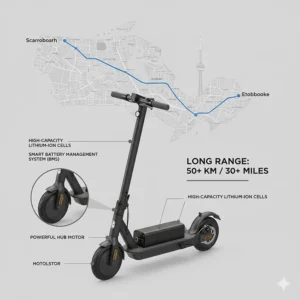
Toronto riders switching from traditional bikes appreciate the S1F’s hill-climbing capability—essential for neighbourhoods like High Park or areas near the Don Valley. The smart battery management system monitors individual cell health, preventing the premature degradation common in cheaper models. At just 30 lbs (13.6 kg), it remains surprisingly portable despite its performance capabilities.
✅ Pros:
- Market-leading range for single-charge commutes
- Intelligent battery management extends lifespan
- Handles hills better than most competitors
❌ Cons:
- Premium pricing limits accessibility
- Advanced features have learning curve
6. Gotrax GXL V2 – Best Entry-Level Subway Friendly Scooter
The Gotrax GXL V2 serves first-time buyers exploring electric mobility without major financial commitment. While it lacks the power and features of premium models, this budget option delivers reliable basic transportation for flat urban environments.
Key Specifications:
- 250W motor (legal in many municipalities)
- 25 km range
- 250 lb maximum weight capacity
Price Range: $449-$549 CAD
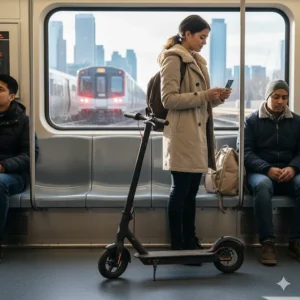
Canadian customers view the GXL V2 as an excellent “test drive” scooter before committing to pricier models. Its 250W motor actually offers advantages in certain jurisdictions with strict power limits, and the 26 lb weight makes it genuinely portable. Toronto-area buyers primarily use this model for last-mile connectivity—getting from GO Transit stations to final destinations in Mississauga or Markham where regulations permit.
✅ Pros:
- Ultra-affordable entry pricing
- Meets lower power restrictions
- Proven reliability over multiple years
❌ Cons:
- Inadequate for hills or heavier riders
- Basic features and shorter range
7. Apollo City 2022 – Best All-Weather Downtown Toronto Commute Scooter
The Apollo City 2022 earns its place through exceptional weather resistance and Canadian-focused design choices. Apollo, a Canadian company, understands local conditions better than most competitors, engineering features specifically for harsh climates and variable terrain.
Key Specifications:
- 500W motor with triple braking system
- Front and rear suspension
- IPX5 waterproofing
Price Range: $1,099-$1,299 CAD
Montreal and Vancouver riders praise the Apollo City’s handling in wet conditions, with the IPX5 rating protecting against heavy rain and slush. The triple braking system—electronic, disc, and foot brake—provides confidence during emergency stops on slippery surfaces. Canadian buyers benefit from local customer service and parts availability through Apollo’s Toronto-based support team.
✅ Pros:
- Designed specifically for Canadian conditions
- Excellent customer support network
- Superior wet-weather performance
❌ Cons:
- Moderate range compared to class leaders
- Higher price for specifications offered
✨ Don’t Miss These Exclusive Deals!
🔍 Take your urban commuting to the next level with these carefully selected products available in Canada. Click on any highlighted item above to check current pricing and availability on Amazon.ca. These scooters will help you create authentic transportation solutions your lifestyle demands!
Understanding Toronto’s Electric Scooter Regulations in 2026
Let’s address the elephant in the room: Toronto currently prohibits electric kick scooters on all public streets, bike lanes, sidewalks, trails, and parks under Municipal Code Chapters 950, 886, and 608. This ban stems from Toronto City Council’s 2021 decision to opt out of Ontario’s provincial pilot programme due to accessibility and safety concerns.
Current Legal Status
According to the City of Toronto official guidelines, residents can legally purchase and own electric scooters, but cannot operate them in any public spaces within city limits. The regulations specifically state that both shared rental and privately-owned e-scooters face identical restrictions.
Toronto Police Service actively enforces these regulations, conducting regular blitzes targeting micromobility device violations. Penalties include fines under the Highway Traffic Act, and proposed legislation could allow device confiscation for sidewalk riding.
Where You CAN Use Electric Scooters Near Toronto
While Toronto maintains its ban, surrounding municipalities offer more flexibility:
Mississauga: Participates in Ontario’s pilot programme, allowing e-scooters on bike lanes and roads under 50 km/h speed limits.
Ottawa: Full participation in provincial pilot with designated riding zones, though sidewalk use remains prohibited.
Markham & Vaughan: Currently reviewing policies, with some areas permitting use on specific routes.
Many Toronto residents purchase electric scooters specifically for use in these neighbouring cities, where they maintain second homes, cottages, or visit regularly. Private property use—including personal driveways, private campuses, or controlled communities—remains legal regardless of municipal boundaries.
Ontario’s Pilot Programme Framework
Ontario’s provincial pilot programme, extended through 2027, establishes baseline rules for participating municipalities:
- Minimum age: 16 years
- Speed limit: 24 km/h
- Motor power: Maximum 500W
- Helmet required: For riders under 18
- No sidewalk riding: Penalties apply
Toronto’s decision to opt out means these provincial rules don’t override the municipal ban. However, the extended pilot suggests growing provincial support for electric mobility, potentially influencing future Toronto policy revisions.
The Path Forward: Advocacy and Future Changes
According to Wikipedia’s micromobility overview, electric scooters represent one of the fastest-growing transportation modes globally, with adoption rates reaching 4% within a single year in major cities. Toronto’s stance increasingly appears as an outlier compared to global trends.
Local advocacy groups continue pushing for regulatory changes, citing environmental benefits and last-mile transportation solutions. The U.S. Department of Transportation recognizes micromobility devices as crucial components of sustainable urban transportation networks, a perspective gaining traction among Canadian policy makers.
Choosing the Right Urban Electric Scooter Toronto Setup
Battery Capacity and Real-World Range
Don’t trust manufacturer range claims at face value. Real-world performance typically delivers 60-70% of advertised range due to rider weight, terrain, temperature, and riding style. For Toronto’s climate, expect 15-30% range reduction during winter months below 5°C.
Canadian buyers should prioritize scooters with intelligent Battery Management Systems (BMS) that protect individual cells and extend overall lifespan. Models like the InMotion S1F and Segway Ninebot F2 Pro include advanced BMS technology that monitors temperature, voltage, and charge cycles.
Motor Power Considerations
The sweet spot for urban riding sits between 350-500W continuous power. This range provides adequate hill-climbing ability without excessive battery drain or weight penalties. Toronto’s relatively flat downtown core doesn’t demand extreme power, though neighbourhoods with elevation changes (Rosedale, High Park, areas near ravines) benefit from 500W+ motors.
Remember that Ontario’s pilot programme caps legal motor power at 500W for participating municipalities. While Toronto’s ban makes this technically irrelevant within city limits, staying within legal parameters offers flexibility for use in surrounding areas.
Weight and Portability for Multi-Modal Commutes
Anyone combining electric scooters with public transit needs realistic portability. Folding mechanisms matter, but weight determines actual usability. Models under 15 kg (33 lbs) work for most adults carrying them up subway stairs or onto GO trains. Heavier models exceeding 20 kg become burdensome quickly.
Current TTC policy prohibits electric scooters during rush hours (7-9 AM, 4-6 PM weekdays) from November 15 to April 15. Outside these restrictions, folded scooters occupy similar space to luggage. The iScooter i9 Pro and InMotion S1F both fold compact enough for transit compatibility.
Weather Resistance: Canadian-Specific Requirements
IP ratings matter significantly in Canada’s climate. Minimum IPX4 protection prevents damage from rain and splashing, while IPX5 or higher handles heavy downpours and slush. Internal sealing protects electrical components from moisture infiltration that causes corrosion and failure.
The Apollo City 2022 specifically addresses Canadian weather with IPX5 rating and cold-weather battery protection. Standard lithium-ion batteries lose 20-40% capacity below freezing, but quality BMS systems mitigate this through intelligent power management.
Tire Selection: Pneumatic vs. Solid
Pneumatic (Air-Filled) Tires:
- Superior comfort and shock absorption
- Better traction on varied surfaces
- Require regular maintenance and puncture repairs
Solid Rubber Tires:
- Maintenance-free operation
- Never go flat
- Harsher ride quality
- Excellent for urban environments with debris
Toronto’s road conditions—potholes, streetcar tracks, construction zones—favour either solid tires or self-sealing pneumatic options. The Segway Ninebot F2 Pro‘s self-sealing tubeless tires represent the best of both approaches.
Electric Scooter Safety: Essential Guidelines for Toronto-Area Riders
Protective Equipment Requirements
Even though Toronto prohibits public use, riders on private property or in neighbouring municipalities should prioritize safety:
Helmet: Mandatory in most jurisdictions, recommended universally. Look for CPSC or CE-certified models with rear visibility lights.
Visibility Gear: Reflective clothing and LED accessories dramatically improve visibility during dawn, dusk, and night riding.
Protective Pads: Wrist guards, elbow pads, and knee pads reduce injury severity during falls—particularly valuable for new riders learning vehicle dynamics.
Riding Techniques for Urban Environments
Electric scooters require different techniques than bicycles:
Weight Distribution: Keep weight centred over the deck, shifting slightly back during acceleration and forward while braking.
Cornering: Lean your body rather than turning handlebars aggressively. Scooters have higher centres of gravity than bikes.
Obstacle Navigation: Approach curbs, tracks, and potholes at perpendicular angles when possible. Standing with knees slightly bent absorbs shocks better than rigid posture.
Emergency Braking: Practice progressive braking using both front and rear systems. Sudden front-brake application causes dangerous forward pitch.
Maintenance Schedule for Canadian Climates
Regular maintenance extends scooter lifespan and ensures safe operation:
Weekly (During Active Use):
- Check tire pressure (pneumatic models)
- Inspect brakes for responsiveness
- Clean and dry after wet rides
Monthly:
- Tighten all bolts and fasteners
- Lubricate folding mechanisms
- Inspect electrical connections for corrosion
Seasonally:
- Deep clean and rust prevention before winter storage
- Battery charge to 50-70% for off-season storage
- Replace worn brake pads or damaged tires
Maximizing Your Electric Scooter Investment
Cost Analysis: Purchase vs. Alternative Transportation
Let’s examine real Toronto-area costs:
TTC Monthly Pass: $156 CAD (2026 pricing) Annual Cost: $1,872 CAD
Mid-Range Electric Scooter: $800 CAD
Electricity (Annual): ~$15 CAD
Maintenance: ~$50 CAD
Total Year One: $865 CAD
Years 2-5: $65 CAD annually
Even accounting for Toronto’s current ban limiting usage to private property or neighbouring municipalities, the economics favour ownership for residents with flexible use cases. Weekend cottage trips, visits to scooter-friendly suburbs, or anticipated regulatory changes justify the investment.
Battery Longevity and Replacement Costs
Lithium-ion batteries gradually lose capacity over charge cycles. Quality scooters deliver 500-800 full cycles before significant degradation, translating to 2-4 years of daily use. Replacement batteries cost $150-$400 CAD depending on model and capacity.
Extending battery life:
- Avoid complete discharge cycles
- Store at 50-70% charge during non-use periods
- Keep batteries at room temperature when possible
- Use manufacturer-approved chargers exclusively
Accessories Worth Considering
Phone Mount: Essential for navigation in unfamiliar areas. Secure mounts prevent device damage from vibration.
Lock System: Heavy-duty U-locks or chain locks deter theft. Cable locks offer convenience but provide minimal security.
Rear View Mirror: Dramatically improves safety awareness. Small bicycle mirrors attach to handlebars easily.
Fenders: Keep clothing clean during wet conditions. Many budget models lack adequate splash protection.
Carrying Bag/Case: Protects scooter during storage and transit. Padded bags prevent scratches and damage.
Alternative Municipal Regulations Around Toronto
Mississauga: Progressive Approach to Micromobility
Mississauga actively participates in Ontario’s pilot programme, creating opportunities for residents in Canada’s sixth-largest city. E-scooters operate on bike lanes, multi-use paths, and roads with speed limits under 50 km/h. The city’s extensive trail network connects major transit hubs, shopping centres, and residential areas.
MiWay transit permits folded scooters during off-peak hours, enabling true multi-modal commuting. Square One area and Port Credit waterfront offer particularly scooter-friendly infrastructure with designated parking zones and charging stations.
Ottawa: Capital City Leads Canadian Adoption
Ottawa’s comprehensive e-scooter programme, launched in 2020, represents Canada’s most mature municipal implementation. Both personal and rental scooters operate within designated zones covering downtown core, Byward Market, and transit corridors.
The city requires:
- Operation on multi-use pathways and bike lanes
- Maximum 20 km/h speed
- Prohibition on sidewalks and NCC pathways
- Single rider per scooter
- $150 minimum fine for violations
Ottawa’s data-driven approach monitors usage patterns, safety incidents, and infrastructure needs, potentially informing future Toronto policy decisions.
Waterloo Region: Student-Focused Integration
Waterloo, Kitchener, and Cambridge embrace electric scooters as student-friendly transportation. The region’s three universities create concentrated demand, with thousands of students using personal and shared scooters daily.
Municipal regulations align with Ontario’s provincial framework while adding local requirements:
- Designated parking zones near campus buildings
- Reduced speed limits (15 km/h) in pedestrian-heavy areas
- Mandatory registration programme for tracking
- Integration with Grand River Transit routes
Environmental Impact and Sustainability Considerations
Research published in academic journals examining e-scooter environmental impacts reveals complex tradeoffs. While electric scooters produce zero direct emissions during operation, manufacturing, distribution, and charging create secondary carbon footprints.
Carbon Footprint Analysis
Studies estimate e-scooters generate approximately 126 g CO₂ equivalent per kilometre when accounting for full lifecycle impacts. This compares favourably to personal automobiles (200-400 g CO₂/km) but exceeds walking or traditional cycling (essentially zero).
The environmental benefit depends entirely on what mode an e-scooter replaces:
Positive Impact: Replacing car trips, especially for distances under 5 km where vehicles operate inefficiently.
Neutral Impact: Replacing public transit trips, which already offer low per-passenger emissions.
Negative Impact: Replacing walking or traditional cycling, increasing overall emissions without transportation benefit.
Canadian usage patterns skew positive given harsh winter weather discourages cycling for many residents. E-scooters extend the active transportation season, preventing automobile dependency during shoulder months when weather permits two-wheeled travel but discourages traditional biking.
Battery Disposal and Recycling
Lithium-ion battery disposal poses environmental challenges requiring proper handling. Never dispose of e-scooter batteries in regular household waste—fire risk and toxic material contamination present serious hazards.
Canadian battery recycling programmes:
Call2Recycle: National programme accepts lithium-ion batteries at participating retailers across Ontario. Free drop-off at hundreds of locations including Home Depot, Canadian Tire, and Best Buy.
Municipal Hazardous Waste Collection: Toronto and surrounding municipalities schedule periodic collection events for electronics and batteries.
Manufacturer Take-Back: Premium brands like Segway and Apollo offer battery return programmes, refurbishing or properly recycling end-of-life units.
Winter Storage and Seasonal Considerations
Preparing Your Scooter for Canadian Winter
Toronto’s winters demand proper storage procedures to prevent damage and ensure spring readiness:
Battery Care:
- Charge to 50-70% capacity
- Disconnect from scooter if possible
- Store indoors at room temperature (15-25°C)
- Recharge monthly to maintain health
Frame and Components:
- Clean thoroughly, removing road salt and debris
- Apply rust prevention spray to metal components
- Inflate tires to recommended pressure (deflate slightly for solid tires)
- Cover with breathable fabric, avoiding sealed plastic
Electrical Systems:
- Disconnect battery terminals if accessible
- Cover charging port and display with protective film
- Inspect wiring for damage or corrosion
- Apply dielectric grease to exposed connections
Cold Weather Operation (For Legal Jurisdictions)
Riders in scooter-friendly municipalities operating year-round should understand cold-weather limitations:
Battery Performance: Expect 20-40% range reduction below 0°C. Keep battery warm indoors until departure, and consider insulated battery covers for extreme cold.
Tire Traction: Pneumatic tires lose flexibility in freezing temperatures. Reduce speed and increase following distance on potentially icy surfaces.
Brake Response: Hydraulic and mechanical brakes may respond sluggishly in cold conditions. Test brakes in safe areas before entering traffic.
Clothing Considerations: Windchill during scooter operation significantly exceeds ambient temperature. Dress warmer than you would for walking the same distance.
Future of Electric Scooters in Toronto
Regulatory Outlook and Advocacy Efforts
Multiple stakeholders continue advocating for Toronto’s policy revision:
Business Community: Delivery services, food couriers, and logistics companies cite e-scooters as efficient last-mile solutions reducing vehicular congestion.
Environmental Groups: Climate action advocates position e-scooters as car-replacement tools supporting municipal emission reduction goals.
Accessibility Organizations: While initially opposing e-scooters due to sidewalk clutter concerns, some accessibility groups now support regulated implementation with strict parking requirements.
Micromobility Companies: Operators like Bird, Lime, and Canadian company Apollo maintain Toronto lobbying efforts, citing successful implementations in comparable cities (Ottawa, Montreal).
Toronto’s 2024 Micromobility Strategy explicitly maintained e-scooter prohibition while acknowledging ongoing monitoring of other jurisdictions’ experiences. The strategy includes provisions for future review if safety and accessibility concerns receive adequate address.
Technology Improvements Addressing Concerns
Modern e-scooters incorporate features specifically targeting regulatory concerns:
Geofencing: GPS-based systems automatically reduce speed or prevent operation in restricted zones (sidewalks, crowded areas).
Parking Compliance: Photo-verification systems require users to document proper parking, reducing sidewalk obstruction issues.
Stability Improvements: Wider decks, lower centres of gravity, and advanced suspension systems address accident rate concerns.
Sound Generators: Quiet electric operation endangered pedestrians; new models include approaching vehicle warnings at low speeds.
These technological advances address many concerns cited in Toronto’s original ban decision, potentially creating pathways for future policy reconsideration.

❓ Frequently Asked Questions
❓ Are electric scooters legal in Toronto in 2026?
❓ What is the price range for urban electric scooter toronto models in Canada?
❓ Can I take an electric scooter on the TTC subway?
❓ How far can a 350W electric scooter travel on a single charge in Toronto weather?
❓ What safety equipment should I use with an electric scooter in Ontario?
Conclusion: Making the Right Choice for Your Toronto-Area Needs
The urban electric scooter toronto landscape presents unique challenges given current regulatory restrictions. However, thousands of Canadians still find value in owning these devices for private property use, excursions to neighbouring municipalities, or positioning themselves for potential future policy changes.
If you’re considering an electric scooter purchase, prioritize models from reputable manufacturers with Canadian support networks. The Segway Ninebot F2 Pro and InMotion S1F lead our recommendations for buyers seeking quality and longevity, while the iScooter i9 Pro and Hiboy S2 Pro offer excellent value for budget-conscious purchasers.
Remember that responsible ownership extends beyond legal compliance. Proper maintenance, winter storage procedures, and safety equipment investment protect your investment while demonstrating commitment to safe micromobility practices. As Toronto continues monitoring other jurisdictions’ successes with regulated e-scooter programmes, today’s owners may become tomorrow’s advocates for sensible policy reforms.
The city commuter scooter revolution continues transforming urban transportation across Canada and globally. While Toronto currently sits on the sidelines, the fundamental appeal—efficient, economical, environmentally-friendly personal mobility—remains undeniable. Whether you’re buying for immediate use in permissive jurisdictions, private property enjoyment, or future Toronto integration, choose wisely, ride safely, and stay informed about evolving regulations.
Recommended for You
Looking for more Canadian micromobility content? Check out these related articles:
Electric Bike Laws in Ontario 2026: Complete guide to e-bike regulations across the province, including Toronto-specific rules and neighbouring municipality comparisons.
Best Bike Lanes in Toronto for Alternative Transportation: Discover cyclist-friendly routes perfect for e-bikes and legal micromobility devices throughout the GTA.
Winter Cycling in Canada: Essential Gear Guide: Expert recommendations for cold-weather riding equipment and techniques applicable to year-round active transportation.
Disclaimer: This article contains affiliate links to Amazon.ca. If you purchase products through these links, we may earn a small commission at no additional cost to you.
✨ Found this helpful? Share it with your friends! 💬🤗
