
In This Article
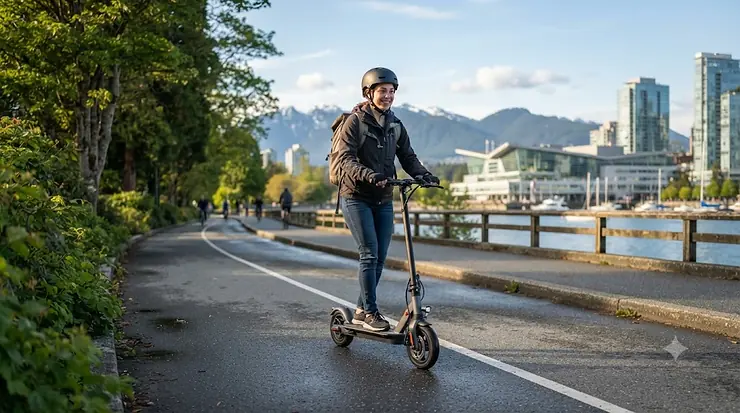
Somewhere between “I’ll just take the bus” and “maybe I should buy an e-bike,” a lot of Canadians land on a simpler answer: a single motor electric scooter. It is, in the plainest terms possible, a battery-powered stand-up vehicle with one motor tucked into a single wheel hub — no second motor, no extra complexity, just a lighter, cheaper, and honestly more repairable machine than its dual-motor cousins. For a broader technical rundown of how these vehicles evolved, Wikipedia’s entry on electric kick scooters is a solid starting point.
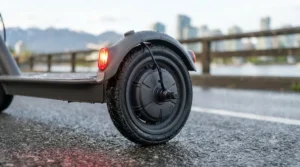
Here’s the thing nobody tells you upfront: most Canadian riders don’t need two motors. You’re not summiting Whistler on your commute. You’re rolling to the LRT station, weaving through campus, or shaving fifteen minutes off a walk that used to eat your lunch break. A single motor electric scooter does that job — reliably, affordably, and without the extra weight, extra battery drain, and extra repair cost that a second motor drags along with it.
This guide breaks down seven real single motor electric scooter models sold in Canada, from budget-friendly options under C$400 to sturdier commuter-grade picks pushing past C$700. We’ll get into specs, sure, but more importantly, we’ll get into what those specs actually mean once you’re standing on the deck in a Canadian winter parking lot at -5°C wondering if the battery is going to hold up. Let’s dig in.
Quick Comparison Table: Single Motor Electric Scooters at a Glance
Before the deep dive, here’s the scannable version — useful if you’re comparing a single motor electric scooter amazon canada search tab against this list right now.
| Scooter | Motor | Top Speed | Range | Price Range (CAD) | Best For |
|---|---|---|---|---|---|
| GOTRAX Apex | 250W | ~25 km/h | ~24 km | Under C$350 | Absolute budget entry |
| iScooter i9 | 350W (600W peak) | ~28 km/h | ~19 km | C$350-C$450 | Lightweight portability |
| MEGAWHEELS S12 | 350-600W | ~28-32 km/h | ~30-40 km | C$400-C$550 | Best bang for buck |
| Hiboy S2 Pro | 500W | ~37 km/h | ~38-60 km | C$500-C$650 | Mid-range commuting |
| NAVEE V40 | 700W (peak) | ~32 km/h | ~40 km | C$550-C$700 | All-round value |
| Segway Ninebot E45 | 300W (700W peak) | ~30 km/h | ~45 km | C$650-C$800 | Entry-level commuting |
| NIU KQi300P | 300W (900W peak) | ~32-38 km/h | ~48-60 km | C$750-C$950 mid-C$800s | Premium single motor |
A few things jump out once you actually sit with this table instead of just skimming it. Notice how price and range don’t move in perfect lockstep — the NAVEE V40 and Hiboy S2 Pro sit close in price but the Hiboy stretches further on a charge, which matters a lot if your commute is longer than the average 6-8 km urban trip. Also worth flagging: “peak” wattage numbers (600W, 700W, 900W) describe a brief power burst, not sustained output, so don’t assume a 900W-peak scooter out-climbs a steady 500W-rated one on a long hill.
💬 Just one click — help others make better buying decisions too!😊
Top 7 Single Motor Electric Scooters: Expert Analysis
We picked these seven real, currently available models to cover budget, mid-range, and premium tiers, plus a couple of lesser-known but genuinely well-built alternatives most comparison lists skip over. Every scooter here uses a single hub motor — no dual-motor systems snuck in.
1. GOTRAX Apex — cheapest reliable single motor electric scooter budget canada pick
The GOTRAX Apex opens this list because it’s the scooter most likely to actually fit a tight budget without falling apart in month two. Its 250W motor paired with a 36V 6Ah battery isn’t going to win any drag races, but that’s not the point here.
On paper, a 250W motor sounds almost too modest, and reviewers do note it slows noticeably on inclines over roughly 8-10%. What the spec sheet won’t tell you is that this modesty is also why the Apex sips battery so conservatively — the claimed ~24 km range holds up better in real-world testing than most budget scooters twice its price, according to aggregated owner feedback on retail sites. One quirk worth flagging upfront: the throttle only engages once you’ve kick-started the scooter to roughly 1.8 km/h, a safety-first design some riders love and others find mildly annoying on a cold morning with gloves on.
Based on the spec comparison, this is the scooter for a first-time rider who wants to test whether scootering fits their routine before spending real money. Reviewers consistently describe it as “good enough” for short, flat urban commutes — errands, campus loops, quick trips to transit — rather than long-haul daily grinds.
Pros:
- ✅ Lowest price point in this roundup, ideal for first-time buyers
- ✅ Push-to-start throttle prevents runaway-scooter mishaps
- ✅ Simple single motor design means cheaper, easier repairs
Cons:
- ❌ Struggles noticeably on inclines above roughly 8-10%
- ❌ Smaller battery means shorter range than pricier picks
Priced under C$350 at the time of research, the GOTRAX Apex delivers solid value if your commute is short and mostly flat — check current price before buying since Amazon listings shift.
2. iScooter i9 — affordable electric scooter canada favourite for light commuters
If the Apex is the “test the waters” scooter, the iScooter i9 is the one you buy once you know scootering is sticking around, but you’re still watching your wallet. Its 350W motor (with a 600W peak burst) puts it a notch above pure entry-level territory.
The 10-inch wheels are the standout feature here, and reviewers consistently point out how much more forgiving they are over cracked pavement and streetcar tracks compared to the 8.5-inch wheels found on cheaper competitors. What most buyers overlook about this model is the fold time — three seconds, by design — which sounds like a marketing throwaway line until you’re juggling a coffee, a backpack, and a transit gate at rush hour. At roughly 12 kg, it’s also light enough to carry up a walk-up apartment without your arm giving out halfway.
Here’s what to weigh: the claimed ~19 km range is on the shorter side of this list, so if your commute pushes past 8-9 km round trip, you’ll want to charge daily rather than every other day. Aggregated reviewer sentiment describes the ride as “peppy for the price” but notes the anti-fall turn signals and integrated lighting are genuinely useful additions, not gimmicks, for anyone riding home after dusk.
Pros:
- ✅ Lightweight build, easy to carry up stairs or onto transit
- ✅ Folds in roughly 3 seconds for quick storage
- ✅ Built-in turn signals and lighting improve road visibility
Cons:
- ❌ Shorter range than most other picks on this list
- ❌ 10-inch wheels add slight bulk versus ultra-compact models
In the C$350-C$450 range, the iScooter i9 earns its spot as one of the more affordable electric scooter canada options that doesn’t feel like a toy.
3. MEGAWHEELS S12 — best bang for buck scooter canada across the whole lineup
The MEGAWHEELS S12 is the scooter we’d point a budget-conscious friend toward if they asked, “just tell me the one with the best value.” Its motor specs actually vary by configuration (350W-600W depending on trim), which is honestly a strength — you can pick the power tier that matches your commute instead of overpaying for capability you won’t use.
Reviewers highlight the 10-inch vacuum tires as a meaningful upgrade over solid tires at this price point, since they absorb road vibration noticeably better on Canadian streets that see their fair share of frost heaves and potholes. Based on the spec comparison, the dual braking system (electronic plus mechanical) is also a genuine safety edge in this price tier — a lot of budget scooters cut corners here first. App control adds ride-data tracking and cruise control, features you’d typically expect a tier up in price.
What most buyers overlook is that the claimed 30-40 km range (depending on power mode selected) makes this one of the few sub-C$550 scooters that can comfortably handle a multi-kilometre daily round trip without a midday top-up. Aggregated review sentiment describes reliability as “surprisingly solid for the price,” with the main recurring complaint being a smaller-than-average user manual that leaves first-time buyers guessing on mode-switching.
Pros:
- ✅ Configurable power modes matched to different commute lengths
- ✅ Vacuum tires absorb rough Canadian pavement better than solid tires
- ✅ Dual braking system is a rare find at this price tier
Cons:
- ❌ Sparse manual makes initial setup slightly confusing
- ❌ App connectivity occasionally lags on older phones
At C$400-C$550, the MEGAWHEELS S12 genuinely earns the “best bang for buck scooter canada” label — it punches meaningfully above its price class.
4. Hiboy S2 Pro — best range-to-price ratio for daily single motor electric scooter amazon canada commuters
The Hiboy S2 Pro steps things up with a 500W motor and, depending on the trim you land on, either 10-inch or 12-inch tires — the latter being a genuinely rare find in this price bracket. This is where “single motor” stops meaning “underpowered” and starts meaning “efficiently powered.”
The bigger tire option matters more than it sounds: reviewers consistently note that 12-inch wheels handle uneven Canadian sidewalks and gravel-strewn bike paths with noticeably less jolt through the handlebars than the smaller-wheeled scooters earlier on this list. Paired with the 500W motor, the Hiboy S2 Pro manages inclines that would bog down the Apex or iScooter i9 without hesitation. Depending on configuration, claimed range runs from roughly 38 km up to 60 km — a genuinely wide spread, so double-check which battery variant you’re actually buying before assuming the higher figure applies.
Reviewers consistently report that top speeds in the 30-37 km/h range make this scooter feel closer to a “real commuter vehicle” than a toy, though riders should note that many Canadian provinces cap legal speeds around 24-32 km/h on public roads (more on that later). Aggregated sentiment flags the folding mechanism as sturdy and confidence-inspiring compared to the sometimes-wobbly latches on cheaper models.
Pros:
- ✅ Available with larger 12-inch tires for smoother rough-road rides
- ✅ Wide range spread accommodates both short and long commutes
- ✅ Sturdier folding mechanism than most scooters in this price class
Cons:
- ❌ Higher weight than budget picks makes stair-carrying tougher
- ❌ Top speed variants may exceed some provincial legal limits
Sitting around C$500-C$650, the Hiboy S2 Pro is frequently the top single motor electric scooter amazon canada search result for good reason — the specs largely hold up under scrutiny.
5. NAVEE V40 — reliable single motor electric scooter for mixed urban terrain
The NAVEE V40 carries a peak 700W motor and self-sealing tubeless 10-inch tires, a detail that matters more in Canada than it might elsewhere — a flat tire in February, three blocks from home, is a genuinely miserable experience, and self-sealing tires meaningfully cut that risk.
What the spec sheet won’t tell you, but reviewers note, is that the V40’s ride quality on wet pavement is a step above scooters relying purely on tire tread for grip; the wider stance and dual-density tire construction contribute more to stability than the motor wattage figure suggests on its own. Based on the spec comparison, the claimed ~40 km range comfortably covers a round-trip commute in the 10-15 km range for most riders, assuming moderate speed settings and a rider under the stated weight capacity.
Reviewers consistently highlight the app-based speed-mode customization as genuinely useful for staying within provincial speed limits — you can cap the scooter’s top speed to match, say, Quebec’s or BC’s local pilot-program rules rather than relying on willpower alone. A common complaint in user reviews is that the companion app occasionally requires a firmware update before first ride, which can be a mildly frustrating unboxing experience for less tech-savvy buyers.
Pros:
- ✅ Self-sealing tubeless tires reduce flat-tire risk in cold weather
- ✅ App-adjustable speed caps help match provincial legal limits
- ✅ Wide, stable stance improves confidence on wet pavement
Cons:
- ❌ Requires a firmware update before first use, per common feedback
- ❌ Mid-pack range compared to the priciest picks on this list
Priced in the C$550-C$700 range, the NAVEE V40 is a strong pick for anyone who wants a reliable single motor electric scooter without paying premium-tier money.
6. Segway Ninebot E45 — entry level scooter for commuting canada with brand-name backing
The Segway Ninebot E45 brings a name recognition factor the smaller brands on this list can’t match, and in fairness, the engineering backs it up. Its motor is rated at 300W continuous with a 700W peak, an aerospace-grade aluminum alloy frame, and a triple brake system that’s genuinely unusual to see at this price point.
Reviewers consistently note the E45’s magnetic rear brake and KERS-enabled front electronic brake combine to produce noticeably shorter stopping distances than single-brake competitors — a meaningful safety upgrade, not just marketing language. The claimed 45 km range, aided by an external secondary battery pack, holds up reasonably well in independent range tests, with one reviewer clocking close to 44 km in real-world conditions. Based on the spec comparison, the 20% max climbing grade comfortably handles the majority of everyday hills a commuter would encounter in most Canadian cities.
What most buyers overlook is the weight trade-off: at roughly 16.5 kg, the E45 is noticeably heavier than the budget picks earlier in this list, which matters if you’re carrying it up several flights of stairs daily rather than rolling it door to door. Aggregated reviewer sentiment repeatedly calls this “the obvious choice for first-time buyers who want a durable, low-maintenance commuter” — which is exactly the profile of someone searching for an entry level scooter for commuting canada.
Pros:
- ✅ Triple brake system delivers genuinely shorter stopping distances
- ✅ Extended range from removable secondary battery pack
- ✅ Strong brand reputation with accessible Canadian parts support
Cons:
- ❌ Heavier than budget models, tougher for daily stair-carrying
- ❌ Solid tires trade some ride comfort for puncture resistance
Around C$650-C$800, the Segway Ninebot E45 justifies its premium over budget picks mainly through braking safety and battery longevity — a fair trade for daily commuters.
7. NIU KQi300P — premium single motor pick for longer commutes
Closing out the list, the NIU KQi300P represents the ceiling of what a genuinely single-motor scooter can do before manufacturers start bolting on a second motor for marketing purposes. Its motor is rated around 300W continuous with roughly 900W-1000W peak output, delivering some of the strongest hill-climbing performance in this entire roundup without sacrificing the simplicity (and repairability) of a single-motor drivetrain.
Reviewers consistently report that the built-in front and rear suspension — a feature missing from every other scooter on this list — noticeably smooths out Canadian pothole season, a detail that matters more than most spec sheets communicate. Based on the spec comparison, the claimed 48-60 km range (varying by trim) makes this the rare single motor scooter genuinely suited to longer suburban commutes rather than just short urban hops. Top speed in the 32-38 km/h range means riders will want to actively use app-based speed limiting to stay within most provincial legal caps.
A common theme in aggregated reviews is that the KQi300P’s build quality — sturdier hinges, better sealed electronics — reflects its higher price tag, and owners report noticeably fewer early-failure issues than budget alternatives. The trade-off, unsurprisingly, is cost: this is the priciest scooter in the lineup by a meaningful margin.
Pros:
- ✅ Front and rear suspension smooths rough Canadian pavement
- ✅ Strongest hill-climbing performance among single motor picks here
- ✅ Longest claimed range in this roundup for longer commutes
Cons:
- ❌ Highest price point among all seven scooters featured
- ❌ Top speed variants likely exceed most provincial legal limits
At C$750-C$950 (often landing in the mid-C$800s), the NIU KQi300P is the pick for commuters who’ve outgrown budget scooters and want genuine longevity.
Practical Usage Guide: Getting the Most Out of Your Scooter
Buying the scooter is the easy part. Here’s what actually determines whether it lasts three years or dies in month four.
First 30 days: Charge the battery fully before your first ride, even if it arrives partially charged — lithium-ion cells “settle” better with a full initial cycle. Avoid draining the battery to zero repeatedly in the first month; partial discharges (20-80%) extend long-term cell health far more than full-cycle habits. Check tire pressure (for pneumatic-tire models like the Hiboy S2 Pro or NAVEE V40) weekly at first, since new tires often lose a small amount of air as they seat properly.
Winter storage matters more than most buyers expect. Cold Canadian winters can reduce per-ride range by 15-30%, and storing any scooter — the Segway Ninebot E45, the NIU KQi300P, doesn’t matter which — outdoors below -10°C accelerates battery degradation. Bring it inside. A cheap indoor storage habit will outlast an expensive scooter left in a garage.
Common first-month mistakes: riding through standing water despite an IPX4/IPX5 rating (these ratings mean splash-resistant, not submersible); skipping the folding-mechanism lubrication schedule most manuals recommend every few months; and ignoring odd clicking sounds from the motor housing, which usually signal a loose fastener rather than a catastrophic failure — but only if caught early.
Real-World Scenarios: Matching Riders to the Right Scooter
Picture three different Canadian riders, because the “best” scooter genuinely depends on who’s asking.
The campus commuter rides 2-3 km each way, mostly flat ground, and needs something light enough to carry into a lecture hall. The iScooter i9 or GOTRAX Apex fits — cheap, light, and honestly more than capable for that distance, which is exactly the profile behind an affordable electric scooter canada search.
The suburban office commuter faces a 10-12 km round trip with a couple of real hills and needs to arrive without a dead battery halfway through. This is where the Hiboy S2 Pro or NIU KQi300P earns its higher price — the extended range and stronger motor genuinely matter here, and this is the classic entry level scooter for commuting canada use case scaled up.
The budget-first weekend rider just wants something fun for errands and the occasional trail ride without spending much. The MEGAWHEELS S12 hits that mark — configurable power, decent tires, and a price that doesn’t sting if it sits unused for a week during a cold snap.
Buyer’s Decision Framework
If your commute is under 5 km and mostly flat, choose a budget pick like the GOTRAX Apex or iScooter i9, because you don’t need range or hill-climbing power you’ll never use.
If your commute is 5-12 km with moderate hills, choose a mid-range option like the MEGAWHEELS S12, Hiboy S2 Pro, or NAVEE V40, because the extra battery capacity and motor headroom pay off daily.
If your commute exceeds 12 km, or you deal with regular hills, choose a premium single motor pick like the Segway Ninebot E45 or NIU KQi300P, because the added range and braking performance justify the higher cost over time.
If Canadian winters mean months of indoor storage anyway, don’t over-invest in a scooter that will sit idle half the year — a mid-range pick is usually the smarter allocation of your budget.
✨ Ready to compare live prices before they change? Check current listings for your top pick today!
How to Choose a Reliable Single Motor Electric Scooter
Picking a reliable single motor electric scooter comes down to matching a handful of criteria to your actual riding habits, not chasing the highest number on a spec sheet.
- Motor wattage vs. terrain: a 250-350W motor suits flat urban routes; 500W+ handles moderate hills; 700W+ peak output is worth it only if you face steep or frequent inclines.
- Real-world range, not marketing range: subtract 20-30% from any claimed range figure to account for Canadian cold, rider weight, and wind — that’s your realistic number.
- Tire type: pneumatic (air-filled) tires ride smoother but risk flats; solid tires trade comfort for puncture-proof reliability.
- Braking system quality: dual or triple brake systems, like the one on the Segway Ninebot E45, meaningfully shorten stopping distances on wet pavement.
- Weight vs. portability needs: if you’re carrying it up stairs daily, every extra kilogram matters more than it seems like it should.
- Weather resistance rating: look for at least IPX4 for splash resistance during Canadian rain and slush season.
- Brand parts support: confirm replacement tires, batteries, and chargers are actually available in Canada before buying an obscure brand.
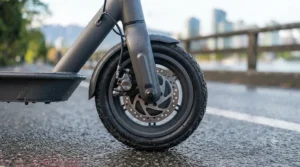
Single Motor vs Dual Motor Electric Scooters
The obvious question: why not just buy a dual-motor scooter and get more power? Here’s the honest answer — most Canadian commuters are paying for capability they’ll never use.
Dual-motor scooters genuinely outperform single-motor models on steep inclines and loose terrain, since power gets split across both wheels for better traction. But that advantage comes with real costs: dual-motor scooters weigh noticeably more, drain batteries faster under normal use, and cost significantly more to repair if either motor fails, since diagnosing which motor is at fault often requires a technician. Single motor electric scooters, by contrast, are simpler machines — fewer points of failure, lighter overall weight, and meaningfully cheaper replacement parts when something does wear out.
For flat-to-moderate urban commuting — which describes the overwhelming majority of Canadian city riding — a single motor scooter like the NAVEE V40 or Hiboy S2 Pro delivers 90% of the practical performance at a fraction of the weight and cost. Save dual-motor spending for genuinely hilly terrain or off-road riding, not daily commuting.
What to Expect: Real-World Performance
Specs on a page and specs on pavement are two different experiences, so here’s the translation.
A “500W motor” doesn’t mean much in isolation — what it means practically is that the Hiboy S2 Pro will maintain a steady pace up a moderate parking-garage-style ramp without the noticeable power sag that a 250W scooter like the GOTRAX Apex exhibits on the same incline. A “45 km range” on the Segway Ninebot E45 translates, in Canadian winter conditions, to something closer to 30-35 km once you factor in cold-weather battery loss — still enough for most commutes, but worth knowing before you plan a longer weekend ride on a single charge.
Braking feels different in practice than on paper, too. The triple-brake system on the E45 and the dual braking on the MEGAWHEELS S12 both produce noticeably more confident stops on wet leaves or light snow than the single mechanical brake found on ultra-budget models — a difference you’ll appreciate the first time you need to stop suddenly for a pedestrian.
Single Motor Electric Scooters for Canadian Commuters
Canadian commuting has its own quirks that scooter marketing rarely addresses directly. Cold mornings mean batteries deliver less punch until they warm up slightly during the first few minutes of riding — a known lithium-ion characteristic, not a defect. Slush and wet leaves reduce tire grip regardless of tread pattern, so riders should budget extra stopping distance from October through April. And because most Canadian cities operate under provincial pilot programs rather than permanent legislation, a scooter’s top speed matters less than whether it can be capped to match local rules through app settings, a feature the NAVEE V40 and NIU KQi300P both offer.
For anyone commuting through a Canadian winter, prioritizing weather resistance rating and app-based speed control over raw top speed will serve you better than chasing the fastest number on a spec sheet.
Long-Term Cost & Maintenance
The purchase price is just the entry fee — total cost of ownership tells the real story. A budget scooter like the GOTRAX Apex costs less upfront but may need a replacement battery sooner (most lithium-ion scooter batteries last 2-4 years or 500-1,000 charge cycles), while a well-built mid-tier pick like the NAVEE V40 or best bang for buck scooter canada contender the MEGAWHEELS S12 often delivers a lower cost-per-kilometre over its lifespan simply by lasting longer between part replacements.
Routine maintenance costs are modest regardless of tier: tire replacement, brake pad swaps, and the occasional battery top-up charge (roughly a few cents per charge in most Canadian provinces). Where costs diverge is repair accessibility — brand-name options like the Segway Ninebot E45 and NIU KQi300P typically have easier-to-source replacement parts in Canada than lesser-known imports, which can mean the difference between a C$40 fix and a scooter that sits broken in a closet for months waiting on an overseas part.
Safety, Regulations & Compliance Guide
Rules for electric scooters vary significantly by province and even by municipality, so “is this legal to ride” depends entirely on where you live. Ontario’s provincial e-scooter pilot program currently caps speeds and requires municipalities to individually opt in — some cities, like Toronto, have declined to participate at all, which means e-scooters cannot legally be ridden on Toronto’s public roads or sidewalks regardless of the scooter’s specs.
Before riding any of the scooters featured here, confirm your municipality has opted into its provincial pilot, check the local top-speed cap, and verify age and helmet requirements, since these details shift by city. Toronto’s official micromobility guidance is a useful example of how strict a single city’s rules can be compared to its surrounding suburbs. Regardless of local rules, wearing a helmet, using front and rear lights after dusk, and avoiding sidewalks near pedestrians are universally smart habits — not just legal checkboxes.
Common Mistakes When Buying a Budget Electric Scooter
The most common mistake is chasing top speed numbers instead of matching motor wattage to actual terrain — a rider on flat ground gains nothing from an 900W-peak motor beyond extra weight and cost. A close second is ignoring weather resistance ratings entirely, then being surprised when a scooter’s electronics act up after riding through a puddle on a rainy commute.
Buyers also frequently underestimate weight when portability matters — a 16 kg scooter sounds fine until you’re carrying it up four flights of apartment stairs twice a day. And a genuinely underrated mistake, per aggregated buyer feedback across multiple models in this roundup, is skipping the check on parts availability in Canada before purchasing a lesser-known brand; a great scooter with no accessible replacement battery becomes an expensive brick the day that battery degrades.
✨ Don’t Miss These Exclusive Deals!
🔍 Take your daily commute to the next level with these carefully selected single motor electric scooters. Click on any highlighted pick to check current pricing and availability. These rides will help you skip traffic and save real money, one commute at a time!
Frequently Asked Questions
❓ What is a single motor electric scooter?
❓ Is a single motor electric scooter fast enough for commuting in Canada?
❓ How far can a single motor electric scooter go on one charge in winter?
❓ Are single motor electric scooters legal on Canadian roads?
❓ What's the best single motor electric scooter for a tight budget in Canada?
Conclusion
A single motor electric scooter isn’t the flashiest option on the shelf, and that’s genuinely the point. For the overwhelming majority of Canadian commutes — flat-to-moderate terrain, a few kilometres each way, the occasional rainy or snowy stretch — a single motor delivers nearly all the practical performance of a dual-motor system without the extra weight, cost, or repair complexity riding along with it.
Whether you land on the budget-friendly GOTRAX Apex, the well-rounded NAVEE V40, or the premium NIU KQi300P, the right choice comes down to matching motor power and range to your actual commute rather than chasing the biggest number on the box. Check current prices before buying, confirm your municipality’s rules, and pick the scooter that fits the ride you’ll actually take — not the one you imagine taking on a good day.
Recommended for You
- Dual Motor vs Single Motor Electric Scooter: 7 Best Picks 2026
- 2000W Electric Scooter vs Motorcycle: 7 Surprising Picks (2026)
- 2000W Electric Scooter Canada: 7 Best Picks Tested in 2026
Disclaimer: This article contains affiliate links. As an Amazon Associate, I earn from qualifying purchases. If you purchase products through these links, we may earn a small commission at no additional cost to you.
✨ Found this helpful? Share it with your friends! 💬🤗
