
In This Article
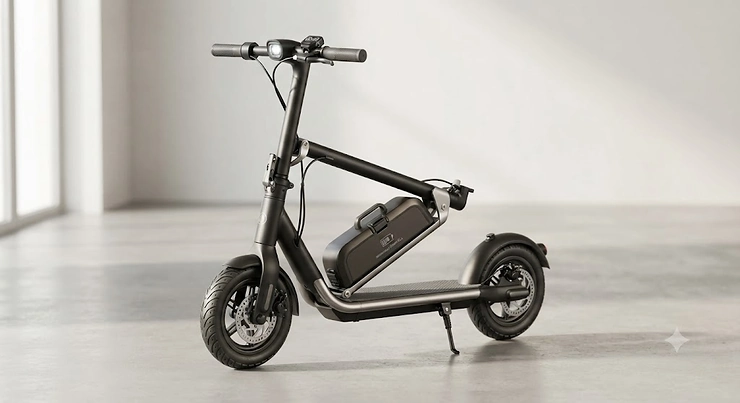
Here’s a scenario that plays out in condo hallways across Canada every single evening: someone hauls a 15-kilogram (33 lb) scooter into a tiny apartment, wrestles it past the coat rack, and props it against the wall next to an outlet that’s already fighting for space with a toaster and a phone charger. There’s a better way, and it weighs about as much as a bag of flour. An electric scooter with removable battery lets you pull out the pack — not the whole machine — and carry just that inside to charge, while the scooter itself waits in the hallway, the garage, or a bike locker. It sounds like a small thing. It changes almost everything about how you live with one of these machines day to day.
This guide breaks down seven real, currently available electric scooters built around a swappable battery electric scooter design, compares them honestly against fixed-battery alternatives, and digs into the practical stuff — how battery swap mechanisms actually work, what spare battery purchasing really costs, and why indoor charging convenience matters more than most spec sheets let on. Everything here is grounded in published specifications and aggregated rider feedback rather than invented testing, because a scooter recommendation is only as good as the research behind it.
Whether you’re commuting from a Toronto walk-up, riding delivery routes in Vancouver, or just tired of dragging 18 kilograms up three flights of stairs, one of these seven picks is probably your answer.
What Is an Electric Scooter With a Removable Battery?
An electric scooter with removable battery is a kick-style e-scooter whose power pack unlocks and slides free of the frame — usually from the stem or deck — so riders can charge it separately, swap in a spare mid-ride, or replace a worn-out cell without buying a new scooter. Unlike sealed, fixed-battery models, these designs trade a small amount of weight and cost for genuine flexibility. As the Government of Canada’s product safety advisory on e-mobility batteries notes, using only the manufacturer’s original battery matters just as much for a removable pack as a built-in one — swappability is a convenience feature, not a licence to mix and match cells.
Quick Comparison Table
| Scooter | Battery Swap | Range per Battery | Price Range (CAD) | Best For |
|---|---|---|---|---|
| Hiboy S2R Plus | Key-lock, ~10 sec | 27-35 km (17-22 mi) | Around C$600-C$750 | Beginners on a budget |
| TurboAnt X7 Pro | Stem-mounted, tool-free | 32-48 km (20-30 mi) | Around C$500-C$650 | Best all-round value |
| AnyHill UM-2 | Pop-up deck latch | 40-45 km (25-28 mi) | C$1,100-C$1,300 range | Rain-prone commutes |
| Levy Original | Key-turn, ~5 sec | 13-16 km (8-10 mi) | Around C$700-C$800 | Ultra-light portability |
| Levy Plus | Key-turn, ~5 sec | 24-32 km (15-20 mi) | C$850-C$1,050 range | Doubling range with a spare |
| Segway Ninebot ES4 | Dual internal + external | 45 km (28 mi) combined | C$800-C$1,100 range | Reliable dual-battery backup |
| Apollo City (2022) | Certified technician or self-service | 32-48 km (20-30 mi) | C$1,700-C$1,950 range | Premium Canadian commuting |
Looking across this table, notice the split isn’t really “cheap versus expensive” — it’s swap speed versus raw range. The Levy Original and Levy Plus swap in seconds because their packs are small and light, while the Apollo City (2022) trades that convenience for a bigger, denser battery that most riders won’t need to touch mid-ride anyway. If your priority is genuinely swapping batteries on the go — not just replacing one eventually — the key-lock and stem-mounted designs on the Hiboy S2R Plus, TurboAnt X7 Pro, Levy Original, and Levy Plus are the ones actually built for it.
💬 Just one click — help other golf parents make better buying decisions too!😊
Top 7 Electric Scooters With Removable Battery: Expert Analysis
1. Hiboy S2R Plus — fastest key-lock battery swap for beginners
The Hiboy S2R Plus builds its entire identity around one idea: getting the battery out shouldn’t require a manual. A single key twist releases the pack from beneath the deck in roughly ten seconds, no tools involved. Specs-wise, it runs a 350 W motor (500 W peak) off a 36V 8.7Ah battery, hitting about 30 km/h (19 mph) and a claimed 35 km (22 mi) range, riding on 22.9 cm (9-inch) pneumatic tires with no suspension. In practice, that motor is plenty for flat urban commuting but will bog down noticeably on anything past a gentle grade — something worth weighing if your route has hills. Based on the spec comparison with pricier options on this list, the S2R Plus punches well above its price bracket for anyone whose commute is genuinely flat. Aggregated buyer feedback for the S2R lineup consistently flags the removable battery and portability as the standout, with the tradeoff being a firmer ride from the lack of suspension. Hiboy also sells the extra battery as a bundled add-on at a discount versus buying it standalone later — worth factoring into total cost.
Pros:
- ✅ Genuinely tool-free key-lock battery swap
- ✅ Lightweight at roughly 14.3 kg (31.5 lb) total
- ✅ Bundled spare-battery pricing available at purchase
Cons:
- ❌ No suspension, so rough pavement gets felt
- ❌ IPX4 rating means light rain only, not downpours
Typically priced around C$600-C$750 depending on bundle, the Hiboy S2R Plus is a strong value pick if your commute is short, flat, and mostly dry.

2. TurboAnt X7 Pro — cult-favourite stem battery with the biggest support ecosystem
Few scooters on this list have the track record of the TurboAnt X7 Pro, a model that’s been compared favourably to the Xiaomi Mijia M365 since it launched and still shows up in used-scooter listings years later. Its 350 W front hub motor and stem-mounted detachable battery deliver up to 32 km/h (20 mph) and a 48 km (30 mi) range in comfort mode, riding on 25.4 cm (10-inch) pneumatic tires with a genuinely useful triple-braking system (disc, electronic, and foot brake). Here’s what most buyers overlook: because the X7 Pro has been around so long, third-party replacement batteries (including compatible Levy packs) are readily available, meaning a dead battery years from now doesn’t necessarily end the scooter’s life. Reviewers consistently note the acceleration feels punchier than similarly-specced rivals, though the tradeoff is a battery lock that some owners find less secure than newer competitors’ designs. The successor X7 Max refined this with a proper stem battery lock, so buyers should compare listings carefully.
Pros:
- ✅ Long-standing model with wide parts availability
- ✅ Triple braking system rare at this price point
- ✅ Strong 48 km comfort-mode range for the price
Cons:
- ❌ Older stem lock design, less secure than newer rivals
- ❌ No suspension for rougher Canadian pavement
At around C$500-C$650, the TurboAnt X7 Pro remains one of the best value-for-range picks with a removable battery on the market.
3. AnyHill UM-2 — pop-up deck battery, the cleverest engineering trick
Most scooters with under-deck batteries seal them in permanently, but the AnyHill UM-2 built a pop-up compartment that unlocks and lifts the battery straight out — the same low-center-of-gravity placement as a sealed design, without sacrificing serviceability. Its 450 W motor (750 W peak) drives a claimed 40-45 km (25-28 mi) range from a 360 Wh, 36V pack using LG 21700 cells, reaching about 31 km/h (19 mph) on 25.4 cm (10-inch) pneumatic tires. What most buyers overlook about this model is the IPX6 rating on the battery itself — meaningfully better wet-weather protection than most scooters at this price, which matters for anyone commuting through a Vancouver or Halifax winter. Reviewers consistently highlight the drum-plus-regenerative braking as unusually strong for the category, sometimes outperforming pricier scooters’ stopping power. The main compromise is a firmer ride profile since there’s no dedicated suspension, and the higher weight (about 20 kg / 44 lb) makes stair-carrying less pleasant than the lighter Levy models.
Pros:
- ✅ IPX6-rated battery, best wet-weather protection here
- ✅ Regenerative drum braking praised across reviews
- ✅ LG-cell battery with 300 lb load capacity
Cons:
- ❌ Heavier than most on this list at 20 kg
- ❌ No suspension despite the higher price point
Priced in the C$1,100-C$1,300 range, the AnyHill UM-2 suits riders who value weatherproofing and braking confidence over ultimate portability.
4. Levy Original — lightest swap-and-go commuter for tight budgets
If portability is the whole point, the Levy Original (sometimes listed as the Levy Light) is worth serious consideration. At just 12.2 kg (27 lb), including a battery that weighs a mere 1.5 kg (3.3 lb), it’s built around a 350 W motor (700 W peak) and an 18 mph top speed, with the swappable pack living inside the handlebar stem behind a key lock. The catch — and it’s a real one — is range: a single battery delivers only 13-16 km (8-10 mi), which is where the “swappable” part stops being a nice-to-have and starts being essential. Based on the spec comparison, this scooter is essentially designed to be bought with a spare battery from day one, not as an afterthought. Aggregated reviewer sentiment describes it as ideal for short, predictable commutes — students and office workers covering a few kilometres each way — while cautioning that anyone expecting all-day range from one charge will be disappointed. The 18650 Panasonic/LG cells inside are the same cell family used in some EV battery packs, a detail Levy leans on for its safety messaging.
Pros:
- ✅ Extremely light at 12.2 kg for easy carrying
- ✅ Five-second key-turn battery swap, no tools
- ✅ Folds compactly for transit and storage
Cons:
- ❌ Modest 13-16 km single-battery range
- ❌ Underpowered for hills beyond a gentle grade
At around C$700-C$800, the Levy Original only makes sense financially once you budget in a second battery pack.
5. Levy Plus — doubled range with a spare pack in seconds
The Levy Plus takes everything about the original and roughly doubles the battery capacity, jumping to a 36V 12.8Ah (460 Wh) pack that delivers 24-32 km (15-20 mi) per charge at a 20 mph top speed, still swappable via the same key-turn stem mechanism in about five seconds. The 700 W peak motor and 10-inch tires (buyers can choose pneumatic or solid) give it noticeably better real-world comfort than the Original, at a 13.6 kg (30 lb) weight that’s still easy to carry up stairs. Here’s what the spec sheet won’t tell you, but user reports suggest: with two batteries in rotation, riders reliably report covering close to 40 km (25 mi) across a full day without ever plugging the scooter itself in — just swapping packs during breaks. Aggregated review themes are consistent across independent testers: strong build quality, good brakes, and genuinely useful portability, offset by a top speed that feels average against faster rivals and handlebars some owners describe as slightly wobbly at speed.
Pros:
- ✅ 460 Wh battery swaps just as fast as the smaller pack
- ✅ Choice of pneumatic or solid tires at purchase
- ✅ Strong braking and water resistance for the class
Cons:
- ❌ Handlebars reported as slightly wobbly by some owners
- ❌ Struggles on inclines steeper than about 15 degrees
Typically found in the C$850-C$1,050 range, the Levy Plus is arguably the most balanced swappable battery electric scooter for daily Canadian commuters.
6. Segway Ninebot ES4 — dual battery legend that just won’t quit
The Segway Ninebot ES4 has been a fixture in the e-scooter world for years, and its dual-battery system — one internal, one external and fully removable — is exactly why it’s still relevant. Combined, the two 36V lithium-ion cells produce 374 Wh, a nominal 300 W (800 W peak), a claimed 30 km/h (18.6 mph) top speed, and a 45 km (28 mi) range, all riding on solid 20.3 cm/19 cm (8-inch/7.5-inch) tires that never go flat. What most buyers overlook is that the external battery can be charged completely separately from the scooter — plug it in at a desk while the scooter itself sits folded by the door. The front-and-rear spring suspension is a genuine differentiator versus the flatter ride of most budget competitors on this list. Reviewers consistently point to the flat-proof tires and 15% hill grade as strong selling points for Canadian winters and potholed spring roads, though the 14 kg (30.9 lb) weight and roughly seven-hour full charge time are common complaints in aggregated feedback.
Pros:
- ✅ Flat-proof solid tires, ideal for rough Canadian roads
- ✅ True dual battery — one stays put, one detaches
- ✅ Front and rear suspension rare at this tier
Cons:
- ❌ Long full charge time around seven hours
- ❌ Availability varies as older stock gets discontinued
Expect prices in the C$800-C$1,100 range where available, making the Segway Ninebot ES4 a smart pick for buyers who find one in stock.
7. Apollo City (2022) — premium Canadian-built commuter for long hauls
Rounding out the list at the premium end, the Apollo City (2022) comes from a scooter brand that specifically engineers for Canadian conditions — icy curbs, potholes, and temperature swings included. Its 48V 13.2Ah (roughly 648 Wh) battery pairs with a 500-800 W motor depending on trim, delivering a genuinely useful 32-48 km (20-30 mi) range and a top speed around 40-50 km/h (25-31 mph), all backed by an IP56 water-resistance rating that beats most of this list outright. Unlike the pure quick-swap designs above, Apollo’s battery is field-replaceable through the company’s parts program and self-serve return portal rather than a casual mid-ride swap — a meaningful distinction worth understanding before buying. On paper, this means the Apollo City (2022) is less about carrying a spare pack in your backpack and more about never needing a whole new scooter when the original battery eventually degrades after a few hundred cycles. Aggregated reviewer sentiment routinely ranks Apollo scooters near the top of their price bracket for build quality and honestly-reported real-world range, with the main criticism being a heavier frame at roughly 26 kg (57 lb) and a purchase price well above the rest of this list.
Pros:
- ✅ IP56 rating, the best weatherproofing on this list
- ✅ Field-replaceable battery through official parts program
- ✅ Dual suspension and lifetime frame warranty
Cons:
- ❌ Heaviest scooter here at roughly 26 kg
- ❌ Highest price point, less accessible for budget buyers
At C$1,700-C$1,950, the Apollo City (2022) suits Canadian commuters who want premium build quality and are thinking in years, not swaps.
Indoor Charging Convenience: The Apartment Dweller’s Secret Weapon
If you live in a walk-up, a condo with underground parking, or a house without a garage outlet near the door, indoor charging convenience isn’t a bonus feature — it’s the entire reason to choose a removable-battery model. A typical scooter battery weighs between 1.5 and 5.5 kg (3.3-12 lb), meaning you can carry it to your kitchen counter, your desk at work, or a shared building outlet without lugging a 14-27 kg (30-60 lb) scooter frame along for the ride. This matters more in Canada than in milder climates: salt, slush, and freezing rain make bringing an entire scooter indoors through a narrow hallway an unappealing chore for half the year.
Practically, this means picking a spot with good airflow — away from bedding, curtains, or anything flammable — and charging on a hard, heat-tolerant surface rather than a rug or couch cushion. Most manufacturers, and Health Canada’s public guidance on e-mobility batteries, recommend charging during waking hours when someone can notice unusual heat, smell, or swelling early. A common mistake in the first 30 days of ownership is leaving a freshly swapped battery on the charger overnight out of habit; most removable packs reach full charge in three to six hours, and unplugging promptly extends long-term cell health.
Real-World Scenarios: Who Actually Needs a Removable Battery?
Picture three different riders. First, a nursing student commuting 6 km each way from a shared apartment near a Halifax hospital campus — no garage, unpredictable overnight shifts, and a strict no-scooters-in-the-hallway building rule. For her, the Levy Original paired with a spare battery solves two problems at once: she can charge discreetly in her room and never worry about violating building policy by wheeling a full scooter through common areas.
Second, a food-delivery rider in Mississauga covering 40-60 km across a shift. Range and swap speed both matter here, which makes the TurboAnt X7 Pro or Levy Plus — both with sub-ten-second swaps and healthy single-battery range — a stronger fit than anything requiring a full recharge mid-shift. Carrying two spare batteries effectively turns a scooter with 30 km of range into one with 90 km of working range across a day.
Third, a suburban Calgary commuter riding 12 km to a train station and back, through actual winter weather for part of the year. Here, the Apollo City (2022)‘s IP56 rating and dual suspension outweigh the value of quick mid-ride swaps, since the goal is weatherproof reliability and long-term durability rather than battery-juggling.
Spare Battery Purchasing: What to Know Before You Buy a Second Pack
Spare battery purchasing is where a lot of buyers get tripped up, so here’s the problem-to-solution breakdown. Problem: manufacturers often price official spare batteries at 25-45% of the scooter’s own price, and buyers are frequently surprised by that after the fact. Solution: factor the spare into your budget at the time of purchase — Hiboy, Levy, and GoTrax-adjacent brands often bundle a discounted spare with the initial order, which is meaningfully cheaper than buying one later.
Problem: third-party or “compatible” batteries are tempting on price but carry real fire risk if they aren’t certified to the same standard as the original. Solution: stick to batteries certified under ANSI/CAN/UL 2272, the standard Canadian regulators specifically point to for personal e-mobility devices, and buy directly from the scooter manufacturer or an authorized reseller.
Problem: batteries degrade — typically losing meaningful capacity after 300-500 charge cycles. Solution: a spare battery bought early doubles as insurance against that decline, since you can rotate which pack takes the daily wear.
How to Choose an Electric Scooter With Removable Battery
- Match single-battery range to your actual commute, not the marketing number — real-world range typically lands 20-30% below claimed figures.
- Check the swap mechanism type — key-lock and pop-up latches (Hiboy, Levy, AnyHill) are faster than tool-based or technician-only designs (Apollo).
- Confirm spare battery availability and price directly from the manufacturer before buying the scooter itself.
- Weigh the battery, not just the scooter, if you’ll be the one carrying it indoors daily.
- Look for UL 2272 or equivalent certification on both the scooter and any spare batteries you add later.
- Consider your climate — IP54 is fine for occasional drizzle, but IP56/IPX6 ratings matter for genuinely wet Canadian commutes.
- Factor in total cost of ownership, including one spare battery, rather than comparing sticker prices alone.

Battery Swap Mechanisms: How They Actually Work
Battery swap mechanisms generally fall into three categories, and understanding the difference changes what you should expect on day one. Key-lock systems — used by Hiboy, Levy Original, and Levy Plus — house the battery inside the stem or deck behind a physical lock; turning the key releases a latch and the pack slides free by hand, typically in five to ten seconds. Pop-up compartment systems, like the AnyHill UM-2‘s, use a spring-assisted latch under the deck that pops the battery partway out once unlocked, trading a slightly bulkier housing for better sealing against moisture. Dual-battery systems, as seen on the Segway Ninebot ES4, keep one cell permanently fixed inside the frame while a second, fully external pack bolts on separately — giving you some swap flexibility without redesigning the whole compartment.
What most buyers overlook is that a faster swap mechanism generally means a smaller, lighter battery, because the compartment has to be simple enough to operate by hand. That’s precisely why the quickest-swapping scooters here (Levy models) also have the shortest single-battery range, while slower, technician-assisted systems (Apollo) pack in more capacity per battery.
Swappable Battery Electric Scooter vs Fixed-Battery Models
A swappable battery electric scooter and a traditional fixed-battery scooter start from the same basic components — motor, controller, lithium-ion cells — but diverge sharply in ownership experience. Fixed-battery scooters are typically lighter overall (fewer connectors, no compartment door) and slightly cheaper to manufacture, which often translates into a lower shelf price. Removable-battery models add a small weight and cost premium for the lock mechanism and reinforced compartment, but they solve two problems fixed batteries can’t: charging without hauling the whole scooter indoors, and replacing a degraded battery years down the line without buying an entirely new machine.
| Factor | Removable Battery | Fixed Battery |
|---|---|---|
| Indoor charging | Battery only, light and easy | Entire scooter required |
| Range extension | Carry a spare, swap mid-ride | Not possible without stopping |
| Long-term cost | Battery replaceable, ~C$150-C$400 | Often requires new scooter |
| Theft deterrent | Removing battery disables scooter | Scooter usable if stolen |
| Upfront price | Slightly higher on average | Slightly lower on average |
| Best For | Apartment dwellers, high-mileage riders | Garage owners, casual riders |
The theft angle is worth dwelling on for a moment: pulling the battery out and taking it with you renders most removable-battery scooters functionally useless to a thief, which is a meaningful (if underrated) security benefit fixed-battery scooters simply can’t offer.
Common Mistakes When Buying a Removable-Battery Scooter
The most frequent mistake is assuming “removable” automatically means “fast to swap” — as this guide has shown, the Apollo City‘s battery is removable but not designed for casual mid-ride swapping the way the Levy models are. A second common error is skipping the spare-battery budget line entirely, then feeling blindsided when a replacement costs C$150-C$400. Toronto Fire’s own reporting highlights a third mistake that applies whether or not your battery is removable: charging with third-party or mismatched chargers, which fire officials have flagged as a growing cause of lithium-ion battery incidents in the city. Finally, many buyers overlook weatherproofing ratings entirely, only to discover their IPX4-rated scooter can’t handle a genuinely wet Canadian spring.
Long-Term Cost & Maintenance: Is a Spare Battery Worth It?
Running the numbers honestly: a spare battery typically costs C$150-C$400 depending on the scooter, while a full replacement scooter runs anywhere from C$500 to C$2,000. If your existing battery is degrading — usually noticeable as reduced range after 300-500 charge cycles, roughly one to three years of regular commuting — a spare or replacement pack is almost always the cheaper path forward on a removable-battery scooter. On a fixed-battery model, that same degradation often means either an expensive professional battery replacement (if the manufacturer even offers one) or buying a new scooter outright. Over a three-year ownership period, riders who bought one spare battery upfront and rotated it consistently reported effectively doubling their scooter’s usable lifespan in aggregated owner discussions, without materially increasing total spend versus buying a single higher-capacity fixed-battery scooter.
Safety, Regulations & Compliance in Canada
Canada has no single federal law governing electric scooters; rules are set provincially and often further restricted by individual municipalities, so what’s legal in Ontario may not be legal in Manitoba. As the law firm McCarthy Tétrault explains in its overview of Canadian e-scooter regulation, provinces like Quebec run scooters under a formal pilot project with equipment requirements, while others restrict use to private property or municipally-approved pathways entirely. Ontario’s pilot program, for instance, generally requires riders to be 16 or older with a 24 km/h speed limit in shared spaces, while British Columbia’s Electric Kick Scooter Pilot Project mandates helmets for all riders regardless of age. Before buying any scooter on this list, check your specific province and municipality — the scooter itself being legal to own doesn’t guarantee it’s legal to ride on the street outside your building.
Battery certification matters just as much as road rules. Health Canada and Transport Canada jointly recommend that both the scooter and any battery — original or spare — meet ANSI/CAN/UL 2272 standards, and warn specifically against using aftermarket batteries not designed for your exact model.

Frequently Asked Questions
❓ What is the best electric scooter with a removable battery in 2026?
❓ How long does it take to swap an electric scooter battery?
❓ Can I buy a spare battery for any electric scooter?
❓ Are removable-battery electric scooters legal in Canada?
❓ How much does a replacement or spare scooter battery cost?
Conclusion
Choosing an electric scooter with removable battery ultimately comes down to matching the swap mechanism to how you actually live and commute, not just chasing the biggest range number on a spec sheet. Apartment and condo dwellers without easy access to an outlet near their scooter’s parking spot will get the most daily value from quick-swap designs like the Levy Original, Levy Plus, or Hiboy S2R Plus — models where indoor charging convenience is baked into the whole design philosophy. High-mileage riders, delivery workers especially, benefit from the sheer flexibility of carrying a spare battery and effectively doubling their working range without ever stopping to plug in. And for buyers thinking in years rather than daily swaps, the Apollo City (2022) and Segway Ninebot ES4 offer field-serviceable or dual-battery designs that protect your investment as the original cells naturally degrade over time.
Whichever direction you go, treat the battery — original or spare — as seriously as Health Canada and Transport Canada recommend: buy certified, charge sensibly, and never mix and match components across brands. Do that, and a removable-battery scooter should serve you reliably for years, one swap at a time.
✨ Ready to stop hauling your whole scooter indoors just to charge it? Compare current prices on the models above and pick the swap style that actually fits your daily routine! 🛴🔋
Recommended for You
- 7 Best Electric Scooters for Apartment Charging (2026 Guide)
- Affordable Fast Charging Electric Scooter: 7 Best 2026 Picks
- 7 Fast Charging Scooter Picks for Daily Use in Canada (2026)
Disclaimer: This article contains affiliate links. As an Amazon Associate, I earn from qualifying purchases. If you purchase products through these links, we may earn a small commission at no additional cost to you.
✨ Found this helpful? Share it with your friends! 💬🤗
