
In This Article
The pitch always sounds the same: “Everyone at school has one.” And honestly, the appeal makes sense. An electric scooter for teenagers costs a fraction of a car, runs quieter than a moped, and folds up small enough to hide behind a locker door. But here’s the twist most product pages skip. The model you choose matters less than the speed you allow, the rules you enforce, and the age of the rider.
Let’s lay the cards on the table. The Canadian Paediatric Society advises that children under 16 should not use e-scooters or e-bikes, and the Canadian Paediatric Surveillance Program counted 57 severe paediatric e-scooter and e-bike injuries in 2025, ten of them fatal. Sobering? Absolutely. Does it mean every electric scooter for teenagers is a bad idea? No. It means the buying criteria change. A safer top speed, solid brakes, app-based parental controls and a properly fitted helmet jump to the front of the line. Range and “cool factor” slide to the back.
This guide compares seven real models sold in Canada and ranks them by how well they help you keep speed under control. Along the way, you’ll find plain-English coverage of age-appropriate riding rules, beginner-friendly speed limited electric scooter features, parental controls and safety gear for young riders. Every spec comes with an explanation of what it means in practice. Prices appear as Canadian-dollar ranges because they shift constantly, and review insights are summarized from published testing and user feedback, never invented.
One honest caveat before we start: if your teen is under 16, check your province’s minimum age first. The rules differ more than you’d expect.
Quick Comparison: 7 Electric Scooters for Teenagers at a Glance
| Model | Claimed top speed | Claimed range | Speed-control tools | Price range (CAD) | Best For |
|---|---|---|---|---|---|
| Segway Ninebot ZING C20 | 16 km/h (10 km/h Safe mode) | Up to 20 km | 3 riding modes, hand brake with energy recovery | C$300-C$450 | Smaller first-time riders |
| Gotrax Apex | 25 km/h | Up to 24 km | 2 speed modes | C$350-C$450 | Budget-minded 14-15 year olds |
| Segway Ninebot E2 Plus | 25 km/h | Up to 25 km | Drive and Sport modes, app settings | C$400-C$600 | Everyday school commutes |
| Hiboy S2 | About 30 km/h | Up to 27 km | App lock, customizable speed | C$400-C$600 | Lightweight, puncture-proof tires |
| Gyrocopters Flash 6.0 | 30 km/h | Up to 30 km | App with smart lock | C$300-C$500 | Value shoppers who want an app |
| Hiboy S2 Pro | About 31 km/h | Up to 40 km | App lock, adjustable acceleration and braking | C$550-C$750 | Tall teens on rougher streets |
| Segway Ninebot Max G2 | Around 35 km/h | Up to 70 km | App-based speed limiting | C$1,100-C$1,500 | Older teens, long-term use |
Looking at the table, start with the speed column rather than the range column. Only the Segway Ninebot ZING C20 ships with a genuinely gentle ceiling, while four of the other six claim 30 km/h or more, well above the 24 km/h cap in the Ontario and B.C. pilot rules. That makes app-based speed limiting a must-use feature, not a bonus. If you want a middle path for a 14 or 15 year old, the Gotrax Apex and Segway Ninebot E2 Plus both top out near 25 km/h, and the Segway Ninebot E2 Plus adds a lower default riding mode.
💬 Just one click — help others make better buying decisions too!😊
What Is an Electric Scooter for Teenagers?
An electric scooter for teenagers is a foldable, stand-up kick scooter with a small electric motor, a rechargeable lithium-ion battery and brakes, sized for riders roughly 10 to 17 years old. Most models top out between 16 and 35 km/h, and the best ones let parents cap speed through an app or built-in ride modes.
How does that differ from the adult version? Mostly in the margins that matter. Teen-oriented models tend to be lighter (about 10 to 15 kg), use motors in the 150W to 500W range, and publish a recommended minimum age or rider height. Adult commuter models add bigger batteries, suspension and weight that a 45 kg student can struggle to lift onto a bus.
There’s also a legal wrinkle worth knowing early. Federally, an e-bike-style “power-assisted bicycle” is capped at a 500W motor and 32 km/h, but kick-style e-scooters are largely governed province by province and often city by city. So the same scooter can be perfectly legal in one municipality and off-limits two postal codes over. Section by section, we’ll untangle that below.
Top 7 Electric Scooters for Teenagers: Expert Analysis
Each pick below pairs real specifications with an honest read on who it suits. Speeds and ranges are manufacturer claims, and real-world range usually lands lower.
1. Segway Ninebot ZING C20 — 10 km/h Safe mode for true beginners
Where most scooters brag about speed, the Segway Ninebot ZING C20 brags about restraint, which is exactly why it opens this list. Its Safe mode holds the scooter to roughly 10 km/h, about a brisk jog, while Cruise and Turbo modes top out near 16 km/h.
The 10 kg frame folds with one hand, so a student can haul it up a flight of stairs without a grimace. Segway quotes up to 20 km of range, and the hand brake adds energy recovery on top of stopping power. A battery management system watches for overcharging and short circuits, which matters for a device that will charge inside a family home.
Based on the spec sheet, this is the most beginner-friendly speed limited electric scooter of the seven. It suits a smaller teen, roughly 140 to 180 cm tall, who is still learning balance and braking. What the spec sheet won’t tell you is the catch: one Canadian retailer listing cites a 50 kg rider limit, and listings disagree on motor power and top speed, so verify the numbers before buying. Taller teens will likely outgrow it within a season.
I couldn’t verify a deep pool of product-specific customer reviews for the Canadian listing, so this assessment leans on manufacturer specifications and retailer descriptions rather than reviewer consensus.
Pros:
- ✅ Safe mode caps speed near 10 km/h
- ✅ Light 10 kg frame with one-hand fold
- ✅ Hand brake plus battery protection system
Cons:
- ❌ Retailer listing cites a 50 kg rider limit
- ❌ 16 km/h ceiling bores older teens fast
Price range: around C$300-C$450 new, with refurbished units sometimes cheaper; check current price. Value verdict: excellent safety per dollar, weaker as a long-term purchase.
2. Gotrax Apex — air-filled tires at an entry-level price
The Gotrax Apex wins its spot with 8.5-inch pneumatic tires, a luxury at this price, and they soak up cracked pavement far better than the solid tires on many rivals. Its 250W rear hub motor gets you to about 25 km/h, and the 216Wh battery sits low in the deck, which keeps the centre of gravity down and the steering calmer.
At around 14.5 kg (32 lb) it folds to roughly 38 x 112 x 15 cm, small enough for a school locker room or a car trunk. One detail deserves applause: the throttle only engages after a push-off above about 3 km/h, so the scooter can’t lurch away from a standing start. For a nervous beginner, that’s a quiet safety feature hiding in the manual.
Here’s what to weigh, though. Gotrax’s own spec sheet lists a single rear disc brake, and an independent comparison database shows no true speed limiting beyond two speed modes, so you can’t hard-cap it the way you can with the app-based models. Retailer listings recommend it for ages 13 and up, which fits the 14 to 15 range reasonably well.
The brand’s own storefront shows a 4.5 out of 5 average across roughly 120 reviews, though brand-hosted ratings tend to skew generous. One comparison database lists realistic range closer to 17.5 km than the 25 km claim.
Pros:
- ✅ Air-filled 8.5-inch tires smooth rough pavement
- ✅ Push-start throttle prevents lurching launches
- ✅ UL 2272 certified for electrical safety
Cons:
- ❌ Only one rear disc brake listed
- ❌ No real speed cap beyond two modes
Price range: mid-C$300s to mid-C$400s, with the brand listing it in the C$430 area at the time of research; check current price. Value verdict: dependable and affordable, but not the safest choice for the youngest riders.
3. Segway Ninebot E2 Plus — a gentler default mode and flat-proof tires
The Segway Ninebot E2 Plus earns its place through sensible defaults. Retailer specifications describe a Drive mode near 15 km/h, a Sport mode near 20 km/h and a 5 km/h Walk mode, so a parent can leave it in the calmer setting while a new rider finds their feet.
Under the deck, a 300W motor (500W peak) and a 220Wh battery deliver a claimed 25 km of range and a 25 km/h ceiling. The 8.1-inch inner hollow tires are puncture-proof, which means no flat-tire emergencies on the way to school, while an electronic front brake and rear drum brake give two independent stopping systems. At about 14.4 kg, it’s light enough for a teen to carry.
Based on the spec comparison, this is the best all-rounder for a 14 or 15 year old with a daily commute. Segway recommends it for ages 14 and up, with a 90 kg rider limit, and that last number is the catch: a taller, heavier teen could run out of headroom quickly. Expect real-world range well under the 25 km claim, particularly in Sport mode and cold weather.
Reviewer evidence is mixed in volume rather than tone. A Canadian dealer storefront shows a 4.9 out of 5 average across 27 reviews for the closely related second-generation model, but dealer-hosted ratings are a small sample.
Pros:
- ✅ Puncture-proof inner hollow tires
- ✅ Front electronic and rear drum brakes
- ✅ Calm Drive mode suits beginners
Cons:
- ❌ 90 kg rider limit excludes larger teens
- ❌ Real range falls well below the claim
Price range: around C$400-C$600, with open-box units appearing near the bottom of that range; check current price. Value verdict: the safest balance of speed control, build quality and price on this list.
4. Hiboy S2 — puncture-proof honeycomb tires and an app lock
The Hiboy S2 answers the most common teen-scooter headache, flat tires, with 8.5-inch solid honeycomb tires that can’t puncture. It’s also one of the lightest options here at roughly 14 kg, and its app can lock the scooter and adjust speed settings, which gives parents real control.
A 350W motor delivers a claimed top speed near 30 km/h (19 mph), and a 36V 7.5Ah battery promises up to 27 km. Three lights (front, middle and rear) make the scooter visible from more angles at dusk, and a dual braking setup covers stopping duty. Speed modes switch with a double-click of the power button.
The honest trade-off is comfort and range. Solid tires transmit more buzz through the handlebars than air-filled ones, and an independent test site measured 15 to 21 km of real range against the 27 km claim. Another detail parents often miss: the app lock ships with a default password, so change it immediately, or a clever sibling or friend can undo your good work.
Reviewers at Tom’s Guide praised the all-around lighting, dual brakes and overall value, calling it a strong budget pick when found near its lower price points.
Pros:
- ✅ Solid tires never go flat
- ✅ App lock and adjustable speed settings
- ✅ Front, middle and rear lights
Cons:
- ❌ Solid tires feel harsh on rough pavement
- ❌ Tested range fell well below claim
Price range: roughly C$400-C$600, though promotions swing it widely; check current price. Value verdict: a smart middle-of-the-road pick if you commit to using the speed settings.
5. Gyrocopters Flash 6.0 — UL 2272 listing with a smart anti-theft lock
The Gyrocopters Flash 6.0 leads with certification, which is the right instinct. Its listing states UL 2272 approval, the North American standard covering the electrical and battery system of personal e-mobility devices, and it pairs that with a Bluetooth app and a smart anti-theft lock.
On paper, you get a 350W motor, a claimed 30 km/h top speed, up to 30 km of range, 8.5-inch burst-proof tires and a 7,500 mAh battery. The listing also advertises a hook for hanging bags, and here’s a gentle warning: please don’t. A loaded handlebar twists the steering at exactly the wrong moment, so keep backpacks on the rider’s back.
What the spec sheet won’t tell you is how much independent testing sits behind those numbers. This is a smaller brand with a thinner review trail than Segway or Hiboy, and I couldn’t verify a reliable pool of customer reviews, so the claims below deserve extra scepticism. A sister model on a large Canadian retailer’s site shows steep markdowns from a much higher list price, which suggests sale pricing here swings wildly. Whether the app can cap speed isn’t clearly stated in the listing, so confirm that before buying for a teen.
Pros:
- ✅ UL 2272 approval stated in the listing
- ✅ Smart lock and app connectivity
- ✅ Competitive spec sheet for the price
Cons:
- ❌ Little independent testing or review history
- ❌ Speed-limiting options aren’t clearly listed
Price range: around C$300-C$500, with promotions causing big swings; check current price. Value verdict: tempting on paper, but best saved for families who can confirm speed-capping features first.

6. Hiboy S2 Pro — rear shock absorbers and plenty of power in reserve
Step up to the Hiboy S2 Pro and the ride changes character. Ten-inch solid tires and dual rear shock absorbers take the sting out of Canadian pavement, which is rarely kind after a freeze-thaw winter.
The numbers are bigger across the board: a 500W motor, a 417.6Wh battery (36V 11.6Ah), a claimed 31 km/h top speed and a claimed 40 km of range. Braking pairs a disc brake with regenerative eABS, and the app lets you lock the scooter and adjust acceleration and braking response, two settings that matter more for a teen than raw top speed. One test site measured roughly 35 to 40 km of real range at moderate speeds on flat roads, which is better than most rivals deliver against their claims.
Here’s the plain truth, though: this is more scooter than most teenagers need. At about 16 to 17 kg, it’s a real lift, and a 31 km/h ceiling sits far above the 24 km/h limits in Ontario’s and B.C.’s pilot rules. It only makes sense for a tall, mature rider whose parent will lock the speed cap in the app and check it periodically.
Reviewers describe it as sturdy and beginner-friendly, and a Canadian outdoors publication called the S2 line an easy, affordable entry into electric mobility.
Pros:
- ✅ Dual rear shocks smooth rough streets
- ✅ Strong real-world range in one test
- ✅ Adjustable acceleration and brake response
Cons:
- ❌ Heavy at roughly 16 to 17 kg
- ❌ Claimed speed far exceeds teen-friendly limits
Price range: roughly C$550-C$750; check current price. Value verdict: good hardware, but only a smart buy with the speed cap locked in.
7. Segway Ninebot Max G2 — app speed limiting and a battery built to last
The Segway Ninebot Max G2 is the grown-up in this lineup, and its standout trick is control. An independent comparison site lists app-based speed limiting as a supported feature, which turns a scooter capable of roughly 35 km/h into one you can lock far lower.
The hardware is a different league: a 450W motor (1,000W peak), a 551Wh battery, 10-inch pneumatic tires, front hydraulic and rear dual-spring suspension, a front drum brake and a rear regenerative brake. Segway claims up to 70 km of range, while one tester measured about 48 km in regular riding. That same tester recorded a braking distance of roughly 3.6 m, which is reassuring for a scooter this fast.
But let’s be blunt about the fit. At around 24 kg (53 lb), it is heavy for most teenagers to carry up stairs, and it’s built for adult commuters. An Italian tech review summed up the experience as powerful, comfortable and very heavy. If a 17 year old will ride it daily on bumpy roads, the suspension and big tires justify the money, provided you cap the speed.
I couldn’t verify a large pool of Canadian customer reviews for this exact model, so the assessment rests on specifications and independent testing.
Pros:
- ✅ App-based speed limiting supported
- ✅ Dual suspension and 10-inch air tires
- ✅ Long real-world range and strong braking
Cons:
- ❌ Heavy at about 24 kg for a teen
- ❌ Capable speed far above legal pilot caps
Price range: roughly C$1,100-C$1,500; check current price. Value verdict: the best long-term hardware here, though overkill for younger or smaller riders.
Spec Snapshot: Rider Fit and Review Evidence
| Model | Motor | Tires | Rider guidance | Review evidence | Best For |
|---|---|---|---|---|---|
| Segway Ninebot ZING C20 | 150W rated | Synthetic rubber | Ages 10+, 140-180 cm | Few verifiable reviews | Smaller beginners |
| Gotrax Apex | 250W | 8.5-inch air-filled | Ages 13+, up to 100 kg | Brand site 4.5/5 (about 120 reviews) | Budget daily rides |
| Segway Ninebot E2 Plus | 300W (500W peak) | 8.1-inch inner hollow | Ages 14+, up to 90 kg | Dealer site 4.9/5 (27 reviews, newer variant) | School commutes |
| Hiboy S2 | 350W | 8.5-inch solid | Up to 100 kg | Media praise, independent range tests | Low-maintenance riders |
| Gyrocopters Flash 6.0 | 350W | 8.5-inch burst-proof | Confirm limit in listing | Few verifiable reviews | Feature-checked value |
| Hiboy S2 Pro | 500W | 10-inch solid | Up to 100 kg | Positive reviews, one real-range test | Tall teens, rough roads |
| Segway Ninebot Max G2 | 450W (1,000W peak) | 10-inch air-filled | Up to about 100 kg | Independent lab-style testing | Older teens, multi-year use |
The review-evidence column is the most telling one. Most of these models have some independent testing or reviewer commentary behind their claims, while the Segway Ninebot ZING C20 and Gyrocopters Flash 6.0 rest mostly on spec sheets, so scrutinize them more carefully. Tire choice also predicts your maintenance chores: air-filled tires on the Gotrax Apex and Segway Ninebot Max G2 ride softest but need pressure checks, while the solid and inner hollow options skip the repairs.
How to Choose an Electric Scooter for Teenagers: 7 Steps
Shopping for an electric scooter for teenagers gets easier when you work through the decision in this order. Each step filters out options before price or style ever enters the conversation.
- Start with local rules. Check your province and municipality for a minimum rider age, helmet requirements and speed caps before you look at a single product page. A scooter that’s illegal where you live is a bad deal at any price.
- Check the real top speed, and whether you can cap it. A scooter that tops out at 25 km/h with modes or an app limiter beats one that claims 20 km/h but can’t be restricted.
- Match rider size to the spec sheet. Look at the maximum rider weight and the recommended height. A 50 kg or 90 kg limit sounds generous until your growing teen reaches it.
- Insist on two braking systems. An electronic brake plus a drum or disc brake gives redundancy if one fails.
- Look for UL 2272 certification. It covers the scooter’s electrical and battery system, which is where fire risk lives.
- Pick tires for your streets. Air-filled tires ride softer but can flatten, while solid or inner hollow tires skip the repair headaches and trade away some comfort.
- Budget for safety gear. Set aside money for a certified helmet and protective pads before you spend the rest.
That ordering matters because it flips the usual shopping habit. Instead of asking “how fast and how far?”, you’re asking “how controllable, and how legal?”
Safer Top Speed: What Number Should Your Teen Actually Ride At?
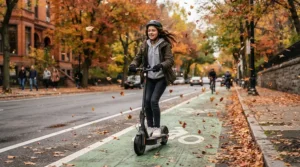
A safer top speed isn’t one magic number, but the evidence points to a clear range. Ontario’s e-scooter pilot caps vehicles at 24 km/h on level ground with a 500W power limit. B.C.’s pilot regulation uses the same 24 km/h ceiling and requires brakes that can stop the scooter within 9 metres from that speed. Some cities go lower still, and Ottawa’s local rules reportedly sit at 20 km/h.
Why so cautious? Crash energy climbs with the square of speed. Ride at 25 km/h instead of 10 km/h and you carry roughly six times the energy into a fall. Pair that physics with a teenager’s still-developing judgment, and the margin for error shrinks fast. Consumer Reports, cited by CP24 this fall, noted that the average tested e-scooter reached 25 km/h back in 2022 and that models keep getting quicker.
So what does a safer top speed look like in practice? Try this progression:
- Weeks 1-4: 10 to 15 km/h, using a Safe or Drive mode, or an app cap.
- First season: about 20 km/h on quiet streets and bike lanes.
- Legal ceiling (24 km/h where applicable): only after consistent braking, shoulder checks and rule-following.
Notice what that implies for shopping. Four of the seven models above claim 30 km/h or more, so for those, the cap isn’t a nice-to-have feature but the entire safety plan. If a scooter can’t be limited, treat its marketed speed as a risk, not a perk.
Source for the pilot caps: Ontario’s e-scooter rules.
What Makes a Beginner-Friendly Speed Limited Electric Scooter?
A beginner-friendly speed limited electric scooter does more than slap a low number on the spec sheet. It controls how speed arrives, how quickly it can be shed, and how easily a nervous rider can stay in command.
Here’s the checklist that separates the genuinely gentle from the merely slow:
- A real speed lock, not just a mode button. Modes help, but an app cap protected by a password is harder for a teen to override on a whim.
- Progressive acceleration. Apps that let you soften throttle and brake response, like the ones on the Hiboy S2 Pro and Segway Ninebot E2 Plus, prevent the jolt that sends beginners backward off the deck.
- A push-off start. The Gotrax Apex won’t engage its throttle until the scooter is already rolling, which takes the lurch out of the first metre.
- A manageable weight. Under about 15 kg means a teen can lift it, and a lighter scooter is easier to steer and stop.
- Two brakes. Redundancy matters most when the rider is still learning how much lever to squeeze.
On those criteria, the Segway Ninebot ZING C20 leads for younger or smaller riders because its 10 km/h Safe mode is built into the hardware. The Segway Ninebot E2 Plus takes the lead for 14 and 15 year olds who need a little more pace but still want a calm Drive mode.
There’s a useful parallel from the professionals. One Canadian city’s shared-scooter program has reportedly asked its operator to hold new riders to 12 km/h for their first three rides, a built-in learning curve you can copy at home with an app cap.
Age-Appropriate Riding Rules: What Canadian Teens Can Legally Do
Age-appropriate riding rules vary so much across Canada that the same 15 year old can be legal in one city and offside in the next. Provinces set the framework, and municipalities decide where scooters may actually go.
Provincial snapshot
- Ontario: Riders must be 16 or older under the pilot program, which runs until November 27, 2029. Anyone under 18 must wear a bicycle helmet, scooters are capped at 24 km/h, and passengers are not allowed. Municipalities must opt in, so your own city’s bylaw decides where you can ride. Penalties run from $250 to $2,500.
- British Columbia: Operators must be 16 or older, wear a helmet approved for cycling use, and ride a scooter weighing no more than 45 kg with a 24 km/h speed capability. The pilot was extended for four years from April 2024, and penalties can reach $2,000 or impoundment.
- Nova Scotia: Children under 14 are already barred from e-scooters, and the province is extending that age floor to e-bikes.
- Quebec: A pilot program has allowed e-scooters on bike paths and roads with limits of 50 km/h or less since July 2023, and Quebec has separate licence requirements for riders aged 14 to 17 on some powered vehicles, so confirm the details with the province.
House rules worth adopting
Law is the floor, not the ceiling. The Canadian Paediatric Society’s 16-and-over guidance is stricter than several provincial rules, so many families set their own standard:
- Helmet on, chin strap buckled, every single ride.
- No passengers, no phone use, no headphones.
- Bike lanes and quiet streets only; never sidewalks.
- No riding after dark without lights.
- Speed cap set by the parent, password known only to the parent.
Because rules keep evolving, check your municipality’s website before the first ride, not after the first ticket.
Parental Controls: How to Set Up Speed Caps, Locks and Ride Modes
Parental controls on an electric scooter for teenagers aren’t a single switch. They’re a layered setup of ride modes, app limits and locks, and they only work if you complete the setup before the first ride. Feature names vary by model and app version, so confirm each step in your manual.
- Pair the app on a parent’s phone first. Segway-Ninebot and Hiboy both offer apps. Keep the account login and the pairing with a parent, not the teen.
- Set the speed ceiling. Use the app’s speed and acceleration settings on models like the Segway Ninebot E2 Plus, or the customizable speed options on the Hiboy S2. On the Segway Ninebot ZING C20, simply keep it in Safe mode.
- Soften the throttle. On the Hiboy S2 Pro, lower acceleration and brake response make the scooter forgiving to beginners.
- Change every default password. The Hiboy S2 lock reportedly ships with a default code, and a default is a code every friend can guess.
- Turn on the lock and tracking features. Use the anti-theft or lock function so the scooter can’t be taken for a spin without you.
- Review settings monthly. If your teen has earned more speed, raise the cap deliberately, in small steps, rather than letting it drift.
A candid limitation: the Gotrax Apex has two speed modes but no true speed limiting, so on that model your “control” is mostly a conversation.
And remember the weak spot in every tech solution. A speed cap only works while a parent holds the password. Pair the settings with clear house rules, and check that the cap is still on before long weekends and holidays.
Safety Gear for Young Riders: The Non-Negotiable Kit
Safety gear for young riders isn’t an accessory category; it’s half of the purchase. A United States Consumer Product Safety Commission follow-up reportedly found helmets worn in only about 18% of e-scooter injury cases it examined, which tells you where the gap is.
- Helmet (non-negotiable). Choose a properly fitted helmet with a recognized standards label. Parachute notes that no helmet test exists yet specifically for e-scooters, and echoes the U.S. commission’s advice: a certified bicycle helmet away from traffic below 32 km/h, and a certified moped or motorcycle helmet near vehicles or at higher speeds. Ontario requires a bicycle helmet for riders under 18, and B.C. requires a cycling-approved one.
- Wrist guards and knee pads. Falls land on hands and knees first. Wrist and knee guards are cheap insurance against the most common breaks and scrapes.
- Lights and reflectors. Ontario’s pilot rules call for a white front light and a red rear light, plus a bell or horn. Add a reflective vest or sash for dusk riding.
- Closed-toe, grippy shoes. Sandals and slick soles are an invitation for a slip at the worst moment.
- A backpack worn properly. Keep weight on the rider’s back, never hanging from the handlebars.
Budget thinking helps here. A quality helmet and a set of pads can run a meaningful fraction of a budget scooter’s cost, and that’s fine. Plan for it up front so it doesn’t get quietly skipped. Replace any helmet after a significant impact, and check the fit again as your teen grows.
One last point: gear reduces injury severity, but it doesn’t replace judgment or speed control. Treat it as the last line of defence, not the first.
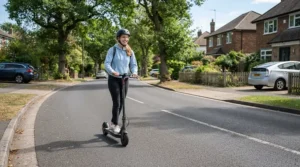
Which Electric Scooter for Teenagers Fits Which Rider? Three Scenarios
Specs only come alive when you attach them to a real routine. These three illustrative profiles are composites for reasoning purposes, not real customers.
Scenario 1: The 14 year old with a short, flat school run
Budget: up to C$450. Route: about 3 km of quiet residential street, most days. Rider: smaller than average and brand new to scooters. The logic points to the Segway Ninebot ZING C20, provided the rider fits its height and weight guidance, because its 10 km/h Safe mode gives a month of calm practice. If the teen is taller or heavier, step up to the Gotrax Apex and treat the push-start throttle as a feature.
Scenario 2: The 15 year old with a bumpy 5 km commute
Budget: C$450-C$600. Route: municipal roads with patchy asphalt, mostly dry-weather riding. Rider: average height, responsible, wants something that won’t leave them stranded. The Segway Ninebot E2 Plus fits because its inner hollow tires can’t go flat and its Drive mode caps pace sensibly. The Hiboy S2 is the alternative if the family prefers a stronger app lock, with the trade-off of firmer ride feel.
Scenario 3: The 17 year old heading to campus
Budget: C$800 and up. Route: 8 km with hills, daily, for the next several years. Rider: tall, experienced, and trusted. Here the Hiboy S2 Pro or Segway Ninebot Max G2 make sense, but only with the cap set to roughly 24 km/h and revisited each term. Weight matters: the Segway Ninebot Max G2 is a heavy carry, so confirm secure ground-floor storage.
A reality check across all three: if the rider is under 16 and your province has an age floor, or you simply want to follow the paediatricians’ guidance, a non-electric kick scooter or bicycle remains the lower-risk starter.
Features That Actually Matter (And Those That Don’t)
Marketing copy loves big numbers. Teen safety lives in smaller, quieter details. Here’s how to sort the signal from the noise.
Worth paying for
- Speed limiting and app locks. These are the features that turn a fast scooter into a manageable one.
- Two braking systems. Redundancy beats a single, overworked brake.
- Lights, front and rear. Visibility is a legal requirement in places like Ontario, and a practical one everywhere.
- UL 2272 certification. It addresses the battery and electrical system, which is the fire-risk heart of the machine.
- Sensible weight. A scooter your teen can carry is a scooter they’ll store safely indoors instead of leaving it locked outside.
Safe to ignore
- Peak motor wattage. A 500W peak figure sounds impressive, but extra power isn’t extra safety. For a teen, it’s mostly extra risk.
- Claimed range. Independent tests have measured Hiboy S2 range at roughly 15 to 21 km against a 27 km claim, and the Segway Ninebot Max G2 at about 48 km against 70 km. Plan around the lower number.
- RGB ambient lighting. The glowing deck on models like the Segway Ninebot ZING C20 and Segway Ninebot E2 Plus is fun, not functional.
- Bag hooks. Convenience features that encourage handlebar loading work against stability.
One quiet exception to the “ignore” list: water resistance ratings. An IPX4 rating, as listed for the Segway Ninebot E2 Plus and the Hiboy S2, covers splashes rather than heavy rain, so treat it as protection from puddle spray and not as permission to ride in a downpour.
Common Mistakes When Buying an Electric Scooter for Teenagers
Most regrets come from the same handful of missteps. Spot them before checkout and you’ll dodge nearly all of them.
- Buying for the teen they’ll be next year. It’s tempting to purchase the faster, bigger model so it lasts. But speed headroom is a liability for a rider who is still learning, so buy for today’s skill level and use the app cap to grow into it.
- Assuming the box speed is the legal speed. Four of the seven scooters reviewed claim 30 km/h or more, while Ontario and B.C. pilots cap at 24 km/h. Marketed speed and permitted speed are different things.
- Skipping the age check. Provincial minimums run from 14 to 16, and the Canadian Paediatric Society recommends 16 or older. A scooter that’s legal to sell isn’t automatically legal for your child to ride.
- Ignoring size limits. A recommended height range or rider weight cap, like the 90 kg limit on the Segway Ninebot E2 Plus, can rule out a model faster than any review.
- Leaving the default password in place. The Hiboy S2 lock reportedly ships with a factory code, which makes it more of a suggestion than a lock.
- Buying obscure listings without certification. If you can’t find UL 2272 or equivalent battery certification, move on, especially for a device that will charge inside your home.
- Spending everything on the scooter. A helmet, pads and lights are part of the price. If the budget has no room for them, it’s the wrong budget.
The pattern is consistent: parents optimize for excitement and range, then discover that control, size and certification mattered more.
Electric Scooter for Teenagers vs Bicycle and Kick Scooter: Which Wins?
An electric scooter for teenagers isn’t automatically the smartest ride. Bicycles and non-electric kick scooters are older technologies with a head start on rider familiarity, and the Canadian Paediatric Society’s guidance leans toward them for younger teens. Here’s how the main options stack up.
| Option | Typical top speed | Exercise value | Injury-risk profile | Best For |
|---|---|---|---|---|
| Electric scooter, speed capped at 15-20 km/h | 15-20 km/h | Low | Moderate; falls and head injuries are the main concern | Commutes for riders 16 and older, or younger riders where rules allow |
| Electric scooter, uncapped | 25-35 km/h | Low | Highest of the options listed | Experienced adults, rarely appropriate for teens |
| Non-electric kick scooter | 10-15 km/h | Moderate | Lower; speeds are modest and the skill transfers easily | Younger teens building balance and road sense |
| Bicycle | 15-25 km/h | High | Moderate; familiar skill with more established rules | Most teens, most trips |
The table makes one thing plain: capping speed is what moves an electric scooter from the “highest risk” row to the “moderate” row. Bicycles keep a clear edge for exercise and rule familiarity, while the electric scooter wins on portability, since it folds into a locker or bus aisle. If your teen’s commute needs to be tucked into a school hallway, the scooter earns its place; if it doesn’t, a bicycle probably does the job with fewer variables.
Parachute also points out that children can build skills on a bicycle or a non-electric kick scooter first, and that’s sound advice for riders at the lower end of the age range.
Long-Term Cost and Battery Care: What Ownership Really Looks Like
The sticker price is only the opening bid. Gear, maintenance and a battery that slowly loses capacity all belong in the total.
| Tier | Model | Price range (CAD) | What the money buys | Best For |
|---|---|---|---|---|
| Budget | Segway Ninebot ZING C20 | C$300-C$450 | Hardware-limited speed | First-time younger riders |
| Budget | Gotrax Apex | C$350-C$450 | Air-filled tires, push-start throttle | Budget 14-15 year olds |
| Budget | Gyrocopters Flash 6.0 | C$300-C$500 | App, smart lock, UL 2272 listing | Shoppers who verify features first |
| Mid-range | Segway Ninebot E2 Plus | C$400-C$600 | Calm modes, flat-proof tires | Daily school commutes |
| Mid-range | Hiboy S2 | C$400-C$600 | App lock, solid tires | Low-maintenance riding |
| Premium | Hiboy S2 Pro | C$550-C$750 | Shocks, bigger battery | Tall teens, rough roads |
| Premium | Segway Ninebot Max G2 | C$1,100-C$1,500 | Suspension, range, speed limiting | Older teens, multi-year use |
The value story depends on how long your teen will ride. The budget tier gives the best safety per dollar for beginners, but riders who outgrow it will need a second purchase. The Segway Ninebot E2 Plus and Hiboy S2 hold the sweet spot for most families, while the Segway Ninebot Max G2 only pays off over several years. Add roughly C$100 to C$200 for a helmet, pads and lights, since no teen should roll without them.
Battery care that protects your home
Lithium-ion batteries are the part of an electric scooter that deserves real respect. Health Canada advises using the battery and charger that came with the device, never using a damaged battery, charging away from exit doors, and storing at room temperature.
- Don’t charge overnight or while no one is home.
- Unplug once the battery is full.
- Stop using the scooter if the battery swells, smells odd, leaks or runs unusually hot.
- Keep it away from heat sources like radiators and direct sun.
Tires and brakes need attention too. Pneumatic tires need regular pressure checks, while solid and inner hollow tires skip that chore, and brake pads or drum adjustments deserve a look every few months.
Frequently Asked Questions
❓ What is the safest electric scooter for teenagers?
❓ How old do you have to be to ride an electric scooter in Canada?
❓ Can parents limit the top speed on an electric scooter?
❓ Do teenagers need a helmet on an electric scooter?
❓ How much does a good electric scooter for teenagers cost in Canada?
Conclusion
Choosing an electric scooter for teenagers comes down to one question: can you control it? A scooter that holds a safer top speed, has two brakes, carries battery certification and pairs with real parental controls beats a faster, flashier model every time.
Here’s the short version of the analysis. The Segway Ninebot ZING C20 is the gentlest start for smaller riders thanks to its 10 km/h Safe mode. The Segway Ninebot E2 Plus is the best all-rounder for a 14 or 15 year old, with flat-proof tires and a calmer default mode. The Hiboy S2 earns its place for families who want an app lock and low maintenance, while the Gotrax Apex offers air-filled tires at a friendly price. The Gyrocopters Flash 6.0 is tempting on paper but deserves extra verification. For tall, mature riders, the Hiboy S2 Pro and Segway Ninebot Max G2 offer long-term hardware, as long as the speed cap stays locked.
Whatever you choose, remember the three non-negotiables: follow your province’s age-appropriate riding rules, gear up with a certified helmet and pads, and set the speed cap before the first ride. And if your teen is under 16, take the Canadian Paediatric Society’s advice seriously and consider a bicycle or non-electric kick scooter first.
✨ Ready to pick your ride?
🛴 Compare your shortlist, click any highlighted product name to check current pricing and availability, and help your teen start safely and ride smart! 🚀
Recommended for You
- Speed Limited Electric Scooter: 7 Safest Picks In Canada 2026
- High Speed Electric Scooter Comparison: 7 Honest Picks 2026
- 40 km/h Electric Scooters Under $2000 CAD: 7 Best Picks (2026)
Disclaimer: This article contains affiliate links. As an Amazon Associate, I earn from qualifying purchases. If you purchase products through these links, we may earn a small commission at no additional cost to you.
✨ Found this helpful? Share it with your friends! 💬🤗
