
In This Article
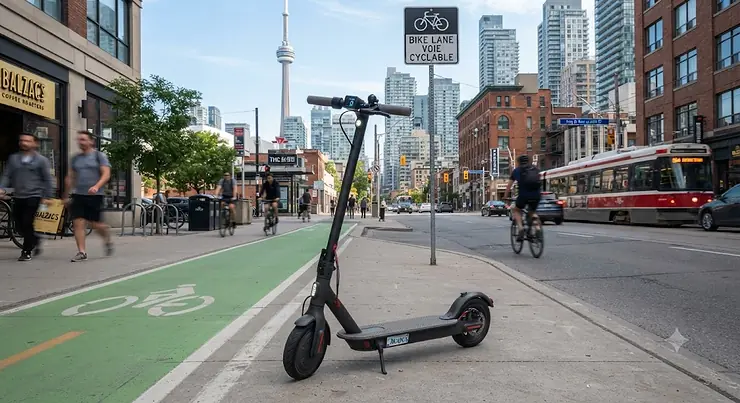
Somewhere between “I could just walk” and “the bus is late again,” a lot of Canadians land on the same idea: maybe a scooter. Not the plastic one your kid abandoned in the driveway — an actual legal electric scooter for commuting, the kind that can shave twenty minutes off a trip without landing you a fine or a confiscated ride. The catch is that Canada doesn’t have one single rulebook for these things. What’s perfectly fine in Ottawa can get your scooter impounded two provinces over, and even within the same city, a bike lane might welcome you on Tuesday and be technically off-limits depending on the posted speed of the road you’re crossing.
That patchwork is exactly why this guide exists. We dug into real specs, real pricing data, and real aggregated review sentiment for seven scooters currently sold to Canadians, and cross-referenced every legal claim against provincial pilot-program rules rather than vibes. A legal electric scooter for commuting, in the Canadian context, generally means a two-wheeled, handlebar-equipped device capped around 24–25 km/h, weighing under 45 kg, with working lights and brakes — built to satisfy the technical requirements set out in provincial pilot regulations like Ontario’s e-scooter pilot program, which currently runs from January 1, 2020 through November 27, 2029. Whether that scooter is actually legal to ride, though, depends just as much on your municipality as on the machine itself.
We’ll walk through seven real models across budget, mid-range, and premium price points, explain what their specs actually mean for your commute, and then get into the regulatory weeds: 25 km/h electric scooter rules, bike lane access, helmet laws, and the province-by-province differences that trip up first-time buyers. No fabricated test rides here — just honest analysis grounded in manufacturer data, aggregated owner sentiment, and the actual text of the regulations.
Quick Comparison Table
| Scooter | Top Speed | Range | Price Range (CAD) | Best For |
|---|---|---|---|---|
| Segway Ninebot MAX G3 | Up to 45 km/h (adjustable) | Up to 80 km | C$1,000–C$1,300 | Riders who cross multiple provinces |
| NIU KQi3 Pro | 32 km/h (app-limitable) | Up to 50 km | Around C$1,100 | Longer mixed-terrain commutes |
| INOKIM Light 2 | Up to 34 km/h (adjustable) | Up to 32 km | C$1,100–C$1,500 | Multi-modal transit riders |
| Gotrax G4 | 20 mph / ~32 km/h (2-speed) | Up to 25 miles claimed | Under C$500 | Budget buyers wanting a warranty |
| iScooter i9 | 25 km/h | Up to 28 km | Under C$400 | Tightest budgets, flat commutes |
| Segway Ninebot E2 Plus | 25 km/h | 25 km | C$400–C$550 | BC/Quebec riders wanting zero guesswork |
| Hiboy S2 Pro | 19 mph / ~30 km/h (2-speed) | Up to 25 miles claimed | C$400–C$600 | Comfort on rougher pavement |
A glance at this table tells you something the marketing copy won’t: several of these scooters ship with a top speed well above what most provinces actually permit on public roads, which means the “Best For” column matters as much as the numbers next to it. The Segway Ninebot E2 Plus and iScooter i9 are the two entries that land right at 25 km/h out of the box, so they need zero speed-limiting fuss in British Columbia or Quebec, while the Segway Ninebot MAX G3 and NIU KQi3 Pro trade that simplicity for adjustable modes that let one scooter serve riders in different jurisdictions.
💬 Just one click — help others make better buying decisions too!😊
Top 7 Legal Electric Scooters for Commuting: Expert Analysis
1. Segway Ninebot MAX G3 — best adjustable-speed pick for multi-province riders
The MAX G3 leads with a 2,000W peak motor and a genuinely absurd 45 km/h top-end capability, but the number that matters for commuters is buried in the mode selector: ECO, DRIVE, SPORT, and SPORT+ let you dial the actual output down to something that satisfies a 24 or 25 km/h provincial cap. Its 80 km claimed range and dual hydraulic suspension put it well ahead of anything else on this list for long, rough commutes, and the 11-inch self-sealing tubeless tires mean a nail in a bike lane won’t end your ride. Based on the spec comparison, this is the scooter for someone who splits time between, say, Ottawa and a cottage town with looser rules, since the same hardware can be tuned to whichever local speed ceiling applies. Reviewers on retailer sites consistently note the smoothness of the SegRide stability system and the confidence of the dual disc brakes, though several also flag that at roughly 24.6 kg, it’s not something you’re casually carrying up three flights of apartment stairs. What the spec sheet won’t tell you is that riding it in its highest gear on a public road in most of Canada would put you offside the law immediately — this is a scooter that demands the rider actually use the app to self-limit, not one that arrives commuter-legal by default.
Pros:
- ✅ Adjustable speed modes fit multiple provincial caps
- ✅ Long 80 km range beats nearly everything on this list
- ✅ Dual hydraulic suspension smooths rough pavement
Cons:
- ❌ Heaviest scooter here at roughly 24.6 kg
- ❌ Top speed requires manual limiting to stay street-legal
Expect to pay in the C$1,000–C$1,300 range depending on retailer bundles; for the range and adjustability on offer, it’s a strong value if you actually use the lower speed modes.
2. NIU KQi3 Pro — best app-controlled commuter for mixed terrain
NIU built the KQi3 Pro around a 350W rated (700W peak) motor that tops out at 32 km/h, with a 20% hill-climbing rating that outperforms most budget rivals on grades. Here’s what to weigh: 32 km/h exceeds Ontario’s 24 km/h pilot cap and Quebec’s 25 km/h limit, but the NIU app lets you throttle the scooter down to a compliant speed mode, which is a genuinely useful feature rather than a marketing footnote. The 50 km range and 486 Wh battery mean most Canadian commutes of 10 km or less leave plenty of buffer for a return trip and a coffee run. Aggregated reviews on NIU’s own storefront and Best Buy Canada’s listing skew positive, with owners frequently praising the ride comfort of the wider 2.5-inch tires and the responsiveness of the app’s speed presets; a recurring critique is the lack of front or rear suspension, which shows up as harsher feedback on cracked pavement and streetcar tracks. NIU Canada also states outright that scooter legality is the owner’s responsibility to verify locally, which honestly reflects the reality every buyer on this list needs to internalize.
Pros:
- ✅ App-adjustable speed modes for legal compliance
- ✅ Strong 20% hill-climbing rating for its price
- ✅ 50 km range covers most round-trip commutes
Cons:
- ❌ No front or rear suspension
- ❌ IP54 rating means avoid heavy rain, not just puddles
Priced around C$1,100 at NIU’s own Canadian storefront, it sits squarely in the mid-range tier and undercuts the MAX G3 while still offering serious range.
3. INOKIM Light 2 — lightest true fold-and-carry legal commuter
INOKIM built a reputation on portability, and the Light 2 backs it up at roughly 13.7–14 kg with a folding handlebar and telescopic stem — genuinely the lightest scooter in this lineup by a wide margin. Its 350W motor (650W peak) tops out around 32–34 km/h depending on the exact model year, which again sits above most provincial ceilings, so the multiple speed modes aren’t optional extras — they’re how you actually keep this thing road-legal. What most buyers overlook about this model is that its dual mechanical drum brakes, while less flashy than hydraulic discs, are prized in aggregated reviews for consistent stopping power in wet Canadian autumns when disc brakes on cheaper scooters can squeal and fade. The UL 2272 electrical safety certification is a meaningful detail for anyone who’ll be charging it in a shared apartment building. Reviewers across multiple scooter-review sites converge on the same theme: build quality and portability are exceptional, but the price reflects it, and the shorter 15.5-inch deck can feel cramped for riders with larger feet.
Pros:
- ✅ Lightest scooter here, easiest for stairs and transit
- ✅ Drum brakes perform well in wet conditions
- ✅ UL 2272 certified for charging safety
Cons:
- ❌ Among the priciest options on this list
- ❌ Shorter deck feels tight for larger riders
Canadian retailers list it in the C$1,100–C$1,500 range, which is a real premium for portability — worth it specifically for anyone combining a scooter with a bus or train leg of their commute.
4. Gotrax G4 — best budget pick with a 2-year warranty
The G4 is Gotrax’s best-selling model for a reason: a 350–500W rear motor, two selectable speed modes (15.5 mph and 20 mph, or roughly 25 and 32 km/h), and 10-inch air-filled tires that smooth out cracked city pavement better than the solid tires found on cheaper rivals. Here’s what the spec sheet won’t emphasize: the lower speed mode lands almost exactly on the 25 km/h ceiling used in British Columbia and Quebec, making this one of the few budget scooters where flipping to “eco” isn’t just about battery savings — it’s about staying compliant. Independent range testing has found the G4 delivering closer to 14–15 miles of real-world range against a claimed 25, which is a common gap across this entire budget category and worth factoring into your actual commute distance. Aggregated owner reviews are consistently positive about the built-in cable lock and digital PIN security feature, and Gotrax backs the G4 with a 2-year warranty — double what many competitors offer at this price. The recurring complaint in testing is underwhelming hill-climbing torque on steeper grades and a rear-only disc brake that benefits from an early adjustment out of the box.
Pros:
- ✅ Lower speed mode lands near the 25 km/h legal cap
- ✅ 2-year warranty doubles most budget competitors
- ✅ Built-in cable lock and PIN security
Cons:
- ❌ Real-world range runs well under the claimed figure
- ❌ Weak hill-climbing torque on steeper streets
Typically found under C$500, the G4 is arguably the best value entry point if your commute is mostly flat.
5. iScooter i9 — cheapest scooter that hits 25 km/h out of the box
At a 350W motor (600W peak) and a top speed of 25 km/h flat, the i9 is one of the only scooters on this list that arrives already tuned to the exact ceiling most provincial pilot programs allow — no app fiddling, no speed-mode juggling. Weighing just 12 kg and folding in about three seconds, it’s built for someone whose commute is a straight, flat run to a transit station rather than a hilly slog. Reviewers covering the budget scooter category consistently frame the i9 as the value leader in its price tier, citing the bright LED headlight and flashing brake-activated taillight as safety features that punch above the price point. On the honest side of the ledger: at this price, corners get cut somewhere, and that shows up as a smaller battery, less refined ride quality over rough pavement, and a general expectation that this scooter is a starter commuter rather than a long-term daily workhorse for someone covering 15+ km round trips.
Pros:
- ✅ Tops out exactly at the 25 km/h legal ceiling
- ✅ Lightest budget option at just 12 kg
- ✅ Folds in roughly three seconds for transit connections
Cons:
- ❌ Smaller battery limits it to shorter commutes
- ❌ Ride quality suffers more over rough pavement
Real Canadian retail listings put it anywhere from under C$400 down toward the C$300s during sales, making it the cheapest entry point on this list.
6. Segway Ninebot E2 Plus — factory-capped at exactly 25 km/h
Segway’s entry-level E2 Plus is refreshingly straightforward: a 300W motor, a 25 km/h top speed, and a 25 km range, all delivered without a single adjustable mode to worry about. On paper this means BC and Quebec riders — the two provinces where the pilot ceiling sits at 25 km/h — can buy this scooter and never think about speed limiting again, since the hardware simply won’t exceed the legal cap. It carries ANSI/CAN/UL-2272 and UL-2271 certification, which matters more than it sounds like for insurance and building-charging policies. Amazon.ca reviewer sentiment aggregated across the listing skews toward praise for the 8.1-inch shock-absorbing hollow tires, which cushion potholes surprisingly well for an entry-level scooter, while a recurring theme in feedback is that the single electronic drum brake, though adequate, isn’t as confidence-inspiring at speed as the disc brakes found on pricier siblings in the Segway lineup.
Pros:
- ✅ Hardware-capped at exactly 25 km/h, no adjusting needed
- ✅ UL 2272 and 2271 certified for battery safety
- ✅ Shock-absorbing tires cushion potholes well
Cons:
- ❌ Single drum brake feels less confident at top speed
- ❌ 25 km range is the shortest on this list
Amazon.ca and Segway’s own storefront generally list it in the C$400–C$550 range, making it one of the best-value legal-by-design options for BC and Quebec commuters specifically.
7. Hiboy S2 Pro — best suspension and cruise control under C$500
The S2 Pro pairs a 500W motor with dual rear suspension and app-based cruise control, two features you don’t typically see together this far down the price ladder. Its two-speed system tops out around 19 mph (roughly 30 km/h) in the higher mode, so — like several entries here — the lower speed setting is the one Canadian commuters in pilot provinces will actually want to leave selected. The 25-mile claimed range and 10-inch honeycomb tires make it a genuinely comfortable option for commuters dealing with older, patchier pavement, which describes a lot of Canadian side streets after a hard winter. Aggregated owner feedback on Hiboy’s own storefront runs mostly positive, particularly around the dual eABS regenerative braking system; a smaller number of reviews mention early battery or overheating issues that Hiboy’s customer service resolved via replacement parts, a pattern worth noting rather than dismissing given how consistently it shows up.
Pros:
- ✅ Dual rear suspension rare at this price point
- ✅ App cruise control reduces wrist fatigue
- ✅ Dual eABS braking system for wet-weather stops
Cons:
- ❌ Higher speed mode exceeds most provincial caps
- ❌ Occasional battery/overheating complaints in reviews
Sale pricing regularly puts the S2 Pro in the C$400–C$600 range, making the suspension and cruise control combo a standout value if you catch a promotion.
What Is a Legal Electric Scooter for Commuting?
A legal electric scooter for commuting is a standing, two-wheeled, battery-powered device — typically capped between 24 and 25 km/h, under 45 kg, and equipped with functioning brakes, lights, and a bell or horn — that meets the technical requirements of a provincial e-scooter pilot regulation and is being ridden in a municipality that has formally opted into that pilot. Meeting the hardware spec is only half the equation; the other half is location-specific permission that can change block by block.
Why 25 km/h Is the Magic Number for Commuter Scooters
The 25 km/h electric scooter threshold isn’t arbitrary — it’s the ceiling written into British Columbia’s and Quebec’s pilot regulations, and it sits close to Ontario’s slightly lower 24 km/h cap. Here’s what most shoppers overlook: a scooter capable of 40 or 45 km/h isn’t automatically illegal to own, but riding it at full throttle on a public bike lane in a pilot province is. That’s why several scooters on our list — the Segway Ninebot E2 Plus and iScooter i9 in particular — are genuinely attractive precisely because they can’t exceed the legal ceiling even if a rider wanted them to, removing a whole category of accidental non-compliance. Scooters like the NIU KQi3 Pro and Segway Ninebot MAX G3 solve the same problem through software, which works fine as long as the rider actually engages the lower mode every single ride rather than defaulting to Sport.
Provincial E-Scooter Regulations at a Glance
| Province | Speed Cap | Helmet Rule | Minimum Age |
|---|---|---|---|
| Ontario (opted-in cities only) | 24 km/h | Required under 18 | 16 |
| British Columbia (pilot communities) | 25 km/h | Required, all ages | 16 |
| Quebec (ATPM pilot) | 25 km/h | Required, all ages | 14 |
| Nova Scotia | 32 km/h (municipalities may lower it) | Required, all ages | 14 |
| Alberta | Personal ownership generally prohibited; rentals only | N/A for personal use | N/A |
Provincial e-scooter regulations diverge in almost every dimension that matters to a buyer: Quebec allows riders as young as 14 while British Columbia and Ontario both require riders to be 16, and Alberta’s two largest cities permit only shared rental fleets rather than personally owned scooters on public roads. As British Columbia’s own electric kick scooter pilot page puts it, these devices are only allowed on roads in participating pilot communities and in line with each community’s own bylaws, which means the province saying yes is never the full answer — you still need your specific city or town to have opted in. The practical takeaway is that a scooter capable of hitting exactly your province’s cap, like the Segway Ninebot E2 Plus in BC, removes one layer of risk, but it never removes the need to confirm your own municipality’s participation before you ride.
Bike Lane Access Rules: Where You Can (and Can’t) Ride
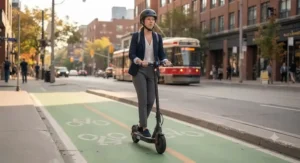
Bike lane access rules for e-scooters generally mirror bicycle rules in participating municipalities: where a road is posted at 50 km/h or lower, you ride in the bike lane if one exists, or as far right as practicable if it doesn’t; where the posted limit is higher, you’re restricted to a bike lane or multi-use pathway if available at all. Toronto remains the starkest exception in the country — electric scooters are not legal to ride there as of 2026, with riding permitted only on private property such as a driveway or parking lot — while a short drive into Mississauga or Brampton puts the exact same scooter fully within its rights on city bike lanes. Sidewalks are essentially universally off-limits for e-scooters across every Canadian jurisdiction we reviewed, with narrow exceptions for direct sidewalk crossings in some cities. If your commute regularly crosses a municipal boundary — say, a Toronto address with an Ottawa-area workplace — the bike lane question becomes less about the scooter and entirely about the map.
Helmet and Safety Requirements by Province
Helmet and safety requirements are where the provinces diverge most sharply, and it’s an easy detail to get wrong. Ontario only requires a helmet for riders under 18, which surprises a lot of adult commuters who assume the rule is universal. British Columbia, Quebec, and Nova Scotia all require a properly fitted helmet for every rider regardless of age, and Quebec goes a step further by also requiring closed shoes, full-finger gloves, and elbow and knee pads for anyone using a hands-free personal transportation device. Beyond helmets, most pilot regulations require working front and rear lights for night riding, a functioning bell or horn, and — per British Columbia’s Electric Kick Scooter Pilot Project Regulation — a requirement that the motor stop propelling the scooter forward the instant the rider releases the accelerator or applies the brakes, a fail-safe built into every scooter on our list. None of the seven scooters here ship with a helmet included, so budget for one separately regardless of which model you choose — CSA or ASTM-certified bicycle helmets satisfy every provincial requirement we found.
Street-Legal Electric Scooter Review Roundup
Pulling together aggregated review sentiment across retailer listings, independent scooter-review outlets, and manufacturer storefronts reveals a consistent pattern across this street-legal electric scooter review category: budget models under C$500 reliably underdeliver on claimed range by 30–45%, while mid-range and premium scooters from C$1,000 and up tend to hit their advertised figures more closely, likely due to more conservative marketing and better battery management systems. Braking is the second recurring theme — disc brakes on the Gotrax G4 and hydraulic discs on the Segway Ninebot MAX G3 consistently outperform the single drum brakes found on the Segway Ninebot E2 Plus, particularly in wet weather. What the aggregated feedback doesn’t support is any claim that a higher price guarantees legal compliance; that’s purely a function of top speed and mode settings, not build quality, and it’s the single most common point of confusion we found across owner forums and comment sections.
How to Choose a Legal Electric Scooter for Commuting
- Confirm your municipality has opted into the provincial pilot — a scooter that’s perfectly legal in the next town over may not be legal on your own street.
- Match top speed to your province’s cap — a factory-limited scooter like the iScooter i9 removes the risk of forgetting to switch modes.
- Measure your actual commute distance both ways — then add 30% buffer to any manufacturer range claim, based on the gap consistently reported in independent testing.
- Prioritize disc brakes if your commute includes hills or heavy traffic — aggregated reviews consistently favour disc over drum brakes for stopping confidence.
- Check the certification label — UL 2272 or an equivalent recognized standard indicates the battery and charging system have been independently tested for fire safety.
- Weigh portability against range — the lightest scooters, like the INOKIM Light 2, trade some battery capacity for ease of carrying onto a bus or train.
- Budget separately for a certified helmet and a lock — neither is included with any scooter on this list, and both are effectively mandatory in most Canadian commuting scenarios.
Practical Usage Guide: Setting Up Your Scooter for Legal Commuting
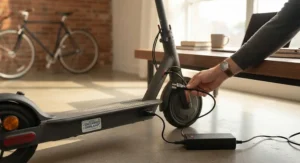
Getting a new scooter road-ready takes more than charging the battery. First, before your first ride, open the manufacturer’s app (available for the Segway Ninebot MAX G3, NIU KQi3 Pro, INOKIM Light 2, and Hiboy S2 Pro on this list) and manually set the speed mode to match your province’s legal cap — don’t assume the default mode is compliant, since several ship in a higher “Sport” setting out of the box. Second, register the scooter’s serial number with the manufacturer where possible; it speeds up warranty claims and can help recovery if it’s stolen, which remains a genuine risk for anything left locked outside. Third, build a light 30-day maintenance habit: check tire pressure weekly on pneumatic-tired models like the G4 and Light 2, inspect brake pads monthly, and never charge the battery immediately after a cold-weather ride — let it return to room temperature first, since charging a frozen lithium battery is a leading cause of avoidable battery degradation. A common first-month mistake is leaving a scooter folded and stored in an unheated garage through a Canadian winter; batteries prefer to be stored around 50% charge in temperatures above freezing, so bringing it inside preserves range and lifespan considerably longer than leaving it in the cold.
Real-World Scenarios: Which Commuter Are You?
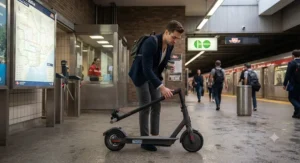
Consider a downtown Ottawa office worker with a 3.5 km commute mostly on posted 40 km/h streets with dedicated bike lanes — the Segway Ninebot E2 Plus or iScooter i9 covers this easily, and Ottawa’s opted-in status combined with its own 20 km/h municipal cap means the factory-limited options remove any guesswork. Now picture a Vancouver commuter riding 8 km each way through Burnaby and into the downtown core, crossing several municipal boundaries with different bylaws layered on the same provincial pilot — here the adjustable-mode NIU KQi3 Pro or Segway Ninebot MAX G3 offers flexibility if any segment of that route has a stricter local limit, plus the range buffer for a genuinely longer round trip. Finally, imagine a Montreal student combining a scooter with a metro connection, folding it to carry onto the train for the second leg of a longer trip — the ultra-portable INOKIM Light 2 or the featherweight iScooter i9 fits that multi-modal pattern far better than the heavier, longer-range MAX G3 ever could.
Common Mistakes When Buying a Legal Electric Scooter for Commuting
A frequent and expensive mistake is buying an off-road-style scooter with a 1,000W-plus motor and a 45+ km/h top speed under the assumption that “it’s sold in Canada, so it must be legal to ride” — availability for purchase and legality for public road use are entirely separate questions, and police in Toronto, Vancouver, and elsewhere have shown willingness to ticket or impound non-compliant devices. A second common error is ignoring the municipal layer entirely and assuming provincial pilot participation is automatic; Toronto’s continued refusal to opt into Ontario’s pilot is the clearest cautionary example in the country. A third mistake is underestimating real-world range by trusting manufacturer claims at face value rather than the 30–45% haircut independent testing consistently applies to budget models, which leaves commuters stranded mid-route more often than it should. Finally, many first-time buyers skip the helmet and lock line items entirely, treating them as optional add-ons rather than the practical necessities that provincial law and basic theft prevention actually make them.
Long-Term Cost & Maintenance
Total cost of ownership on a legal electric scooter for commuting extends well past the sticker price. Budget models like the iScooter i9 or Gotrax G4 typically need replacement tires or a new battery within 18–24 months of daily use, often running C$60–C$150 per part depending on availability, while premium models like the Segway Ninebot MAX G3 and INOKIM Light 2 generally carry sturdier components and longer manufacturer warranties that offset some of the higher upfront cost over a 3-year ownership window. Charging costs are genuinely negligible across every scooter here — typically just a few cents per full charge based on standard residential electricity rates — which is where e-scooters meaningfully undercut both driving and even public transit fares on a per-trip basis for short, regular commutes. Factor in a helmet (roughly C$40–C$120 for a CSA-certified option), a quality lock, and periodic brake pad replacement, and the realistic annual maintenance budget across this category runs somewhere between C$80 and C$250 depending on usage intensity and how well the scooter is stored through winter months. It’s also worth watching the regulatory landscape itself: a recent CBC News report on BC’s e-scooter pilot notes that rising injury numbers among younger riders are already pushing some municipalities toward stricter local rules, which could affect resale value or usage rights for scooters purchased today.
Frequently Asked Questions
❓ Is it legal to ride an electric scooter on the road in Canada?
❓ What is the maximum legal speed for an electric scooter in Canada?
❓ Do I need a helmet to ride an electric scooter in Canada?
❓ Can I ride my electric scooter in a bike lane?
❓ Is my electric scooter legal in Toronto?
Conclusion
Choosing a legal electric scooter for commuting in Canada really comes down to two separate decisions that shoppers often collapse into one: which scooter fits your commute, and which rules apply to wherever you actually live and ride. The Segway Ninebot E2 Plus and iScooter i9 take the guesswork out of speed compliance by simply not being capable of anything faster than the legal ceiling in BC and Quebec, while the NIU KQi3 Pro and Segway Ninebot MAX G3 trade that simplicity for adjustable modes that suit riders covering longer or hillier routes across jurisdictions. Budget-focused commuters get real value from the Gotrax G4 and Hiboy S2 Pro, provided expectations around real-world range are set honestly from day one. Whichever model you land on, the scooter itself is genuinely the easier half of this decision — confirming your city’s pilot status, understanding your bike lane access, and budgeting for a proper certified helmet will do more for a smooth, ticket-free commute than any single spec on a comparison chart.
✨ Don’t Miss These Exclusive Deals! 🔍
Take your commute to the next level with these carefully selected scooters. Click on any highlighted model to check current pricing and availability. A good scooter turns a dreaded commute into the best part of your day!
Recommended for You
- Affordable Removable Battery Electric Scooter: 7 Best Picks (2026)
- Top 7 Removable Battery Electric Scooters Under $1200 CAD (2026)
- 7 Best Electric Scooters With Removable Battery in Canada (2026)
Disclaimer: This article contains affiliate links. As an Amazon Associate, I earn from qualifying purchases. If you purchase products through these links, we may earn a small commission at no additional cost to you.
✨ Found this helpful? Share it with your friends! 💬🤗
