
In This Article
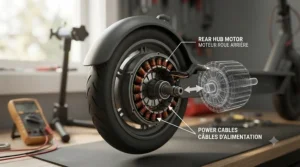
If you’ve spent more than ten minutes shopping for a ride, you’ve probably hit the same wall every Canadian buyer hits: dual motor vs single motor electric scooter, and nobody in the listing photos bothers explaining what that actually changes about your commute. It sounds like a spec-sheet footnote. It isn’t. A dual motor electric scooter puts a brushless hub motor in both wheels instead of just one, which rewires how the machine accelerates, climbs, and grips wet pavement. A single motor scooter drives only the front or rear wheel, and for flat city blocks, that’s often plenty. The difference shows up hardest on hills, in loose gravel, and on the icy shoulder season that most of the country deals with for half the year.
This guide breaks down seven real, currently sold models spanning budget to premium, digs into dual motor electric scooter hill climbing performance, tackles the “does dual motor drain battery faster” question honestly, and walks through electric scooter traction control in a way that actually matters for Canadian streets. We’ll also cover dual motor electric scooter range in Canada under real winter and mixed-terrain conditions, not the lab numbers stamped on the box. By the end, you’ll know exactly which setup fits your commute, your budget, and your province’s rules.
Quick Comparison Table: Dual Motor vs Single Motor at a Glance
| Factor | Single Motor Scooter | Dual Motor Scooter | Best For |
|---|---|---|---|
| Hill climbing | Struggles above 10-12% grade | Handles 15-25%+ grades confidently | Dual: hilly cities like Halifax, Hamilton |
| Acceleration | Gradual, gentler launch | Sharp, near-instant torque | Dual: commuters merging with traffic |
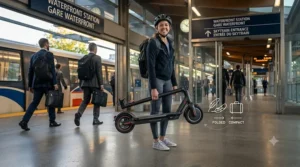
| Typical weight | 27-40 lbs (12-18 kg) | 55-80 lbs (25-36 kg) | Single: transit riders, apartment stairs |
| Price range (CAD) | Under C$600 to mid-C$900s | Mid-C$900s to C$3,000+ | Single: budget-first buyers |
| Wet/loose traction | One wheel can spin freely | Power splits, less wheelspin | Dual: gravel paths, rain-heavy regions |
Looking at the table, the pattern is straightforward: single motor scooters win on price and portability, while dual motor models win almost everywhere power, grip, or elevation change becomes a factor. Weight is the honest trade-off nobody advertises loudly — a dual motor scooter is genuinely a workout to carry up a third-floor walk-up, while a single motor model tucks under a transit seat without complaint. For most Canadian buyers, the deciding factor isn’t which setup is “better” in the abstract, it’s which trade-off matches their actual commute.
Just one click — help others make better buying decisions too! 😊
Top 7 Dual Motor and Single Motor Electric Scooters: Expert Analysis
1. Hiboy S2 Pro — best budget entry point for flat commutes
The Hiboy S2 Pro opens this list because it represents exactly what a single motor scooter should be: simple, light, and honest about its limits. Its 500W rear hub motor pushes a top speed of roughly 30 km/h (19 mph), and the 36V/11.6Ah battery is rated for up to 40 km, though real-world range on mixed terrain tends to land closer to 25-30 km. Based on the spec comparison with its dual motor rivals further down this list, the S2 Pro is clearly built for pavement, not hills — its single hub motor has no partner to share torque with, so a steep incline noticeably slows it down.
What most buyers overlook about this model is the dual braking system pairing an electronic front brake with a rear disc, which gives it stopping performance that punches above its price bracket. Reviewers consistently note the 10-inch honeycomb tires eliminate flat-tire anxiety entirely, since there’s no air chamber to puncture, though the trade-off is a slightly firmer ride over expansion joints and potholes. This is the scooter for a first-time rider, a student commuting across a flat campus, or anyone whose “hill” is really just a gentle parking-lot slope.
Pros:
- ✅ Genuinely light at roughly 36 lbs — easy to carry upstairs
- ✅ Honeycomb tires mean zero flat-tire maintenance
- ✅ App-based cruise control and speed customization
Cons:
- ❌ Single motor struggles noticeably above a 10% grade
- ❌ Not waterproof — IPX4 rating means light splashes only
Expect Hiboy S2 Pro pricing in the C$400-C$550 range at the time of research, and prices may vary by retailer. For anyone who just needs A-to-B transportation on level ground, it’s tough to beat the value here.
2. NIU KQi3 Pro — best triple-braking commuter under C$800
The NIU KQi3 Pro steps up the power slightly with a 700W-peak rear motor and a genuine triple-braking system: front mechanical disc, rear disc, and regenerative electric braking working together. On paper this means roughly 32 km/h top speed and up to 50 km of range, though NIU’s own real-world testing and independent reviewers generally report closer to 35-40 km once you factor in Canadian winter cold, rider weight, and stop-and-go traffic.
Here’s what to weigh: the KQi3 Pro is still a single motor design, so it inherits the same hill-climbing ceiling as any front- or rear-drive scooter, but its wider 9.5-inch tubeless tires and reinforced deck make it noticeably more planted than cheaper competitors. Reviewers consistently praise the self-healing tire compound, which seals small punctures on the spot rather than leaving you stranded. Based on the spec comparison, this model sits in an interesting middle ground — more capable than an entry single motor scooter, but still short of what dual motor torque delivers on an actual hill.
Pros:
- ✅ Triple-braking system stops confidently in wet conditions
- ✅ Self-healing tubeless tires reduce roadside repairs
- ✅ NIU app tracks range, locks scooter, tunes speed modes
Cons:
- ❌ Still a single motor — hills above 15% grade slow it down
- ❌ No front or rear suspension on this trim
Pricing for the NIU KQi3 Pro typically falls in the C$650-C$850 range, check current price before buying since retailer promotions shift often. It’s a strong pick for a commuter who wants more braking confidence without jumping to dual motor weight and cost.
3. NIU KQi3 Max — best single-motor range for longer commutes
If range is the priority and hills aren’t a daily obstacle, the NIU KQi3 Max is worth serious consideration. Its 450W rated motor (with a 900W peak burst for 30 minutes) is paired with a larger 608Wh battery, and NIU rates it for up to 65 km (40.4 miles) — among the longest single motor ranges currently sold. What most buyers overlook about this model is that the rated 450W figure undersells it slightly, since the 900W peak burst is what actually gets you up short, sharp inclines.
Reviewers consistently report the KQi3 Max feels smoother and more composed at speed than cheaper single motor scooters, largely thanks to its wider deck and handlebar geometry. The regenerative braking system quietly tops up the battery every time you slow down, which is a nice bonus rather than a range-changing feature — don’t expect it to meaningfully extend your trip distance. For a Canadian commuter doing 15-25 km round trips on mostly flat routes, this is genuinely one of the better single motor options on the market.
Pros:
- ✅ Among the longest ranges available on a single motor
- ✅ Regenerative rear braking adds a small efficiency bonus
- ✅ Wider deck and handlebars improve high-speed stability
Cons:
- ❌ 25% hill grade rating still lags dual motor scooters
- ❌ No front suspension, so rougher roads transmit more vibration
At the time of research, the NIU KQi3 Max sits in the C$700-C$950 range. It’s the natural upgrade for someone who has outgrown a basic commuter scooter but isn’t ready to pay dual motor prices.
4. Gotrax GX1 — best entry-level dual motor for Canadian hills
This is where the dual motor electric scooter benefits start showing up in the numbers. The Gotrax GX1 pairs two 600W hub motors (48V/15Ah battery) for a combined output that pushes top speed to roughly 50 km/h (30 mph) and meaningfully improves hill-climbing torque compared to any single motor scooter on this list. What most buyers overlook about entry-level dual motor scooters like this one is that you don’t need flagship-level wattage to feel the difference — splitting torque across two driven wheels changes how the scooter launches from a stop, not just its top-end speed.
Based on the spec comparison with the GX2 further down, the GX1’s 25-35 mile range is respectable but not class-leading, and its dual suspension (front and rear) does a solid job smoothing out Canadian road seams and speed bumps. Reviewers consistently flag the GX1 as “the most affordable quality dual motor scooter” in its segment, and the dual braking, dual suspension package genuinely delivers more confidence on rougher pathways than a single motor design at a similar price.
Pros:
- ✅ Dual 600W motors deliver noticeably stronger hill torque
- ✅ Full front-and-rear suspension smooths rough pavement
- ✅ Dual braking system adds real stopping confidence
Cons:
- ❌ Heavier than single motor rivals at roughly 76 lbs
- ❌ Range trails premium dual motor models by a wide margin
The Gotrax GX1 generally lists in the C$900-C$1,300 range before any promotional pricing, so check current price and availability. It’s the clearest entry point into dual motor performance without a four-figure commitment.
5. Gotrax GX2 — best mid-range dual motor for expert city riders
Stepping up from the GX1, the Gotrax GX2 doubles down with dual 800W motors, pushing top speed toward 56 km/h (35 mph) and range up to roughly 40 miles (64 km) per charge. Here’s what to weigh: that extra wattage isn’t just about bragging-rights top speed — it’s the difference between a scooter that hesitates on a steep on-ramp and one that pulls through it without losing momentum, which matters a lot if your commute includes any real elevation change.
The spec sheet won’t tell you this, but user reports suggest the GX2’s quad-coil hydraulic-adjustable suspension (shared with its bigger sibling, the GX3) makes a genuine difference on frost-heaved Canadian pavement compared to the simpler suspension on the GX1. Reviewers consistently describe it as the sweet spot in the Gotrax dual motor lineup — enough power to feel like a real upgrade from entry-level dual motor scooters, without the size and cost of the flagship GX3. It’s aimed squarely at riders who’ve already owned a basic scooter and know exactly what they’re missing.
Pros:
- ✅ Dual 800W motors handle steeper grades with ease
- ✅ Adjustable hydraulic suspension improves ride comfort
- ✅ Meaningfully longer range than entry dual motor rivals
Cons:
- ❌ Noticeably heavier and bulkier than commuter-class scooters
- ❌ Higher price bracket may be overkill for flat-terrain riders
Expect the Gotrax GX2 in the C$1,100-C$1,700 range depending on promotions at the time of research. For a rider who wants dual motor performance without going full off-road, this is a strong middle option.
6. Segway Ninebot GT2 — best traction control for wet Canadian roads
The Segway Ninebot GT2 is a genuine performance machine: dual motors delivering a combined 6,000W peak, a top speed near 70 km/h (43.5 mph), and a substantial 90 km rated range from its 1,512Wh battery. What sets it apart from the rest of this list isn’t just raw power — it’s the Segway Dynamic Traction Control (SDTC) system, which continuously adjusts torque split between the front and rear motor to reduce wheelspin on wet or gravel surfaces. This is precisely the electric scooter traction control feature Canadian riders should be paying attention to, since it directly affects control on rain-slicked bike lanes and early-spring gravel shoulders.
Based on the spec comparison, the GT2’s dual hydraulic-damped suspension and “twin-charging” dual-port charger set it apart from every other model here — you can genuinely halve the recharge time by using both chargers simultaneously. Reviewers consistently note the acceleration is aggressive enough to demand real riding experience before pushing top speed; this isn’t a first scooter. What the spec sheet won’t tell you, but user reports suggest, is that the traction control system meaningfully reduces the “one wheel spins, one wheel grips” feeling that plagues cheaper dual motor scooters on loose surfaces.
Pros:
- ✅ SDTC traction control genuinely improves wet-weather grip
- ✅ Twin-charging cuts recharge time significantly
- ✅ Long 90 km rated range for a performance-class scooter
Cons:
- ❌ Premium pricing puts it out of reach for casual commuters
- ❌ Top speed and power require real riding experience to manage
The Segway Ninebot GT2 typically sits in the C$2,200-C$3,200 range at the time of research, so confirm current pricing before ordering. This is the pick for a confident rider who wants both raw performance and the safety net of traction control.
7. Kaabo Mantis King GT — best premium dual motor for off-road and hill terrain
Closing out the list is the Kaabo Mantis King GT, built around dual 1,100W hub motors for a combined output near 2,200W nominal (with a substantially higher peak). Kaabo’s dual motor lineup as a whole spans roughly 43-62 mph top speeds depending on trim, and the King GT lands solidly in serious-performance territory with strong acceleration and confident climbing on grades that would stall a single motor scooter outright. The spec sheet won’t tell you this, but reviewers consistently note that Kaabo’s coordinated dual-motor controllers distribute heat and wear across both units, which in theory extends motor lifespan compared to a single overworked hub motor doing all the work alone.
What most buyers overlook about this class of scooter is the maintenance complexity that comes with the territory: dual hydraulic suspension, dual hydraulic disc brakes, and a heavier frame all mean more components that eventually need attention. Based on the spec comparison with the Segway GT2, the King GT leans slightly more toward off-road capability with its larger pneumatic tires and more aggressive suspension travel, making it the better pick for riders who split time between paved commutes and gravel trails rather than pure street performance.
Pros:
- ✅ Dual 1,100W motors deliver serious hill-climbing torque
- ✅ Coordinated motor controllers reduce per-motor wear over time
- ✅ Hydraulic suspension and brakes suit mixed paved/off-road use
Cons:
- ❌ Among the heaviest scooters in this roundup to transport
- ❌ Higher maintenance complexity than single motor alternatives
Pricing on the Kaabo Mantis King GT generally falls in the C$2,000-C$2,900 range, and prices may vary at the time of research. It’s the pick for riders who genuinely need off-road-capable dual motor torque, not just city-street speed.
Top 7 Products: Full Spec Comparison
| Product | Motor Setup | Top Speed | Range | Price Range (CAD) | Best For |
|---|---|---|---|---|---|
| Hiboy S2 Pro | Single 500W | ~30 km/h | Up to 40 km | C$400-C$550 | Flat commutes, first scooter |
| NIU KQi3 Pro | Single 700W peak | ~32 km/h | Up to 50 km | C$650-C$850 | Wet-weather braking confidence |
| NIU KQi3 Max | Single 450W (900W peak) | ~38 km/h unlocked | Up to 65 km | C$700-C$950 | Longer single-motor commutes |
| Gotrax GX1 | Dual 2x600W | ~50 km/h | 25-35 miles | C$900-C$1,300 | Entry dual motor, hills |
| Gotrax GX2 | Dual 2x800W | ~56 km/h | Up to 40 miles | C$1,100-C$1,700 | Mid-range dual motor commuting |
| Segway Ninebot GT2 | Dual, 6,000W peak | ~70 km/h | Up to 90 km | C$2,200-C$3,200 | Traction control, wet roads |
| Kaabo Mantis King GT | Dual 2×1,100W | ~43-48 mph | 37-50+ miles | C$2,000-C$2,900 | Off-road, steep grades |
The pattern in this table confirms what the individual reviews already suggested: every dual motor model here beats its single motor counterparts on top speed and hill-climbing capability, but that performance comes bundled with a meaningfully higher price and more weight to haul around. Notice too that range doesn’t scale in a straight line with motor count — the NIU KQi3 Max, a single motor scooter, actually out-ranges the entry-level Gotrax GX1, because battery capacity and motor efficiency matter as much as motor count. If your commute is genuinely flat, that single motor range advantage is worth taking seriously before assuming dual motor is automatically the better buy.
Practical Usage Guide: Getting the Most from a Dual Motor Scooter
Owning a dual motor scooter changes a few daily habits compared to a single motor model. First, most dual motor scooters — including the Gotrax GX1, Gotrax GX2, and Kaabo Mantis King GT — let you toggle between single-motor eco mode and dual-motor full-power mode. Riding in single-motor mode for routine flat stretches genuinely extends your range and reduces wear on the motor you’re not using, saving dual power for hills and headwinds.
Second, charging habits matter more with larger battery packs. Avoid leaving a dual motor scooter’s lithium battery sitting at 0% or 100% for extended periods; charging to roughly 80-90% for daily use and doing a full charge only before long rides extends battery lifespan noticeably over a season. Third, in the first 30 days, check tire pressure weekly if your model uses pneumatic tires — underinflated tires on a heavier dual motor frame accelerate wear and reduce range more than most new owners expect. Finally, budget for more frequent brake pad inspection on dual motor scooters; the extra weight and speed put more load on hydraulic or disc brakes than a lightweight single motor commuter ever will.
Real-World Scenarios: Which Rider Needs Which Motor Setup
Consider three different Canadian riders. A downtown Toronto office worker with a flat 3 km commute along dedicated bike lanes genuinely doesn’t need dual motor torque — something like the Hiboy S2 Pro covers that trip with battery to spare, folds into an elevator-friendly package, and costs a fraction of a performance model. A Halifax commuter climbing a steep hill from the harbour up to the south end every day is a textbook case for dual motor torque; the Gotrax GX1 or Gotrax GX2 would eliminate the mid-hill power sag that a single motor scooter struggles with on that kind of grade.
Then there’s the weekend trail rider in Calgary who splits time between paved pathways and gravel river trails in variable weather. That rider benefits most from the Kaabo Mantis King GT‘s hydraulic suspension and dual-motor traction, or the Segway Ninebot GT2‘s SDTC traction control if paved-road performance matters more than off-road capability. Matching the scooter to the actual terrain and distance of your specific commute, rather than to whichever spec sheet sounds most impressive, is the single biggest factor in whether you’ll be happy with the purchase six months in.
Buyer’s Decision Framework: If This, Then That
If your commute is under 8 km and stays mostly flat, choose a single motor scooter like the Hiboy S2 Pro or NIU KQi3 Pro, because the weight and cost savings outweigh power you’d rarely use. If your route includes any hill steeper than a gentle driveway slope, choose a dual motor scooter, since single motor designs measurably lose speed and torque on inclines above roughly 10-12%. If you ride in rain, wet leaves, or loose gravel regularly, prioritize a model with traction control, such as the Segway Ninebot GT2, over raw wattage alone. If you carry your scooter up stairs or onto transit daily, weight should outrank power in your decision — a lighter single motor scooter will make that daily routine considerably less frustrating than a 70-pound dual motor machine. And if budget is the primary constraint, remember that a well-specced single motor scooter like the NIU KQi3 Max often delivers more real-world range per dollar than an entry dual motor model.
Dual Motor vs Single Motor Electric Scooter: How to Choose
- Map your actual terrain first. Before comparing wattage, walk or drive your commute and note every incline — dual motor electric scooter hill climbing capability only matters if you’re actually facing hills.
- Weigh portability against power honestly. If you’re carrying the scooter indoors, up stairs, or onto a bus, a dual motor scooter’s extra 30-40 lbs is a daily tax, not a one-time trade-off.
- Check the real-world range, not the marketing number. Manufacturer range figures assume ideal conditions; expect 20-30% less in Canadian cold, headwinds, or hilly terrain.
- Consider your province’s speed cap. A scooter capable of 70 km/h is meaningless if your province limits e-scooters to 24-32 km/h on public roads — extra top speed only helps on private land.
- Factor in braking system quality alongside motor count. A single motor scooter with strong dual brakes can be safer overall than an underbraked dual motor model with more speed than stopping power.
- Budget for maintenance complexity. Dual motor scooters generally have more components — two motor controllers, often hydraulic suspension and brakes — that eventually need service.
- Test-ride before committing to premium models. The acceleration difference between single and dual motor is dramatic enough that photos and spec sheets genuinely don’t convey it; a short test ride settles the question fast.
Dual Motor Electric Scooter Hill Climbing: What the Numbers Really Mean
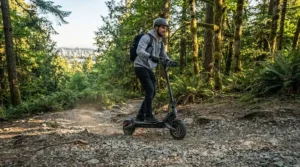
A single motor scooter typically lists a hill-grade rating between 10% and 15%, while dual motor models routinely claim 20%, 25%, or even higher. On paper this means a dual motor scooter should handle roughly double the incline of a single motor one, and in practice, that gap holds up. What’s happening mechanically is straightforward: two motors splitting the climbing torque means neither one has to work at its absolute limit, which preserves speed as the grade steepens. A single motor scooter climbing the same hill has no partner to share the load, so it bleeds speed noticeably as the incline increases, sometimes dropping to a crawl on anything above 12-15%.
Here’s what to weigh: hill-grade ratings are typically tested with a lighter-than-average rider and a fresh battery, so a 200-pound rider on a half-charged battery should expect somewhat less climbing capability than the spec sheet promises from either motor type. For anyone commuting through a hilly Canadian city — Halifax, Hamilton, parts of Vancouver, or Quebec City’s older districts — this single factor probably matters more than top speed or even total range when choosing between motor configurations.
Does Dual Motor Drain Battery Faster? The Real Answer
This is one of the most searched questions around dual motor electric scooters, and the honest answer is: it depends entirely on how you ride, not simply on having two motors. Reviewers consistently note that most dual motor scooters, including the Gotrax GX1 and Gotrax GX2, let you run in single-motor mode for flat, easy stretches, which draws roughly the same power as a comparable single motor scooter. Dual motor mode only draws significantly more current when both motors are actually working — climbing a hill, accelerating hard, or maintaining a high top speed.
What most buyers overlook about this is that dual motor scooters typically ship with proportionally larger batteries specifically to compensate for the higher potential draw, which is why a well-specced dual motor model like the NIU KQi3 Max‘s single-motor sibling can sometimes out-range an entry dual motor scooter despite having less peak power. So the fair comparison isn’t “dual motor drains faster than single motor” in isolation — it’s “dual motor mode, used constantly, drains faster than single motor mode, used constantly,” which is really just physics: more power delivered means more energy consumed, regardless of how many motors deliver it.
Electric Scooter Traction Control in Canada: Why It Matters
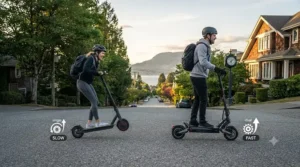
Traction control on an electric scooter works similarly to the system in a car: sensors detect when one wheel is spinning faster than the other — a sign of lost grip — and the controller reduces power to that wheel while sending more to the wheel that still has traction. On the Segway Ninebot GT2, this system (branded SDTC) continuously rebalances torque between the front and rear motor, which is genuinely useful given how often Canadian riders encounter wet pavement, painted crosswalk lines, fallen leaves, or loose gravel shoulders through spring and fall.
Here’s what to weigh: traction control is a dual-motor-exclusive feature in almost every case, because splitting and redirecting torque requires two independently controlled motors to begin with — a single motor scooter has nothing to redirect power to. That said, traction control isn’t a substitute for basic winter riding judgment; Transport Canada and provincial safety authorities are consistent in noting that riders on public roads must follow rules established through provincial pilot programs, and no traction control system changes the fact that most e-scooter tires simply aren’t designed for snow or ice. If you’re riding through a genuinely wet or gravel-heavy Canadian season, a traction-control-equipped dual motor scooter offers a real safety margin — but slowing down remains the most reliable traction control of all.
Dual Motor Electric Scooter Range in Canada: Real-World Numbers vs Spec Sheet
Manufacturer range figures are tested under close-to-ideal conditions: a lighter rider, a flat closed course, mild temperature, and a single steady speed. Canadian riding conditions rarely match that description. Cold temperatures alone can reduce lithium battery range by 15-25%, hills and headwinds compound that further, and stop-and-go city riding draws more power than a steady cruise. Based on the spec comparison across this list, expect the Segway Ninebot GT2‘s rated 90 km to realistically deliver 55-70 km in mixed Canadian conditions, and expect the Gotrax GX1‘s rated 25-35 mile range to land closer to the lower end of that window in winter.
What most buyers overlook about dual motor range specifically is that riding in dual-motor mode constantly, rather than switching to single-motor mode on flat stretches, is the single biggest factor separating advertised range from real-world range — more so than temperature alone. If dual motor electric scooter range in Canada is a top priority, look for models with genuinely large battery packs (1,000Wh or more) rather than assuming dual motor equals long range by default; as the spec comparison shows, a well-built single motor scooter can sometimes out-range an entry-level dual motor competitor.
Common Mistakes When Buying a Dual Motor Electric Scooter
The most frequent mistake is buying based on top speed alone without checking your province’s legal speed cap — a 70 km/h scooter is genuinely wasted capability if local rules cap street riding at 24-32 km/h. The second common mistake is underestimating weight: many first-time dual motor buyers don’t realize they’re committing to a 60-80 pound machine until it’s already in their apartment hallway. A third mistake is skipping the test ride; the torque difference between single and dual motor is dramatic enough in person that photos genuinely don’t do it justice, and some riders find the acceleration more aggressive than expected. Finally, buyers frequently overlook warranty and local parts availability — a dual motor scooter with two motor controllers, hydraulic brakes, and adjustable suspension has meaningfully more that can go wrong, so checking whether a Canadian retailer or distributor actually stocks parts matters more here than with a simple single motor commuter.
Long-Term Cost & Maintenance: Dual Motor vs Single Motor
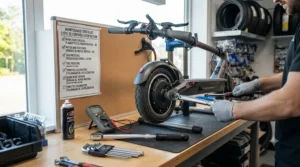
A single motor scooter is generally cheaper to maintain over its lifespan: fewer components, lighter loads on brakes and tires, and simpler troubleshooting if something goes wrong. A dual motor scooter costs more upfront and typically has higher ongoing costs — two motor controllers to potentially service, hydraulic components on premium models like the Kaabo Mantis King GT that need periodic bleeding and pad replacement, and larger, more expensive battery packs to eventually replace.
That said, the cost-per-use calculation shifts depending on how hard you push the scooter. Reviewers consistently note that coordinated dual-motor systems, which share load across two motors rather than overworking one, can actually extend motor lifespan for high-mileage riders compared to a single motor working at its limit every single ride. For a low-mileage, flat-terrain commuter, a single motor scooter’s lower total cost of ownership is the clear winner. For a high-mileage rider tackling hills daily, the dual motor’s shared workload may partially offset its higher upfront and parts costs over a multi-year ownership period.
✨ Ready to find your match? Compare current prices on today’s top picks before you decide. 😊
✨ Don’t Miss These Exclusive Deals!
🔍 Take your electric scooter search to the next level with these carefully compared picks. Click through to check current pricing and availability before you commit. The right motor setup will make every ride — flat commute or steep hill — genuinely more enjoyable. ⚡🛴
Safety, Regulations & Compliance Guide for Canadian Riders
E-scooter rules in Canada are set provincially, not federally, so requirements differ significantly depending on where you live. British Columbia runs its Electric Kick Scooter Pilot Project, which requires riders to be at least 16 years old, wear an approved helmet, and follow rules set both provincially and by participating municipalities. Quebec’s approach is similarly structured but distinct: under its motorized personal mobility device pilot, devices must weigh no more than 36 kg including the battery, have brakes on each wheel, and riders must be at least 14 years old and wear a helmet, with maximum speeds capped around 25 km/h on the relevant roads and paths.
Safety data backs up why these rules exist. A government-published study analyzing hospital injury data found that motorized scooter injuries increased significantly between 2012 and 2017, with fractures and dislocations as the most common injury type. More recently, CBC News reported that the Canadian Institute for Health Information found nearly 1,000 Canadians hospitalized for scooter-related injuries in a recent 12-month period, with roughly half of those specifically involving motorized e-scooters. None of this means dual motor scooters are inherently more dangerous than single motor ones — speed, rider experience, helmet use, and road conditions matter far more than motor count — but it’s a strong reminder that whichever configuration you choose, a certified helmet and a genuine respect for your local speed limits matter more than any spec on the page.
FAQ
❓ Is a dual motor electric scooter worth the extra cost?
❓ Does dual motor drain battery faster than single motor?
❓ What's the best dual motor electric scooter for hill climbing in Canada?
❓ How much range do dual motor electric scooters really get in Canada?
❓ Do I need traction control on an electric scooter?
Conclusion
The dual motor vs single motor electric scooter decision ultimately comes down to matching the machine to your actual commute rather than chasing the biggest spec sheet. Single motor models like the Hiboy S2 Pro, NIU KQi3 Pro, and NIU KQi3 Max deliver genuine value, lighter portability, and surprisingly strong range for flat, short-to-medium commutes — and they cost meaningfully less both upfront and over time. Dual motor scooters like the Gotrax GX1, Gotrax GX2, Segway Ninebot GT2, and Kaabo Mantis King GT earn their higher price tags on hills, in loose or wet conditions, and for riders who simply want stronger acceleration and, in the Segway’s case, genuine traction control for Canadian weather.
Walk your actual commute before you buy, check your province’s speed and age rules, and weigh portability as seriously as power — the “best” scooter on paper isn’t the best scooter for you unless it fits how, where, and how often you actually ride. Whichever setup you land on, wearing a certified helmet and riding within local speed limits matters more than any motor configuration ever will.
Disclaimer: This article contains affiliate links. As an Amazon Associate, I earn from qualifying purchases. If you purchase products through these links, we may earn a small commission at no additional cost to you.
Recommended for You
- 2000W Electric Scooter vs Motorcycle: 7 Surprising Picks (2026)
- 2000W Electric Scooter Canada: 7 Best Picks Tested in 2026
- Electric Scooter for Winter Canada 1500w: 7 Best Picks (2026)
✨ Found this helpful? Share it with your friends! 💬🤗
