
In This Article
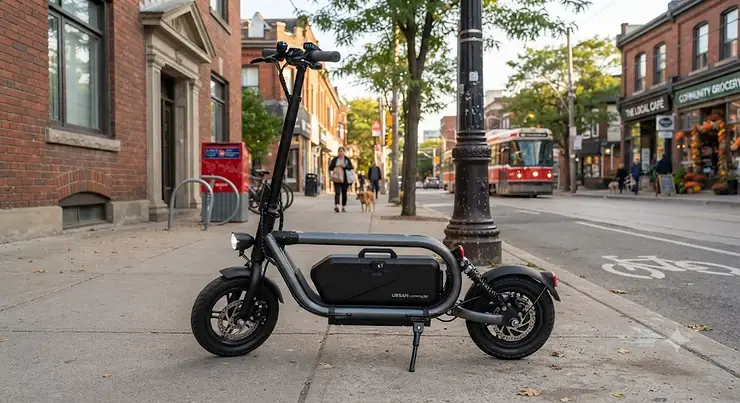
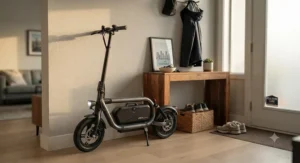
Let’s be honest about the real reason you’re here: you live in a condo with one outlet near the door, or you park your ride in a shed with zero power access, and the idea of hauling an entire 18 kg scooter up three flights of stairs just to charge it sounds like a personal insult. An affordable removable battery electric scooter solves exactly that problem — you pop the pack out, carry the (much lighter) battery inside, and leave the frame wherever it’s convenient. What is an affordable removable battery electric scooter? It’s a budget-to-mid-range e-scooter, typically priced under C$900, whose battery detaches from the deck or stem for indoor charging, theft prevention, or hot-swapping a spare pack to double your range on longer trips. In this guide, we dug through real spec sheets, aggregated review sentiment, and Canadian pricing to rank seven genuinely removable battery electric scooter models — no fixed-battery imposters, no fabricated hands-on claims, just honest analysis grounded in what the manufacturers publish and what actual owners report. 🛴
Canada’s micromobility scene has matured fast, and 2026 has brought sharper competition in the sub-$900 bracket specifically. Whether you’re commuting the “last kilometre” from a GO Transit station, running errands around a university campus, or just tired of babysitting a charging cable that reaches across your kitchen, the models below cover budget, mid-range, and near-premium territory — with honest trade-offs spelled out for each.
Quick Comparison Table
| Scooter | Motor / Battery | Range | Best For |
|---|---|---|---|
| iScooter i9 | 350W / 7.5Ah removable | ~17 mi (27 km) | Ultra-tight budgets |
| Kugoo Kirin HX Pro | 350W / 12.8Ah removable | ~27 mi (43 km) | Lightest carry weight |
| Hiboy S2R Plus | 350W / 8.7Ah key-locked removable | ~22 mi (35 km) | Theft-conscious commuters |
| Hiboy S2 Pro | 500W / 11.6Ah removable | ~25 mi (40 km) | Best all-round value |
| TurboAnt X7 Pro | 350W / 10Ah removable | ~30 mi (48 km) | Longest single-battery range |
| Segway Ninebot F2 Plus | 350W / 7.8Ah removable | ~19 mi (30 km) | Brand trust and app polish |
| NIU KQi2 Pro | 300W (600W peak) / 7.6Ah removable | ~25 mi (40 km) | Reliability-first buyers |
Looking across the table, the spread from iScooter i9 to NIU KQi2 Pro tells you most of what you need to know about this category: more money buys you a bigger battery, a stronger motor, and — usually — a more refined removal mechanism (keyed locks, tool-free latches, sealed connectors). The TurboAnt X7 Pro stands out as the range champion among true swappable-battery models, while the Hiboy S2R Plus wins on portability and anti-theft design rather than raw distance. If your commute is under 10 km each way, don’t overspend on range you’ll never use — the extra dollars are better spent on build quality and a certified battery management system.
💬 Just one click — help others make better buying decisions too!😊
Top 7 Affordable Removable Battery Electric Scooters: Expert Analysis
1. iScooter i9 — lowest entry price with a genuine removable pack
The iScooter i9 opens this list because it proves you don’t need to spend big to get a real detachable battery, not just a marketing buzzword. Its 350W motor and 36V 7.5Ah lithium battery deliver a claimed range of roughly 17 miles (27 km) and a top speed around 17-19 mph (27-30 km/h), figures that are modest but honest for the price bracket. Based on the spec comparison with its closest budget rivals, the i9’s 8.5-inch tires and dual e-braking system are reasonably generous for an entry scooter — most sub-C$450 competitors skimp on one or the other. This is the pick for a first-time rider, a student on a tight budget, or anyone who wants to try micromobility before committing to a pricier model. Reviewers consistently note that the one-touch folding mechanism and digital code lock work well for the price, though several also mention that real-world range runs noticeably under the marketed 17 miles once rider weight and hills enter the equation — a pattern common across this entire budget tier, not unique to iScooter. The removable battery itself draws praise for making apartment charging painless.
Pros:
- ✅ Lowest starting price in this roundup
- ✅ Genuinely removable battery, not just marketed as one
- ✅ Digital code lock adds basic theft deterrence
Cons:
- ❌ Real-world range trails the advertised 17 miles
- ❌ No suspension, so rougher pavement transmits more shock
At a price generally under C$450, the iScooter i9 is a smart value pick if your commute is short and mostly flat — just temper expectations on range once winter cold or hills enter the picture.
2. Kugoo Kirin HX Pro — lightest full package for apartment living
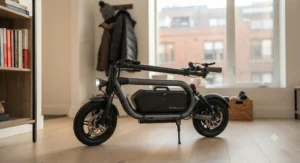
The Kugoo Kirin HX Pro’s standout feature is its unusually large battery-to-weight ratio: a 12.8Ah removable pack squeezed into a 14 kg (about 31 lb) frame, which is lighter than several rivals with smaller batteries. That combination gives it a claimed range around 27 miles (43 km) at a 350W motor output, numbers that punch above the HX Pro’s price class on paper. What most buyers overlook about this model is that the front-wheel regenerative braking paired with a rear disc brake gives a more balanced stopping feel than the single-brake setups common on similarly priced scooters. This model suits commuters who need to physically carry their scooter part of the way — up a stairwell, onto a bus, into an office — because the whole package stays manageable even without pulling the battery. Aggregated buyer sentiment around Kugoo’s HX-series scooters is generally positive on value and portability, though owners flag that after-sales support and parts availability can be slower than for bigger-name brands like NIU or Segway, since Kugoo distribution is more fragmented across smaller retailers.
Pros:
- ✅ Exceptional range-to-weight ratio for the price
- ✅ Removable battery works with an available spare
- ✅ Dual braking system (regenerative front, disc rear)
Cons:
- ❌ Smaller brand means less consistent after-sales support
- ❌ 10-inch tires are pneumatic but not puncture-resistant
Priced around C$480-C$560 at the time of research, the HX Pro rewards buyers who prioritize range and light carry weight over brand-name backup.
3. Hiboy S2R Plus — best theft-deterrent removable battery design
Hiboy built the S2R Plus around a specific pain point: battery theft and lock-picking on scooters parked in shared bike racks. The standout feature is a keyed battery release — you need the physical key to pull the 4.8 lb pack, which is a meaningfully different security model than the tool-free latches on most budget scooters. Spec-wise, it runs a 350W motor (500W peak) with a 36V 8.7Ah battery for a claimed 22-mile (35 km) range at up to 19 mph. Here’s what to weigh: the keyed system is more secure, but it’s also one more thing to lose, and Hiboy sells replacement batteries and keys separately if that happens. Reviewers who compare it directly against the plain Hiboy S2 describe the tradeoff as intentional — you’re sacrificing a bit of raw range for meaningfully better theft resistance and a lighter 31.5 lb overall frame, among the lightest in this roundup. For commuters who lock their scooter outside a workplace or transit station for hours at a time, that keyed battery is arguably worth more than a few extra kilometres of range.
Pros:
- ✅ Keyed, theft-deterrent battery removal system
- ✅ Lightest overall frame weight in this lineup
- ✅ Optional second battery doubles range to ~44 miles
Cons:
- ❌ Losing the battery key means a locked-out battery
- ❌ 9-inch tires are smaller than most rivals here
Expect a price in the C$520-C$620 range, positioning the S2R Plus as a security-focused upgrade over the base iScooter and Kugoo entries above.
4. Hiboy S2 Pro — best all-rounder for hilly Canadian commutes
The Hiboy S2 Pro is the scooter we’d point most first-time buyers toward, because it balances power, price, and Hiboy’s now well-established parts ecosystem better than almost anything else under C$700. Its 500W motor and 36V 11.6Ah removable battery deliver a claimed 25-mile (40 km) range at 19 mph, and — based on the spec comparison with the smaller-motored S2 and S2R Plus above — the extra wattage genuinely matters on inclines. A 350W motor labours on a 10-15% grade; a 500W motor handles it without the noticeable speed sag that frustrates budget-scooter owners in hillier cities like Vancouver or Halifax. The dual rear suspension is a small but real comfort upgrade over the fully rigid budget models. Reviewers consistently report satisfaction with the cruise control and Hiboy app’s speed-tracking, and the aggregated sentiment across owner reviews skews notably positive on reliability compared to lesser-known budget brands, likely reflecting Hiboy’s longer track record and wider spare-parts availability in North America.
Pros:
- ✅ 500W motor noticeably outperforms 350W rivals on hills
- ✅ Dual rear suspension smooths out rougher pavement
- ✅ Strong spare-parts and community support ecosystem
Cons:
- ❌ Heavier than the S2R Plus, less ideal for stair-carrying
- ❌ Optional seat and accessories add to the total cost
Typically priced around C$560-C$680, the S2 Pro is the model most buyers should default to unless a specific need (extreme portability, maximum range) pulls them elsewhere.
5. TurboAnt X7 Pro — longest range on a single removable battery
If range anxiety is your main hesitation about an affordable removable battery electric scooter, the TurboAnt X7 Pro answers it directly: a 36V 10Ah pack rated for up to 30 miles (48 km) on a single charge, the longest figure in this entire roundup, paired with a 350W front-hub motor. TurboAnt essentially pioneered the mainstream removable-battery scooter category years ago, and the X7 Pro remains the reference point competitors are measured against. What the spec sheet won’t tell you, but reviewers note repeatedly, is how convenient the battery-in-the-stem placement is for one-handed charging — you don’t need tools, and the 6.5 lb pack slides out in seconds. The tradeoff Hiboy’s S2 Pro avoids: this design makes the X7 Pro slightly front-heavy when lifting it unfolded by the handlebars, something owners mention when carrying it up curbs. For riders who want to buy a second battery and effectively double their range to roughly 60 miles for weekend exploring, this is the standout option in the sub-C$900 tier.
Pros:
- ✅ Longest single-charge range among removable-battery picks
- ✅ Tool-free battery swap in the handlebar stem
- ✅ Second battery pack available to extend range further
Cons:
- ❌ Front-heavy balance when carrying it unfolded
- ❌ No suspension, relying entirely on tire cushioning
At roughly C$700-C$820 depending on retailer promotions, the X7 Pro justifies its higher price primarily through range, not raw power — a distinction worth understanding before you buy.
6. Segway Ninebot F2 Plus — best brand trust and app ecosystem
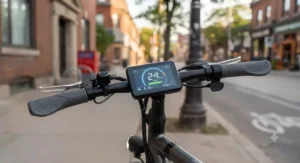
Segway-Ninebot’s F2 Plus brings a level of build polish and software support that budget brands generally can’t match, and its removable 36V 7.8Ah battery is a genuine modular component designed for field replacement after 300-500 charge cycles. The 350W motor produces a claimed 18.6-mile (30 km) range with front disc and rear E-ABS braking plus a traction control system that smaller brands rarely bother implementing at this price. Based on the spec comparison, the F2 Plus trades outright range for refinement: Apple Find My integration, turn signals on some trims, and a mobile app that reviewers describe as noticeably more stable than many budget-brand apps, which commonly draw complaints about Bluetooth dropouts. This is the pick for buyers who’ve been burned by flaky no-name electronics before and are willing to pay a premium for a company with an established Canadian service network. Aggregated owner sentiment frequently cites the “it just works” reliability factor as the deciding purchase reason, even when raw specs look similar to cheaper alternatives.
Pros:
- ✅ Strong brand reputation and established service network
- ✅ Traction control system rare at this price point
- ✅ Stable companion app with Find My support
Cons:
- ❌ Range trails the TurboAnt X7 Pro by roughly 11 miles
- ❌ Professional installation recommended for battery swaps
Expect a price around C$650-C$780, positioning the F2 Plus as the “buy once, worry less” option for risk-averse commuters.
7. NIU KQi2 Pro — most polished pick near the C$900 ceiling
Closing out the list at the top of this budget category, the NIU KQi2 Pro brings a 48V architecture that’s electrically more efficient than the 36V systems used by every other scooter on this list, plus a 300W motor (600W peak) driving a claimed 25-mile (40 km) range. The standout feature is NIU’s drum brake, engineered to sit flush inside the front wheel rather than bolted externally — a small design choice that reduces exposed moving parts and maintenance fuss. Here’s what to weigh: NIU’s removable battery system is well regarded for longevity and NIU’s own retail stores in Toronto and Montreal offer a level of in-person support that’s rare among budget e-scooter brands, but the KQi2 Pro sits at the very top of the “affordable” range for this category, pushing close to C$900 before taxes. Reviewers consistently praise the regenerative braking and four riding modes for genuine everyday usability, and the aggregated sentiment across long-term owners skews toward satisfaction with battery longevity specifically, likely reflecting NIU’s more mature battery management system compared to newer market entrants.
Pros:
- ✅ Efficient 48V electrical architecture
- ✅ In-person Canadian retail support (Toronto, Montreal)
- ✅ Strong long-term battery longevity sentiment among owners
Cons:
- ❌ Sits near the top of the affordable price bracket
- ❌ Lower top speed than TurboAnt X7 Pro or Hiboy S2 Pro
At around C$780-C$900, the KQi2 Pro is the “buy it for the last time” option in this lineup, best suited to riders who value long-term durability over rock-bottom price.
Removable Battery vs Fixed Battery Electric Scooters
The removable battery vs fixed battery electric scooter question comes down to a simple trade: convenience and modularity versus a slightly lower price and, often, a marginally more rigid frame. Fixed-battery scooters like the classic GoTrax GXL series integrate the battery directly into the deck, which typically shaves manufacturing cost and can lower the centre of gravity for a steadier ride. But that integration means charging always requires hauling the entire scooter to an outlet, and a failing battery usually means a shop visit rather than a five-minute swap.
| Factor | Removable Battery | Fixed Battery |
|---|---|---|
| Charging convenience | Detach and charge indoors | Must move whole scooter to outlet |
| Range extension | Swap in a spare pack | Not possible without a shop |
| Theft risk when parked | Lower (can remove battery) | Higher (battery stays exposed) |
| Typical price | Slightly higher | Slightly lower |
| Best For | Apartment/condo dwellers, commuters parking outdoors | Buyers prioritizing lowest sticker price |
Interpreting this table, the fixed-battery route makes sense mainly for garage-owning riders who never need to carry the scooter far and simply want the cheapest reliable option, such as a basic GoTrax GXL V2. For nearly everyone else — students, condo residents, transit commuters — the flexibility of a removable pack tends to outweigh the modest price premium, particularly once you factor in reduced theft exposure. On a total cost of ownership basis, a removable-battery scooter can also come out ahead over three to four years, since a degraded battery is a simple, often self-serviceable swap rather than a full scooter replacement or an expensive shop repair.
Entry-Level Swappable Battery Models for New Riders
If you’ve never owned an e-scooter and just want to test the waters, the entry-level swappable battery models in this guide are the iScooter i9 and the Kugoo Kirin HX Pro. Both keep the total investment low while still delivering the core benefit that separates this category from cheap fixed-battery alternatives: you’re never locked into charging near a single outlet. New riders should treat that first scooter as a learning tool rather than a forever purchase — you’ll figure out fast whether you need more range (push toward the TurboAnt X7 Pro), more stability on rough pavement (look at the Hiboy S2 Pro‘s suspension), or more theft protection (the Hiboy S2R Plus‘s keyed battery).
A practical tip most first-time buyers miss: test the battery-release mechanism in the store or in an unboxing video before buying, since some entry-level swappable battery models require noticeably more hand strength or dexterity to release than premium models with spring-assisted latches. If you have limited grip strength, prioritize models reviewers describe as “tool-free” and “one-hand” removable over ones requiring two-handed prying.
How to Choose an Affordable Removable Battery Electric Scooter
Choosing between these seven models comes down to five decision points, in the order most buyers should weigh them:
- Commute distance first. Measure your actual round trip. A 10 km daily round trip needs roughly half the range these scooters claim on paper, once you build in a safety margin for cold weather and hills.
- Battery removal mechanism second. Tool-free latches (TurboAnt, Kugoo) suit daily swappers; keyed systems (Hiboy S2R Plus) suit security-conscious commuters willing to trade a bit of convenience.
- Motor wattage for your terrain. Flat city grids are fine with 250-350W; anything with sustained hills over 10% grade benefits from 500W, like the Hiboy S2 Pro.
- Certification matters more than horsepower. Look for UL 2272 or equivalent battery-management certification before comparing top speeds — an uncertified fast scooter is a worse buy than a certified slower one.
- Spare battery availability. Confirm the manufacturer sells replacement and spare batteries directly; some smaller import brands quietly discontinue battery stock within a year or two, stranding otherwise-fine scooters.
- Total weight including the battery. If you’ll carry the scooter up stairs regularly, prioritize sub-35 lb models like the Hiboy S2R Plus or Kugoo Kirin HX Pro over heavier long-range options.
- Warranty coverage on the battery specifically, not just the frame — some warranties exclude batteries after 90 days even when the frame is covered for a year.
Setting Up and Maintaining Your Scooter: The First 30 Days
Getting a new removable-battery scooter right in its first month prevents most of the early-ownership complaints that show up in review sections. On day one, charge the battery fully before your first ride, even if it arrives partially charged — lithium cells calibrate more accurately after a full cycle. Check tire pressure against the manufacturer’s PSI rating weekly for the first month; underinflated tires are the single most common cause of range complaints in owner forums, more than any actual battery defect.
A common first-30-days mistake is leaving the battery attached to the charger overnight, every night, out of habit from phone charging routines. Most manufacturers, including Hiboy and TurboAnt, recommend disconnecting once the indicator light shows full, since prolonged trickle charging accelerates long-term capacity loss. Similarly, avoid fully draining the battery to zero repeatedly; stopping a ride around the 10-15% mark and recharging soon after extends cell lifespan meaningfully compared to habitual full discharges. Finally, inspect the battery release mechanism itself in the first week — tighten any loose thumbscrews on keyed models like the S2R Plus, and confirm the locking pin engages fully so the pack can’t rattle loose over rough pavement.
Charging Indoors vs Outdoors: What Actually Matters
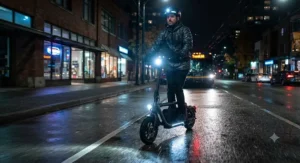
The whole appeal of a removable battery electric scooter is flexibility on charging indoors vs outdoors, but that flexibility comes with real safety obligations. Charging indoors is generally the better default: it protects the battery from temperature extremes and reduces theft risk, but it also means following basic lithium-ion precautions. Health Canada’s official battery safety guidance recommends charging on a hard, non-flammable surface away from soft furniture like beds or couches that can trap heat, and using only the charger that came with your specific scooter model rather than a generic substitute.
Charging outdoors or in an unheated garage introduces a different problem entirely: cold-soaked lithium cells shouldn’t be charged below roughly 0°C, since doing so can cause internal lithium plating that permanently reduces capacity. If you commute through a Canadian winter, the practical solution most owners land on is bringing the removable battery inside to warm to room temperature before plugging it in, rather than charging the whole scooter outside in a cold shed. This is precisely the scenario where a removable pack earns its price premium over a fixed-battery design — you simply can’t do this workaround if the battery is welded into the deck.
Real-World Scenarios: Which Rider Are You?
The Downtown Condo Commuter: Budget around C$550-C$700, 5 km daily commute, no outdoor storage. The Hiboy S2R Plus fits well here — its keyed removable battery and light frame suit someone taking the scooter into an elevator and a small apartment daily, where every extra pound matters and theft deterrence in the building’s bike room is a real concern.
The University Student on a Tight Budget: Budget under C$500, campus commute under 5 km, charges in a dorm room with one shared outlet. The iScooter i9 or Kugoo Kirin HX Pro make sense, since the removable battery means only a lightweight pack needs to occupy that single outlet overnight rather than the whole scooter blocking a hallway.
The Suburban Transit Connector: Budget C$700-C$900, 12-15 km round trip combining a train ride with scooter legs on both ends, occasional hills near home. The TurboAnt X7 Pro or NIU KQi2 Pro suit this profile — enough range to comfortably cover both legs without daily charging anxiety, plus the durability to handle more frequent folding and unfolding at station entrances.
Common Mistakes When Buying a Removable Battery Scooter
The most frequent mistake is buying on advertised range alone without checking real-world testing figures — manufacturer numbers are measured under ideal conditions (flat ground, moderate rider weight, ideal temperature) that rarely match daily Canadian commuting. A second common mistake is ignoring the battery’s certification status entirely; a scooter without UL 2272 or an equivalent independent safety certification can save you C$50-C$100 upfront but exposes you to meaningfully higher fire risk, a trade most buyers wouldn’t knowingly make if it were clearly labelled. Third, buyers frequently underestimate winter range loss, which can reduce effective distance by 20-30% in cold weather regardless of brand. Finally, many first-time buyers skip checking whether spare batteries are actually purchasable for their chosen model before buying — discovering a discontinued battery line two years in is a frustrating and entirely avoidable problem.
Long-Term Cost & Battery Replacement: What It Really Costs
Every lithium battery degrades gradually, typically losing meaningful capacity after 300-500 full charge cycles — roughly one to three years of regular commuting depending on your riding frequency. Understanding battery replacement cost upfront helps you judge true total cost of ownership rather than just the sticker price. Across the models in this guide, replacement battery packs generally run in the C$120-C$260 range depending on capacity and brand, with larger 10-15Ah packs like those in the TurboAnt X7 Pro and Hiboy S2 Pro sitting toward the higher end, and smaller 7-8Ah packs like the Segway Ninebot F2 Plus’s toward the lower end.
Framed as cost-per-kilometre, a C$180 replacement battery rated for roughly 500 cycles at 30 km per charge works out to well under a cent per kilometre over its lifespan — genuinely competitive with public transit fares over the same distance, and dramatically cheaper than car ownership. The real financial advantage of removable-battery scooters shows up here specifically: because the pack detaches as a standalone component, replacing it is typically a five-minute DIY job rather than a shop visit, saving the labour cost that fixed-battery designs often require when the integrated pack eventually fails.
Safety, Regulations & Riding Rules Across Canada
Electric scooter legality in Canada is a patchwork of provincial pilot programs rather than one federal standard, which surprises many first-time buyers. In British Columbia, for example, the province’s official electric kick scooter rules require riders to be 16 or older, wear an approved helmet, and stick to a maximum continuous motor output of 500 watts — specifications every scooter in this guide comfortably meets. Ontario, Quebec, and other provinces run their own pilot frameworks with different age minimums, permitted riding areas, and municipal opt-in requirements, so checking your specific city’s rules before your first ride matters more than checking a single national law that doesn’t fully exist for scooters.
Beyond road legality, battery fire safety deserves equal attention given rising incident numbers across Canadian cities. Toronto Fire Services has publicly flagged lithium-ion battery fires from e-bikes and e-scooters as a growing risk, and CBC’s coverage of e-scooter battery fire safety highlights that most incidents trace back to damaged batteries, non-approved chargers, or charging on soft furniture that traps heat. None of the seven scooters reviewed here have documented widespread fire issues, but every removable-battery owner should treat the pack with the same care as any other lithium-ion device: buy from the manufacturer directly for replacements, avoid physical damage, and never charge a swollen or visibly damaged battery.
🔍 Take your commute to the next level with these carefully selected scooters. Click on any highlighted item to check current pricing and availability. These picks will help you find the reliable, affordable ride your daily routine deserves! ✨
Frequently Asked Questions
❓ Is a removable battery electric scooter worth the extra cost over a fixed-battery model?
❓ How long do removable scooter batteries actually last?
❓ Can I charge a removable scooter battery in a Canadian winter?
❓ What is the battery replacement cost for these scooters?
❓ Are affordable removable battery electric scooters legal to ride in Canada?
Conclusion
Across budget, mid-range, and near-premium tiers, the honest takeaway from comparing these seven models is that “affordable” and “genuinely useful removable battery” aren’t mutually exclusive anymore. The iScooter i9 and Kugoo Kirin HX Pro prove real swappable-battery convenience doesn’t require a big budget, while the Hiboy S2 Pro remains the sensible default for most Canadian commuters dealing with hills and mixed terrain. If range anxiety is your main concern, the TurboAnt X7 Pro delivers the longest single-charge distance in this lineup, and buyers who value brand backing and long-term battery health should lean toward the Segway Ninebot F2 Plus or NIU KQi2 Pro.
Whichever model you choose, remember that the battery itself — not the frame, not the motor — is the component that will define your ownership experience three years from now. Prioritize certified battery management, confirm spare-battery availability before buying, and follow basic charging safety practices from week one. Do that, and any scooter on this list should serve you reliably through several Canadian commuting seasons.
✨ Don’t Miss These Exclusive Deals!
🔍 Take your daily commute to the next level with these carefully selected removable battery electric scooters. Click on any highlighted item to check current pricing and availability. These picks will help you create a genuinely convenient, affordable ride your whole routine will benefit from!
Recommended for You
- Top 7 Removable Battery Electric Scooters Under $1200 CAD (2026)
- 7 Best Electric Scooters With Removable Battery in Canada (2026)
- 7 Best Electric Scooters for Apartment Charging (2026 Guide)
Disclaimer: This article contains affiliate links. As an Amazon Associate, I earn from qualifying purchases. If you purchase products through these links, we may earn a small commission at no additional cost to you.
✨ Found this helpful? Share it with your friends! 💬🤗
