
In This Article
Here’s the thing nobody tells you before you start shopping for 25 km/h electric scooters under $700 CAD: the speed number on the box is the least interesting spec in the entire listing. What actually decides whether you love or loathe your scooter six weeks from now is tire type, motor placement, and whether the battery still behaves once a Canadian October shows up uninvited. A 25 km/h electric scooter is, by definition, a lower-powered, typically 250-500W personal mobility device governed to roughly 24-25 km/h — the speed ceiling that lines up with most provincial pilot programs and municipal e-scooter bylaws across the country.
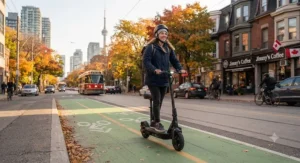
That governed speed isn’t a marketing weakness, either. It’s the sweet spot where a scooter is fast enough to beat walking and transfers by a wide margin, yet slow enough that you’re not white-knuckling the handlebars every time a pothole shows up on a bike lane. This guide walks through seven real, currently available models — sourced from manufacturer spec sheets, retailer listings, and aggregated owner feedback — so you can figure out which one actually fits your commute, your budget, and your province’s rules. We’ll cover the true budget tier (a 25 km/h electric scooter under $500 CAD is very much a real category, not a myth), the mid-range sweet spot approaching $700, speed governance tech, and the messy patchwork of municipal e-scooter bylaws that determines whether you can legally ride any of this on public pavement in the first place.
Quick Comparison: 25 km/h Electric Scooters Under $700 CAD
| Scooter | Motor | Governed Speed | Range | Price Range (CAD) | Best For |
|---|---|---|---|---|---|
| GOTRAX Apex | 250W | 25 km/h | ~20-24 km | C$300-C$400 | Affordable everyday scooter |
| iScooter i9 | 350W | 25 km/h | ~28 km | C$300-C$450 | 25 km/h electric scooter under $500 CAD |
| Gotrax GXL V2 | 250W | 25 km/h | ~19 km | under C$300 | Tightest possible budget |
| NIU KQi100P | 450W rated | 25 km/h | ~30-35 km | C$340-C$450 | Suspension on a budget |
| Segway Ninebot E2 Pro | 350W (750W peak) | 25 km/h | ~25-30 km | C$450-C$600 | Brand trust and resale value |
| Hiboy S2 | 350W | 25 km/h (governed) | ~27 km | C$400-C$550 | Entry-level commuter scooters |
| Qlaway 8.5″ | 350W (700W peak) | 25 km/h (governed) | ~25-35 km | C$350-C$450 | Cruise control on a budget |
A pattern jumps out immediately: motor wattage climbs from 250W to nearly 700W peak across this list, yet the governed top speed barely moves. That’s speed governance tech doing its job — capping output electronically so the scooter stays street-legal under most municipal e-scooter bylaws, regardless of how much raw power the motor could otherwise deliver. What actually separates these seven models is range, tire type, and how gracefully they handle Canadian pavement, not the number on the spec sheet everyone fixates on.
💬 Just one click — help others make better buying decisions too!😊
Top 7 25 km/h Electric Scooters Under $700 CAD: Expert Analysis
1. GOTRAX Apex — best all-round affordable everyday scooter
The Apex earns its “affordable everyday scooter” label by doing the basics extremely well and not pretending to be anything more. Its 250W rear-hub motor is governed to 25 km/h, and the in-deck battery placement — unusual for this price bracket — lowers the centre of gravity so the ride feels more planted than the wattage number suggests.
Under the hood, the 8.5-inch pneumatic tires are the real story: they soak up expansion joints and cracked asphalt in a way solid tires simply can’t at this price. Based on the spec comparison, the trade-off is that pneumatic tires need occasional air top-ups and carry a small flat risk — something buyers coming from a solid-tire scooter should budget mental energy for. What most buyers overlook about this model is the kick-to-start throttle behaviour, which forces a manual push before the motor engages; it’s a deliberate safety feature, not a design flaw, since it prevents runaway-scooter incidents in crowded areas.
Reviewers consistently report smooth, comfortable rides on rolling terrain and praise the fast charge time, though several owners note real-world range lands closer to 20 km than the claimed 24 km once mixed use and cooler weather are factored in — a gap worth planning around rather than treating as a defect. The lack of app connectivity and non-adjustable handlebar height are the two trade-offs buyers most often flag.
Pros:
- ✅ In-deck battery improves balance and stability
- ✅ Pneumatic tires smooth out rough Canadian pavement
- ✅ Fast charge time keeps downtime short
Cons:
- ❌ No app connectivity or ride customization
- ❌ Handlebar height is fixed, not adjustable
Priced in the C$300-C$400 range, the GOTRAX Apex is the scooter to buy if you want zero surprises and a name-brand warranty behind you — genuinely excellent value for a first-time rider.
2. iScooter i9 — best 25 km/h electric scooter under $500 CAD
If your budget ceiling is genuinely $500, not $700, the iScooter i9 is the model most worth your attention. Its 350W motor is a meaningful step up from the 250W class while still landing squarely in the governed 25 km/h bracket, and the claimed 28 km range is among the longest in this price tier.
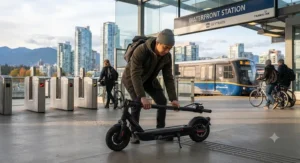
Here’s what the spec sheet won’t tell you, but the foldable frame does: this is a scooter built for people who combine transit and scooting in the same commute. The folding mechanism is fast enough to use daily without it becoming a chore, which matters enormously if your trip involves a GO train, a subway turnstile, or an elevator at the office. On paper, this means the i9 competes with scooters costing C$150-C$200 more, and reviewers back that up — the general sentiment across retailer listings is that the i9 punches above its price bracket, particularly on range and build quality, though the display and lighting are noticeably more basic than pricier siblings in the same lineup.
Where it falls short: the suspension is minimal to none, so expect to feel Canadian frost heaves and construction-zone gravel more than you would on a suspension-equipped model. Braking is adequate but not confidence-inspiring at the top of its speed range, so cautious riders should factor in extra stopping distance.
Pros:
- ✅ 28 km claimed range beats most scooters near this price
- ✅ Fast, transit-friendly folding mechanism
- ✅ 350W motor handles moderate inclines confidently
Cons:
- ❌ Minimal suspension transmits road vibration
- ❌ Braking feels underpowered at top speed
At around C$300-C$450, the iScooter i9 is the clearest answer to “what’s the best 25 km/h electric scooter under $500 CAD” in this entire roundup.
3. Gotrax GXL V2 — best for the tightest possible budget
The Gotrax GXL V2 exists for one buyer: someone who wants a genuinely functional 25 km/h electric scooter and refuses to spend more than they absolutely have to. Its 250W motor and 8.5-inch solid tires keep manufacturing costs low, which is precisely why this model routinely undercuts everything else on this list.
Based on the spec comparison, solid tires are the single biggest trade-off here — they never go flat, which is genuinely valuable for a low-maintenance commuter, but they transmit far more vibration than pneumatic alternatives. What most buyers overlook about ultra-budget scooters like this one is that the frame and folding mechanism are usually where cost gets cut hardest, and the GXL V2 is no exception; it’s noticeably lighter-duty than the pricier models on this list, so heavier riders or daily hard-commuters may find it wears faster.
Aggregated reviewer sentiment describes the GXL V2 as “good enough” rather than exciting — a fair characterization. It’s not the scooter you brag about, but it’s the one that gets a college student, a warehouse worker, or a curious first-timer riding for the lowest realistic entry cost in the Canadian market.
Pros:
- ✅ Lowest price point of any model on this list
- ✅ Puncture-proof solid tires need zero maintenance
- ✅ Simple, beginner-friendly control layout
Cons:
- ❌ Noticeably rougher ride on cracked pavement
- ❌ Lighter-duty frame than pricier alternatives
At under C$300, the Gotrax GXL V2 is the honest budget floor of this entire category — no frills, no surprises.
4. NIU KQi100P — best suspension on a budget
NIU built its reputation on mid-tier and premium commuter scooters, and the NIU KQi100P is the brand’s attempt to bring that engineering DNA down into true entry-level territory. Front suspension at this price point is genuinely rare — most competitors skip it entirely below C$450 — and it’s the single biggest differentiator on this list.
The rated 450W motor (with a documented 900W peak burst) sounds aggressive for a 25 km/h class scooter, but that headroom exists for hill-climbing torque rather than sustained top speed, since Canadian units are speed-governed for provincial pilot-program compliance rather than tuned for the higher speeds NIU sells in unregulated markets. What most buyers overlook about suspension-equipped budget scooters is how much it changes daily comfort rather than outright performance — the KQi100P feels noticeably calmer over speed bumps, sewer grates, and frost-heaved sidewalk transitions than any solid-tire competitor here.
Reviewers consistently point to the two-year warranty as a standout, unusually long for this price tier, and describe the ride quality as “punches above its price.” The trade-off is a slightly higher weight than the ultra-light budget models, which matters if you’re carrying the scooter up apartment stairs daily.
Pros:
- ✅ Front suspension rare at this price point
- ✅ Two-year warranty beats most competitors
- ✅ Strong hill-climbing torque from peak power
Cons:
- ❌ Heavier than solid-tire budget alternatives
- ❌ Suspension adds a maintenance point over time
In the C$340-C$450 range, the NIU KQi100P is the pick for riders who prioritize comfort and long-term reliability over shaving off the last few dollars.
5. Segway Ninebot E2 Pro — best for brand trust and resale value
Segway’s name carries weight in this category for a reason, and the Segway Ninebot E2 Pro is the brand’s answer to buyers who want that reputation without paying premium-tier prices. Its 350W rated motor (750W peak) drives a rear-wheel-drive layout, and Segway’s own published range testing is measured specifically at 25 km/h under a realistic 75 kg rider load — a level of transparency most budget brands don’t bother with.
Here’s what the spec sheet won’t tell you, but the tubeless tires do: this model trades the ultra-soft ride of pneumatic tires for a puncture-resistant design that still outperforms fully solid tires on rough pavement, landing in a genuinely useful middle ground. Based on the spec comparison, the traction control system is a meaningful upgrade over cheaper competitors — it noticeably reduces rear-wheel slip on wet pavement, which matters a great deal given how often Canadian commutes involve rain or road spray.
Aggregated review sentiment is strongly positive on build quality and dual braking confidence, with the dual front-drum-and-rear-electric setup earning consistent praise for stopping power. The most common critique is that the Apple Find My integration and companion app, while nice extras, aren’t essential enough to justify skipping a cheaper model if your budget is genuinely tight.
Pros:
- ✅ Traction control improves wet-pavement safety
- ✅ Dual braking system inspires real confidence
- ✅ Strong resale value thanks to brand recognition
Cons:
- ❌ Costs more than most scooters on this list
- ❌ App features add little for casual riders
Landing around C$450-C$600, the Segway Ninebot E2 Pro is the scooter to buy if long-term brand support and resale value matter as much as the ride itself.
6. Hiboy S2 — best entry-level commuter scooter
Hiboy built the S2 specifically to sit at the front door of the entry-level commuter scooters category, and it succeeds mainly because of one decision: dual braking. Most scooters under C$500 lean on a single mechanical or electronic brake, but the S2 pairs e-braking with disc braking, which genuinely shortens stopping distances on wet or gravelly bike lanes.
Its 350W Hall brushless motor handles the governed 25 km/h ceiling comfortably and, according to Hiboy’s own published figures, manages 15% hill grades without noticeably bogging down — a claim that lines up with aggregated owner feedback describing the S2 as “surprisingly torquey for its size.” What most buyers overlook about entry-level commuter scooters like the S2 is app support: the Hiboy companion app unlocks cruise control customization and ride statistics that most competitors in this exact price bracket simply don’t offer.
Reviewers frequently mention the dual rear shock absorbers as a comfort highlight, and the IPX4 water resistance rating — while modest — is enough to survive an unexpected drizzle on the way home. The trade-off is battery capacity: at 36V 7.5Ah, range sits toward the lower end of this roundup, so longer commutes may require a mid-day top-up.
Pros:
- ✅ Dual braking system for genuine stopping confidence
- ✅ App-enabled cruise control, rare at this price
- ✅ Handles 15% hill grades without struggling
Cons:
- ❌ Smaller battery limits range versus competitors
- ❌ IPX4 rating means light rain only, not downpours
At roughly C$400-C$550, the Hiboy S2 is the strongest pure commuter pick among entry-level options — built for the daily grind, not weekend joyrides.
7. Qlaway 8.5″ — best cruise control on a budget
Rounding out this list, the Qlaway 8.5″ brings a feature usually reserved for pricier scooters down into true budget territory: hold-to-lock cruise control. Hold a steady speed for roughly eight seconds and it locks in, which meaningfully reduces wrist fatigue on longer stretches of dedicated bike lane — a small feature that makes an outsized difference on a 20-minute commute.
The 350W brushless motor (700W peak) is governed to the same 25 km/h ceiling as everything else here, but the rated 20% grade climbing capability suggests real reserve power for Canadian hills, something budget scooters frequently overstate and underdeliver on. Based on the spec comparison, the 187.2Wh battery is modest on paper, yet real-world reports of 25-35 km align with genuinely efficient power delivery rather than an inflated headline number — a rare case of a budget scooter’s real-world range holding up to scrutiny.
Reviewer sentiment highlights the honeycomb solid tires as puncture-proof and low-maintenance, with the expected trade-off of more transmitted road vibration on rough pavement. The 265 lb weight capacity is unusually generous for an 8.5-inch-tire scooter in this price bracket, making it a rare budget pick that comfortably accommodates larger riders.
Pros:
- ✅ Cruise control is rare at this price point
- ✅ Generous 265 lb weight capacity
- ✅ Handles 20% grades better than most budget rivals
Cons:
- ❌ Solid tires transmit more road vibration
- ❌ Battery capacity is modest on paper
Priced around C$350-C$450, the Qlaway 8.5″ proves that a genuinely useful comfort feature doesn’t have to live exclusively in the premium tier.
Top 7 Products at a Glance: Specs, Price & Value
| Scooter | Weight | Max Load | Tire Type | Value Verdict |
|---|---|---|---|---|
| GOTRAX Apex | ~13 kg | 220 lb | Pneumatic | Best pure value, no frills |
| iScooter i9 | ~14 kg | 220 lb | Solid | Best range-per-dollar under $500 |
| Gotrax GXL V2 | ~12 kg | 220 lb | Solid | Rock-bottom entry cost |
| NIU KQi100P | ~16 kg | 264 lb | Pneumatic | Best comfort-per-dollar |
| Segway Ninebot E2 Pro | ~15 kg | 220 lb | Tubeless | Best resale and brand backing |
| Hiboy S2 | ~14 kg | 220 lb | Honeycomb | Best braking confidence |
| Qlaway 8.5″ | ~13.5 kg | 265 lb | Solid | Best comfort feature-to-price ratio |
Weight and load capacity tell a story the top-line speed spec hides: heavier riders should lean toward the NIU KQi100P or Qlaway 8.5″, both rated well above the 220 lb standard, while anyone hauling a scooter up multiple flights of stairs daily will appreciate the lighter Gotrax GXL V2 or GOTRAX Apex. Tire type is arguably the most underrated column in this table — pneumatic and tubeless options cost a little more up front but pay that back in ride comfort over months of daily use, while solid tires trade comfort for genuinely zero maintenance.
Benefits of 25 km/h Scooters vs Traditional Alternatives
| Factor | 25 km/h Electric Scooter | Bicycle | Public Transit | Car |
|---|---|---|---|---|
| Upfront cost | C$300-C$700 | C$300-C$1,500+ | Monthly pass fees | C$25,000+ |
| Commute speed (1-5 km) | Fast | Fast | Slow (waits, transfers) | Fast |
| Physical effort | Minimal | High | None | None |
| Parking | Fold and carry in | Requires rack/lock | N/A | Requires paid parking |
| Weather resilience | Moderate | Moderate | High | High |
For short urban hops in that one-to-five-kilometre range, a governed 25 km/h scooter often beats every alternative on total door-to-door time once you account for transit wait times and parking searches for a car. What it can’t match is weather resilience — a bicycle and a scooter both suffer in a Canadian ice storm in ways a bus or a car simply doesn’t. The honest takeaway: a 25 km/h electric scooter under $700 CAD is best understood as a three-season tool that replaces short car trips and transit transfers, not a year-round, all-weather solution.
✨ Don’t Miss These Exclusive Deals! 🔍
Take your scooter shopping to the next level with these carefully selected picks. Click on any highlighted model to check current pricing and availability, and start commuting smarter today!
Practical Usage Guide: Getting the Most From Your New Scooter
Setup on any of these seven models follows roughly the same pattern, but a few first-30-days habits separate owners who love their scooter from owners who regret the purchase. First, charge fully before the first ride — most lithium battery packs ship at a partial charge, and a full initial cycle helps the battery management system calibrate accurately from day one. Second, resist the urge to max out speed immediately; spend your first few rides in the lowest speed mode to learn how the throttle and brakes respond, especially on models like the GOTRAX Apex that require a kick-start push before the motor engages.
Tire pressure matters more than most new owners expect, particularly on pneumatic models like the NIU KQi100P and GOTRAX Apex. Under-inflated tires increase rolling resistance, quietly draining 10-15% more range than the same scooter at correct PSI, and they raise puncture risk on debris-strewn bike lanes. Check pressure weekly during your first month, then monthly once you’ve established a baseline.
Winter storage is the mistake that costs Canadian owners the most money. Lithium batteries degrade faster when stored fully charged in cold garages; the safer habit is storing at roughly 40-60% charge indoors at room temperature if you’re parking the scooter for more than a few weeks. Finally, tighten the folding-mechanism bolts and stem clamp every couple of weeks during your first month — vibration from regular riding loosens hardware faster than most owners expect, and a wobbly stem is both annoying and genuinely unsafe at speed.
Real-World Scenarios: Who Should Buy Which Scooter
The downtown condo commuter — rides 3 km each way to a transit station, folds and carries the scooter onto a train, and needs it light enough to not dread the daily lift. This rider should prioritize the iScooter i9 or Gotrax GXL V2, both light enough for daily folding without becoming a chore, with the i9 edging ahead if a slightly longer range matters for errands after work.
The suburban hill-climber — lives somewhere with real elevation change between home and the nearest bike lane, and has watched underpowered scooters struggle on inclines before. This rider should lean toward the NIU KQi100P or Qlaway 8.5″, both of which post genuinely strong hill-grade ratings relative to their price, backed by peak power figures well above their rated output.
The all-weather worrier — rides through spring drizzle and fall road spray more often than dry pavement, and wants braking that won’t betray them on a wet corner. This rider is best served by the Segway Ninebot E2 Pro or Hiboy S2, both built around dual braking systems and, in Segway’s case, traction control specifically engineered to manage wet-pavement slip.
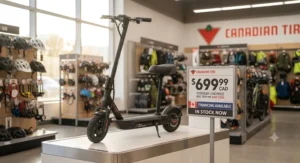
How to Choose a 25 km/h Electric Scooter Under $700 CAD
- Confirm your municipality actually permits e-scooters first. Speed and price mean nothing if riding on public roads or sidewalks where you live isn’t legal — check local bylaws before you fall in love with a spec sheet.
- Match tire type to your actual pavement, not your ideal pavement. Pneumatic tires reward smooth commutes with comfort; solid and honeycomb tires reward rough, debris-heavy routes with zero maintenance downtime.
- Treat claimed range as a ceiling, not a floor. Aggregated owner feedback across this list consistently shows real-world range landing 15-25% below manufacturer claims once cold weather and rider weight are factored in.
- Weigh braking systems as seriously as motor wattage. A dual braking system, like those on the Hiboy S2 and Segway Ninebot E2 Pro, matters more to real-world safety than an extra 50W of motor power.
- Check the warranty length before the price tag. The NIU KQi100P‘s two-year warranty is a meaningful signal of manufacturer confidence that shorter one-year warranties don’t send.
- Weigh the scooter, literally, against your daily carrying reality. A 16 kg scooter is a non-issue if you never climb stairs with it and a genuine dealbreaker if you do, five days a week.
- Buy for the commute you have, not the one you’re planning. If your trip is under 5 km each way, nearly every scooter on this list has more than enough range; longer commutes should prioritize the iScooter i9 or Qlaway 8.5″.
Speed Governance and Limiter Technology, Explained
Every scooter on this list uses electronic speed governance to cap output at roughly 24-25 km/h, regardless of how much raw power the underlying motor could otherwise produce. Here’s what that actually means in practice: the motor controller — a small circuit board sitting between the battery and the motor — continuously monitors wheel speed and throttles back power delivery once the governed ceiling is reached, the same way cruise control on a car doesn’t let the engine keep accelerating past a set speed. This is precisely why the NIU KQi100P can advertise a 900W peak motor and still top out at 25 km/h in its Canadian configuration: peak power is reserved for acceleration and hill-climbing torque, not sustained top speed.
What most buyers overlook about limiter tech is that it’s not a single global standard — it’s manufacturer-configured software, and the same physical scooter hardware often ships with different governed speeds for different markets depending on provincial licensing thresholds. That’s precisely the mechanism NIU references on its own Canadian product pages when it notes that top speed “varies by provincial regulation.” Attempting to bypass or unlock this governance — a practice some enthusiast forums discuss — voids warranty coverage on every model in this roundup and, more importantly, can push a scooter’s legal classification out of the “standard e-scooter” category entirely, since scooters exceeding roughly 500W of power or 32 km/h can be reclassified as limited-speed motorcycles in some provinces, which brings licensing and insurance requirements most casual riders have no interest in taking on.
Municipal E-Scooter Bylaws Across Canada
This is the section that trips up more first-time buyers than any spec sheet ever could: owning a 25 km/h electric scooter under $700 CAD does not automatically mean you can legally ride it on public roads or sidewalks in your city. Provincial and municipal rules genuinely diverge in ways that matter. In Ontario, for example, e-scooters remain illegal on roads province-wide unless the local municipality has specifically opted into the provincial e-scooter pilot program and passed its own bylaw — Mississauga has done so, while Toronto has historically kept scooters off public streets, sidewalks, and trails entirely. British Columbia and Quebec take a different approach, generally treating standard e-scooters under 500W as permitted on roads and bike lanes similar to power-assisted bicycles, with helmet and age requirements layered on top.
The practical upshot: two people living twenty minutes apart in the same province can face completely different legal realities for the exact same scooter. As a CBC report on Ontario’s pilot program noted, some e-scooters top out around 25 km/h, and certain manufacturers have built app-based systems that lower speed further in specific zones, such as near schools — a reminder that governed speed and legal compliance are two layers of the same regulatory puzzle, not interchangeable concepts. Before ordering any scooter on this list, search your specific municipality’s name alongside “e-scooter bylaw” to confirm current status, since Ontario’s own pilot program has already been extended once, stretching from a planned five years to a full decade, and rules continue shifting as more cities opt in or reconsider their positions.
Helmet requirements, minimum age, and permitted road types also vary meaningfully by province, and enforcement has real teeth — Ontario’s Highway Traffic Act penalties for pilot-regulation violations aren’t symbolic fines. A broader look at how e-bikes and e-scooters are regulated nationally, compiled by the Canadian Automobile Association’s traffic safety research, is worth a read if you commute across municipal borders regularly, since crossing from one city into another can silently change your legal status mid-ride.
Entry-Level Commuter Scooters for Different Riders
Not every “entry-level” buyer wants the same thing, even within a single price bracket. Students commuting short campus distances tend to prioritize light weight and low upfront cost above all else, which points toward the Gotrax GXL V2 or GOTRAX Apex — neither is flashy, but both get a rider from dorm to lecture hall reliably and cheaply. Working professionals doing a genuine last-mile transit connection, by contrast, tend to value fold speed and a bit more range, which is exactly where the iScooter i9 and Hiboy S2 earn their keep.
Older or heavier riders, meanwhile, are frequently underserved by the ultra-light budget tier, since lighter frames often correlate with lower weight capacity ratings. The NIU KQi100P (264 lb capacity) and Qlaway 8.5″ (265 lb capacity) stand out specifically because they don’t force larger riders into the premium price tier just to get a scooter rated for their weight. What most first-time buyers overlook is that “entry-level” doesn’t have to mean “compromised” — it increasingly means “efficiently engineered for a specific use case,” and matching that use case to your actual daily routine matters more than chasing the highest-spec model in this list.

Common Problems and Practical Solutions
Problem: Range falls noticeably short of the claimed distance. This is the single most common complaint across aggregated owner reviews for every scooter on this list. Solution: cold weather, rider weight above the manufacturer’s test conditions, and higher speed modes all reduce real-world range independently — riding in a lower speed mode and keeping tires properly inflated typically recovers 10-15% of lost range without any hardware changes.
Problem: The scooter feels unstable at higher speeds. Solution: check tire pressure first (under-inflation causes wobble before anything else does), then verify the stem clamp and folding mechanism are fully tightened, since loosened hardware from regular vibration is a frequent, easily fixed culprit.
Problem: Battery charges slower or holds less charge after a few months. Solution: avoid storing the scooter fully charged in a cold garage between rides; lithium batteries degrade faster at full charge in cold conditions, so a 40-60% storage charge at room temperature preserves long-term capacity meaningfully better.
Problem: Braking feels weaker than expected, especially on models with a single brake type. Solution: budget models with only mechanical or only electronic braking benefit from earlier, more deliberate braking habits — start slowing down sooner than instinct suggests, particularly on wet pavement, and consider a dual-braking model like the Hiboy S2 if this remains a persistent concern.
Problem: Confusion over where it’s actually legal to ride. Solution: confirm your specific municipality’s bylaw status before your first ride, not after — a five-minute search prevents a fine that can run into the hundreds of dollars under provincial highway traffic penalties.
Long-Term Cost and Maintenance
The sticker price is only the entry fee. Replacement tires for pneumatic and honeycomb models typically run modest amounts every year or two depending on riding surface and distance, while fully solid tires on models like the Gotrax GXL V2 effectively eliminate that recurring cost entirely — a real, if underappreciated, long-term saving. Battery replacement is the biggest looming expense across the entire category; lithium battery packs generally last 300-500 full charge cycles before capacity noticeably declines, which for a daily short commuter often works out to somewhere in the two-to-four-year range before a replacement pack becomes worth considering.
Brake pad wear, folding-mechanism hardware, and the occasional new inner tube round out the realistic maintenance list, none of which is expensive individually but which does add up over several seasons of regular riding. Where warranty length becomes a genuine financial factor: the NIU KQi100P‘s two-year coverage effectively insures against the most expensive early-life failures (motor and battery defects) for twice as long as the one-year warranties standard on most of this list. When you divide total realistic ownership cost — purchase price plus two to three years of modest upkeep — by the number of transit fares or rideshare trips a scooter replaces, most models here pay for themselves within a single Canadian riding season for a genuine daily commuter.
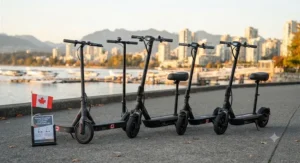
Frequently Asked Questions
❓ Is a 25 km/h electric scooter fast enough for commuting?
❓ Do I need a licence for a 25 km/h electric scooter in Canada?
❓ What is the best 25 km/h electric scooter under $500 CAD?
❓ How much range do budget electric scooters really get?
❓ Can municipal e-scooter bylaws change after I've already bought one?
Conclusion
Shopping for 25 km/h electric scooters under $700 CAD comes down to matching a genuinely specific use case to a genuinely specific scooter, not chasing the highest number on any single spec line. The GOTRAX Apex and iScooter i9 cover the true budget end with real competence rather than compromise, the NIU KQi100P and Qlaway 8.5″ bring comfort features usually reserved for pricier scooters down into entry-level territory, and the Segway Ninebot E2 Pro and Hiboy S2 lean hardest into braking confidence and brand backing for riders who want extra peace of mind. The Gotrax GXL V2 remains the honest floor of the category for anyone who simply needs the cheapest scooter that still works reliably.
Whichever model you land on, the governed 25 km/h speed ceiling isn’t a limitation to work around — it’s precisely why these scooters stay compliant with most municipal e-scooter bylaws across Canada while still meaningfully beating walking, waiting for a bus, or circling a block for parking. Confirm your local rules, match tire type to your actual commute, and the rest of the decision gets a lot easier.
Recommended for You
- 7 Best Legal Electric Scooters for Commuting in Canada 2026
- Affordable Removable Battery Electric Scooter: 7 Best Picks (2026)
- Top 7 Removable Battery Electric Scooters Under $1200 CAD (2026)
Disclaimer: This article contains affiliate links. As an Amazon Associate, I earn from qualifying purchases. If you purchase products through these links, we may earn a small commission at no additional cost to you.
✨ Found this helpful? Share it with your friends! 💬🤗
