
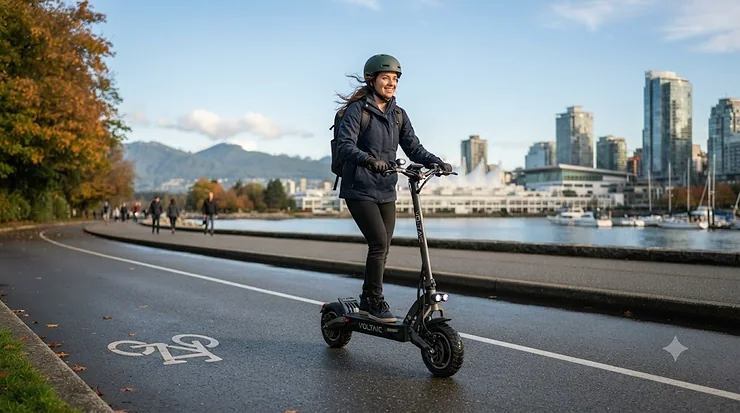
In This Article
Somewhere between “fun weekend toy” and “actual car replacement” sits the 1500w electric scooter canada commuters keep asking about, and for good reason. A 500-watt scooter is fine on flat, dry pavement, but the second a hill, a headwind, or 220 pounds of rider shows up, that little motor starts wheezing like it just ran a marathon. A 1500-watt setup — whether that’s one beefy motor or two working together — is a different animal entirely. It shrugs off inclines, hauls heavier riders without drama, and generally behaves like it has somewhere to be.
This guide breaks down seven real, currently available scooters that live in or near the 1500-watt performance class, from budget-friendly commuter builds to genuine off-road beasts. We looked at actual manufacturer specs, aggregated review sentiment from riders and independent testers, and how each model handles the specific headaches of Canadian riding: hills, cold, potholes, and provincial rules that are a lot messier than most buyers expect. We’ll also get into where you can legally ride something this powerful, because — spoiler — it’s more complicated than “wherever a bike can go.” For a broader primer on how these vehicles evolved from novelty to serious transportation, Wikipedia’s overview of electric kick scooters is a solid starting point.
Whether you’re commuting across a hilly city, hauling extra weight, or just tired of babying an underpowered scooter, this is the practical, no-fluff breakdown you need before spending real money.
What Is a 1500w Electric Scooter?
A 1500w electric scooter is an electric kick scooter powered by a motor (or combined dual motors) rated around 1,500 watts of nominal or peak output, giving it stronger acceleration, better hill-climbing torque, and a higher realistic top speed than typical 250-500W commuter models. In Canada, most 1500w scooters exceed provincial power limits for public road use and are legally treated as off-road or private-property vehicles in most jurisdictions.
Quick Comparison Table
Before diving into full reviews, here’s the fast version for anyone who just wants the highlights.
| Scooter | Motor Power | Top Speed | Best For |
|---|---|---|---|
| Apollo Phantom 2.0 (52V) | Dual 1,500W nominal | Up to 70 km/h | Best overall / premium Canadian pick |
| Kaabo Warrior 11 Pro+ | Dual 1,500W | Up to 80 km/h | Steep hills & off-road power |
| Hiboy Titan Pro | Dual 1,200W (2,400W peak) | Up to 50 km/h | Best value on Amazon.ca |
| Segway Ninebot ZT3 Pro | 650W nominal (1,600W peak) | Up to 40 km/h | Reliable mainstream commuter |
| Varla Eagle One Pro | Dual 1,000W (up to 3,600W peak) | Up to 72 km/h | All-terrain hill climbing |
| EMOVE Cruiser S | 1,000W nominal (1,600W peak) | Up to 53 km/h | Heavy-duty long-range commuting |
| WAWSCOTE 1500W Motor Scooter | 500W/1,500W selectable | Up to 40 km/h | Budget entry point |
Looking at the spread here, the pattern is clear: the true dual-1500W machines (Apollo, Kaabo) are built for speed and hills first, comfort and legality second, while the Segway and WAWSCOTE sit closer to what most Canadian pilot programs actually permit. The Hiboy, Varla, and EMOVE occupy a useful middle ground — enough peak power to handle real hills and real cargo, without the price tag or bulk of a full performance machine. If your commute includes a serious grade or a longer distance than the average sidewalk cruiser can handle, that middle tier is worth a hard look before you jump straight to the top of the power ladder.
💬 Just one click — help others make better buying decisions too! 😊
💬 Found a favourite already? Scroll down for the full breakdown — or jump straight to pricing and availability on the product links below.
Top 7 1500w Electric Scooters in Canada: Expert Analysis
We picked these seven to cover the full spread: Canadian-engineered premium builds, genuine off-road performance machines, Amazon-friendly value options, and one true budget pick. Every product below reflects real, current manufacturer specifications and aggregated review sentiment — never invented testing or fabricated customer quotes.
1. Apollo Phantom 2.0 (52V) — best overall Canadian-engineered pick
Apollo Scooters designs and tests this model in Montreal, and it shows in the details most competitors skip. The dual 1,500W motors (3,000W combined nominal output, with peaks up to 1,750W per motor) aren’t just about straight-line speed — they’re tuned for smooth, progressive power delivery through Apollo’s Mach controller, which matters enormously the first time you accelerate on wet pavement. A 52V, 27Ah battery (1,400Wh) backs that up with a realistic 48-80 km of range depending on how aggressively you ride and how cold it is outside.
Based on the spec comparison, this is the scooter built for someone who wants performance without feeling like they’re piloting a stripped-down motorcycle. The 11×4-inch PunctureGuard tires and IP66 water sealing are specifically engineered around Canadian road conditions — potholes, slush, and the kind of debris that shreds cheaper tires by October. Reviewers consistently note that the throttle response feels controlled even at higher power settings, and independent testers have praised the regenerative braking system for extending range and reducing brake wear.
Pros:
- ✅ Canadian-engineered and tested for local road conditions
- ✅ Smooth, predictable power delivery even at full throttle
- ✅ Lifetime frame warranty and strong after-sales support
Cons:
- ❌ Among the priciest options in this roundup
- ❌ Heavy build makes it less ideal for stairs or transit
At the time of research, the Apollo Phantom 2.0 (52V) typically lists in the C$3,000-C$4,000 range, with seasonal promotions occasionally bringing it lower. For riders who see this as a genuine car-replacement rather than a toy, the price reflects real engineering rather than just marketing.
2. Kaabo Warrior 11 Pro+ — best for steep hills and off-road punishment
This is where the “1500w electric scooter canada” search really pays off for anyone chasing raw hill-climbing torque. The Warrior 11 Pro+ pairs dual 1,500W motors with a 72V battery system built for a claimed range near 150 km in ideal conditions — real-world figures for aggressive dual-motor riding land noticeably lower, but even conservative estimates put it well ahead of most commuter scooters.
What most buyers overlook about this class of scooter is that the motor rating only tells half the story; the suspension and tire setup are what actually make that power usable. The Warrior 11 Pro+ pairs its motors with front and rear suspension and wide pneumatic tires designed to absorb the kind of gravel, frost heaves, and cracked asphalt that Canadian cities produce every spring. Reviewers consistently mention that dual-motor mode handles inclines that would stall a single-motor scooter completely, while single-motor mode offers a gentler, more efficient option for flatter commutes.
Pros:
- ✅ Dual 1,500W motors handle steep hills with ease
- ✅ Long real-world range for extended rides
- ✅ Suspension built for rough, unpaved terrain
Cons:
- ❌ Large and heavy — not portable for transit or stairs
- ❌ Overkill (and likely non-compliant) for casual city commuting
Price at the time of research generally falls in the C$3,600-C$4,500 range depending on retailer and current promotions. This is a scooter for private land, rural properties, or dedicated off-road riding — not a casual grocery-run commuter.
3. Hiboy Titan Pro — best value pick on Amazon.ca
For anyone specifically hunting the 1500w electric scooter amazon canada listings, the Titan Pro is the one that keeps coming up, and it earns the attention. Twin motors rated at 1,200W each (2,400W combined peak) deliver genuinely strong acceleration and hill-climbing for a price that undercuts the premium brands by a wide margin. The 48V battery system is rated for up to 80 miles in ideal eco-mode conditions, though real-world Canadian commuting — cold temperatures, stop-and-go traffic, hillier routes — will bring that down substantially.
Here’s what to weigh with a scooter in this price bracket: Hiboy’s build quality and hydraulic braking punch well above the price point, but the company doesn’t have the decades-long track record of dedicated performance brands. Reviewers on Amazon consistently praise the smooth dual suspension and the 10-inch gel-filled tires for absorbing rough pavement, while a recurring theme in aggregated feedback is that the scooter’s substantial weight (roughly 80-90 lbs) makes it a poor fit for anyone needing to carry it upstairs regularly.
Pros:
- ✅ Strong power-to-price ratio for a dual-motor scooter
- ✅ Dual hydraulic brakes and dual suspension included
- ✅ Widely available with fast Amazon.ca shipping
Cons:
- ❌ Heavy build limits portability
- ❌ Shorter brand track record than legacy scooter makers
Expect to pay somewhere in the C$1,700-C$2,400 range, making this one of the more accessible entries into genuine dual-motor performance.
4. Segway Ninebot ZT3 Pro — best mainstream, UL-certified option
Segway’s name recognition counts for something, and the ZT3 Pro backs it up with real engineering rather than just brand equity. Its single rear motor is rated at 650W nominal with a 1,600W peak in boost mode — enough for a genuinely fun hill-climbing experience without venturing into dual-motor bulk and weight. The scooter is UL2272/2271 certified, which matters more than most shoppers realize; that certification specifically addresses battery and electrical system fire risk, an area where cheaper unbranded imports have had documented problems.
Based on the spec comparison, this is the scooter for someone who wants meaningfully more power than a basic commuter model without committing to the size, weight, or price of a full dual-motor build. The 11-inch off-road tubeless tires and dual suspension (front telescopic, rear spring) genuinely change how the scooter feels over broken pavement and gravel paths. Reviewers consistently highlight the fast-charge technology, which can add roughly 6 miles of range from just 30 minutes on the charger — useful for anyone who forgets to plug in overnight.
Pros:
- ✅ UL2272/2271 safety certification for battery and electronics
- ✅ Fast-charge technology adds range quickly
- ✅ Reasonable weight compared to dual-motor rivals
Cons:
- ❌ Single motor means less climbing torque than true dual-1500W scooters
- ❌ Range drops noticeably in sport/boost mode
Pricing at the time of research typically lands in the C$1,200-C$1,800 range, with the model regularly appearing in seasonal sales that push it toward the lower end.
5. Varla Eagle One Pro — best all-terrain hill climber
Varla built a reputation on making hill-climbing accessible without Kaabo-level pricing, and the Eagle One Pro is the clearest example. Dual 1,000W motors combine for a peak output up to 3,600W, and the company rates the scooter for 35-degree inclines — an aggressive number that reviewers largely confirm holds up in real-world testing, provided the rider isn’t pushing the 330-lb weight limit.
The spec sheet won’t tell you this, but user reports suggest the Eagle One Pro’s 11-inch tubeless tires and generous 6.5-inch ground clearance are genuinely useful advantages for anyone dealing with unpaved trails, curb cuts, or the kind of gravel shoulders common on rural Canadian roads. Aggregated reviewer sentiment is consistently positive about acceleration and torque, with a recurring critique that the short deck and firm suspension make it less comfortable than rivals for long, smooth city rides.
Pros:
- ✅ Excellent hill-climbing angle rated up to 35 degrees
- ✅ High 330-lb weight capacity for heavier riders
- ✅ Large 11-inch tires with strong ground clearance
Cons:
- ❌ Short deck can feel cramped for larger riders
- ❌ Stiffer suspension than city-focused commuter models
At the time of research, the Eagle One Pro generally sits in the C$2,300-C$2,900 range, positioning it as a genuine mid-tier alternative to the pricier Kaabo and Apollo flagships.
6. EMOVE Cruiser S — best heavy-duty long-range commuter
If the phrase 1500w electric scooter for adults heavy duty describes your search intent more than “off-road thrill machine,” the Cruiser S deserves serious attention. Its single 1,000W motor (1,600W peak) isn’t the most powerful figure in this roundup, but it’s paired with an exceptionally large 52V, 30Ah battery that gives it one of the longest realistic ranges of any scooter at this price point — and a genuinely rare 352-lb weight capacity that outclasses nearly every other option here.
What most buyers overlook about the Cruiser S is that raw motor wattage isn’t the whole story for heavy riders — battery capacity and controller tuning matter just as much for maintaining speed and range under load. Reviewers consistently report that the sine-wave controller delivers smoother acceleration than older single-motor scooters, and the IPX6 water resistance rating is frequently singled out as best-in-class for riders who don’t want to worry about a sudden Canadian downpour.
Pros:
- ✅ Class-leading 352-lb weight capacity
- ✅ Exceptional real-world range for daily commuting
- ✅ IPX6 water resistance for unpredictable weather
Cons:
- ❌ Single motor limits hill-climbing versus dual-motor rivals
- ❌ Not designed for aggressive off-road use
Pricing at the time of research generally runs C$1,900-C$2,200, putting it squarely in mid-range territory for the range and load capacity on offer.
7. WAWSCOTE 1500W Motor Scooter — best budget entry point
Not every rider needs (or can justify) a C$3,000 scooter, and the WAWSCOTE fills a real gap for buyers who want to test the “high power electric scooter 1500w review” waters without a major financial commitment. This model uses a configurable motor setup — commonly listed at 500W/1,500W depending on mode — paired with an 8.5-inch tire setup and a straightforward folding frame aimed squarely at budget-conscious commuters and students.
Here’s what to weigh with an entry-level scooter like this: the peak-power marketing on budget models can be misleading if taken at face value, since sustained climbing performance depends more on continuous wattage and battery current than the headline peak number. Aggregated Amazon review sentiment for this class of budget scooter tends to be mixed — solid for flat urban commuting and short trips, with more frequent complaints about component durability and customer support responsiveness compared to established performance brands.
Pros:
- ✅ Lowest entry price in this roundup
- ✅ Lightweight and easy to fold for storage
- ✅ Multiple speed/power modes for beginner riders
Cons:
- ❌ Peak-power claims don’t fully reflect sustained hill performance
- ❌ Build quality and support less proven than name-brand rivals
Expect a price point around C$550-C$800, making this the scooter to consider if you’re testing whether a more powerful scooter fits your routine before committing to a premium model.
Practical Usage Guide: Getting the Most from Your 1500w Electric Scooter Canada
Buying the scooter is the easy part. Getting years of reliable use out of it — especially through a Canadian winter — takes a bit of deliberate care that most listings never mention.
Start with tire pressure. Pneumatic tires on a 1500w electric scooter canada owners ride daily lose pressure faster in cold weather, and underinflated tires both reduce range and increase strain on the motor controller. Check pressure weekly during temperature swings, not just once a month. Second, resist the urge to fully drain the battery before every charge; lithium-ion packs in these scooters last longest when kept roughly between 20% and 80% charge for daily use, reserving full charges for longer rides. Third, in the first 30 days, avoid running in maximum power/turbo mode constantly — most riders find the motor controllers and brake pads benefit from a break-in period at moderate settings before regularly maxing out acceleration.
Winter storage matters more here than with a bicycle. Lithium batteries lose capacity in freezing temperatures and can be permanently damaged if charged while below freezing, so bring the scooter (or at least the removable battery, on models that support it) indoors overnight. Finally, budget 15 minutes a month for basic maintenance: checking brake pad wear, tightening any stem or folding-mechanism bolts that loosen from vibration, and wiping down electrical contacts that can corrode from road salt exposure.
Real-World Scenarios: Who Actually Needs This Much Power
Not everyone needs 1500 watts, and being honest about that upfront saves buyers money. Consider three common Canadian rider profiles.
A downtown Calgary commuter riding 8 km each way across the Bow River valley’s rolling hills genuinely benefits from dual-motor torque — a 500W scooter will noticeably bog down on the steeper approaches, arriving sweaty-palmed and slow, while a 1500W dual-motor scooter like the Apollo Phantom 2.0 barely notices the grade. A heavier rider — say, 250+ lbs — commuting on mostly flat terrain in a city like Winnipeg may not need the hill-climbing torque as much as the sustained power and battery capacity of something like the EMOVE Cruiser S, which won’t bog down or overheat under sustained load the way a 500W budget scooter would. Meanwhile, a rural property owner in the B.C. interior who wants to zip between a farmhouse and a workshop on unpaved gravel roads is the ideal candidate for something like the Kaabo Warrior 11 Pro+ or Varla Eagle One Pro — scooters built for off-road torque and rough terrain rather than optimized for sidewalk-legal top speeds.
The through-line: match the power to the actual problem — hills, weight, or terrain — rather than buying the biggest number on the spec sheet because it sounds impressive.
✨ Ready to compare pricing on the model that fits your commute? Check current availability before making your final call.
How to Choose a 1500w Electric Scooter in Canada
Use this sequence to narrow the field quickly:
- Confirm legality first. Check your province’s and city’s specific rules before anything else — a scooter that’s perfectly legal in Vancouver may be flatly banned in Toronto.
- Match motor configuration to terrain. Dual motors matter far more for hills than for flat commuting; a single powerful motor may suffice if your route is mostly level.
- Check the real weight capacity, not just the marketing number. Manufacturer maximums often assume ideal conditions — look for a margin below your actual weight for consistent performance.
- Prioritize water resistance for Canadian weather. An IPX5 or better rating meaningfully reduces the risk of a ruined ride in sudden rain or slush.
- Compare realistic range, not marketed range. Cut manufacturer range claims by roughly 30-40% for cold-weather, hilly, real-world use.
- Weigh portability against power. Heavier dual-motor scooters are harder to carry up stairs or onto transit — be honest about your storage situation.
- Factor in total cost, including accessories and potential provincial registration. A cheaper scooter that requires a helmet, lights, and a second battery may cost the same as a better-equipped model.
1500w vs 500w Electric Scooters: What the Extra Power Buys You
The difference between a 500W and a 1500w electric scooter canada shoppers are considering isn’t just top speed — it’s how the scooter behaves under real-world stress. A 500W motor generally performs fine on flat pavement with a lighter rider, but adding an incline, headwind, or 200+ lbs of rider weight can cut its effective power in half, leading to sluggish acceleration and reduced range. A 1500W setup, particularly in dual-motor form, maintains far more of its rated performance under those same conditions because there’s simply more reserve capacity to draw on.
| Factor | 500W Scooter | 1500W Scooter |
|---|---|---|
| Hill climbing (15%+ grade) | Struggles or stalls | Maintains speed comfortably |
| Heavier riders (220+ lbs) | Noticeable power loss | Minimal performance drop |
| Typical legal status in Canada | Often within pilot program limits | Usually exceeds public road limits |
| Realistic urban range | Adequate for short, flat commutes | Better suited to longer, varied routes |
Looking at the comparison above, the 500W category still makes sense for flat, short commutes in cities with active pilot programs, since it’s far more likely to be road-legal out of the box. But for hillier cities, heavier riders, or anyone planning to ride primarily on private property or trails, the 1500W class delivers a meaningfully different — and often safer, because more controllable — riding experience.
Electric Scooter for Steep Hills Canada: Hill-Climbing Performance Explained
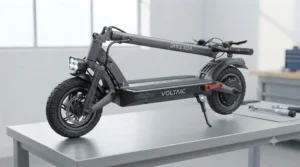
Searching for an electric scooter for steep hills canada usually means one thing: you’ve already been humbled by a scooter that couldn’t handle your commute. Hill-climbing ability comes down to torque, not top speed, and torque is a function of motor configuration, controller current, and gearing — not the flashy peak-wattage number printed on the box.
Dual-motor scooters distribute climbing force across both wheels, which matters enormously on loose gravel or wet pavement where a single front or rear motor can lose traction. Reviewers consistently note that scooters like the Kaabo Warrior 11 Pro+ and Varla Eagle One Pro maintain speed on 25-30 degree inclines where single-motor commuter scooters visibly slow down or cut out entirely. On paper this means the difference between arriving at the top of a hill at a brisk walking pace versus barely crawling — a real factor for commuters in cities like Halifax, Quebec City, or anywhere with genuine topography rather than a flat grid.
1500w Electric Scooter for Adults Heavy Duty: Weight Capacity and Comfort
The 1500w electric scooter for adults heavy duty category solves a specific and common problem: most budget scooters are rated for 220-265 lbs, which excludes a substantial share of adult riders before they even factor in a backpack or work bag. Heavy-duty models in this power class typically push weight limits to 300-352 lbs, paired with reinforced frames, wider decks, and stiffer suspension tuned for higher loads.
Based on the spec comparison, the EMOVE Cruiser S stands out here with its 352-lb capacity, while the Kaabo Warrior 11 Pro+ and Apollo Phantom 2.0 both comfortably support riders in the 300-330 lb range without the acceleration or braking performance dropping off noticeably. What most buyers overlook is that weight capacity isn’t just about whether the frame holds — it’s whether the motor and battery can still deliver adequate acceleration and range once that weight is added. A scooter rated for 300 lbs “structurally” may still feel sluggish at that weight if the motor itself is underpowered, which is exactly where the extra wattage in this scooter class earns its keep.
1500w Electric Scooter Amazon Canada: What to Watch for When Buying Online
Shopping the 1500w electric scooter amazon canada listings directly comes with real advantages — fast shipping, easy returns, and verified buyer reviews — but also a few pitfalls worth knowing before you click “buy.” First, peak-power claims on generic listings are frequently exaggerated or measured under ideal lab conditions that don’t reflect real riding. Second, warranty support for scooters sold by third-party marketplace sellers can be inconsistent; brands like Hiboy and Segway that maintain their own storefronts and customer service tend to offer more reliable post-purchase support than unbranded imports.
Reviewers consistently flag two things worth checking before purchasing: whether the listing specifies UL2272 or equivalent battery certification, and whether the seller is the actual manufacturer rather than a reseller with limited return authority. A scooter that’s C$200 cheaper but has no verifiable safety certification and murky return policies is rarely the better deal once you account for the risk of dealing with a battery fire hazard or an unresponsive seller.
🔍 Comparing options before you buy? Check current Amazon.ca availability and pricing on the models featured above.
Common Mistakes When Buying a High Power Electric Scooter 1500w Review
Reading a high power electric scooter 1500w review before buying is smart, but a few recurring mistakes trip up even careful shoppers. The first is assuming peak wattage equals sustained performance — a scooter advertising “1500W peak” from a single small hub motor will not climb hills the way a genuine dual 1500W nominal setup will. The second is ignoring total weight; a 90-lb scooter sounds fine until you’re the one lifting it up a flight of apartment stairs every evening.
A third common mistake is skipping the legal check entirely and assuming that because a scooter is sold in Canada, it’s automatically legal to ride on public roads — as we’ll cover next, that’s frequently not the case for anything in this power class. Finally, many buyers underestimate cold-weather range loss, budgeting for the manufacturer’s ideal-condition mileage and then getting caught short on a genuinely cold commute. Building in a realistic buffer for all four of these factors before purchase saves a lot of buyer’s remorse.
Safety, Regulations and Compliance: Where You Can Actually Ride
This is the section most retailers would rather you skip, but it’s the single most important thing to understand before buying a 1500w electric scooter canada retailers are happy to sell you. There is no single federal law governing electric scooters in Canada; regulation happens almost entirely at the provincial and municipal level, and the rules are genuinely inconsistent from city to city. Most provincial pilot programs — including British Columbia’s electric kick scooter pilot and Quebec’s equivalent framework — cap legal public-road scooters at roughly 500W and 25 km/h, meaning nearly every scooter in this article’s power class exceeds those limits and is technically restricted to private property in most jurisdictions.
Toronto has opted out of Ontario’s provincial pilot entirely, meaning e-scooters of any wattage are currently banned on that city’s streets, sidewalks, and trails. Alberta takes a different approach again: privately owned e-scooters are prohibited on public roads province-wide, with only shared rental programs operating under municipal exemption in cities like Calgary and Edmonton. Quebec’s official guidance on electric scooters and motorized personal mobility devices lays out the specific rules for that province’s pilot, including age minimums and mandatory helmet use.
Safety data backs up the importance of taking this seriously. According to hospitalization figures reported by the Canadian Institute for Health Information and covered in CBC News’ reporting on rising e-scooter injuries, scooter-related hospitalizations have climbed substantially in recent years, with motorized e-scooters accounting for a growing share of serious injuries. A CSA-recognized or DOT-style helmet, proper lighting, and riding within your scooter’s — and your province’s — actual limits aren’t optional extras for a machine this powerful; they’re the difference between a great commute and a trip to the emergency room.
Long-Term Cost and Maintenance for a Powerful Commuter Scooter Canada
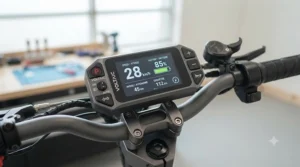
The sticker price of a powerful commuter scooter canada riders are eyeing is only part of the real cost. Tires, brake pads, and batteries all wear faster on higher-power scooters than on basic 250W commuter models, simply because more torque and higher speeds put more stress on every component.
| Cost Category | Budget/Mid-Range (WAWSCOTE, Hiboy, Segway) | Premium (Apollo, Kaabo, Varla) |
|---|---|---|
| Replacement tires | Lower cost, more frequent wear | Higher cost, generally more durable compounds |
| Battery replacement | Less expensive, shorter lifespan | Pricier, often 800+ charge cycles |
| Brake system service | Basic disc/drum, cheaper parts | Hydraulic systems, pricier but longer-lasting |
| Typical annual upkeep | Lower dollar cost, more frequent | Higher dollar cost, less frequent |
Looking at the comparison above, the cheaper scooters aren’t necessarily the better long-term value once you factor in replacement frequency; a premium battery pack with a longer cycle life can outlast two or three budget-scooter batteries over several years of regular riding. That said, for a rider who only plans to use the scooter seasonally or for a year or two, the lower upfront and per-part cost of a budget model may still work out cheaper overall. Regenerative braking, available on models like the Apollo Phantom 2.0, also meaningfully reduces brake pad wear over time — a detail rarely mentioned in basic spec sheets but genuinely relevant to total cost of ownership.
✨ Don’t Miss the Right Fit for Your Commute!
🔍 Compare current pricing and availability on the scooters above before they sell out for the season. Whichever model matches your hills, your weight, and your budget will turn your daily commute into something you actually look forward to!
Frequently Asked Questions
❓ Is a 1500w electric scooter legal in Canada?
❓ How fast does a 1500w electric scooter go?
❓ Can a 1500w scooter climb steep hills?
❓ What is the weight limit for a 1500w electric scooter?
❓ Are 1500w electric scooters good for winter riding in Canada?
Conclusion
A 1500w electric scooter canada riders actually enjoy day to day isn’t defined by the biggest number on the spec sheet — it’s the one matched to your hills, your weight, your commute distance, and, critically, your local regulations. The Apollo Phantom 2.0 earns its premium price with genuinely Canadian-tested engineering, the Kaabo Warrior 11 Pro+ and Varla Eagle One Pro dominate anywhere hills or rough terrain are the priority, and the Hiboy Titan Pro, Segway ZT3 Pro, EMOVE Cruiser S, and WAWSCOTE round out a range of price points for nearly every kind of rider.
Before you buy anything in this power class, though, spend ten minutes confirming your province’s and city’s specific rules — a scooter that’s perfectly legal to ride to work in Vancouver may be flatly prohibited a few provinces over. Ride within your scooter’s limits, wear a proper helmet, and check that any listing you’re considering carries recognized battery safety certification. Get those fundamentals right, and any of the seven scooters above should deliver years of genuinely useful, genuinely fun transportation.
Recommended for You
- 1000w Electric Scooter Legal Canada: 7 Real Picks for 2026
- 1000W vs 1500W Electric Scooter Canada: 7 Real Picks (2026)
- 1000W Electric Scooter Canada: 7 Powerful Picks for 2026
Disclaimer: This article contains affiliate links. As an Amazon Associate, I earn from qualifying purchases. If you purchase products through these links, we may earn a small commission at no additional cost to you.
✨ Found this helpful? Share it with your friends! 💬🤗
