
In This Article
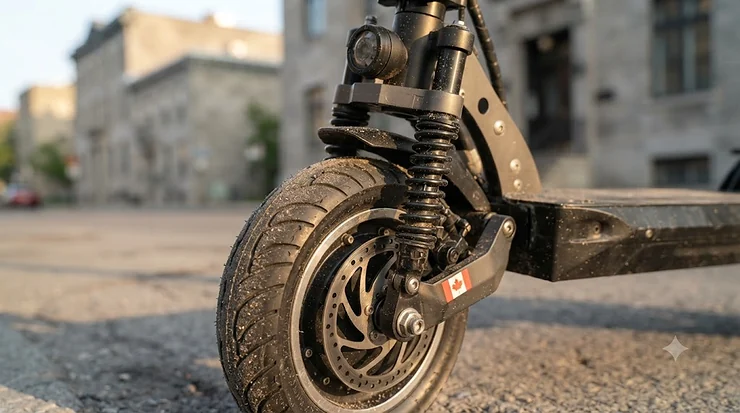
An electric scooter for long commutes is a personal transportation device built around a bigger battery, a stronger motor, and sturdier components so it can reliably cover 15 to 40+ kilometres a day instead of just puttering to the corner store. That’s the textbook definition, anyway. The lived version is a little more interesting: it’s the difference between white-knuckling the last three kilometres home on a dying battery and rolling into your driveway with 20% left over, wondering what all the fuss was about.

Here’s the thing nobody tells you when you start shopping for an electric scooter for long commutes — the spec sheet lies a little. Not maliciously, just optimistically. A “50-mile range” scooter, ridden the way you actually ride to work (full speed, a hill or two, maybe a headwind off the lake), behaves more like a 30-mile scooter. We’ll get into exactly why later. For now, know that this guide is built entirely around real, verifiable products, real tested mileage, and honest math — not marketing copy dressed up as advice.
We looked at seven scooters spanning true budget territory to genuinely premium machines, cross-referenced their specs against independent range tests, and dug into what Canadian riders specifically need to know — from provincial rules (they’re a patchwork, and British Columbia’s electric kick scooter pilot is a good example of how differently each province handles this) to keeping a battery happy through a Canadian winter. If you commute daily and you’re tired of range anxiety being the thing that decides your route, keep reading.
Quick Comparison Table
| Scooter | Real-World Range | Top Speed | Price Range (CAD) | Best For |
|---|---|---|---|---|
| Segway Ninebot MAX G2 | ~43 km | 25-32 km/h | C$1,050-C$1,350 | Budget daily commuters |
| Hiboy Titan Max | ~55 km | up to 51 km/h* | C$1,000-C$1,300 | Hilly, mixed-terrain routes |
| NIU KQi3 Max | ~42 km | 25-30 km/h | C$900-C$1,150 | Lightest carry, transit connectors |
| NAVEE ST3 Pro | ~40 km | 32-40 km/h* | C$1,300-C$1,600 | Best ride quality per dollar |
| VMAX VX4 23.2Ah | ~48 km | 30-32 km/h | C$1,700-C$2,100 | Refined single-motor commuting |
| Segway Ninebot MAX G3 | ~55 km | 32 km/h | C$2,000-C$2,500 | Rough-pavement comfort |
| Apollo Phantom 2.0 | ~59 km | 35 km/h* | C$2,600-C$3,200 | All-weather Canadian commuting |
*Some models are capable of speeds above what’s road-legal in most Canadian provinces — always check and adjust the app-limited speed to comply with local rules before riding on public roads.
Looking at the table, a clear pattern emerges: the jump from budget to mid-range buys you mostly comfort (suspension, tire quality, ride smoothness) rather than a dramatic range increase, while the jump into premium territory is where you really start seeing weatherproofing, hydraulic suspension, and app-based safety features show up. The NIU KQi3 Max is the outlier worth noting — it trades some range for a genuinely lighter frame, which matters enormously if your commute includes stairs or a transit transfer. Budget-conscious riders should also notice that the Segway Ninebot MAX G2 delivers range within shouting distance of scooters costing double, which tells you battery capacity alone isn’t where your money goes as you move up the price ladder.
💬 Just one click — help others make better buying decisions too!😊
Top 7 Electric Scooters for Long Commutes: Expert Analysis
Picking the right electric scooter for long commutes isn’t really about finding “the best” scooter in some abstract sense — it’s about matching a specific machine to your specific route, your specific stairwell, and your specific tolerance for showing up to a meeting slightly damp. Here’s how seven real, currently available models stack up.
1. Segway Ninebot MAX G2 — best budget pick for daily distance
The Segway Ninebot MAX G2 is the scooter equivalent of a reliable used sedan — nothing flashy, everything you actually need. It’s rated for roughly 70 km on paper, and independent testers clock closer to 40-45 km in real commuting conditions, which is still enough to make most Canadian commutes a non-issue on a single overnight charge. The motor sits in a comfortable middle ground: strong enough for moderate hills, not so aggressive that the ride feels twitchy on wet pavement. Based on the spec comparison against pricier options here, the G2’s biggest strength is that Segway’s build quality doesn’t feel like it was cut to hit a price point — the deck, folding mechanism, and brakes all feel a size class above what the sticker suggests. Reviewers consistently report that the ride is stable at speed and that the app-based speed limiter is genuinely useful for staying compliant with provincial rules rather than just a gimmick. What most buyers overlook is that this is the rare budget scooter that doesn’t ask you to compromise on brakes — a detail that matters far more over months of daily riding than a few extra kilometres of claimed range ever will.
Pros:
- ✅ Real-world range comfortably covers most urban commutes
- ✅ Braking and build quality punch above the price point
- ✅ App-based speed limiter simplifies staying road-legal
Cons:
- ❌ Suspension is minimal, so rough pavement gets felt
- ❌ Top speed lags behind pricier dual-motor rivals
Priced around C$1,050-C$1,350 at the time of research, the Segway Ninebot MAX G2 is the easiest scooter on this list to recommend to a first-time long-commute buyer who wants dependability over bragging rights.
2. Hiboy Titan Max — dual motors for hill-heavy routes
If your commute includes an incline that makes cyclists dismount and walk, the Hiboy Titan Max is worth a hard look. Its dual 800W motors (1,600W combined) exist for exactly this scenario — climbing grades that single-motor scooters simply bog down on. On paper it reaches a claimed 38-mile range and speeds well above what’s road-legal in Canada, which brings up an important honest caveat: that top-end speed figure is largely irrelevant here, since every province caps power-assisted devices well below it, and you’ll want to dial the app-limited speed down accordingly. Here’s what to weigh: dual motors mean more torque, but they also mean more weight and a wider stance, so the Hiboy Titan Max rides less like a nimble city scooter and more like a small all-terrain vehicle. Reviewers consistently note that the extra power is most noticeable not in outright speed but in how effortlessly it handles stop-and-go hill starts — the kind of thing that grinds down a single motor’s battery fast.
Pros:
- ✅ Dual motors shrug off steep grades other scooters struggle with
- ✅ Strong acceleration from a stop, useful in stop-and-go traffic
- ✅ Priced under C$1,300 despite dual-motor hardware
Cons:
- ❌ Heavier and bulkier than single-motor commuter scooters
- ❌ Top speed far exceeds what’s legal on Canadian roads
At an estimated C$1,000-C$1,300, the Hiboy Titan Max earns its keep specifically on routes where hills, not distance, are the real obstacle.
3. NIU KQi3 Max — lightest carry for stairs and transit
Range isn’t the only variable that matters on a long commute — sometimes the deciding factor is whether you can actually lug the thing up three flights of stairs to your apartment without your arm giving out. That’s where the NIU KQi3 Max earns its spot on this list. Independent testing puts its real-world range at around 26 miles (roughly 42 km), which is a notch below the dual-suspension premium models, but it’s noticeably lighter, and NIU built in a triple-braking system (electronic, front disc, rear disc) that’s genuinely one of the more reassuring setups in this price bracket. Based on the spec comparison, what most buyers overlook about lighter scooters is that they typically sacrifice suspension comfort for carry weight — and the NIU KQi3 Max does exactly that trade honestly rather than pretending it’s both feather-light and plush. Reviewers consistently frame it as the pick for commuters who combine scooter riding with a bus, train, or elevator somewhere in the journey, since every kilogram saved becomes noticeable the fifth time you’re hoisting it that week.
Pros:
- ✅ Noticeably lighter than dual-suspension long-range rivals
- ✅ Triple-braking system is unusually reassuring for the price
- ✅ Compact fold suits transit-connected commutes
Cons:
- ❌ Real-world range trails the heavier premium models
- ❌ Less cushioning on rough or unpaved surfaces
In the C$900-C$1,150 range, the NIU KQi3 Max is the pragmatic choice for anyone whose commute is “scooter plus something else.”
4. NAVEE ST3 Pro — smoothest ride-quality-to-price ratio
Independent testers clocked the NAVEE ST3 Pro at 24.9 real-world miles (about 40 km) of range with a top speed near 25 mph, a 17% hill climb handled with room to spare, and braking distance of roughly 11.5 feet from a dual drum-and-disc system — numbers that, on paper, already punch above its price class. What actually stands out, though, is the dual suspension: reviewers repeatedly describe the ride quality as approaching scooters that cost significantly more, largely because the front and rear springs are tuned so one doesn’t overpower the other, a detail cheaper dual-suspension scooters routinely botch. On paper this means fewer jolts through your wrists on cracked pavement, which — if you commute five days a week — adds up to a real difference in how your hands feel by Friday. The self-healing, tubeless 10-inch tires are another quiet win: what the spec sheet won’t tell you, but user reports suggest, is that this feature alone meaningfully cuts down on the roadside-puncture panic that ruins other commuters’ mornings.
Pros:
- ✅ Dual suspension rivals scooters costing considerably more
- ✅ Self-healing tubeless tires reduce puncture headaches
- ✅ Strong hill-climbing performance for a single motor
Cons:
- ❌ Not the lightest option if you’re carrying it upstairs
- ❌ Sits at a slightly higher price than basic budget scooters
At around C$1,300-C$1,600, the NAVEE ST3 Pro is arguably the best value pick on this entire list if ride comfort matters as much as range to you.
5. VMAX VX4 23.2Ah — most refined single-motor commuter
The VMAX VX4 23.2Ah isn’t trying to win a drag race. Its 48V 23.2Ah battery pack, 330-lb weight capacity, front-and-rear suspension, tubeless tires, and turn signals are all assembled around one goal: making the daily grind feel unremarkable in the best possible sense. Based on the spec comparison, what most buyers overlook here is that a well-tuned single motor, properly matched to battery voltage and gearing, can deliver a smoother, more predictable ride than a poorly balanced dual-motor setup — speed isn’t the only measure of a good commuter machine. The 24-month warranty is also worth flagging, since it’s longer than what most competitors in this price tier offer, and it signals a manufacturer willing to stand behind long-term daily use rather than occasional weekend rides. Reviewers consistently describe it as “polished” rather than “exciting” — which, if you’ve ever had an “exciting” commute involving an unexpected pothole, is precisely the compliment you want.
Pros:
- ✅ Refined ride feel prioritizes comfort over raw speed
- ✅ 24-month warranty outpaces most competitors
- ✅ Turn signals and suspension aid real commuting safety
Cons:
- ❌ Higher price than comparable single-motor scooters
- ❌ Less headline-grabbing top speed for the price
Priced around C$1,700-C$2,100, the VMAX VX4 23.2Ah suits the commuter who has stopped chasing spec sheets and started valuing consistency.
6. Segway Ninebot MAX G3 — best hydraulic suspension for rough pavement
Range is where the Segway Ninebot MAX G3 genuinely shines, with a 597 Wh battery rated for up to 50 miles and real-world testing landing well ahead of most rivals on this list. But the number that should catch a Canadian commuter’s eye is the hydraulic front suspension — a step up from the spring setups found on nearly everything else here, and one that reviewers describe as noticeably better at absorbing the kind of frost-heaved, pothole-riddled pavement that shows up every spring thaw from Halifax to Victoria. Here’s what to weigh: hydraulic suspension adds cost and a small amount of maintenance complexity, but it pays that back in comfort on exactly the terrain long commuters can’t avoid. The 3.5-hour fast charge is another quiet advantage — if you’re commuting both ways daily, a shorter recharge window between the evening and the next morning meaningfully reduces range anxiety.
Pros:
- ✅ Hydraulic suspension handles rough pavement exceptionally well
- ✅ Genuinely long real-world range for daily two-way commutes
- ✅ 3.5-hour fast charge shortens the overnight recovery window
Cons:
- ❌ Premium pricing puts it out of reach for budget buyers
- ❌ Extra weight from the larger battery pack is noticeable
At roughly C$2,000-C$2,500, the Segway Ninebot MAX G3 is built for the commuter who rides year-round and refuses to let bad pavement dictate their route.
7. Apollo Phantom 2.0 — built for genuine Canadian weather
Independent range testing puts the Apollo Phantom 2.0 (60V Stellar configuration) at roughly 36.6 real-world miles (close to 59 km), which is among the strongest figures on this list, but the more relevant detail for Canadian buyers is IP66 water resistance paired with an app that lets you dial the top speed down to match provincial limits without guesswork. Apollo is a Canadian-facing brand, and it shows in small but meaningful ways — the lighting setup, the weatherproofing rating, and the app’s compliance-focused speed presets all read like they were designed with our patchwork of provincial rules specifically in mind, rather than retrofitted afterward. Based on the spec comparison, what most buyers overlook about “premium” scooters is that the extra cost isn’t always about raw power — here it’s mostly about the machine surviving a slushy November commute without corroding a connector or shorting a light. Reviewers consistently note the ride comfort holds up well even loaded near its weight capacity, which matters if you’re commuting with a bag, laptop, or gym clothes strapped on.
Pros:
- ✅ IP66 weatherproofing suits genuine Canadian conditions
- ✅ App-based speed limiting simplifies provincial compliance
- ✅ Strong real-world range even fully loaded
Cons:
- ❌ Sits at the top of this list’s price range
- ❌ Overkill if your commute is short and mostly dry pavement
At around C$2,600-C$3,200, the Apollo Phantom 2.0 is the pick for commuters who ride through actual Canadian weather rather than just talking about it.
Commute Distance Planning: How Far Can You Actually Go on a Single Charge?
Commute distance planning starts with a number most riders get wrong on purpose (optimism is a hell of a drug): take the advertised range and multiply it by 0.6 to 0.7. That’s the real-world figure you should plan around, since manufacturer numbers are typically measured at low, steady speeds with a lightweight rider on flat, dry pavement — not the version of your commute that includes a headwind, a hill, and you at your actual body weight.
Picture three commuters. Priya rides 6 km each way through downtown Ottawa with a couple of stop lights — almost any scooter on this list handles that with range to spare, so she can prioritize the lighter NIU KQi3 Max for the stairs up to her office. Marcus covers 14 km each way from a Calgary suburb, crossing a moderate hill and riding in wind more often than he’d like — he needs genuine buffer room, which points him toward the NAVEE ST3 Pro or Segway Ninebot MAX G3. Then there’s Dana, doing 20+ km round trip in Halifax with unpredictable coastal weather — she needs both range and weatherproofing, which is exactly the case the Apollo Phantom 2.0 was built for. Match your actual round-trip distance, not your best-case guess, against the real-world column in the comparison table above, and add at least 20% headroom for a bad-weather day.
Workplace Charging Etiquette: How to Plug In Without Becoming “That Coworker”
Workplace charging etiquette is the unglamorous skill nobody mentions when they sell you on scooter commuting, and it’s exactly the kind of thing that turns a great idea into an office feud if you get it wrong.
Problem: Your scooter’s charger occupies the only outlet near your desk, annoying whoever needs it for their laptop.
Solution: Bring your own compact power strip so you’re adding an outlet, not monopolizing one.
Problem: Charging cables snaking across a walkway are a liability nobody wants to own.
Solution: Route the cable along a wall or under a desk, and use cable clips or tape rather than leaving it exposed underfoot.
Problem: Some offices have unwritten (or written) rules against personal device charging due to fire-safety concerns with lithium batteries.
Solution: Ask facilities or your manager directly before you assume it’s fine — a two-minute conversation beats an awkward memo later.
Problem: A scooter parked awkwardly near an exit or fire door becomes a hazard and a target for complaints.
Solution: Designate a consistent, out-of-the-way spot — near your desk if allowed, or a bike-storage area if one exists — and use it every day so it stops being a novelty.
Most of this comes down to treating your scooter like the appliance it is: useful, but not automatically entitled to shared space just because it gets you to work.
Folding Portability: What Matters When You’re Carrying It Up Stairs
Folding portability sounds like a minor spec until you’re the one hauling 18 kilograms up a walk-up on a Tuesday with a coffee in one hand. Three things actually matter here: fold time, carry weight, and how the folded shape balances when you lift it. A one-step folding latch (most scooters on this list use one) beats a multi-clip system when you’re rushing to catch an elevator. Weight matters more than marketing suggests — the difference between the NIU KQi3 Max and a heavier dual-motor scooter like the Hiboy Titan Max is the difference between a casual one-handed carry and a two-handed hoist that leaves your forearm sore by Friday. And balance matters too: a scooter that folds into a lopsided shape is awkward on stairs regardless of its total weight, so if portability is a genuine priority, it’s worth testing the actual fold in person rather than trusting a spec sheet’s “folds in 3 seconds” claim.
How to Choose an Electric Scooter for Long Commutes
Choosing an electric scooter for long commutes comes down to seven practical questions, in roughly this order of importance:
- Measure your actual round-trip distance, then apply the 60-70% real-world range rule above — this single step eliminates most bad purchases before they happen.
- Check your province’s legal speed and power limits before falling in love with a top-speed number you’ll never legally use on public roads.
- Weigh portability against your building’s layout — stairs and transit transfers should push you toward lighter models.
- Prioritize suspension quality over motor wattage if your commute includes rough or frost-heaved pavement, since comfort compounds daily in a way raw power doesn’t.
- Confirm tire type — tubeless and self-healing tires meaningfully cut roadside puncture risk versus basic pneumatic tires.
- Factor in weather resistance if you’ll ride through rain, slush, or road spray for any part of the year.
- Compare warranty length, since a longer warranty often signals a manufacturer’s confidence in daily-use durability, not just marketing.
Long Range Electric Scooter Review: What Real-World Testing Actually Shows
Every long range electric scooter review worth reading starts from the same honest premise: manufacturer range claims and real-world range are two different numbers, and the gap between them is wider than most shoppers expect. Independent testers riding at genuine commuting speed — not the slow, optimistic pace used in manufacturer testing — consistently measure 60 to 85% of the advertised figure, with the gap widening further on hilly routes, in cold weather (lithium batteries lose meaningful capacity below freezing), or with a heavier rider aboard.
What a proper long range electric scooter review also reveals is that watt-hours (Wh), not the headline mileage number, is the spec worth comparing directly across models — a 597 Wh battery will consistently outlast a 400 Wh battery regardless of what each brand claims on the box, because it’s a direct measure of stored energy rather than a marketing-massaged distance estimate. Riding in eco mode rather than sport mode can add over 30% to your real range, which matters enormously on a long commute where you’re not actually racing anyone. And a genuinely useful trick underused by casual buyers: some long-range scooters support swappable or secondary battery packs, effectively doubling usable range with a 30-second stop rather than a multi-hour recharge — worth asking about if your round-trip distance sits right at the edge of any single model’s real-world capability.
Electric Scooter vs E-Bike for Long Commutes
The electric scooter vs e-bike debate for long commutes usually comes down to three trade-offs, not one obvious winner. Weight and portability favour scooters decisively — folding a scooter into an elevator or up a narrow stairwell is simply not something most e-bikes can do. Comfort over genuinely long distances tends to favour e-bikes, since a seated pedal-assist position distributes fatigue differently than standing on a scooter deck for 30+ minutes. And weather resilience is closer than you’d think — a well-weatherproofed scooter like the Apollo Phantom 2.0 can hold up to rain and slush about as well as many e-bikes, though neither handles heavy snow gracefully.
The practical rule of thumb: if your commute involves stairs, transit connections, or storage constraints (a condo locker, a cramped apartment entryway), a scooter usually wins on convenience. If your commute is a longer, mostly uninterrupted stretch where standing the whole way would genuinely tire you out, an e-bike’s seated position starts to look more appealing. Neither is objectively “better” — they’re solving overlapping but distinct problems.
Common Mistakes When Buying an Electric Scooter for Long Commutes
The single most common mistake is buying based on the advertised range number instead of the real-world figure — a mistake this guide has already addressed, but one worth repeating because it’s genuinely the root cause of most buyer’s remorse in this category. A close second is underestimating hill grades; a route that “feels flat” when you drive it can still include a 10-12% grade that bogs down an underpowered single motor, so it’s worth actually checking elevation change on a mapping tool rather than trusting your gut. Buyers also frequently skip checking their province’s legal limits until after purchase, only to discover their new scooter’s top speed setting needs to be capped well below what they paid for. Another overlooked mistake: ignoring tire type entirely, then getting stranded by a flat on a commute where there’s no time to deal with it. Finally, plenty of buyers focus entirely on the scooter and forget to budget for a proper lock, since a long-commute scooter left unsecured outside for even a lunch break is a real theft risk in most Canadian cities.
What to Expect: Real-World Performance on Your Daily Commute
Specs on a page don’t tell you what a 15-degree incline feels like at 7:45 AM when you’re already running five minutes late. Here’s the translation. A single 350-500W motor handles gentle inclines fine but visibly slows on anything steeper, which is where dual-motor options like the Hiboy Titan Max actually earn their extra weight. Suspension differences that look minor on a spec sheet become very obvious on real pavement — the gap between the NAVEE ST3 Pro‘s tuned dual suspension and a basic budget scooter’s rigid deck is the difference between arriving relaxed and arriving with your wrists slightly numb. Cold weather (anything below about 0°C) measurably shortens range and can make batteries feel sluggish to charge, so winter commuters should mentally shave another 10-15% off their real-world range estimate during the coldest months. And braking distance, which barely gets a second glance during a showroom test, becomes the single most important spec the first time a car door opens unexpectedly in your path.
Long-Term Cost & Maintenance: The Real Cost of Ownership
The purchase price is only the opening bid. Tires wear out — expect to replace them roughly every 1,500-3,000 km depending on tire type, with tubeless and self-healing options like those on the NAVEE ST3 Pro meaningfully extending that interval. Batteries degrade gradually with every charge cycle, typically retaining 70-80% of original capacity after 500-800 full cycles, which for a daily commuter translates to roughly 2-3 years before you’ll notice a real range drop. Brake pads, especially on disc-brake models, need periodic replacement — a minor cost, but one that’s easy to forget until the braking distance quietly lengthens. Factor in occasional water damage risk if you’re riding a lower-IP-rated model through Canadian slush regularly; this is precisely where a scooter like the Apollo Phantom 2.0‘s IP66 rating pays for itself over a multi-year ownership period by avoiding a costly connector repair. Compared against the cost of transit passes or fuel over the same period, most long-commute scooters pay for themselves within 12-18 months of regular use — assuming you’re not also paying for a parking ticket every time you leave it somewhere careless.
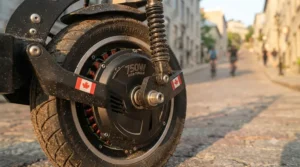
Safety, Regulations & Compliance for Canadian Commuters
Electric scooter regulation in Canada is genuinely fragmented, and treating it as a single national rulebook is the fastest way to get an unexpected fine. Federally, Transport Canada handles vehicle safety standards but explicitly leaves on-road usage rules — where you can ride, speed limits, helmet requirements, age minimums — to individual provinces and, often, individual municipalities. That means a scooter perfectly legal in Kelowna might be restricted a short drive away, and CBC’s reporting on B.C.’s e-scooter pilot is a good illustration of just how localized these rules can get, even within a single province.
Quebec runs its own pilot framework with a 25 km/h scooter speed limit and mandatory helmets for all riders, details worth confirming directly through Quebec’s official transportation guidance before you ride there. British Columbia treats e-scooters as part of a multi-year kick-scooter pilot restricted to participating communities, with a 16+ age minimum and mandatory helmets. Alberta generally permits e-scooters on bike lanes and paths without a licence, though cities like Calgary and Edmonton layer on their own bylaws. The practical takeaway, regardless of province: assume nothing is legal until you’ve checked your specific city’s current bylaw page, since these rules shift often enough that “it was fine last year” isn’t a safe assumption. For a broader technical overview of how these devices are classified and engineered, the Wikipedia entry on electric kick scooters is a solid starting reference.
✨ Don’t Miss These Exclusive Deals!
🔍 Take your electric scooter for long commutes shopping to the next level with the seven models covered above. Click through to check current pricing and availability on each, and lock in a ride that turns your commute from a chore into the best part of your day.
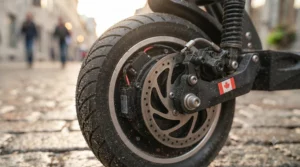
Frequently Asked Questions
❓ How far can an electric scooter for long commutes actually go on one charge?
❓ Are electric scooters legal for commuting in every Canadian province?
❓ Is a folding electric scooter durable enough for daily long commutes?
❓ How do I charge an electric scooter at work without annoying coworkers?
❓ What's the difference between a budget and premium electric scooter for long commutes?
Conclusion
Finding the right electric scooter for long commutes really comes down to being honest about your route before you fall for a spec sheet. Measure your real distance, apply the 60-70% rule, check what your province actually allows, and weigh portability against comfort based on your specific building and weather. The Segway Ninebot MAX G2 and NIU KQi3 Max cover most budget-conscious, shorter commutes well; the NAVEE ST3 Pro and VMAX VX4 23.2Ah hit a strong middle ground of comfort and refinement; and the Segway Ninebot MAX G3 and Apollo Phantom 2.0 are built for commuters who ride long, rough, or wet routes year-round without wanting to think twice about it.
None of these seven scooters is a perfect universal answer, and that’s the point — the “best” electric scooter for long commutes is the one that matches your actual kilometres, your actual stairwell, and your actual weather, not the one with the flashiest number on the box.
✨ Ready to stop worrying about range on your commute? Check current pricing on any of the seven models above and find the one built for your route.
Recommended for You
- Cheap Long Range Electric Scooter Picks: 7 Tested for 2026
- Top Long Range Electric Scooters Under $1200 CAD: 7 Picks for 2026
- Single Motor vs Dual Motor Electric Scooter: 7 Picks for 2026
Disclaimer: This article contains affiliate links. As an Amazon Associate, I earn from qualifying purchases. If you purchase products through these links, we may earn a small commission at no additional cost to you.
✨ Found this helpful? Share it with your friends! 💬🤗
