
In This Article
Somewhere between “I can walk it” and “I need a car for this,” there’s a stretch of commute that nobody quite designed for — the 6-to-12-kilometre zone where transit connections don’t line up, biking feels like a workout you didn’t ask for, and driving means paying for parking you resent. That’s the gap an electric scooter for medium commutes is built to fill. An electric scooter for medium commutes is a foldable, battery-powered kick scooter engineered for daily rides in roughly the 8 to 20 km range, balancing battery capacity, motor power, and portability so you can ride to the office or campus and still fold it under a desk…
An electric kick scooter, as Wikipedia’s overview of the vehicle category explains, has grown from a novelty into genuine daily transportation over the past several years, and the medium-commute segment is where that shift shows up most clearly. If you’ve been scrolling listings trying to figure out whether a 25-mile range actually means 25 miles, or whether “foldable” means “foldable in three seconds” or “foldable with two hands, a grunt, and mild regret,” you’re not alone. Prices swing from budget-friendly to genuinely premium, and the marketing copy rarely explains what any of it means for a Tuesday morning ride through Canadian weather. This guide breaks down seven real, currently available models — sourced from manufacturer specs and aggregated rider feedback, not guesswork — so you can match a scooter to your actual commute instead of your wishlist.
We’ll walk through a quick comparison, a deep dive into each of the seven scooters, and then get into the stuff most listings skip entirely: how folding mechanisms actually differ in daily use, what charge cycle frequency really does to your battery over two Canadian winters, and which scooter fits a campus route versus a downtown office grind. U.S. federal safety data has tracked a notable rise in micromobility-related injuries in recent years, which is exactly why picking the right scooter — not just the cheapest or the flashiest — actually matters. Let’s get into it.
Quick Comparison Table
For readers in a hurry, here’s the condensed version. Every model below is available through Amazon.ca, and every price reflects a range rather than a fixed figure, since Amazon pricing shifts constantly.
| Scooter | Best For | Top Speed | Real-World Range | Price Range (CAD) |
|---|---|---|---|---|
| Segway Ninebot Max G2 | Longest medium commutes, hilly routes | 35 km/h | 45-55 km | C$900-1,050 |
| NIU KQi3 Pro | Best all-round balance | 32 km/h | 35-45 km | C$800-950 |
| Xiaomi Electric Scooter 4 Pro | Fastest, smoothest fold | 25 km/h | 40-48 km | C$650-780 |
| Hiboy S2 Pro | Budget campus commuting | 30 km/h | 30-35 km | C$400-480 |
| GoTrax G4 | Cheapest reliable entry point | 32 km/h | 28-33 km | C$350-430 |
| Turboant V8 | Swappable dual-battery range | 32 km/h | 32-40 km | C$550-680 |
| Unagi Model One E500 | Lightest premium office carry | 32 km/h | 18-24 km | C$1,000-1,150 |
Looking at the spread, the pattern that jumps out is the tradeoff between range and weight: the Segway Ninebot Max G2 wins on distance because it’s willing to carry more battery and more bulk, while the Unagi Model One E500 sacrifices range for a frame you can actually carry up three flights of stairs without cursing. Budget doesn’t automatically mean “worse” here either — the Hiboy S2 Pro and GoTrax G4 cover a genuinely useful chunk of the medium-commute range for less than half the price of the premium options. If your round-trip commute regularly exceeds 15 km, that difference in range stops being a nice-to-have and starts being the thing that decides whether you make it home without pushing a scooter the last kilometre.
💬 Just one click — help others make better buying decisions too!😊
Top 7 Electric Scooters for Medium Commutes: Expert Analysis
We researched real specs, current availability, and aggregated review sentiment for each of these seven scooters. None of the commentary below is based on personal ownership — it’s grounded in manufacturer data and the recurring themes across verified customer reviews, clearly flagged as such.
1. Segway Ninebot Max G2 — best all-rounder for longer, hillier medium commutes
The Max G2’s headline feature is a genuine double suspension setup — a hydraulic damper up front paired with double spring suspension at the rear — and that’s not just spec-sheet fluff — it’s the reason this scooter handles rougher pavement without rattling your wrists loose. A 1000W peak motor draws on a 551 Wh battery for a manufacturer-claimed range in the low 40-mile territory at a top speed around 22 mph, though real-world commuting at mixed speeds typically lands closer to 28-35 km on a full charge once you factor in stop-and-go traffic, cold weather, and rider weight. What most buyers overlook about this model is that the headline range figure is measured at a slow, steady pace — treat it as a ceiling, not a daily expectation. For anyone commuting through a hilly city like Halifax or parts of Vancouver, the roughly 22% max incline rating is genuinely useful, since plenty of budget scooters simply bog down on anything steeper than a gentle slope.
Reviewers consistently note the dual suspension as the standout feature for comfort on cracked pavement and streetcar tracks, and several also flag the built-in Apple Find My compatibility as a meaningful anti-theft advantage over scooters with no location tracking at all. On the flip side, a recurring theme in aggregated feedback is the scooter’s weight — north of 50 pounds — meaning this isn’t something you casually sling over a shoulder for a subway transfer.
Pros:
- ✅ Dual suspension smooths out rough Canadian pavement
- ✅ Long real-world range for genuinely hilly commutes
- ✅ Apple Find My tracking helps deter theft
Cons:
- ❌ At 53.5 lbs, awkward to carry up stairs daily
- ❌ Claimed range is optimistic versus mixed-speed riding
Price sits in the C$900-1,050 range at the time of research, and for riders whose medium commute regularly tops 12-15 km one-way or includes real hills, the extra weight is a fair trade for the range and suspension you get in return.
2. NIU KQi3 Pro — best all-around balance of range, comfort, and price
NIU built its reputation on mopeds before scooters, and that manufacturing scale shows up as unusually consistent quality control at this price point. A 700W peak motor delivers a top speed around 32 km/h and a claimed range near 50 km on paper, though independent range testing found real-world results closer to 29-38 km depending on riding style — still comfortably enough for most medium commutes with a buffer left over. Here’s what to weigh: the KQi3 Pro skips front/rear suspension entirely, leaning instead on wide 9.5-inch fat tubeless tires and a broader deck and handlebar to absorb bumps. In practice that’s a reasonable compromise — fatter tires cost less to maintain than suspension hardware, which matters over years of ownership.
The triple-braking setup, combining a front mechanical disc brake with a rear disc and electric brake, consistently earns praise in aggregated reviews for stopping distance in wet Canadian fall conditions, a detail that matters more than most buyers initially realize. What the spec sheet won’t tell you, but reviewers note, is that the wide deck genuinely helps riders with bigger shoes or winter boots stay comfortably planted, which is a small thing that becomes a big thing on a 20-minute ride.
Pros:
- ✅ Triple braking system performs well in wet weather
- ✅ Wide deck and fat tires comfortable for taller riders
- ✅ Strong range-to-price ratio in the mid-range category
Cons:
- ❌ No front or rear suspension hardware
- ❌ Heavier than similarly priced folding competitors
At C$800-950, the KQi3 Pro is arguably the safest “just buy this” recommendation for someone commuting 5-10 km each way who wants dependable performance without premium pricing.
3. Xiaomi Electric Scooter 4 Pro — best folding mechanism and smart features
Xiaomi’s 4 Pro earns its spot here almost entirely on portability engineering. The frame uses aerospace-grade aluminum alloy paired with a quick three-step folding mechanism that reviewers repeatedly describe as the fastest, most intuitive fold in this price bracket — genuinely relevant if you’re folding and unfolding twice a day at a transit stop. A 446Wh battery is rated for up to roughly 55 km of range, and a kinetic energy recovery system (KERS) recaptures braking and coasting energy to stretch that range further, adjustable through the companion app. Based on the spec comparison, the tradeoff here is top speed: at around 15.5 mph (25 km/h), it’s noticeably slower than the Segway or NIU models, which matters if your route has stretches where you’d otherwise want to keep pace with bike-lane traffic.
Aggregated review sentiment consistently highlights the 10-inch self-sealing tubeless tires as a genuine upgrade over solid-tire budget competitors, cutting down on the harsh ride quality that plagues cheaper scooters on broken pavement. The tradeoff for that comfort is a slightly longer charging window — Xiaomi’s own documentation puts a full charge at roughly 8-9 hours, which means overnight charging is basically mandatory rather than optional.
Pros:
- ✅ Fastest, most intuitive folding mechanism tested
- ✅ Tubeless self-sealing tires reduce puncture risk
- ✅ Strong smart-app integration for range tuning
Cons:
- ❌ Top speed noticeably slower than rival mid-range models
- ❌ Full charge takes roughly 8-9 hours
Priced around C$650-780, the 4 Pro is the pick for commuters who fold and carry their scooter through doorways, elevators, or transit turnstiles multiple times a day and value that mechanism more than raw speed.
4. Hiboy S2 Pro — best budget option built for daily campus and commuter use
The S2 Pro is where most first-time scooter commuters should start looking, and the review data backs that up. A 500W brushless hub motor reaches speeds up to about 30 km/h, and the 36V/11.6Ah battery is rated for a maximum range near 40 km under ideal conditions — call it a realistic 20-25 km in daily mixed-terrain use, which still covers the vast majority of campus and short-office commutes with room to spare. What most buyers overlook is that this scooter’s 10-inch solid tires, paired with dual rear shock absorbers, deliver noticeably more comfort than you’d expect at this price, since solid tires alone (without any shock absorption) tend to transmit every crack in the sidewalk straight into your wrists.
Reviewers consistently flag the dual braking system — a disc brake up front plus EABS regenerative anti-lock braking at the rear — as reliable stopping power that outperforms its price tag, and companion app support for tracking battery life and locking the scooter adds a security layer that budget competitors often skip. On the downside, aggregated feedback repeatedly mentions that solid tires — while puncture-proof — transmit more road vibration than pneumatic alternatives, particularly on frost-heaved pavement common after a Canadian winter.
Pros:
- ✅ Genuinely comfortable ride for a budget-tier scooter
- ✅ Reliable dual braking system for the price
- ✅ App-based lock and battery tracking included
Cons:
- ❌ Solid tires transmit more vibration than pneumatic tires
- ❌ Range drops noticeably in cold weather
At C$400-480, the S2 Pro is the strongest value pick for students or new commuters testing whether scooter commuting fits their routine before spending premium money.
5. GoTrax G4 — best entry-level pick for short-to-medium campus routes
If budget is the deciding factor, the G4 remains one of the most consistently recommended entry-level scooters on the market, largely because GoTrax has iterated on this exact model for years. A 350W rear-wheel motor reaches a claimed top speed around 20 mph, while the 36V 10.4Ah battery is rated for roughly 25 miles per charge on paper — though independent testing found a certified real-world range closer to 14-15 miles (about 23 km), which is the honest number to plan around. Here’s what to weigh: that’s still enough for most 5-8 km campus or office routes with a charging buffer, but it’s not the scooter for someone stretching toward the upper end of “medium commute.”
The 10-inch tires and one-touch folding mechanism get consistent praise in aggregated reviews for convenience, and a built-in electric code lock paired with a cable lock gives budget-conscious buyers a genuine anti-theft feature that’s often missing at this price. What the marketing won’t emphasize is braking: independent testing found the rear-disc-only braking setup needs adjustment out of the box for effective stopping, so budget in five minutes with a wrench before your first ride.
Pros:
- ✅ Lowest price point among reliable commuter scooters
- ✅ Built-in electric code lock deters casual theft
- ✅ One-touch folding is fast and simple
Cons:
- ❌ Real-world range runs well under the advertised figure
- ❌ Rear-only braking needs manual adjustment for best stopping power
At C$350-430, the G4 is the practical choice for students commuting short-to-medium distances around a campus who want a dependable first scooter without a big upfront investment.

6. Turboant V8 — best for medium-commuters who need swappable dual-battery range
The V8’s defining feature is its dual removable battery system, which changes the calculus for anyone whose medium commute runs long or who doesn’t want to plan their week around a single charging session. Turboant advertises a claimed range approaching 50 miles thanks to the pair of 36V, 7.5 Ah batteries, though real-world testing during a hilly 10-mile ride found the battery level dropped to roughly half, suggesting closer to 20 miles (about 32 km) of realistic range — still a strong showing for the medium-commute category. Based on the spec comparison, the tradeoff for that battery capacity is weight: at nearly 48 lbs, the V8 is genuinely one of the heavier scooters in this lineup, and reviewers are candid about it feeling bulky to carry despite folding compactly.
Aggregated feedback repeatedly praises the built-in bike lock slot as a rare and genuinely useful security feature most competitors don’t offer, along with the rear dual-spring suspension paired with 9.3-inch pneumatic tires for ride comfort. What reviewers consistently flag as a weak point is hill performance and carry weight — this is a scooter built to be ridden, not carried, so it suits riders who can park it rather than haul it up stairs.
Pros:
- ✅ Dual removable batteries extend real-world range
- ✅ Built-in bike lock slot adds genuine theft protection
- ✅ Pneumatic tires plus rear suspension smooth out bumps
Cons:
- ❌ Noticeably heavier and bulkier than similarly priced rivals
- ❌ Struggles on steeper inclines despite the power on paper
Priced around C$550-680, the V8 fits commuters with longer medium routes who value range security over portability, particularly those who can leave the scooter locked at a destination rather than carrying it indoors.
7. Unagi Model One E500 — best ultralight premium pick for office and transit-linked commutes
The Model One is built for a specific type of commuter: someone who rides a shorter leg of a longer, multi-modal trip and needs the lightest, most elegant fold possible. At roughly 28-29 lbs, it’s dramatically lighter than every other scooter on this list, and its patented one-button hinge system folds and locks faster than most competing designs — a genuine advantage if you’re folding this scooter to board a bus or GO train partway through your commute. Reviewers consistently describe the fold-and-carry experience as the best in the category, which lines up with Unagi’s design focus on aerospace-grade carbon fiber construction, chosen specifically to cut weight without sacrificing structural strength.
What most buyers overlook is the range tradeoff that comes with all that lightness: real-world range runs closer to 15 miles (about 24 km), noticeably less than the heavier scooters on this list, and the compact 7.5-inch solid tires offer minimal cushioning on rough pavement compared to pneumatic alternatives. The spec sheet won’t tell you this, but user reports suggest the smaller wheel size means potholes and streetcar tracks are felt more directly than on 10-inch-tire competitors — this is a scooter optimized for smooth downtown pavement, not rough backroads.
Pros:
- ✅ Lightest scooter in this roundup by a wide margin
- ✅ Fastest, most premium-feeling folding mechanism
- ✅ Genuinely elegant design for office and transit use
Cons:
- ❌ Shortest real-world range of any scooter here
- ❌ Small solid tires transmit more road vibration
At C$1,000-1,150, the Model One E500 is a deliberate premium purchase for riders whose actual riding distance is shorter than their theoretical “medium commute,” with the rest of the trip covered by transit.
Practical Usage Guide: Getting the Most from Your Medium-Commute Scooter
Setting up a new scooter properly in the first week matters more than most buyers expect. Start with a full charge-discharge cycle before your first real ride — most manufacturers recommend this to calibrate the battery gauge accurately, so your remaining-range display isn’t guessing. Check tire pressure (for pneumatic models like the Xiaomi Electric Scooter 4 Pro or Turboant V8) weekly during your first month, since a soft tire quietly eats into both range and ride comfort without any obvious warning sign.
A common first-30-days mistake is over-tightening the folding mechanism’s safety latch out of an abundance of caution — most folding hinges, including the one on the Unagi Model One E500, are engineered to click firmly without force, and forcing it can wear the latch prematurely. Similarly, riders new to models like the GoTrax G4 or Hiboy S2 Pro often skip the brake-lever adjustment step entirely, leaving stopping power softer than it should be right out of the box.
For ongoing maintenance, wipe down the deck and stem weekly to prevent grit buildup in the folding hinge, and inspect brake pads monthly if you’re riding daily — Canadian winters accelerate wear thanks to road salt. Store your scooter somewhere temperature-stable when possible; lithium batteries lose capacity fastest when repeatedly charged or stored below freezing, which matters a great deal if your commute runs through a Canadian winter.
Best Electric Scooter for Campus and Office Commuting
Campus and office commuting are similar in distance but different in constraints, and matching the right scooter to each context saves real frustration. Picture a college student living 3 km from a lecture hall with irregular gaps between classes: the priority here is low upfront cost and dead-simple folding for locker or backpack storage, which points squarely at the GoTrax G4 or Hiboy S2 Pro — both fold quickly, cost under C$500, and comfortably cover short, repeated trips across a campus in a single school day.
Now picture a downtown office worker who takes a 12-minute train ride and then scoots the final 4 km to their building. That’s the exact use case the Unagi Model One E500 was designed around: light enough to carry through a turnstile and up an office elevator without becoming a chore, with a fold fast enough to execute in a crowded train car. A third profile — a suburban commuter riding a full 10-12 km with no transit backup — needs the range security of the Segway Ninebot Max G2 or Turboant V8, since running out of charge mid-route with no fallback plan is a genuinely bad Tuesday.
The throughline across all three profiles: match the scooter’s weight and range to the parts of your trip you can’t shortcut, not to the scooter that looks the most impressive in photos.
Problem → Solution: Fixing the Top Medium-Commute Scooter Headaches
Problem 1 — Range anxiety on longer routes. If you’re regularly cutting it close on battery, the fix isn’t always a bigger battery; it’s often riding mode discipline. Switching from “Sport” to “Standard” or “Eco” mode on models like the NIU KQi3 Pro or Xiaomi Electric Scooter 4 Pro can meaningfully extend range at a modest speed cost.
Problem 2 — Folding fatigue from twice-daily use. Scooters with tool-free, single-latch mechanisms — the Xiaomi Electric Scooter 4 Pro and Unagi Model One E500 both fit this description — hold up better to repeated daily folding than multi-step designs, which matters if you’re folding and unfolding four times a day.
Problem 3 — Cold-weather range drops. Lithium batteries lose meaningful capacity below 0°C. The practical fix is riding in a higher power mode to compensate for reduced efficiency, and storing the scooter indoors overnight rather than in an unheated garage whenever possible.
Problem 4 — Wet-weather braking confidence. Scooters with dual or triple braking systems, such as the NIU KQi3 Pro or Hiboy S2 Pro, brake noticeably better on wet pavement than single-brake budget models — worth prioritizing if your commute includes Canadian rain or slush season.
Problem 5 — Theft risk at destination. Built-in locks, like the GoTrax G4‘s electric code lock or the Turboant V8‘s integrated bike-lock slot, meaningfully reduce opportunistic theft compared to scooters with no locking mechanism at all — pair either with a secondary cable lock for anything left unattended longer than a few minutes.
How to Choose an Electric Scooter for Medium Commutes
Choosing the right electric scooter for medium commutes comes down to matching seven criteria against your actual route, not the specs that look best in a listing:
- Measure your real one-way distance. Add 30-40% buffer to whatever your maps app says, since real-world range always runs under manufacturer claims.
- Weigh portability against range. If you carry the scooter indoors daily, prioritize weight (Unagi Model One E500, Xiaomi Electric Scooter 4 Pro); if it stays outside or locked, prioritize range (Segway Ninebot Max G2, Turboant V8).
- Check the incline rating against your route. Hilly commutes need at least a 15-20% climb rating to avoid the motor bogging down.
- Prioritize tires based on your pavement. Pneumatic tires ride smoother on rough streets; solid tires need zero maintenance but transmit more vibration.
- Confirm the braking system matches your climate. Dual or triple braking systems matter more if you ride through rain or slush regularly.
- Factor in charge time against your schedule. An 8-9 hour charge time (Xiaomi) works fine for overnight charging but poorly for same-day top-ups.
- Set a realistic budget band, not a single number. Budget (C$350-500), mid-range (C$550-950), and premium (C$1,000+) each deliver genuinely different real-world experiences — decide which tier your commute actually justifies before shopping specific models.
Medium Range Electric Scooter Review: What the Spec Sheets Don’t Tell You
Every manufacturer publishes a range figure, and almost none of them reflect how you’ll actually ride. Manufacturer range tests typically use a single rider around 165 lbs, a flat surface, mild temperatures, and a slow, steady speed — conditions that rarely match a real commute with traffic lights, hills, and Canadian weather. Independent testing consistently finds real-world range running roughly 20-40% below advertised figures depending on rider weight, terrain, and riding style.
What actually predicts a medium-range electric scooter’s real performance better than the headline number is battery capacity measured in watt-hours (Wh) combined with total vehicle weight — a heavier scooter with a bigger battery, like the Segway Ninebot Max G2‘s 551 Wh pack, tends to hold up better across genuinely mixed terrain than a lighter scooter with a smaller battery, even if their advertised ranges look similar on paper. The lesson for medium-commute shoppers specifically: if your round trip is close to a scooter’s advertised range, assume it isn’t enough, and size up rather than cutting it close.
Folding Mechanisms Compared: Which Fold Fastest and Smallest
Folding mechanisms matter more on a medium commute than a short one, simply because you’re more likely to be folding and unfolding around transit connections, office storage, or campus lockers rather than just wheeling the scooter from a garage to a driveway. There are three broad folding designs across this lineup, and each behaves differently in daily use.
One-click hinge systems, like the Unagi Model One E500‘s patented mechanism, fold and lock with a single button press and consistently earn the fastest fold times in aggregated reviews — genuinely useful if you’re folding in a crowded train car. Three-step folding designs, used on the Xiaomi Electric Scooter 4 Pro, take slightly longer but tend to feel more secure once locked, since the multi-step process double-checks the latch. Lever-and-latch systems, found on the Turboant V8 and GoTrax G4, sit in the middle — reasonably fast, but the stem sometimes shifts slightly during carrying if the latch isn’t fully engaged.
| Scooter | Fold Type | Approx. Fold Time | Folded Portability |
|---|---|---|---|
| Unagi Model One E500 | One-click hinge | 1-2 seconds | Excellent (lightest) |
| Xiaomi Electric Scooter 4 Pro | Three-step latch | 5-8 seconds | Very good |
| Turboant V8 | Lever-and-latch | 3-5 seconds | Fair (bulky when folded) |
| GoTrax G4 | One-touch fold | 2-4 seconds | Good |
The pattern here is clear: lighter scooters generally fold faster and carry easier, but that’s not a coincidence — it’s a direct tradeoff against battery size and range. Anyone weighing folding convenience heavily should also revisit the range numbers above, since the two specs move in opposite directions.
Charge Cycle Frequency: How Long Your Battery Actually Lasts
Charge cycle frequency is one of the most overlooked numbers in scooter shopping, and it directly determines how long your investment lasts before performance noticeably declines. Lithium-ion packs in most commuter scooters are generally good for somewhere in the neighbourhood of 500 to 1,000 full charge cycles before capacity starts noticeably slipping. For someone charging once per weekday, that works out to somewhere around two to four years of solid daily use before a rider is likely to notice reduced range. A “charge cycle” isn’t the same as “one charge session” — it’s a full 0-to-100% equivalent, so two consecutive top-ups from 50% count as one full cycle, not two.
The practical takeaway for medium-commute riders: you can meaningfully extend battery lifespan by avoiding repeated full discharges and topping up once the battery gets down to roughly the 20% mark, rather than running it to zero every time. Charging habits matter more than most buyers assume — consistently topping up overnight, rather than letting the battery sit empty for extended periods, keeps the lithium cells within their healthiest voltage range. Scooters with larger batteries, like the Segway Ninebot Max G2‘s 551 Wh pack, also tend to experience less noticeable per-cycle degradation than smaller-capacity batteries, simply because each individual charge represents a smaller percentage of total capacity.
Common Mistakes When Buying an Electric Scooter for Medium Commutes
The single most common mistake is buying based on advertised range alone, without accounting for the real-world 20-40% gap discussed earlier — a scooter rated for exactly your commute distance is, in practice, under-rated for it. A close second is ignoring weight entirely, especially among first-time buyers drawn to premium features on heavier models like the Segway Ninebot Max G2, only to discover they’re carrying it up three flights of apartment stairs daily.
Buyers also frequently underestimate the impact of tire type on long-term comfort, choosing solid tires purely to avoid punctures without accounting for the harsher ride quality on cracked or frost-heaved pavement. Another frequent misstep is skipping the incline rating entirely, which matters enormously for anyone commuting through a hilly city, where an underpowered motor can leave you walking the scooter up a slope it wasn’t built to climb. Finally, many buyers overlook charge time relative to their actual schedule — an 8-9 hour charge (like the Xiaomi 4 Pro) is a non-issue for overnight charging but a real problem if you’re hoping to top up during a lunch break.
Electric Scooter vs E-Bike for Medium Commutes
For medium-distance commuting specifically, electric scooters and e-bikes solve the same core problem in genuinely different ways, and the right choice depends heavily on route and storage constraints. Electric scooters fold smaller and lighter — even the heaviest model here, the Segway Ninebot Max G2, folds down to a fraction of an e-bike’s footprint, which matters enormously if you’re storing it in a small apartment or office cubicle rather than a garage.
E-bikes, by contrast, generally offer longer range per charge and considerably better performance on hills and longer stretches, since pedaling assistance supplements the motor rather than relying on it entirely. E-bikes are also classified differently under Canadian law in most provinces — pedal-equipped e-bikes capped around 32 km/h are generally treated as ordinary bicycles at the federal level, while electric scooters, lacking pedals, fall under separate — and often more restrictive — provincial and municipal rules, a distinction worth understanding thoroughly before you buy either one. For a medium commute under roughly 12-15 km with reasonable storage space, a scooter is usually the more convenient choice; for longer or hillier routes with garage or shed storage available, an e-bike often makes more practical sense.
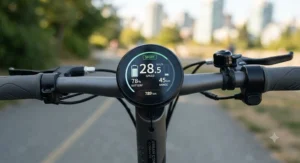
What to Expect: Real-World Performance on Canadian Streets
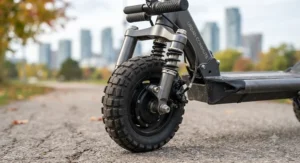
On paper, most of these scooters look similar — decent range, decent top speed, decent motor power. In practice, Canadian streets introduce variables that spec sheets don’t fully capture. Frost-heaved pavement, streetcar tracks in cities like Toronto, and gravel-strewn bike lanes after winter sanding all reward scooters with pneumatic tires and genuine suspension, like the Segway Ninebot Max G2 and Turboant V8, over solid-tire models that transmit every crack directly into your wrists.
Cold weather is the other major variable that specs don’t reflect. Battery efficiency drops meaningfully below freezing, meaning a scooter rated for 40 km of range might realistically deliver 25-30 km on a genuinely cold January commute. Riders switching between seasons should expect range figures to fluctuate by season, not just by riding style, and should plan winter commutes with a wider safety margin than the summer range would suggest.
Long-Term Cost & Maintenance in Canada
The upfront price is only part of the total cost of ownership. Budget models like the GoTrax G4 and Hiboy S2 Pro cost less initially but tend to need tire and brake pad replacements sooner under daily Canadian commuting conditions, particularly given road salt exposure through winter months. Premium models like the Segway Ninebot Max G2 and Unagi Model One E500 carry a higher purchase price but often use more durable components — self-healing tubeless tires, for instance, avoid the flat-repair costs that solid or standard pneumatic tires eventually incur.
Battery replacement is the largest long-term cost consideration, typically running a meaningful fraction of the original scooter price once a battery drops below 500-1,000 charge cycles, as discussed above. Riders who charge nightly on a scooter with a smaller battery pack, such as the GoTrax G4, will likely hit that replacement threshold sooner than riders on a larger-capacity pack like the NIU KQi3 Pro or Segway Ninebot Max G2, simply due to the math of cycle count over calendar years. Factoring in occasional tire replacement, brake pad wear, and eventual battery service, most riders should budget a modest annual maintenance allowance on top of the sticker price — cheap insurance against a scooter that quietly degrades until a commute becomes unreliable.
✨ Don’t Miss These Exclusive Deals!
🔍 Take your daily commute to the next level with these carefully researched picks. Click on any highlighted scooter to check current pricing and availability on Amazon.ca — the right ride can turn a dreaded commute into the best part of your day!
Safety, Regulations & Compliance Guide for Canadian Riders
Canadian electric scooter regulation is genuinely fragmented, and it’s worth understanding before you buy, not after. The legal picture in Canada is entirely local: rules depend on both provincial regulations and municipal bylaws layered on top, meaning a scooter that’s perfectly legal to ride in one city can be prohibited entirely in a neighbouring municipality within the same province. Ontario, for example, runs a provincial e-scooter pilot framework that lets individual municipalities opt in and permit electric kick-style scooters on their roads, but the City of Toronto has twice declined to join that pilot, meaning e-scooters currently cannot legally be operated on Toronto’s public roads, sidewalks, or bike lanes even though they’re legal to own and ride in many surrounding municipalities.
At the federal level, Transport Canada evaluates e-bicycles and similar micromobility devices based on their design and speed characteristics rather than applying one blanket classification, which is part of why day-to-day riding rules have shifted to provincial and municipal jurisdiction rather than a single national standard. Practically, that means before buying any scooter on this list, it’s worth checking your specific city’s bylaws — not just your province’s baseline rules — since enforcement and permitted riding zones vary block by block in some cases. Regardless of local rules, wearing a CSA-approved helmet, using front and rear lighting after dusk, and staying off sidewalks where prohibited are near-universal expectations across Canadian jurisdictions, and following them meaningfully reduces both injury risk and the odds of a fine.
Features That Actually Matter (And Those That Don’t)
Marketing copy loves to lead with top speed, but for a genuine medium commute, top speed matters far less than consistent range and reliable braking — most riders never sustain a scooter’s advertised top speed for more than a few seconds at a time in real traffic. Similarly, flashy LED underglow lighting and app gimmicks look impressive in listings but do essentially nothing for your actual commute experience.
What actually matters: battery capacity in watt-hours (a genuinely comparable number across brands, unlike marketing-friendly “miles” claims), tire type matched to your pavement conditions, and a braking system with at least dual redundancy. Suspension matters more than most buyers initially budget for, particularly on the Segway Ninebot Max G2 and Turboant V8, if your commute includes rough pavement. Cruise control, meanwhile, is a genuinely nice-to-have for longer straightaways but rarely a dealbreaker either way — it’s the kind of feature worth a slight preference, not worth paying a significant premium for.
FAQ
❓ What is the best electric scooter for a medium commute in Canada?
❓ How far can an electric scooter for medium commutes actually go on one charge?
❓ Are electric scooters legal to ride to work or school in Canada?
❓ How long do electric scooter batteries last before needing replacement?
❓ Is a heavier electric scooter with more range better than a lightweight one for commuting?
Conclusion
Picking the right electric scooter for medium commutes really comes down to being honest about your actual route — not the commute you wish you had, but the one with real hills, real weather, and real transit connections. If your trip regularly pushes past 10-12 km or includes real elevation, the Segway Ninebot Max G2‘s range and suspension earn their weight. If you’re weighing cost against reliability for a shorter campus or office hop, the Hiboy S2 Pro and GoTrax G4 both punch well above their price. And if part of your commute is already covered by transit, the Unagi Model One E500‘s featherweight fold is worth the premium.
None of these seven scooters is objectively “the best” — they’re built for genuinely different commutes, weights, and budgets, which is exactly why matching specs to your actual route matters more than chasing the highest-rated option on a list. Take the range figures with the healthy skepticism this guide has laid out, budget for real-world performance rather than marketing numbers, and check your local bylaws before your first ride — CBC’s coverage of Ontario’s e-scooter pilot rollout is a useful reminder of just how recently, and how unevenly, these rules have taken shape across the country. Do that, and whichever scooter you land on should turn a genuinely annoying commute into one of the more enjoyable parts of your day.
Recommended for You
- Top Medium Range Electric Scooters Under $800 CAD: 7 Picks (2026)
- Top 7 Extended Range Electric Scooters Under $2000 CAD (2026)
- Electric Scooter for Long Distance Travel: 7 Best 2026 Picks
Disclaimer: This article contains affiliate links. As an Amazon Associate, I earn from qualifying purchases. If you purchase products through these links, we may earn a small commission at no additional cost to you.
✨ Found this helpful? Share it with your friends! 💬🤗
