
In This Article
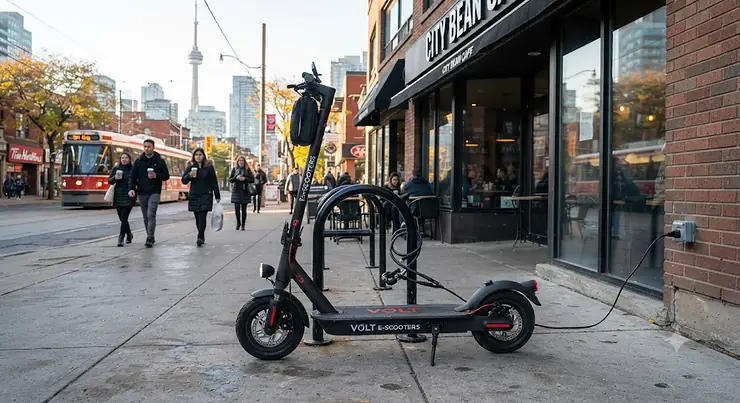
There’s a very specific kind of dread that comes from watching a charging light blink orange at 7:45 a.m. while your bus pulls away outside. If you’ve owned a cheap scooter before, you know the feeling — you plugged it in the night before, sure, but “the night before” apparently wasn’t enough, and now you’re walking. An affordable fast charging electric scooter solves exactly that problem, and in 2026 you genuinely don’t need to spend premium money to get it. The Canadian market has matured fast: brands that used to cut corners on charging hardware now compete on it, because riders have figured out that range numbers on a box mean nothing if the battery takes half a workday to refill. This guide digs into seven real, currently available scooters, breaks down what “fast charging” actually means at each price point, and shows you where the compromises hide. We’ll also cover charging cable compatibility, entry-level charger technology, and how to avoid turning your hallway into a fire hazard — because in Canada, that last part is not hypothetical. Provincial rules on where and how you can even ride one vary a lot, so it’s worth checking your province’s electric scooter regulations before you commit to a purchase.
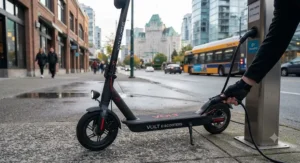
An affordable fast charging electric scooter, broadly speaking, is a commuter-grade e-scooter priced under roughly C$800-C$1,000 that recharges meaningfully faster than the 8-to-10-hour norm for budget models — usually through a higher-wattage stock charger, an optional fast-charge accessory, or a manufacturer “flash charge” mode. That distinction matters more than most spec sheets let on.
Quick Comparison Table
| Scooter | Motor | Charge Time | Price Range (CAD) | Best For |
|---|---|---|---|---|
| NAVEE GT3 Max | 500W (peak 900W) | ~5-6 hrs (standard) | C$850-C$950 | All-around commuters |
| Segway Ninebot Max G3 | 350W (peak 700W) | 6-9 hrs standard / 3-4 hrs w/ fast charger | C$900-C$1,000 | Brand-loyal, long-term owners |
| Hiboy S2 Pro | 500W | 6 hrs stock / faster w/ upgraded charger | C$650-C$750 | First-time buyers on a budget |
| iSinwheel S10Max | 1000W | Unverified — treat claims cautiously | C$550-C$650 | Best power-per-dollar |
| Gotrax GXL V2 | 250W | 8-10 hrs (24W entry-level charger) | C$350-C$450 | Absolute rock-bottom budget |
| Kugoo G2 Pro | ~500W | ~6-7 hrs | C$650-C$750 | Rough suburban pavement |
| NAVEE XT5 Max | 2,200W (peak) | ~5 hrs standard / ~2 hrs Flash Charge | C$1,900-C$2,100 | Riders who truly hate waiting |
Looking at this lineup, the split is obvious once you stop staring at top speed and start staring at the charge-time column. The NAVEE XT5 Max is the only scooter here with a manufacturer-verified rapid-charge mode that cuts recharge time by more than half, but it also costs roughly double what most Canadian commuters want to spend on a scooter. For most readers, the Segway Ninebot Max G3 and Hiboy S2 Pro represent the more realistic version of “fast charging” — not blazing, but meaningfully better than the entry-level norm, and available at a price that doesn’t require a financing plan.
💬 Just one click — help others make better buying decisions too!😊
Top 7 Affordable Fast Charging Electric Scooters: Expert Analysis
1. NAVEE GT3 Max — best overall value for a fast-charging commuter
The standout here isn’t raw charge speed — it’s how much scooter you get for a charger that behaves itself. Under the hood sits a 48V 12.75Ah battery driving a motor rated at 500W with a 900W peak, enough to hit roughly 32 km/h on flat pavement, which happens to line up neatly with the federal power-assisted-bicycle ceiling most provinces use as their own scooter cutoff. Front fork suspension and a rear spring work together to smooth out the potholed reality of most Canadian side streets, while IPX5 water resistance means a surprise October drizzle won’t end your commute early.
Based on the spec comparison against similarly priced rivals, the NAVEE GT3 Max earns its spot through feature density rather than any single dazzling number — turn signals, OTA firmware updates, and app-based location tracking aren’t things you’d expect at this price a few years ago. Reviewers consistently note that the regenerative braking noticeably extends real-world range compared to scooters that rely purely on mechanical brakes, which matters if your commute includes a lot of stop-and-go.
Pros:
- ✅ Strong feature set for the price — suspension, app, and turn signals
- ✅ Regenerative braking meaningfully stretches real-world range
- ✅ IPX5 rating handles rain without drama
Cons:
- ❌ No dedicated fast-charge accessory verified by the manufacturer
- ❌ Price sits right at the edge of true budget territory
Expect to pay somewhere in the C$850-C$950 range at the time of research; check current price before buying, since availability shifts often. For riders who want one scooter that does almost everything competently, this is a strong value verdict.
2. Segway Ninebot Max G3 — most trusted charging ecosystem
Segway built its reputation on the back of the Ninebot Max series, and the charging story here is one of the more transparent in the entire budget-to-mid-range category. The stock 42V 1.7A charger delivers a standard full charge in roughly six to nine hours depending on ambient temperature and how depleted the 350W-rated motor’s battery is when you plug in. What makes this pick relevant to anyone searching for entry-level charger technology is the optional 42V 3A fast charger, sold separately, which pushes 126W into the pack and can shave the charge time down to three or four hours from fully dead.
What most buyers overlook about Segway’s approach is that the company designed the battery management system to tolerate that higher current safely, rather than bolting fast charging on as an afterthought — a detail that matters more than it sounds, since some battery engineers warn that aggressive fast charging can accelerate degradation by 10 to 20 percent over a battery’s lifespan if the BMS wasn’t built for it. Here’s what to weigh: paying extra for the fast charger only makes sense if your daily routine genuinely needs the turnaround.
Pros:
- ✅ Manufacturer-verified fast charging accessory, not a workaround
- ✅ Large support network and widely available replacement parts
- ✅ Known, well-documented reliability track record
Cons:
- ❌ Fast charger sold separately, adding to total cost
- ❌ Standard charge time is unremarkable without the upgrade
Price sits around C$900-C$1,000 in the mid-C$900s range; prices may vary by retailer and bundle. Reviewers consistently cite Segway’s app and firmware support as a reason to pay the brand premium.
3. Hiboy S2 Pro — best budget pick with an upgradeable charger
This is the scooter for someone who wants to test the waters without draining a paycheque. The 500W motor and 36V 11.6Ah battery combine for a claimed range around 40 km and a top speed near 30 km/h, which covers the vast majority of short urban hops. The stock charger takes about six hours for a full cycle — not fast, but not the glacial pace you’ll find on true entry-level units either.
On paper this means the Hiboy S2 Pro is a middling charger. What changes the calculus is that Hiboy sells a genuine 3A “faster charger” accessory compatible with this model and its siblings, a detail that matters for anyone researching charging cable compatibility before buying — not every brand offers a drop-in upgrade path like this. A common theme in aggregated user feedback is that the double braking system (front mechanical drum plus rear regenerative e-brake) feels more confidence-inspiring than the single-brake setups common at this price.
Pros:
- ✅ Genuine upgrade-path fast charger sold as an official accessory
- ✅ Double braking system, unusual for the price tier
- ✅ Three-second fold time makes transit commuting practical
Cons:
- ❌ Stock charger alone is only average speed
- ❌ IPX4 rating means light rain only, not downpours
Expect a price in the C$650-C$750 range; check current price, as Hiboy runs frequent promotions. This is a strong entry-level value verdict for first-time buyers.
4. iSinwheel S10Max — best power-per-dollar
Few scooters in this bracket pack a 1000W motor at this price, and that’s the entire pitch for the iSinwheel S10Max. Independent Canadian retail analysis pegs its claimed range near 60 km, a figure that would normally command a C$700-C$900 price tag on a comparably specced competitor. Reviewers consistently note that the extra wattage translates into noticeably better hill-climbing than 350W-500W rivals, which matters if your commute includes any real elevation change.
Here’s the honest caveat, and it’s an important one: iSinwheel does not publish a verified fast-charge time for this specific model, so any third-party claim of a sub-four-hour charge should be treated with healthy skepticism until you can confirm it against the actual charger’s wattage rating printed on the brick itself. What most buyers overlook about “value tier” scooter brands generally is that the savings usually come from somewhere — in this case, it appears to be charging infrastructure and after-sales support rather than motor or battery capacity.
Pros:
- ✅ 1000W motor is unusually powerful for this price bracket
- ✅ Claimed 60 km range beats most direct competitors
- ✅ Strong hill-climbing performance based on aggregated reviews
Cons:
- ❌ No manufacturer-verified fast-charge specification
- ❌ Smaller brand footprint means fewer service options in Canada
At around C$550-C$650, this is one of the strongest raw-spec deals on this list — just don’t buy it expecting rapid charging unless you verify the charger wattage yourself first.
5. Gotrax GXL V2 — cheapest true entry point
Every list like this needs an honest floor, and the Gotrax GXL V2 is it. This is, by a wide margin, the cheapest functional way into electric scooting — a genuinely popular, heavily reviewed model that prioritizes getting you rolling over getting you rolling quickly after a charge. The 250W motor and 24V battery system are paired with what the industry generally treats as classic entry-level charger technology: a 24W charger, delivering roughly 29V at under 1A.
What the spec sheet won’t tell you, but the math will, is that a 24W charger on a battery this size realistically means eight to ten hours for a full cycle — this is not a fast-charging scooter in any technical sense, and it shouldn’t be marketed or bought as one. The honest analytical take is that this model earns its place on this list as a deliberate contrast: it shows exactly what riders give up in charging speed when they chase the absolute lowest price point, and why “affordable” and “fast charging” don’t automatically travel together.
Pros:
- ✅ Rock-bottom entry price with a huge installed user base
- ✅ Widely available spare parts thanks to sales volume
- ✅ Simple mechanical design with fewer failure points
Cons:
- ❌ Charging genuinely takes most of a workday
- ❌ 250W motor struggles on any real incline
Price typically lands under C$450; check current price, as this model sees frequent seasonal discounts. If charging speed is your priority, this is the one scooter here to skip.
6. Kugoo G2 Pro — toughest suspension for rough streets
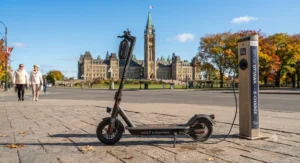
Suburban Canadian pavement is not kind to scooters — frost heaves, gravel shoulders, and the occasional streetcar track conspire against smooth commuting. The Kugoo G2 Pro answers with genuine dual suspension and chunkier tires than most budget rivals, a combination that aggregated reviews describe as noticeably more forgiving on cracked sidewalks than single-suspension competitors in the same price band.
Based on the spec comparison against similarly built scooters, the roughly 500W motor and 36V battery architecture put charge time in a middling six-to-seven-hour window on the stock charger — comparable to the Hiboy S2 Pro rather than anything approaching genuinely rapid. What most buyers overlook here is that the suspension itself indirectly protects charging performance over time, since a battery pack that isn’t constantly jolted by unabsorbed impacts tends to hold its rated capacity longer.
Pros:
- ✅ Genuine dual suspension rare at this price point
- ✅ Chunkier tires handle rough Scarborough- and Surrey-style streets
- ✅ Sturdy build praised in aggregated user feedback
Cons:
- ❌ Charge time is average, not fast, on the stock unit
- ❌ Heavier than sleeker commuter-focused rivals
Expect a price around C$650-C$750; check current price given regular retailer promotions. The value verdict favours anyone whose commute is more pothole than pavement.
7. NAVEE XT5 Max — fastest charge time, period
If genuine rapid charging is the entire point of your search, this is the scooter that actually delivers a verified number instead of a marketing gesture. The NAVEE XT5 Max pairs a 2,200W peak motor with an 899Wh battery rated for up to 110 km of range, expandable toward 160 km with an accessory pack. A full recharge from empty takes about five hours on the standard charger — respectable on its own — but the model’s Flash Charge mode cuts that down to roughly two hours, a figure NAVEE has publicly stated rather than left to third-party speculation.
What the spec sheet won’t tell you is how much that convenience costs elsewhere: this scooter weighs about 33 kg, noticeably heavier than anything else on this list, and it’s priced well above what most people mean when they say “affordable.” Reviewers consistently frame it as the scooter for someone who values time over money — gig workers, multi-trip commuters, anyone whose day genuinely can’t accommodate a five-hour charging window twice.
Pros:
- ✅ Manufacturer-verified Flash Charge mode, roughly 2 hours from empty
- ✅ Massive 899Wh battery with genuinely long real-world range
- ✅ Triple braking system with traction control, unusual at any price
Cons:
- ❌ Priced well above true budget territory
- ❌ Heavy at roughly 33 kg, hard to carry upstairs daily
Price runs roughly C$1,900-C$2,100 in the mid-to-high range; check current price and consider it a splurge rather than a default pick. For riders who’ve calculated their time is worth more than the price gap, the value verdict is favourable anyway.
Practical Usage Guide: Getting the Most From Your Charger
Fast charging only helps if you’re using it correctly, and this is where a lot of new owners quietly shorten their battery’s life without realizing it. In the first 30 days, resist the urge to run the battery all the way to zero before plugging in — lithium-ion cells generally prefer partial cycles in the 20-to-80-percent range over repeated full drains. Charge on a hard, non-flammable surface, never on a bed or carpet, and never while you’re asleep or out of the house; Calgary and Toronto fire departments have both issued repeated public warnings after lithium-ion battery fires linked to scooters charging unattended.
On charging cable compatibility specifically: most budget and mid-range scooters use an 8mm barrel connector, but voltage and current ratings differ by brand and even by model generation, so a charger that physically plugs in isn’t automatically safe to use. Mismatched chargers are one of the most commonly cited causes fire investigators point to when a battery goes into thermal runaway. If you buy a manufacturer-approved fast-charge accessory — like the ones Segway and Hiboy sell for the models above — confirm the voltage and amperage printed on both the charger and the scooter’s charging port match exactly before your first use. A simple maintenance habit that pays off: unplug the moment the indicator light turns green, rather than leaving it topped off overnight out of convenience.
Real-World Scenarios: Who Actually Needs Fast Charging
The campus commuter. If you’re a college student riding 6-10 km daily between classes, part-time work, and home, you probably don’t need the fastest charger on this list — you need reliability and a low upfront cost. The Gotrax GXL V2 or Hiboy S2 Pro fits a schedule where the scooter sits charging overnight regardless of how long that technically takes.
The gig-economy rider. Food delivery and courier work is the scenario where charging speed stops being a nice-to-have and becomes the entire business model. Someone doing multiple shifts a day, with only an hour or two of downtime between them, is exactly who the NAVEE XT5 Max‘s Flash Charge mode was built for — a two-hour top-up between shifts can mean the difference between three deliveries and none.
The suburban car-replacement rider. If you’re swapping a 15-20 minute local car trip for a scooter, you likely charge once every day or two rather than mid-day, which makes the Segway Ninebot Max G3‘s optional fast charger a nice-to-have rather than a necessity — reliability and suspension, courtesy of something like the Kugoo G2 Pro, probably matter more than shaving two hours off an overnight charge.
Problem → Solution: Common Charging Headaches, Solved
Problem: the scooter takes forever to charge and you have no idea why. Solution: check the charger’s printed wattage. A 24W charger, like the one bundled with the Gotrax GXL V2, will always be slow on a larger battery — that’s physics, not a defect. If speed matters, budget for a model with a documented higher-wattage charger or fast-charge accessory, like the Segway Ninebot Max G3 or Hiboy S2 Pro.
Problem: your scooter won’t hold a charge like it used to. Solution: this is almost always partial-discharge neglect or cold-weather storage. Cold Canadian winters can reduce per-ride range by 15 to 30 percent, and repeatedly charging a battery that’s still cold from outside accelerates wear. Bring the scooter inside to reach room temperature before plugging in.
Problem: you’re not sure if your replacement charger is safe. Solution: only use chargers rated for your exact model’s voltage and current, ideally sourced from the manufacturer. Cheap third-party chargers are a recurring theme in fire investigator reports across multiple Canadian cities.
Problem: charging feels unsafe in your apartment. Solution: charge on a hard surface near an exit, never overnight while sleeping, and never in a hallway or stairwell that blocks egress.
Problem: you want faster charging but can’t afford a premium model. Solution: look specifically at models with a documented optional fast-charge accessory, like the Hiboy S2 Pro, rather than paying for a whole new premium scooter.
How to Choose an Affordable Fast Charging Electric Scooter
Choosing the right model comes down to a handful of decisions that actually matter more than horsepower-style spec bragging:
- Check the charger’s actual wattage, not just “fast charging” marketing language. A higher-watt charger is the entire mechanism behind faster charging — everything else is packaging.
- Confirm whether fast charging is standard or a paid accessory. Segway and Hiboy sell it separately; NAVEE’s XT5 Max includes Flash Charge mode built in.
- Match motor wattage to your actual terrain. Flat city riding is fine with 350-500W; hills demand 800W or more.
- Weigh weight against portability needs. A scooter you carry up three flights daily should stay under roughly 16 kg.
- Verify the water-resistance rating for your climate. IPX4 tolerates drizzle; IPX5 handles genuine rain.
- Read aggregated review sentiment for battery longevity, not just launch-week hype.
- Budget for a helmet and lock as part of the total cost, not an afterthought.
Common Mistakes When Buying an Affordable Fast Charging Electric Scooter
The single most common mistake is assuming “fast charging” is a universal feature rather than a specific, verifiable spec that varies wildly between brands — some manufacturers use the phrase loosely in marketing copy without publishing an actual charge-time number. A close second: buyers fixate on top speed and range while ignoring charger wattage entirely, then feel blindsided when a 60 km range takes nine hours to replenish. Another frequent misstep is buying a third-party “compatible” charger based on connector shape alone, without verifying voltage and current match — a mismatch here is a genuine fire risk, not just a performance issue. Finally, plenty of shoppers skip checking their province’s legal speed and power caps before buying, only to discover afterward that their new scooter technically exceeds what’s street-legal where they live.
Fast Charging vs Standard Charging Electric Scooters
| Factor | Fast Charging | Standard Charging |
|---|---|---|
| Typical charge time | 2-4 hours | 6-10 hours |
| Charger wattage | 100W-210W+ | 24W-70W |
| Price premium | Often C$50-C$300+ extra | Included as standard |
| Battery wear consideration | Slightly higher long-term stress if BMS isn’t rated for it | Gentler on cell longevity |
| Best for | Gig workers, multi-trip days | Overnight-only riders |
The trade-off here isn’t purely about convenience — it’s also about battery chemistry. Fast charging pushes more current into the cells in less time, and unless the battery management system was specifically engineered for that load, as Segway states its Max G3 was, some of that speed can come at the cost of long-term capacity. For riders who genuinely charge once overnight and never mid-day, standard charging remains the more conservative, arguably more battery-friendly choice — the Gotrax GXL V2 and iSinwheel S10Max both fall into this camp by default.
✨ Don’t Miss These Exclusive Deals!
🔍 Take your commute to the next level with these carefully selected scooters. Click on any highlighted model to check current pricing and availability. These rides will help you skip the transit delays your family is tired of hearing about.
Affordable Fast Charging Electric Scooters for Budget-Conscious Commuters
Value-tier scooter brands earn their reputation by making smart trade-offs rather than cutting every corner evenly. The iSinwheel S10Max sacrifices a documented fast-charge spec to deliver an outsized motor and range for the price. The Kugoo G2 Pro trades a marginally slower charger for genuine dual suspension most budget rivals skip entirely. Reviewers consistently frame these value-tier brands as smart picks specifically for riders who prioritize one or two features hard rather than chasing an all-rounder. If your budget realistically tops out around C$600, comparing the iSinwheel S10Max against the Kugoo G2 Pro side by side — power versus ride comfort — will tell you more than any star rating.
Long-Term Cost & Maintenance
The sticker price is only the opening bid. A scooter that fails at six months and gets replaced costs more per ride than a pricier model that lasts two years, even though the upfront number looks worse. Factor in tire replacement (roughly C$20-C$50 per tire depending on whether it’s pneumatic or solid), brake pad wear, and — critically for this guide — the cost of an official replacement charger if yours fails, which can run C$40-C$100 depending on brand. Models with widely available parts, like the Gotrax GXL V2 and Segway Ninebot Max G3, tend to have lower long-term ownership costs simply because replacement components are easy to source in Canada without importing from overseas.
Safety, Regulations & Battery Compliance Guide
Provincial rules genuinely differ across Canada, and the gap matters more than most first-time buyers expect. Ontario’s pilot program caps speed and requires opt-in from individual municipalities, meaning a scooter that’s fine in Ottawa can be a ticketable offence in Toronto under the same provincial law. British Columbia treats e-scooters more like motor-assisted cycles, generally allowing up to 32 km/h, while Quebec’s rules cap propulsion at 25 km/h and require riders to be at least 14. None of the seven scooters above are inherently illegal, but several can be ridden in modes that exceed local caps, so check your municipality’s bylaws before your first ride.
Battery safety deserves equal attention. Toronto Fire has reported a sustained rise in lithium-ion battery fires tied to e-bikes and e-scooters, and investigators repeatedly point to mismatched or damaged chargers as a recurring cause. Transport Canada regulates the labelling, transport, and handling of lithium batteries, and federal regulators have indicated growing support for mandatory safety requirements, though as of this writing those proposed rules don’t directly cover e-scooter batteries themselves. The practical takeaway: buy from established brands, use only manufacturer-approved chargers, and never leave a scooter charging unattended overnight — regardless of how fast that charger claims to be.
Frequently Asked Questions
❓ How fast can an affordable electric scooter charge in Canada?
❓ Is fast charging bad for scooter battery life?
❓ Can I use a third-party charger on my scooter?
❓ Are affordable fast charging electric scooters legal on Canadian roads?
❓ What's the cheapest scooter with any kind of fast-charge option?
Conclusion
The honest verdict on affordable fast charging electric scooters in 2026 is that the category has genuinely matured — you no longer have to choose between “cheap” and “recharges before your next shift.” The NAVEE GT3 Max remains the strongest all-around pick for most Canadian commuters, balancing feature density against a still-reasonable price. If charging speed is your single non-negotiable priority and budget allows, the NAVEE XT5 Max‘s verified Flash Charge mode is genuinely in a different league. And if you’re just testing whether scooter commuting works for your routine at all, the Hiboy S2 Pro or even the humble Gotrax GXL V2 will get you rolling without much financial risk. Whatever you choose, match the charger’s real specs — not the marketing language around it — to how your actual week looks, and check your province’s rules before your first ride.
✨ Ready to stop watching the clock while your scooter charges? Compare current prices on the models above and find the one that fits your commute.
Recommended for You
- 7 Fast Charging Scooter Picks for Daily Use in Canada (2026)
- 7 Best Extended Range Scooter for Delivery Riders Picks (2026 CA)
- Top Fast Charging Electric Scooters Under $1000 CAD (2026 Guide)
Disclaimer: This article contains affiliate links. As an Amazon Associate, I earn from qualifying purchases. If you purchase products through these links, we may earn a small commission at no additional cost to you.
✨ Found this helpful? Share it with your friends! 💬🤗
