
In This Article
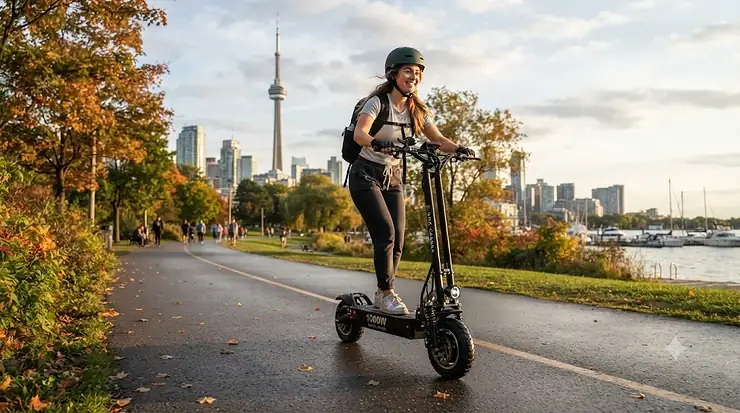
There’s a specific kind of moment that sends people searching for a 1000w electric scooter canada retailers actually stock: you’re standing at a bus stop in the rain, watching your ride disappear down the road without you, and thinking “never again.” A 1000w electric scooter canada commuters can lean on isn’t a toy — it’s a stand-up electric vehicle built around one or two hub motors rated at roughly 1,000 watts combined or per motor, paired with a battery big enough to push that power across real hills and real distances. That’s the textbook definition, and it matters here because “1000W” gets used loosely by marketers, slapped onto everything from gentle commuters to off-road beasts that could outrun a cyclist.
What you actually get at this power level is hill-climbing torque that 350W and 500W scooters simply don’t have, paired with the kind of acceleration that turns a five-block walk into a ninety-second cruise. But power this serious also raises a question almost nobody answers honestly: is it even legal to ride where you live? We’ll get into that, because in Canada the answer depends entirely on your province, and ignoring it can mean a $200 fine or a confiscated scooter.
This guide breaks down seven real, currently available scooters spanning budget to premium, off-road to urban commuter, sourced from manufacturer specifications and independent reviewer testing data rather than marketing copy. We’ll cover what the wattage numbers actually mean for your ride, how these machines stack up against each other on hills, range, and price, and where you stand legally depending on your province. Whether you’re chasing the fastest 1000w electric scooter you can find or just want something powerful enough to handle Canadian winters and potholes without flinching, you’ll have what you need to make a confident call by the end of this.
Quick Comparison Table
| Scooter | Motor | Top Speed | Range | Best For |
|---|---|---|---|---|
| NAVEE GT3 Pro | 1000W peak | 32 km/h | 60 km | Budget commuters |
| Hiboy Titan | 1000W peak | 40 km/h | 74 km | Value off-road |
| Gotrax GX3 | Dual 1000W | 61 km/h | 88-96 km | Fastest mainstream pick |
| Apollo City Pro | Dual 500W (1000W combined) | 51 km/h | 69 km | Canadian-designed commuting |
| Hiboy Titan Pro | Dual 1000W peak | 50-53 km/h | 129 km | Premium off-road |
| Varla Eagle One V2.0 | Dual 1000W continuous | ~60 km/h | 68 km | All-terrain comfort |
| Varla Eagle One Pro | Dual 1000W | up to 72 km/h | 72 km | Outright speed |
Looking at the spread above, range and top speed don’t move together the way most buyers expect — the Hiboy Titan Pro actually out-ranges the faster Varla models by a wide margin thanks to its larger 1728Wh battery, while the Gotrax GX3 splits the difference with genuinely quick acceleration and respectable range for a high-power Canadian electric scooter. If raw speed is your priority, the Eagle One Pro and GX3 are the two worth cross-shopping directly against each other. Budget-conscious riders should note that the NAVEE GT3 Pro delivers nearly identical peak motor output to scooters costing two to three times as much — you’re paying extra for suspension travel, battery size, and build materials, not motor power.
💬 Just one click — help others make better buying decisions too! 😊
Top 7 1000W Electric Scooters in Canada: Expert Analysis
Coverage below spans budget, mid-range, and premium price tiers, plus both street commuters and dedicated off-road builds, so you can match a scooter to how you’ll actually ride rather than to a marketing headline.
1. NAVEE GT3 Pro — best budget pick with real hill-climbing power
The GT3 Pro punches well above its price class by pairing a 1000W peak motor with a 48V battery system, and that combination is what separates it from the sea of 350W commuters crowding the same shelf space. Independent testing from ERideHero clocked a 20.6 mph top speed and a sub-5.5-second 0-15 mph run, numbers that are genuinely quick for a scooter in this price bracket, while NAVEE rates the eco-range at 37.3 miles (roughly 60 km) on a full charge. The dual spring-and-cylinder suspension and traction control system (TCS) are the standout engineering choices here — TCS is rare below the $1,000 mark and noticeably reduces wheel slip on wet pavement, which matters a lot given how often Canadian commutes involve rain or melting snow.
Based on the spec sheet and reviewer testing, this is the scooter for someone who wants 1000W torque without committing to off-road bulk: it’s foldable, sits around 46 lbs, and is genuinely Amazon-friendly for Canadian shoppers comparing a 1000w electric scooter amazon canada search against direct-from-brand pricing. Reviewers consistently note the regenerative front drum brake feels smooth and tunable through the NAVEE app, with no jarring dead zone — a common complaint on cheaper scooters. The aerospace-grade aluminum frame and IPX5 rating also mean it tolerates damp commutes better than its price suggests.
✅ 1000W peak motor delivers real hill-climbing torque for the price
✅ Traction control system rare at this price point
✅ Folds in 3 seconds and weighs just 46 lbs
❌ Single drum brake, not dual hydraulic discs
❌ Real-world range typically runs below the claimed maximum
In CAD terms, expect the GT3 Pro to land in the C$650-C$850 range at the time of research — always check current price before buying, since promotional pricing shifts often. For the torque and traction control on offer, this is hard to beat as an entry point into serious 1000W performance.
2. Hiboy Titan — best value off-road commuter
The Titan uses a 750W rear hub motor rated for 1000W peak output, which sounds like a technicality until you ride it: Hiboy’s own engineering notes and multiple owner reviews describe strong torque off the line and confident hill-climbing that the smaller S2 Pro in the same lineup simply can’t match. Top speed sits at 25 mph (roughly 40 km/h) with a 48V/18Ah battery rated for up to 46 miles (74 km), and the dual hydraulic disc brakes paired with dual suspension are a genuine step up from the cable-actuated brakes common on similarly priced competitors.
What most buyers overlook about the Titan is the tire choice — 10-inch gel-filled tubeless tires absorb impact better than the solid rubber tires found on cheaper off-road scooters, without the puncture risk of pneumatic tubes. That’s a meaningful trade-off for anyone riding gravel shoulders, unpaved trails, or the kind of frost-heaved pavement that shows up every spring across most of Canada. The UL2272-certified battery and Red Dot Award-winning frame design also signal that Hiboy invested in build quality rather than just chasing a wattage number on the box.
✅ Dual hydraulic disc brakes at a mid-range price
✅ Gel-filled tubeless tires resist punctures on rough terrain
✅ UL2272-certified battery with reinforced 6061 aluminum frame
❌ Single motor means less torque than true dual-motor rivals
❌ Heavier than commuter-only scooters, less ideal for stairs
Pricing for the standard Titan generally sits in the C$950-C$1,150 range. For riders who want genuine 1000w off road electric scooter canada capability without spending dual-motor money, this is the realistic sweet spot.
3. Gotrax GX3 — fastest mainstream pick for thrill-seekers
Gotrax built its name on budget commuters, so the GX3 is a genuine departure — and reviewers have noticed. Electric Scooter Guide’s lab testing recorded a top speed of 37.9 mph (about 61 km/h), essentially matching the manufacturer’s 38 mph claim, alongside a 2.6-second 0-15 mph acceleration time that ties the much pricier Apollo Phantom. The dual 1000W motors, four-point adjustable hydraulic suspension, and Nutt hydraulic brakes form a spec sheet that genuinely competes with scooters costing several hundred dollars more.
Here’s what the spec comparison reveals in practice: the GX3’s real-world tested range came in around 28.8 miles in aggressive riding, well short of the claimed 60-mile maximum but still competitive with the Kaabo Mantis V2 and close to pricier beast-class scooters like the Segway GT2. That gap between claimed and tested range is standard across this entire category — manufacturers test in eco mode on flat ground, and almost nobody rides that way. If you’re chasing the fastest 1000w electric scooter without stepping into true premium pricing, the GX3’s acceleration and top-speed numbers are difficult to beat dollar-for-dollar.
✅ Acceleration that rivals scooters costing far more
✅ Four-point hydraulic suspension smooths rough Canadian roads
✅ Two-year warranty from an established North American brand
❌ At roughly 94 lbs, it’s genuinely heavy to carry upstairs
❌ Claimed 60-mile range is roughly double real-world testing results
Expect the GX3 in the C$2,300-C$2,900 range at the time of research, with promotions occasionally bringing it lower. For riders prioritizing speed and acceleration over portability, it’s a standout in this lineup.
4. Apollo City Pro — Canadian-designed commuter benchmark
Apollo designs its scooters in Canada, which matters for more than just marketing — it means the City Pro is engineered with Canadian climate, road conditions, and provincial pilot-program speed caps in mind from the start. The dual-motor setup uses two 500W motors (1000W combined nominal output) reaching a tested top speed of 32.3 mph, verified by GPS logger testing from eRideHero with a 175 lb rider. The standout here isn’t raw power, though — it’s the triple-spring suspension system and regenerative braking, both of which independent reviewers describe as best-in-class for the price tier.
Reviewers consistently note that the City Pro’s 48V battery, upgraded from 18Ah to 20Ah in recent model years, delivered nearly 22 miles of real-world range with a 215 lb test rider, a figure that holds up well against scooters with larger but less efficiently managed batteries. What the spec sheet won’t tell you, but eRideHero’s testing notes do, is that the City Pro climbed a 200-foot, 10% grade hill in just 11 seconds while accelerating the entire way — a genuinely impressive number for a scooter this size. Apollo also operates Canadian-based servicing through certified shops, which is a real practical advantage over import-only brands when something needs warranty work.
✅ Designed and serviced specifically for the Canadian market
✅ Triple-spring suspension rated among the best in its class
✅ Regenerative braking system extends range while braking
❌ Premium pricing compared to imported alternatives with similar specs
❌ 65 lb weight makes it less portable than lighter commuters
Apollo’s direct-to-Canadian-consumer pricing typically lands in the C$1,900-C$2,400 range, varying with promotions. For buyers who specifically want a powerful electric scooter canada engineers actually built around, this is the most relevant entry on the list.
5. Hiboy Titan Pro — premium off-road dual-motor flagship
The Titan Pro steps up from the standard Titan with genuine dual 1000W peak motors instead of one, and the difference shows immediately in hill-climbing and acceleration. Hiboy rates the max incline at 35%, a steep figure that reflects real off-road ambition rather than just marketing language, and the optional dual BOSCH in-hub motor configuration pushes combined peak output to 2400W for riders who want maximum torque. Top speed lands around 31-33 mph (roughly 50-53 km/h) depending on configuration.
Based on the spec comparison against the standard Titan, what justifies the price jump is primarily the 1728Wh battery — nearly double the standard Titan’s capacity — which Hiboy rates for up to 80 miles (129 km) of range, making it the longest-range scooter on this list by a wide margin. The dual hydraulic suspension and dual hydraulic disc brakes carry over from the base Titan but feel more confidence-inspiring given the extra power on tap. Owner reviews on Hiboy’s own product pages repeatedly mention the upgrade from smaller scooters as transformative for hill-heavy commutes, and the reinforced 6061 aluminum frame is built to handle genuine trail use, not just rough pavement.
✅ Class-leading 80-mile claimed range thanks to a 1728Wh battery
✅ Optional dual BOSCH motor configuration for maximum torque
✅ Dual hydraulic brakes and suspension built for real off-road use
❌ Among the heaviest and bulkiest scooters in this comparison
❌ Premium pricing puts it well above mid-range commuter alternatives
Pricing typically runs the C$1,700-C$2,700 range depending on motor configuration and current promotions. This is the pick for riders who genuinely need long range and steep hill-climbing in one package.
6. Varla Eagle One V2.0 — all-terrain comfort specialist
Electrek’s hands-on review of the Eagle One V2.0 describes it as “seriously high-performance,” and the spec sheet backs that up: dual 1,000W continuous motors rated for 1,600W peak output, paired with full hydraulic suspension front and rear. What sets this model apart from the rest of this list is ride comfort on genuinely rough terrain — Electrek’s reviewer specifically noted the suspension “definitely adds some great cushioning off-road” while the hydraulic disc brakes bring the scooter to a stop “quickly and surprisingly effortlessly.”
Here’s what most spec sheets skip: the V2.0’s 52V/20.8Ah battery uses 112 high energy density 18650 lithium-ion cells rated for up to 42 miles (68 km), a meaningful range upgrade over the original Eagle One. Reviewers consistently flag the 82 lb weight as the trade-off for that comfort and power — this isn’t a scooter you carry up apartment stairs casually, but for riders who park it in a garage and ride mixed pavement-and-trail routes, the weight matters less than the ride quality it buys. The NFC card security system is also a thoughtful touch most competitors skip entirely.
✅ Full hydraulic suspension delivers genuinely smooth off-road comfort
✅ 1,600W peak power handles hills up to a 30-degree incline
✅ NFC card lock system adds real anti-theft security
❌ At 82 lbs, portability is essentially nonexistent
❌ Canadian shipping has historically carried additional fees from Varla
Expect pricing in the C$2,100-C$2,500 range at the time of research. For riders who want a high speed electric scooter canada conditions won’t rattle apart, the V2.0’s suspension is the standout reason to choose it over lighter alternatives.
7. Varla Eagle One Pro — outright speed and power leader
If raw numbers are what you’re after, the Eagle One Pro tops this entire list: dual 1000W hub motors capable of 2,600W to 3,600W combined peak output depending on configuration, and a top speed that independent reviewers at Electric Scooter Insider and Rider Guide both clocked in the 45 mph (72 km/h) range. That makes it, by a meaningful margin, the fastest 1000w electric scooter in this comparison, and one of the fastest consumer scooters available at any price short of true beast-class machines costing thousands more.
Rider Guide’s testing found the Eagle One Pro’s hill-climbing performance held a steady 17.1 mph up a 200-foot, 10% grade incline even as the battery dropped toward 10% charge — a genuinely strong result that few competitors match. The 60V/27Ah battery (1,620Wh) is also 71% larger than the original Eagle One’s pack, translating to a tested 36-mile range even when ridden aggressively. Reviewers do note a catch worth weighing honestly: despite the on-paper power advantage, acceleration testing showed the Eagle One Pro actually feels somewhat muted compared to lighter, similarly priced rivals like the Kaabo Mantis V2, a reminder that peak wattage alone doesn’t guarantee the quickest launch off the line.
✅ Among the fastest top speeds available in the 1000W category
✅ Maintains strong hill-climbing power even at low battery
✅ Large 1,620Wh battery delivers genuinely strong tested range
❌ Acceleration feels less sharp than its power numbers suggest
❌ At roughly 90 lbs, it’s strictly a garage-stored, not-portable machine
Pricing generally falls in the C$2,600-C$3,200 range depending on configuration. For riders whose priority is top-end speed above all else, this is the clear pick on this list.
Practical Usage Guide: Setting Up and Maintaining Your 1000W Scooter
Getting a 1000W scooter dialed in correctly during the first 30 days makes a measurable difference in how long the battery, tires, and brakes last. Start by fully charging the battery before the first ride, even if it arrives partially charged — lithium-ion cells calibrate more accurately when they complete at least one full charge cycle early on, and most manufacturers explicitly recommend this in their manuals. Check tire pressure before every ride for the first few weeks; pneumatic and gel-filled tires lose a small amount of pressure naturally, and underinflated tires both reduce range and increase puncture risk on Canadian gravel shoulders and frost-heaved pavement.
One of the most common first-month mistakes is riding exclusively in the highest-power mode. Most 1000W scooters offer eco, normal, and sport or turbo modes, and starting in eco or normal lets you build a feel for throttle response and braking distance before you’re managing 30+ mph speeds. It also extends battery lifespan — lithium-ion cells degrade faster under sustained high-current draw, so riders who mix throttle modes report better long-term range retention than those who stay pinned in turbo mode every ride. For maintenance, plan to check and tighten the folding mechanism’s stem bolts roughly every two weeks during the break-in period, since vibration loosens hardware faster than most riders expect, and a wobbly stem at speed is a genuine safety issue, not just an annoyance.
Battery storage matters more in Canada than in milder climates. Lithium-ion batteries should ideally be stored between 20-80% charge if the scooter won’t be ridden for more than a few weeks, and never charged in temperatures below 5°C, since cold charging can permanently damage cell capacity. If you’re commuting through a Canadian winter, bringing the battery indoors overnight — on removable-battery models like the Gotrax GX Zero or GX3 — preserves range far better than leaving the whole scooter in an unheated garage.
Real-World Scenarios: Which Rider Are You?
The hill-heavy commuter. If your daily route includes a steep grade between home and the bus stop or office, dual-motor torque matters more than top speed. The Apollo City Pro or Hiboy Titan Pro both deliver confident hill-climbing without the bulk of a true off-road build, and Apollo’s Canadian-based servicing is a real advantage if your commute happens in a city with an Apollo Certified Shop nearby.
The budget-conscious student or first-time rider. If this is your first scooter above the entry-level 350W tier, the NAVEE GT3 Pro offers genuine 1000W torque and traction control without premium pricing, and its lighter weight makes it realistic to carry into a dorm or apartment. Riders in this profile should prioritize a scooter with adjustable speed modes so they can ease into higher speeds gradually.
The off-road thrill-seeker with a flexible budget. Someone riding mixed gravel trails, unpaved shortcuts, or simply wanting maximum performance for weekend rides should look at the Varla Eagle One Pro or Hiboy Titan Pro. Both deliver genuine off-road durability and long range, though neither is realistic for daily stair-carrying or transit combining — budget for garage or shed storage and a vehicle with trunk space if you need to transport it.
Buyer’s Decision Framework: Choosing the Right 1000W Scooter
If your commute includes hills steeper than a gentle slope, choose a dual-motor model, because single hub motors lose noticeable speed climbing grades above 10-15%. If portability for stairs or transit matters more than raw performance, choose the lightest model on this list (NAVEE GT3 Pro) rather than chasing maximum wattage, since weight differences of 30-40 lbs make a real daily difference. If you live somewhere with an active provincial e-scooter pilot program, prioritize a scooter with adjustable speed limiting, since several provinces cap legal speeds well below what these scooters can physically achieve. If budget is the primary constraint, start with the NAVEE GT3 Pro or Hiboy Titan rather than stretching for a premium model — the torque difference at this wattage tier is smaller than the price difference suggests. If you genuinely need maximum range for longer commutes, prioritize battery capacity (measured in Wh, not just Ah) over top speed, since the Hiboy Titan Pro’s larger battery outperforms faster but smaller-batteried competitors on real distance covered.
✨ Still narrowing it down? Compare specs side-by-side and check today’s pricing before you commit!
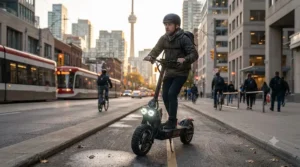
How to Choose a 1000W Electric Scooter in Canada
Choosing the right 1000W electric scooter canada riders will actually be happy with six months in comes down to matching specs to your real riding conditions, not chasing the highest number on a spec sheet. Here’s the process worth following:
- Confirm your province’s legal speed and power limits first. Before comparing a single product, check whether your province or city even permits the speeds these scooters are physically capable of reaching, since several pilot programs cap legal use well below 1000W performance.
- Calculate your real commute distance, then double it. Manufacturer range claims are typically tested in ideal conditions and eco mode; real-world range commonly comes in at 50-70% of the claimed figure, so a 10 km one-way commute needs a scooter rated for at least 30-40 km round trip.
- Weigh portability against power honestly. If you’ll carry the scooter up stairs or onto transit, a 45-50 lb scooter is a very different daily experience than a 90+ lb one, regardless of how impressive the spec sheet looks.
- Prioritize dual motors if hills are part of your route. Single 1000W motors handle moderate inclines fine, but dual-motor setups noticeably outperform on grades steeper than 10%.
- Check brake type, not just brake count. Hydraulic disc brakes consistently outperform mechanical disc or drum brakes in stopping distance, which matters more on a 1000W scooter than on a slower commuter model.
- Factor in climate-specific build quality. IP ratings, tubeless or gel-filled tires, and removable batteries all matter more in Canadian winters than they do in milder climates.
- Compare total cost, not sticker price. Replacement tires, brake pads, and battery degradation over 2-3 years can meaningfully shift which model is actually the better value.
Common Mistakes When Buying a 1000W Electric Scooter
The single most common mistake buyers make is assuming “1000W” is a standardized, comparable number across brands. It isn’t — some manufacturers list peak motor output, others list continuous output, and a few quietly list combined dual-motor output as if it were per-motor power. That’s why the Apollo City Pro’s two 500W motors and the Varla Eagle One Pro’s two 1000W motors both get marketed under similar wattage language despite a real performance gap between them. Always check whether a listing specifies peak or continuous, and for dual-motor scooters, whether wattage is per-motor or combined.
A second frequent mistake is buying based on claimed range alone. As the testing data throughout this guide shows, real-world range routinely lands well below manufacturer claims, sometimes by half. A third mistake worth flagging specifically for the Canadian market: assuming Amazon.ca listings are interchangeable with U.S. Amazon listings for the same model name. Battery certifications, voltage compatibility, and even motor specifications occasionally differ between regional product lines, so always confirm the listing is shipping to and certified for Canada before buying a 1000w electric scooter amazon canada search surfaces. Finally, many first-time buyers underestimate weight until delivery day — a 90 lb scooter is genuinely difficult for one person to lift into a car trunk or up a flight of stairs, and that’s a daily reality, not a one-time inconvenience.
1000W Electric Scooter vs 500W Commuter Scooter
The core difference between a 1000W and a 500W scooter isn’t just top speed — it’s torque under load. A 500W motor manages flat ground and gentle inclines fine, but loses noticeable speed on grades above roughly 8-10%, while 1000W motors, particularly dual-motor configurations, maintain speed far more consistently on hills. That torque advantage also shows up in acceleration: most 1000W scooters reach 15 mph in under 4 seconds, while typical 500W commuters take closer to 6-8 seconds for the same benchmark.
The trade-off is legal and practical. As covered in the regulations section below, Canada’s federal power-assisted bicycle standard caps motors at 500W with a 32 km/h assist limit, and most provincial e-scooter pilot programs mirror similarly conservative limits. That means many 1000W scooters technically exceed what’s permitted for road or bike-lane use in several provinces, even though they’re freely sold at retail. Weight is the other major trade-off — 1000W scooters typically weigh 45-95 lbs versus 25-40 lbs for comparable 500W models, directly affecting portability. For riders without serious hills or long distances, a compliant 500W scooter may genuinely be the smarter, more legally straightforward choice; for riders who need real hill-climbing power or off-road capability, the 1000W tier is worth the trade-offs.
Safety, Regulations & Compliance: Riding a 1000W Scooter in Canada
This is the section most retail listings conveniently skip, and it matters enormously if you’re buying a 1000W scooter in Canada. Transport Canada’s federal power-assisted bicycle definition caps motor output at 500W with assistance cutting off at 32 km/h, and standing e-scooters without pedals don’t even qualify under that definition in the first place, leaving them in what amounts to a regulatory grey zone that each province has filled differently. Quebec’s pilot program for motorized personal mobility devices requires devices to be equipped with one or more electric motors with a maximum power of 500 W, whose drive effect ceases when the device reaches 25 km/h, which means a 1000W scooter run at full power technically exceeds Quebec’s pilot specifications even though dealers sell them freely.
Ontario takes a similar approach through Ontario Regulation 389/19, which defines a legal electric kick-scooter as having a motor not exceeding 500 watts and a maximum speed of 24 km/h, with the pilot program now extended to November 2029 and administered municipality by municipality — meaning Toronto still hasn’t opted in at all, while cities like Ottawa, Hamilton, and Mississauga have. British Columbia’s separate pilot caps speed at 25 km/h and requires riders to be at least 16 with a helmet. The practical upshot: most 1000W scooters on this list can physically exceed every one of these provincial speed caps, and riding one at full throttle on public roads or bike lanes may put you outside your local pilot program’s rules even though the scooter itself was legally purchased. Many owners use these scooters primarily on private property or with software-limited speed settings to stay within local rules — always verify your municipality’s specific bylaw before riding on public infrastructure.
Safety data backs up the caution. A CBC News report on Canadian Institute for Health Information data found that nearly 1,000 people were hospitalized for scooter-related injuries during the 12-month period starting April 1, 2023, up from 810 the prior year, with roughly half of all injuries tied specifically to motorized e-scooters. Emergency physicians interviewed in that reporting described trauma ranging from brain, facial, and dental injuries to fractures requiring multiple surgeries. The takeaway for 1000W scooter owners specifically: helmet use, gradual speed-mode familiarization, and honest awareness of your local pilot program’s rules aren’t optional extras — they’re the difference between enjoying real performance safely and becoming a statistic in next year’s hospitalization data.
Long-Term Cost & Maintenance: What a 1000W Scooter Really Costs
The sticker price is only the starting point. Tires are the most frequent replacement cost — pneumatic and gel-filled tires on 1000W scooters typically run C$40-C$90 per tire depending on size, and riders putting on serious mileage should expect to replace at least one tire annually. Brake pads for hydraulic disc systems run roughly C$15-C$30 per set and typically need replacement every 6-12 months depending on riding style and terrain. Battery replacement is the largest long-term cost: a replacement 48V-60V battery pack for a 1000W scooter generally costs C$400-C$900, and most lithium-ion packs retain meaningful capacity for 2-4 years of regular use before noticeable degradation sets in.
Looking at total cost of ownership over three years, a budget pick like the NAVEE GT3 Pro often comes out ahead in raw dollar terms simply because its lower purchase price offsets similar maintenance costs to pricier models. However, premium scooters like the Hiboy Titan Pro or Apollo City Pro frequently use higher-grade components — sealed bearings, reinforced frames, certified batteries — that can mean fewer mid-cycle repairs, partially closing the cost gap over time. For riders genuinely using a scooter as a daily commuting replacement for transit fares or fuel costs, even the premium-tier models typically pay for themselves within 12-18 months compared to ongoing transit or parking costs in most major Canadian cities.
Features That Actually Matter (And Those That Don’t)
Hydraulic brakes, dual suspension, and battery capacity in Wh (not just Ah) are the three specs worth prioritizing on any 1000W scooter — they directly affect safety, comfort, and real-world range in ways marketing claims often obscure. Traction control, found on the NAVEE GT3 Pro, is a genuinely underrated feature for Canadian conditions given how often commutes happen in rain or slush. Removable batteries, available on models like the Gotrax GX series, matter more than most buyers initially realize because they let you charge indoors during cold weather rather than leaving the whole unit in a freezing garage.
On the other side of the ledger, top speed numbers above roughly 45 km/h provide diminishing real-world value for most Canadian riders, since legal road and bike-lane speeds in virtually every provincial pilot program cap well below what these scooters can achieve — meaning that extra speed mostly translates to bragging rights and faster battery drain rather than a meaningfully different daily commute. Ambient LED lighting and app connectivity are genuinely nice-to-have features but shouldn’t move the needle on a purchase decision the way brake quality or battery chemistry should. Similarly, claimed maximum range figures are consistently the least reliable spec on any listing — treat them as a ceiling, not an expectation, and weight your decision toward tested or aggregated-review range numbers instead.
Performance Electric Scooter Review: What to Expect in Real-World Riding
Independent performance electric scooter review data from outlets like ERideHero, Electric Scooter Guide, and Rider Guide consistently shows a pattern worth understanding before you buy: manufacturer-claimed top speeds are usually close to accurate, while claimed range figures routinely overstate real-world performance by 30-50%. That gap exists because range testing happens in eco mode on flat, temperate terrain — conditions that don’t match how most owners actually ride, especially in hilly cities or cold Canadian winters where battery efficiency genuinely drops.
What reviewer testing also reveals is that acceleration, not top speed, tends to define how a scooter actually feels day-to-day. The Gotrax GX3’s 2.6-second 0-15 mph time and the NAVEE GT3 Pro’s sub-5.5-second equivalent both translate to a noticeably punchier feel off the line than their headline top-speed numbers might suggest on their own. Braking distance is the other underrated performance metric — independent testing puts well-built hydraulic disc setups stopping from 15 mph in roughly 14 feet, compared to 20+ feet for cheaper mechanical or drum systems, a difference that genuinely matters at the speeds 1000W scooters are capable of reaching. If you’re cross-shopping models, looking past the top-speed number toward acceleration and stopping-distance data from independent testers will tell you far more about how a high speed electric scooter canada commute will actually feel than the spec sheet alone.
For broader technical context on how these vehicles are classified and how the category has evolved, the E-scooter entry on Wikipedia offers a useful overview of the underlying technology and global adoption trends shaping today’s market.

FAQ
❓ Is a 1000W electric scooter legal in Canada?
❓ What is the fastest 1000w electric scooter available right now?
❓ How far can a 1000W electric scooter actually go on one charge?
❓ Can I buy a 1000w electric scooter on Amazon Canada?
❓ Do I need a helmet to ride a 1000W electric scooter in Canada?
Conclusion
A 1000w electric scooter canada riders can genuinely depend on comes down to matching real specs to real riding conditions rather than chasing the biggest number on a listing page. Across the seven models compared here, the spread runs from the NAVEE GT3 Pro’s budget-friendly torque to the Varla Eagle One Pro’s outright speed, with the Apollo City Pro standing out specifically for buyers who want a powerful electric scooter canada engineers actually designed around local climate and provincial rules. What ties every honest recommendation together is the same caution: check your province’s pilot program rules before riding at full power, prioritize hydraulic brakes and real battery capacity over headline top-speed claims, and treat manufacturer range figures as optimistic ceilings rather than guarantees.
Whether your priority is the fastest 1000w electric scooter on this list, the most capable 1000w off road electric scooter canada trail riders can trust, or simply a reliable commuter that handles hills without complaint, the research above should narrow your shortlist considerably. None of these are casual purchases — they’re genuine investments in daily transportation — so take the time to confirm local legality and read current owner feedback before finalizing your choice.
✨ Don’t Miss These Exclusive Deals!
🔍 Take your commute to the next level with these carefully selected scooters. Click on any highlighted model to check current pricing and availability. These rides will help you create a faster, more confident daily commute you’ll actually look forward to!
Recommended for You
- Best 750W Electric Scooters for Heavy Riders in Canada (2026)
- Is 500W Enough for an Electric Scooter? 7 Best Picks in Canada 2026
- Best 500W Electric Scooter Canada 2026: 7 Top Picks Reviewed
Disclaimer: This article contains affiliate links. As an Amazon Associate, I earn from qualifying purchases. If you purchase products through these links, we may earn a small commission at no additional cost to you.
✨ Found this helpful? Share it with your friends! 💬🤗
