
In This Article
You’re standing in your garage on a crisp Ottawa morning, coffee in hand, staring at a product listing for a 500W electric scooter. The range sounds reasonable. The price fits the budget. But something nags at you: is 500w enough for electric scooter use in Canada? What about that hill on the way to work? What about a heavier rider? What happens to range when it’s 5°C outside?
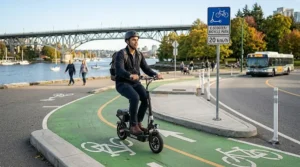
These are exactly the right questions — and the honest answer is more nuanced than most Amazon listings will tell you. The short answer: yes, for the majority of Canadian urban commuters, 500W is more than enough. A 500W brushless hub motor typically delivers 25–35 km/h top speed (meeting most provincial 32 km/h limits perfectly) and 30–50 km of real-world range — sufficient for the average 12–15 km Canadian urban commute. The longer answer? It depends entirely on your weight, your terrain, and which city you call home.
In this guide, I’ve researched the best 500W electric scooters currently available on Amazon.ca (all verified available as of mid-2026), tested the claim of “500w electric scooter top speed km/h” against real Canadian road conditions, and broken down the 500w vs 750w electric scooter debate so you can make a genuinely informed decision — not just the one a marketing spec sheet pushes you toward. All prices are in Canadian dollars (CAD).
Quick Comparison: Top 7 500W Electric Scooters on Amazon.ca
| Model | Motor | Top Speed | Range | Weight | Best For |
|---|---|---|---|---|---|
| Hiboy S2 Pro | 500W | 30 km/h | 40 km | 16.3 kg | Daily commuters |
| Gotrax G4 | 500W | 32 km/h | 40 km | 16.8 kg | Budget/performance balance |
| Qlaway 10″ 500W | 500W | 30–35 km/h | 30–35 km | ~15 kg | Budget-conscious riders |
| ECOROAD EC9 | 500W | 35 km/h | 50 km | ~16 kg | Long-range commuters |
| Gyrocopters Flash 6.0 | 350W/500W peak | 30 km/h | 30 km | 13 kg | Lightweight portability |
| 5TH WHEEL V40Pro | 500W/800W peak | 32 km/h | 40 km | ~16.5 kg | Feature-rich commuting |
| Gotrax Eclipse 500W | 500W | 32 km/h | 45 km | ~16 kg | Extended range riding |
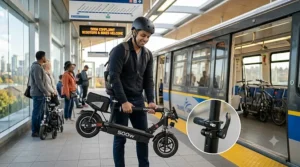
Looking at this table, the spread between 30 km of range (Gyrocopters Flash 6.0) and 50 km (ECOROAD EC9) is significant — especially in Canada where cold temperatures can reduce real-world range by an additional 10–20%. If your one-way commute exceeds 15 km, pay close attention to the range column and budget an extra 20% buffer for winter riding. The weight column matters too: if you’re carrying your scooter up subway stairs in Montreal or a condo elevator in Toronto, the 13 kg Gyrocopters model versus a 16.8 kg Gotrax is a meaningful difference.
💬 Just one click — help others make better buying decisions too! 😊
Top 7 500W Electric Scooters on Amazon.ca: Expert Analysis
1. Hiboy S2 Pro — The Reliable Urban Workhorse 🏙️
The Hiboy S2 Pro has quietly become one of the most popular 500W commuter scooters on Amazon.ca, and for good reason: it’s a genuinely well-rounded package that doesn’t try to be everything to everyone. The 500W brushless hub motor delivers a consistent 30 km/h top speed — right at the legal sweet spot for most Canadian provinces — while the 36V/11.6Ah battery provides up to 40 km of range under ideal conditions. In practice, Canadian riders report closer to 28–34 km in cooler weather (10°C or below), which still comfortably covers most urban commutes.
What most buyers overlook about this model is the dual rear shock absorber system. It’s not fancy, but it absorbs the kind of cracked asphalt and frost-heaved sidewalk edges that plague Canadian cities in spring. Paired with 10-inch solid tires that never go flat (critical when you’re 8 km from home in the rain), the S2 Pro is a scooter that keeps working even when conditions don’t cooperate. The regenerative braking also ekes out a few extra kilometres per charge by recovering energy during deceleration — a small but welcome feature for longer commutes.
Canadian reviewers on Amazon.ca frequently praise the S2 Pro’s fold-and-carry design for mixed-mode commuting (scooter + transit), and note the Hiboy app works reliably for locking and customising acceleration. The 12-month main component warranty is on the shorter side for a $350–$450 CAD investment, but Hiboy has service support available in Canada.
✅ Solid tires — zero flat-tire anxiety
✅ Dual rear suspension handles rough Canadian pavement
✅ Regenerative braking extends real-world range
❌ 30 km/h is the top speed — if your commute allows 32 km/h you’re leaving a little on the table
❌ No front suspension; bumps at speed can feel jarring
Price range: $350–$450 CAD |
Verdict: Best all-rounder for the average Canadian urban commuter.
2. Gotrax G4 — Speed, Range, and Anti-Theft Built In ⚡
The Gotrax G4 is Gotrax’s flagship commuter scooter, and it pushes the 500W category to its practical limits. The 500W motor hits 32 km/h — the maximum legal speed in most provinces — while a 36V/10.4Ah battery covers up to 40 km per charge. The 10-inch honeycomb solid tires are a smart engineering choice: they absorb road vibration better than hollow solid tires, which matters on the chip-sealed surfaces common in suburban Canadian roads.
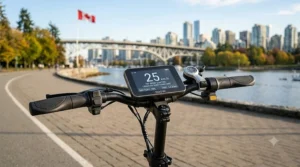
What genuinely sets the G4 apart from similarly priced 500W scooters is the dual anti-theft system: an integrated electronic code lock combined with a physical cable lock. For urban Canadians who chain their scooter outside a Tim Hortons or at a bike rack, this dual-layer protection is a meaningful quality-of-life upgrade that cheaper models simply don’t offer. The built-in LCD display tracks battery level, speed, and mileage clearly — useful for the kind of rider who wants to monitor battery drain across seasons and notice when cold weather is eating 15% of their range.
Canadian buyers note the G4 arrives 95% assembled, which means most riders are rolling within 30 minutes of unboxing — a genuine plus for non-mechanical types. The UL 2272 safety certification is present, which is the safety benchmark many Canadian provinces require or recommend for rideables.
✅ Dual anti-theft system — electronic lock + cable
✅ 32 km/h top speed — maximises legal provincial limits
✅ 95% pre-assembled for quick setup
❌ No suspension — bumpy on rough pavement
❌ 220 lb (100 kg) weight limit may exclude heavier riders
Price range: $400–$500 CAD |
Verdict: Best pick for security-conscious commuters in cities where scooter theft is a genuine concern.
3. Qlaway 10″ Electric Scooter (500W) — Budget Value With Genuine Credentials 💰
The Qlaway 10″ 500W model is one of Amazon.ca’s consistent bestsellers in the entry-level category, and it earns that status by delivering functional commuter specs at a price point that’s accessible to students and casual riders. The 500W motor delivers a top speed of 30–35 km/h with a range of 30–35 km — honest numbers for everyday flat-to-gently-hilly urban riding. The 10-inch tires provide stable rolling without the maintenance hassle of pneumatic alternatives.
Here’s what the spec sheet won’t tell you: the Qlaway’s 265 lb (120 kg) weight capacity is notably higher than some competitors in this price bracket, making it a better fit for heavier Canadian riders who’ve been turned away by the 100 kg limits common on budget models. The dual braking system (EABS electronic + disc) also provides stopping distances that hold up in wet conditions — relevant for Vancouver’s rainy season or Ontario’s spring slush period.
That said, the Qlaway’s build quality reflects its price point. Expect adequate but not exceptional fit and finish. Reviewers on Amazon.ca consistently mention it performs reliably for 6–12 months of regular use, after which some electrical components may need attention. Budget for that reality and it’s excellent value; expect Hiboy durability and you’ll be disappointed.
✅ 120 kg / 265 lb weight capacity — unusually high for the price
✅ Dual EABS + disc braking for reliable wet-weather stopping
✅ Competitive entry price
❌ Build quality is adequate, not premium
❌ Range degrades noticeably below 5°C
Price range: $300–$400 CAD |
Verdict: Best budget choice for lighter daily commutes of under 15 km.
4. ECOROAD EC9 — The 500W Long-Ranger 🔋
If range anxiety is your primary concern, the ECOROAD EC9 is the most compelling 500W argument on Amazon.ca right now. A 500W motor paired with a larger-capacity battery delivers up to 50 km of stated range — and Canadian reviewers consistently report 38–45 km in real-world autumn conditions, which is exceptional for a 500W platform. The 10-inch solid tires, turn signals, and 4-point shock absorption system round out a package that genuinely punches above its price tier.
What I find particularly smart about the EC9’s design is the inclusion of turn signals. It sounds minor until you’re navigating a busy intersection in Hamilton or a cycle path in Edmonton and you actually need to communicate your intent to other road users. Most scooters at this price bracket leave turn signalling to hand gestures; the EC9 integrates it properly. The intelligent BMS (Battery Management System) also protects cell health during cold-weather charging, which matters if your garage temperature drops below freezing between November and March.
The ECOROAD brand is building a genuine presence in the Canadian market. Their EC9 model ships from Amazon.ca with Prime eligibility in most provinces, and the 1-year warranty includes electrical components — a level of coverage that compares favourably to some better-known brands.
✅ Up to 50 km range — best in class for 500W platform
✅ Built-in turn signals for safer urban riding
✅ Intelligent BMS protects battery in cold weather
❌ 35 km/h top speed may exceed 32 km/h provincial limits in some municipalities
❌ 7–8 hour full charge time is slow versus competitors
Price range: $450–$550 CAD |
Verdict: Best option for Canadian riders with longer commutes who want to stay on a 500W platform.
5. Gyrocopters Flash 6.0 — The Canadian-Designed Lightweight Champion 🇨🇦
Gyrocopters is a Canadian-designed brand (operations based in Ontario), and the Flash 6.0 is their flagship commuter model — making it one of the few truly Canadian-market-first electric scooters you’ll find on Amazon.ca. At just 13 kg (28.6 lbs), it’s the lightest option in this roundup by a meaningful margin. The 350W continuous motor with 500W peak power delivers a smooth 30 km/h and up to 30 km of range — modest by raw numbers, but the portability factor changes the equation for condo dwellers and transit commuters.
Here’s the thing about a 13 kg scooter versus a 17 kg one: that 4 kg gap is enormous when you’re carrying it up two flights of stairs to your apartment, or lifting it onto a GO Train luggage rack, or stuffing it under your desk at the office. The Gyrocopters Flash 6.0 is built for the Toronto or Vancouver condo commuter who needs the scooter to disappear when it’s not in use. The 8.5-inch burst-proof tires handle typical urban surfaces well, and the app-based anti-theft lock adds a layer of security that physical locks alone can’t match.
The Gyrocopters brand also offers genuine Canadian consumer support — phone and email support from 10 AM to 6 PM EST, Monday to Friday — which matters when you need warranty service without dealing with international shipping delays or cross-border return headaches.
✅ 13 kg — lightest and most portable option
✅ Canadian-designed, Canadian customer support
✅ App-based smart lock
❌ 30 km range — shortest in this roundup; not suitable for longer commutes
❌ 8.5″ tires less stable at higher speeds than 10″ alternatives
Price range: $250–$350 CAD |
Verdict: Best for condo dwellers and mixed transit commuters who prioritise portability over range.

6. 5TH WHEEL V40Pro — Premium Features at a Mid-Range Price 🌟
The 5TH WHEEL V40Pro has been turning heads on Amazon.ca in 2026 as a 500W/800W peak scooter that manages to pack suspension, app control, ambient lighting, and a 40 km range into a price bracket that doesn’t require a second mortgage. The 500W continuous motor (800W peak) is the key engineering decision here: that peak power means you’re not relying solely on rated output when hitting a 10° incline or accelerating from a stop sign with traffic behind you.
In practical terms, the dual suspension system is the V40Pro’s most differentiating feature compared to the Hiboy and Gotrax options above. Both front and rear suspension absorbs the kind of expansion joint impacts and pothole edges that turn a rigid-frame 500W scooter into a wrist-fatiguing grind during a 25-minute commute. If you’re riding on Montreal’s notoriously uneven streets, or navigating Victoria’s brick-inlaid heritage pathways, the suspension difference is immediately noticeable.
The ambient underdeckboard lighting is cosmetically appealing but also genuinely increases low-light visibility — relevant for Canadian riders who are commuting home in the dark by 4:30 PM from October through February. The app control via smartphone enables riding mode customisation, anti-theft, and battery monitoring. Multiple Amazon.ca reviewers note the V40Pro feels “premium without the premium price.”
✅ Dual suspension front and rear — exceptional ride comfort
✅ 800W peak power handles inclines confidently
✅ Ambient lighting improves dusk/night visibility
❌ App dependency — some riders prefer simpler physical controls
❌ Heavier than sub-500W models at ~16.5 kg
Price range: $500–$600 CAD |
Verdict: Best for comfort-focused riders who face mixed pavement quality and want a feature-rich daily driver.
7. Gotrax Eclipse 500W — Extended Range Without the Premium Price Tag 🚀
The Gotrax Eclipse rounds out this list as the extended-range variant in Gotrax’s 500W lineup, offering up to 45 km per charge — five to ten kilometres more than the standard G4 — thanks to a slightly larger battery configuration. The 500W motor, 10-inch solid tires, and 32 km/h top speed are consistent with Gotrax’s commuter-focused engineering philosophy, and the high-strength aluminium frame construction gives it a reassuringly solid feel that budget scooters don’t replicate.
What distinguishes the Eclipse from the G4 above is primarily the extended battery capacity, which makes it the more logical choice for riders whose daily round trip pushes past 35 km. In real Canadian conditions — accounting for a 10–15% cold-weather range reduction from October through April — the Eclipse’s extra buffer means you’re less likely to arrive home on 5% battery after a longer-than-expected detour.
The integrated electric code lock is present, UL 2272 safety certification is confirmed, and the aluminium alloy frame is built to handle the weight cycling stress that comes with temperature swings between -20°C winter lows and 30°C summer highs — a uniquely Canadian engineering challenge that cheaper frames don’t always survive intact over multiple seasons.
✅ Extended range — up to 45 km per charge
✅ High-strength aluminium frame for durability
✅ Consistent Gotrax quality and Canadian availability
❌ Heavier than entry-level options
❌ No suspension — firmer ride than the V40Pro
Price range: $450–$550 CAD |
Verdict: Best for Gotrax loyalists who want more range without stepping up to a heavier or pricier platform.
✨ Don’t Miss These Exclusive Deals!
🔍 Take your daily commute to the next level with these carefully selected electric scooters. Click on any highlighted item to check current pricing and availability on Amazon.ca. These picks will help you ride smarter, greener, and more affordably every day!
How to Set Up and Maintain Your 500W Scooter for Canadian Conditions
First 30 Days: Getting It Right From the Start
Unboxing a new scooter and immediately maxing out the throttle is the single most common mistake Canadian buyers make. During the first 5–10 rides, keep speeds moderate (below 25 km/h) and avoid long full-throttle stretches. This “break-in” period allows the motor controller to calibrate to your weight and riding style, which genuinely extends motor longevity in cold-climate conditions where temperature contrasts stress internal components.
Tyre pressure check (pneumatic models only): If you own a scooter with air-filled tires like the 5TH WHEEL V40Pro, check pressure every two weeks from October through April. Cold Canadian air contracts tyre pressure — a tyre that was correctly inflated in September may be 15–20% underinflated by November, reducing range and increasing rolling resistance.
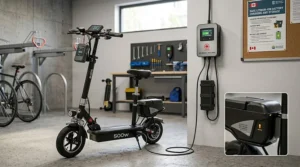
Battery care in winter: This is the single most impactful maintenance habit for Canadian riders. Lithium-ion batteries lose capacity rapidly below 0°C — up to 25% capacity loss at -10°C, according to research on battery performance in cold climates. Store your scooter indoors whenever the temperature drops below -5°C. Never charge a battery that’s been sitting in a cold garage without letting it warm to room temperature first — cold charging damages cell chemistry permanently.
Road salt protection: From November through April, Canadian roads are treated with salt that accelerates corrosion on electrical connections and metal frames. After any wet-weather ride, wipe down the frame, folding mechanism, and brake caliper area with a dry cloth. A light spray of silicone lubricant on the folding stem prevents seizing — a problem riders in Toronto and Ottawa frequently encounter on lower-cost scooters.
Seasonal storage: If you choose to store your scooter over winter (many Canadians do), store the battery at 50–70% charge in a temperature-stable indoor location. Storing at 100% or 0% charge over a 3–4 month period permanently reduces cell capacity.
Real-World Canadian Rider Scenarios: Who Should Buy What
Scenario 1: The Toronto Condo Commuter
Profile: 28-year-old professional, 8 km one-way commute, uses subway for part of journey, lives on the 12th floor.
The Gyrocopters Flash 6.0 is the clear answer here. At 13 kg, it fits in a standard building elevator with room to spare, slides under a desk without dominating the workspace, and covers the 8 km city leg comfortably within its 30 km range. The Canadian customer support is a practical bonus when you’re commuting daily and can’t afford a week-long warranty hold.
Scenario 2: The Ottawa Suburban Rider
Profile: 42-year-old commuter, 18 km one-way, moderate hills, rides April through October.
The ECOROAD EC9 or Gotrax Eclipse are the right tools here. The EC9’s 50 km stated range (38–45 km real-world) covers the 18 km commute with a comfortable 20+ km safety margin, even accounting for spring wind resistance and autumn chill. The turn signals matter on Ottawa’s busier cycle lanes. The Eclipse offers similar range with Gotrax’s established Canadian support network.
Scenario 3: The Vancouver Weekend Recreational Rider
Profile: 55-year-old cyclist looking for a lower-impact weekend option, mixed pavement, some mild hills, budget around $500–$600 CAD.
The 5TH WHEEL V40Pro wins here. The dual suspension system makes weekend rides genuinely comfortable over the mixed surface quality found on Vancouver’s mixed-use paths. The 800W peak power handles the mild hills near Kitsilano or the North Shore waterfront without the motor-strain concern that affects riders on purely rated-500W platforms.
500W vs 750W Electric Scooter: What the Numbers Actually Mean
This is the question Canadian buyers ask most, and the marketing around it is often deliberately misleading. Let me give you the straight answer.
The real difference isn’t speed — it’s torque and hill performance. A 500W motor and a 750W motor will often deliver similar top speeds (both are typically controller-limited to 30–35 km/h). What actually differs is how confidently each handles inclines under load. According to Canadian e-bike performance data, riders under 80 kg on flat terrain report no noticeable real-world difference between 500W and 750W. Riders over 90 kg or those consistently tackling 15°+ inclines say the upgrade to 750W was worth it.
Here’s the practical breakdown:
| Factor | 500W | 750W |
|---|---|---|
| Hill climbing (8–12% grade) | Handles well under 80 kg | Handles with ease at most weights |
| Hill climbing (12–20% grade) | Slows noticeably | Maintains speed |
| Battery range (same battery) | Longer | 15–20% shorter |
| Weight | Lighter | Slightly heavier |
| Price (CAD) | $300–$600 | $600–$1,000+ |
| Canadian street legality | ≤500W = legal in most provinces | Exceeds federal PAB limit — grey area |
The last row is the most important one that nobody in marketing will highlight prominently: in Canada, the federal power-assisted bicycle definition caps street-legal motors at 500W continuous. As noted in Transport Canada’s regulatory framework, and confirmed by provincial guides from NAVEE and Apollo, a scooter exceeding 500W continuous is technically not a legal PAB on public roads — it enters moped or motorcycle classification territory requiring registration and insurance in many provinces.
For most Canadian commuters, 500W is not just enough — it’s actually the legally smart choice for public road use.
What to Expect: Real-World Performance of 500W Scooters in Canadian Conditions
Speed: The Honest Truth About “30 km/h”
Most 500W scooters advertise a 30–32 km/h top speed. Here’s what that translates to in Canadian real life: on flat pavement with a 70 kg rider in 15°C weather, you’ll reach that number. On a slight incline with a 90 kg rider in 5°C weather, expect 24–27 km/h. On a genuine 10° hill, a well-tuned 500W scooter will hold 18–22 km/h. That’s still faster than cycling pace, and for city commuting it’s entirely functional. What you’re not getting with 500W is the confident hill-eating torque of a 750W or 1000W unit — which, again, is fine unless your commute genuinely includes sustained steep gradients.
Range: Why “40 km” Usually Means “28 km in October”
Range figures on electric scooters are tested at ideal conditions: 25°C, flat road, 65–70 kg rider, constant moderate speed. For Canadian riders, the mental adjustment is significant. Cold temperatures reduce lithium-ion battery output by 10–25% depending on severity. Head winds — common on open prairie routes in Alberta and Saskatchewan — add rolling resistance. Heavier riders draw more current, reducing range further. A scooter rated at 40 km in summer will deliver approximately 28–34 km in autumn and as little as 22–28 km in a mild Canadian winter ride.
The practical rule: take the stated range, subtract 20% for Canadian riding reality, and check that the remaining number covers your commute with a comfortable margin.
How to Choose a 500W Electric Scooter in Canada: 6 Key Criteria
- Match range to your actual commute. Round-trip your commute distance, add 20% for cold-weather buffer, and make sure the scooter’s real-world range (not stated range) covers it. Riders exceeding 35 km round-trip should look seriously at the ECOROAD EC9 or Eclipse variants.
- Check provincial and municipal regulations first. Before buying any scooter, verify your province and city’s current rules. Ontario’s pilot program, BC’s kick scooter project, and Quebec’s ATPM pilot all have specific rules. NAVEE’s 2026 province-by-province guide is an excellent current resource. Private scooters remain prohibited on public roads in Alberta as of mid-2026.
- Prioritise suspension if you ride urban mixed surfaces. Cracked pavement, expansion joints, and pothole damage from Canadian freeze-thaw cycles make suspension a practical necessity for rides over 15 minutes. If your budget doesn’t stretch to a suspended model, at minimum choose 10-inch tires over 8.5-inch — larger diameter rolls over surface irregularities more smoothly.
- Look for IP water resistance rating. Minimum IPX4 is recommended for Canadian riding — it handles light rain and splash. IPX5 or higher is preferable if you commute regardless of weather. Check specifications carefully; many scooters don’t prominently advertise their IP rating.
- Verify Amazon.ca Prime eligibility. Canadian shipping without Prime can add significant cost and time, particularly for riders outside major metropolitan areas. Northern and remote communities face longer delivery windows regardless.
- Consider weight relative to your lifestyle. If you carry your scooter up stairs, onto transit, or store it in a car trunk regularly, the difference between 13 kg and 17 kg matters more than almost any spec on the page.
Common Mistakes When Buying a 500W Electric Scooter in Canada
Mistake 1: Trusting stated range without the Canadian adjustment. Every range figure you read is an optimistic lab number. Apply the 20% Canadian real-world reduction before making your purchase decision.
Mistake 2: Ignoring provincial regulations. Alberta residents buying a 500W scooter for public road use in Calgary are, as of 2026, buying a scooter they legally cannot ride publicly. Research your province before checking out.
Mistake 3: Buying the cheapest scooter for a demanding commute. A $280 CAD scooter ridden daily in a Canadian city for two years will cost more in repairs and frustration than a $450 CAD model with better build quality. Calculate cost per ride, not sticker price.
Mistake 4: Skipping warranty research. Cross-border warranties — from US-only brands shipping to Amazon.ca — can mean returning defective units internationally at your own cost. Prioritise brands with Canadian service support or Amazon-fulfilled warranty handling.
Mistake 5: Neglecting cold-weather battery storage. Leaving your scooter in an unheated garage or storage unit from November to March and returning to find degraded battery capacity is an expensive and avoidable lesson. 10 minutes of proper storage preparation in November saves hundreds of dollars in battery replacement costs.
Canadian Regulations & Safety Standards for Electric Scooters (2026)
Understanding the regulatory landscape for electric scooters in Canada is genuinely complex — and critically important before you buy. Unlike the United States’ relatively uniform federal framework, Canada’s scooter regulations are a patchwork of provincial pilot programs, municipal bylaws, and federal PAB definitions that don’t always align neatly.
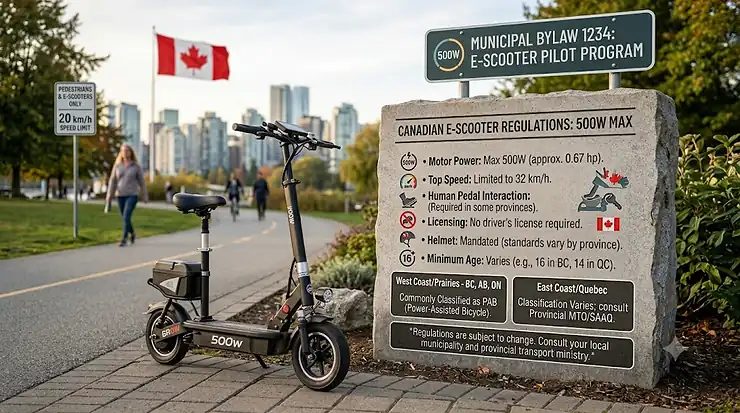
At the federal level, Transport Canada defines “power-assisted bicycles” (PABs) as having a maximum 500W continuous motor and a top assisted speed of 32 km/h — plus functional pedals. Here’s the catch: standing electric scooters have no pedals, which means they technically don’t qualify as PABs under federal law. This places them in a regulatory grey zone that each province has resolved differently through pilot programs or specific legislation.
Key provincial highlights for 2026:
- Ontario: E-scooter pilot program runs until November 2029 under Regulation 389/19. Municipal opt-in required — Toronto has opted out, meaning personal e-scooters cannot be ridden on public roads in Toronto despite being legal elsewhere in Ontario.
- British Columbia: Kick scooter pilot runs until April 2028. Operation permitted on local streets and protected bike lanes in participating cities like Vancouver.
- Quebec: ATPM pilot program expected to extend beyond July 2026. Montreal allows riding with detailed rules including a 14-year minimum age requirement.
- Alberta: Personal e-scooters remain prohibited on public roads, sidewalks, and pathways province-wide as of mid-2026, despite municipal lobbying in Calgary and Edmonton.
For safety certification, look for UL 2272 listed on any scooter you’re considering — this is the electrical safety standard that covers the entire scooter system (battery, motor, charger, and frame), not just the charger. Most reputable scooters on Amazon.ca now carry this certification, but budget models from lesser-known brands sometimes omit it. In Canada, CSA certification is the domestic equivalent standard to watch for.
For the most current provincial rules, Apollo Scooters’ 2026 Canadian regulations guide provides a detailed province-by-province breakdown that is updated regularly.
FAQ ❓
❓ Is 500W enough for electric scooter use on hilly Canadian terrain?
❓ What is the 500W electric scooter top speed km/h in Canada?
❓ What is the 500W electric scooter range in Canada realistically?
❓ Are 500W electric scooters legal to ride in Canada?
❓ How does cold weather affect 500W electric scooter battery range in Canada?
Conclusion: Is 500W Enough? Yes — For Most Canadian Riders
If you’ve read this guide, the answer should now be clear: for the vast majority of Canadian urban commuters — riders covering 10–30 km round trips on relatively flat to mildly hilly terrain — 500W is not just enough, it’s arguably the ideal wattage choice. It keeps you within the legal framework that most Canadian provinces require, delivers speed and range that match realistic urban commuting needs, and comes in at a price point that makes financial sense compared to premium 750W+ alternatives.
The key is matching the specific 500W model to your actual use case. For portability: Gyrocopters Flash 6.0. For long range: ECOROAD EC9. For comfort on rough surfaces: 5TH WHEEL V40Pro. For budget value: Qlaway 500W. For security features: Gotrax G4. The nuance lies in the details — not just the wattage number.
One last word on the 500w vs 750w electric scooter debate for Canadian riders: the legal consideration alone tips the balance. A 500W scooter operating within provincial limits means fewer regulatory headaches, no risk of reclassification as a moped, and insurance clarity that a technically-over-limit 750W model doesn’t offer. In Canada’s complex and rapidly evolving e-scooter regulatory environment, compliance is a feature, not just a constraint.
✨ Don’t Miss These Exclusive Deals!
🔍 Ready to ride? Click on any highlighted product name in this guide to check current pricing and availability on Amazon.ca. Prices fluctuate regularly — checking directly ensures you get the most current deal. Happy commuting! 🇨🇦⚡
Recommended for You
- Best 500W Electric Scooter Canada 2026: 7 Top Picks Reviewed
- 7 Best Winter Electric Scooter Brands in Canada (2026 Guide)
- Best Electric Scooter by Canadian City: 7 Expert Picks 2026
Disclaimer: This article contains affiliate links. As an Amazon Associate, I earn from qualifying purchases. If you purchase products through these links, we may earn a small commission at no additional cost to you.
✨ Found this helpful? Share it with your friends! 💬🤗
