
In This Article
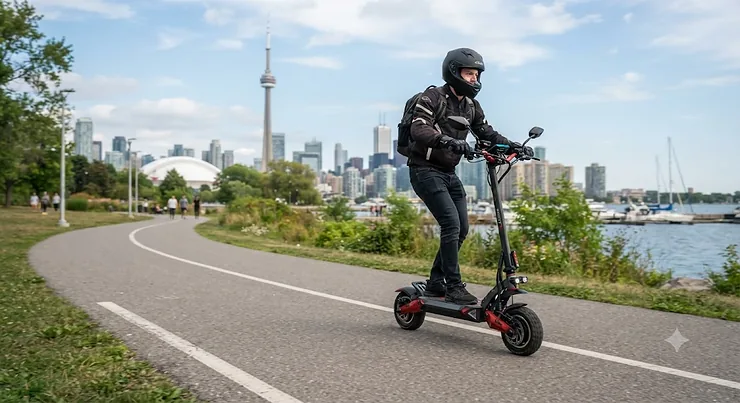
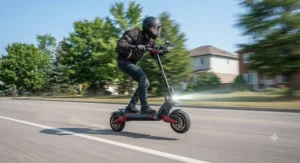
A high speed electric scooter for experienced riders is a stand-up, dual-motor (or high-output single-motor) e-scooter built to cruise well beyond 50 km/h (31 mph), with hydraulic brakes, real suspension and wide pneumatic tires. It is closer to a light motorcycle than a commuter kick scooter, and it demands matching skill, gear and legal awareness.
Speed is cheap thrills right up until the moment it isn’t. Riders who have logged thousands of kilometres on 25 km/h commuter scooters eventually hit a ceiling. The scooter feels like a shopping cart with a battery, and the search begins for something with genuine headroom. That headroom is the point: a machine that cruises at 45 km/h without straining feels calm, while one that tops out at 45 is working flat out. The e-scooter category has grown fast, but the performance end of it is a different animal from the rental scooters on your street corner.
Here is the Canadian reality check up front. Every province that regulates e-scooters caps them at roughly 500 W and 24-25 km/h, so a high speed electric scooter for experienced riders lives on private property and permitted off-road ground. This guide is built from published specs, independent test data and aggregated owner feedback rather than claimed hands-on testing. It covers seven real scooters, the tires, the gear and the legal fine print. Availability on amazon.ca shifts by seller and season, so treat every listing as “check current stock.”
Quick Comparison: 7 Fast Scooters at a Glance
| Product | Claimed Top Speed | Motor Power | Claimed Range | Approx. Price (CAD) | Best For |
|---|---|---|---|---|---|
| ECOROAD ES6 Dual | 55 km/h (34 mph) | 2 × 1,000 W | Up to 80 km (50 mi), ECO mode | C$1,000-C$1,600 | Stepping up from a commuter |
| CIRCOOTER Landturbo Pro | 52 km/h (32 mph) | 1,500 W peak | Up to 75 km | C$1,000-C$1,500 | Value-first hybrid riding |
| CIRCOOTER Landturbo Ultra | 56 km/h (35 mph) | 2,400 W peak | Up to 96 km | C$1,300-C$2,000 | Dual-motor power on a budget |
| Varla Eagle One V3.0 | 64 km/h (40 mph) | 2 × 1,200 W | Up to 80 km | C$2,500-C$3,300 | Taller, heavier riders |
| Segway GT3 | 50 km/h (31 mph) | 2,400 W peak | Up to 72 km | C$2,000-C$2,800 | Polished, brand-backed all-rounder |
| Segway GT3 Pro | 80 km/h (50 mph) | 7,000 W peak | Up to 138 km | C$3,500-C$4,500 | Top speed plus safety tech |
| Kaabo Warrior 11 Max | 80 km/h (50 mph) | 6,720 W peak | Varies by battery | C$4,500 and up | Maximum torque, dual-stem stability |
Looking at the table above, the two CIRCOOTER models and the ECOROAD ES6 Dual cluster in the C$1,000-C$2,000 band, and they are the sensible entry to real speed for riders who want dual-motor punch without flagship money. The gap between the Varla Eagle One V3.0 and the Segway GT3 Pro is mostly about top-end speed and battery size, not everyday usability. Claimed ranges are manufacturer figures under gentle conditions, so budget for far less at full throttle.
💬 Just one click — help others make better buying decisions too!😊
Top 7 High Speed Electric Scooter for Experienced Riders: Expert Analysis
The seven picks below run from budget to premium. Each gets the same treatment: what the spec sheet actually means, who it suits, and what buyers report. Prices are ranges in CAD at the time of research, so check current pricing before you commit.
1. ECOROAD ES6 Dual — switchable single/dual motor for a gentler on-ramp
The standout trick here is a button on the left handlebar that toggles between one motor and two. It is the only scooter on this list that lets you grow into the power instead of getting dumped into it.
The twin 1,000 W motors give a claimed 55 km/h (34 mph) and a 30% climb rating. The 748.8 Wh battery is where the range story gets honest. ECOROAD’s 80 km figure comes from ECO mode with a 70 kg rider, and the company itself quotes roughly 30 km (19 mi) in Turbo. That gap is the real number to plan around.
On paper, this suits riders graduating from a 25 km/h commuter who want to dip into 50 km/h territory without a C$3,000 commitment. The 10-inch tubeless tires and dual swingarm suspension are a sensible pairing for gravel driveways and paved loops. It carries UL 2272 certification through TÜV.
Review sentiment: this is a new model, and independent owner feedback was too thin at the time of research to summarize honestly. Earlier single-motor ES6 coverage described it as solidly built.
Pros:
- ✅ Single/dual switch eases riders into power
- ✅ Tubeless 10-inch tires resist punctures
- ✅ Lowest entry price among true dual-motor picks
Cons:
- ❌ Turbo-mode range is a fraction of the headline
- ❌ Limited independent owner feedback so far
Price range: roughly C$1,000-C$1,600. The value verdict is strong for a first performance scooter, with the caveat that it is not the fastest here.

2. CIRCOOTER Landturbo Pro — the most affordable route to 50-plus km/h
This is the pragmatic pick. It skips dual-motor bragging rights and concentrates on making one strong rear motor feel usable.
The 1,500 W peak rear-drive motor is rated for a 52 km/h (32 mph) top speed and slopes of 20-25°. In practice, single-motor drive means less complexity and a longer claimed 75 km range, but also less traction on loose climbs than a dual setup. The 10-inch pneumatic tires, dual suspension, dual disc brakes with E-ABS and a 150 kg load rating suit a rider who wants fast weekend loops rather than track-day drama.
Based on the spec comparison, it is the right call if your budget tops out near C$1,500 and your terrain is mostly packed surfaces. Riders wanting to climb steep gravel with a full load should look at the dual-motor models instead.
Review sentiment: the amazon.ca listing covering the Landturbo series showed about 4.3 out of 5 from roughly 185 ratings at the time of research. That listing spans several variants, so treat it as directional rather than specific to the Pro.
Pros:
- ✅ Strong speed-per-dollar ratio
- ✅ Dual disc brakes with E-ABS included
- ✅ 150 kg load rating suits larger riders
Cons:
- ❌ Single motor limits loose-surface climbing
- ❌ Variant-mixed reviews blur model-specific feedback
Price range: about C$1,000-C$1,500. It is excellent value if you accept single-motor traction limits.
3. CIRCOOTER Landturbo Ultra — dual 2,400 W peak power without flagship pricing
Where the Pro is sensible, the Ultra is ambitious. It steps to dual motors and a 56 km/h (35 mph) claim while keeping an all-terrain mindset.
Dual swingarm suspension and 10-inch tubeless all-terrain tires are the headline hardware, and the claimed 96 km (60 mi) range comes with the usual “optimal conditions” fine print. The maker claims it climbs grades up to 45%, and I would treat that number as marketing shorthand rather than a promise. Real hill performance depends on rider weight, battery state and gearing. The IPX5 rating applies to the display, not the whole scooter, so a splash is fine but a puddle crossing is not.
The honest take: it fits riders who want dual-motor torque for driveway hills and trail loops and are comfortable with a lesser-known brand. UL 2272 certification by SGS is reassuring on the fire-safety side.
Review sentiment: independent owner data specific to the Ultra was limited at the time of research, so I would rather say so than guess.
Pros:
- ✅ Dual motors at a sub-flagship price
- ✅ Tubeless all-terrain tires with dual suspension
- ✅ UL 2272 certified
Cons:
- ❌ 45% climb claim is optimistic marketing
- ❌ Thin independent review history
Price range: roughly C$1,300-C$2,000. The value verdict is good if you prize torque over brand pedigree.
4. Varla Eagle One V3.0 — brightest lighting and a build for bigger riders
This model earns its place through ride quality and rider fit, not raw numbers.
The dual 1,200 W hub motors, 52 V 26 Ah LG-cell battery and 30° climb claim add up to a 40 mph (64 km/h) rating. One independent review recorded a tested 40.3 mph on the V3.0, slightly beating the claim. Dual hydraulic brakes, an NFC key and a recommended load of about 120 kg (265 lb, with a 150 kg maximum) round out the package. Reviewers highlight the tall, wide handlebars and a headlight that stood out among competitors, which matters if you ride at dusk.
If you are taller or heavier and found commuter scooters cramped, this is the fit-first pick. Weight is the trade-off: the original Eagle One was reported at about 35 kg (77 lb), so plan on a car ramp rather than a stair carry.
Review sentiment: prior-generation owners describe smooth suspension and a stable feel, though some report faster battery drain in dual-motor mode. Availability on amazon.ca varies, so confirm the current listing.
Pros:
- ✅ Roomy cockpit suits taller riders
- ✅ Tested speed met its 40 mph claim
- ✅ Very bright headlight for night riding
Cons:
- ❌ Heavy to load and carry
- ❌ Dual-mode battery drain reported by past owners
Price range: about C$2,500-C$3,300. The value verdict is fair, and best if fit matters more than lowest price.
5. Segway GT3 — the polished, dealer-supported all-rounder
The Segway GT3 trades headline speed for refinement, a real brand behind it and a fuller service network than most competitors.
A 31 mph (50 km/h) top speed from 2,400 W peak power sounds modest next to the flagships. In practice, it means calm cruising at 40-45 km/h with margin left in the motors, and the claimed 72 km range is easier to approach at moderate speeds. Dual hydraulic suspension, self-sealing tires and UL 2272/2271 certification round out the safety side.
The analytical take: this is the scooter for riders who value warranty support and build quality over chasing a big number. Canadian owner comments on Segway’s store page praise the build and ride feel, and complaints I found were about stock and shipping logistics rather than riding problems.
Pros:
- ✅ Refined build and suspension feel
- ✅ Self-sealing tires reduce flat risk
- ✅ Established brand and service network
Cons:
- ❌ Lower top speed than the flagship class
- ❌ Stock can be inconsistent
Price range: roughly C$2,000-C$2,800. The value verdict is solid if you would rather buy peace of mind than peak wattage.
6. Segway GT3 Pro — 80 km/h flagship with the best safety tech
This is the fastest-and-farthest option in the group, and the one built most like a piece of proper vehicle engineering.
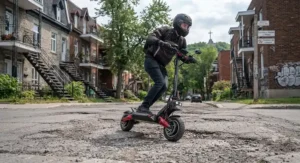
Dual 3,500 W motors deliver 7,000 W peak, a claimed 80 km/h (50 mph) top speed, 0-48 km/h (0-30 mph) in 3.9 seconds and a 38% incline rating. The 2,160 Wh, 72 V battery underpins the 138 km (86 mi) claim, which is a maximum under perfect conditions. The 11-inch wide tires use a self-sealing layer said to withstand punctures up to 4 mm, and it carries UL 2272 certification via TÜV Rheinland. The amazon.ca listing shows about 53 kg, so it is a two-person lift.
One independent testing outlet recorded just under 50 mph, which supports the claim. It suits experienced riders with a large private lot or acreage who value auto headlights, turn signals and stability tech.
Review sentiment: Canadian buyers on Segway’s store page praise speed, range and smoothness. Some raise concerns about rain protection and spare-part availability in Canada, so ask about parts before buying.
Pros:
- ✅ 80 km/h claim backed by independent testing
- ✅ Turn signals and auto headlight standard
- ✅ Huge battery for real range headroom
Cons:
- ❌ Heavy, at about 53 kg
- ❌ Rain protection and Canadian parts support questioned
Price range: about C$3,500-C$4,500. The value verdict is high cost, high capability.
7. Kaabo Warrior 11 Max — brute torque with a dual-stem chassis
For riders who measure a scooter by how it feels at 70 km/h, the Kaabo Warrior 11 Max is the specialist’s choice.
The dual 1,500 W motors reach 6,720 W peak, with 52 N·m of torque and a claimed 50 mph (80 km/h) top speed. Kaabo’s dual-stem design is meant to keep the front end planted at speed, and front and rear shocks are adjustable. That matters more than the top-speed number: stability at speed is what separates a usable fast scooter from a frightening one.
The honest read: this is for experienced riders comfortable managing serious torque, and it is not the scooter to learn on. It sits at the expensive end, so verify current amazon.ca availability and Canadian dealer support before buying.
Review sentiment: the wider Kaabo Warrior line is known among enthusiast outlets for hard acceleration. I could not verify enough reviews of the Max itself to summarize them honestly.
Pros:
- ✅ Dual-stem front end aids high-speed stability
- ✅ Adjustable front and rear suspension
- ✅ Huge torque for hills and heavy riders
Cons:
- ❌ Premium price and heavy build
- ❌ Limited verified Max-specific reviews
Price range: north of C$4,500. The value verdict is best for enthusiasts who will use every watt.
| Product | Tires | Brakes and Suspension | Certification or Notable Claim | Best For |
|---|---|---|---|---|
| ECOROAD ES6 Dual | 10″ tubeless | Dual disc, dual swingarm | UL 2272 via TÜV | New-to-fast riders |
| CIRCOOTER Landturbo Pro | 10″ pneumatic | Dual disc + E-ABS, dual suspension | 150 kg load rating | Budget hybrid riders |
| CIRCOOTER Landturbo Ultra | 10″ tubeless all-terrain | Dual disc + E-ABS, dual swingarm | UL 2272 via SGS | Value dual-motor riders |
| Varla Eagle One V3.0 | 10″ class | Dual hydraulic, dual suspension | Tested 40.3 mph reported | Tall or heavy riders |
| Segway GT3 | Self-sealing | Dual hydraulic suspension | UL 2272/2271 | Support-minded buyers |
| Segway GT3 Pro | 11″ self-sealing | Hydraulic suspension | UL 2272 via TÜV | Speed and range seekers |
| Kaabo Warrior 11 Max | All-terrain | Adjustable front and rear shocks | 52 N·m torque | Torque-hungry experts |
Reading this second table, self-sealing and tubeless tires are becoming standard on faster models, which tells you the industry treats punctures at speed as a safety issue. The Segway GT3 Pro and Segway GT3 stand out for pairing certification with brand support, while the CIRCOOTER Landturbo Ultra and ECOROAD ES6 Dual deliver similar hardware headlines for far less. Certification tells you about battery and charging safety, not about crash performance, so it is a floor rather than a ceiling.
✨ Ready to Find Your Ride?
🔍 Take your search for a high speed electric scooter for experienced riders to the next level with these carefully selected options. Click any highlighted product name to check current pricing and availability, and compare the spec tables above before you decide. Your next fast, smooth ride is closer than you think! 🛴⚡
High Speed Electric Scooter Review: What Testers and Owners Keep Saying
A useful high speed electric scooter review has to separate three things: manufacturer claims, independent tests and owner experience. Across the independent outlets I found, the message is consistent. Manufacturer range figures often run 40-60% above what you get in practice, and real riding at speed is thirstier than the ECO-mode number on the box.
The second pattern is that performance riders do not live at top speed. One large fleet-data analysis found most performance riding happens between roughly 40 and 55 km/h (25-35 mph), so headroom matters more than the maximum. That is why a 50 km/h scooter like the Segway GT3 can feel more relaxed than a 55 km/h scooter running flat out, and why the Segway GT3 Pro and Kaabo Warrior 11 Max feel effortless at ordinary cruising speeds.
The third theme is weight and portability. Fast scooters are heavy, and every review-style source flags it. Finally, verify claims yourself: a tested 40.3 mph on the Varla Eagle One V3.0 against a 40 mph claim is a good sign, while a headline climb of 45% on the CIRCOOTER Landturbo Ultra deserves skepticism. Where independent reviews are thin, as with the ECOROAD ES6 Dual and the Max, the honest move is to wait for more data or buy from a seller with a clear return window.
How to Choose a High Speed Electric Scooter for Experienced Riders
Follow these steps in order.
- Decide where you will actually ride. Private acreage, a large lot or off-road ground defines the whole purchase, because no fast scooter here is a legal road machine in Canada.
- Set a real budget. Add C$300-C$600 for a proper helmet and armour, since gear is part of the price of speed.
- Choose your power tier. Around 50 km/h suits most riders; 80 km/h needs dedicated space and serious experience.
- Check weight against your vehicle. A 53 kg scooter is a two-person lift into an SUV.
- Prioritize brakes and stability over top speed. Hydraulic brakes, real suspension and a rigid stem matter more than peak watts.
- Verify certification and support. Look for UL 2272 and a warranty you can actually use in Canada.
- Plan for realistic range. Take the claimed figure, then assume something well below it at full throttle.
Off-Road/On-Road Hybrid Tires: What Actually Works
The phrase off-road/on-road hybrid tires describes a tread compromise: enough grip for gravel and packed dirt, enough smoothness for pavement. For a fast scooter, tire choice affects braking distance and stability at speed as much as suspension does.
Tubeless setups, like those on the ECOROAD ES6 Dual and CIRCOOTER Landturbo Ultra, lose air slowly when punctured, which matters when you are travelling at 50 km/h. Self-sealing layers, as on the Segway GT3 Pro, add a puncture barrier. Wider tires, such as the 11-inch units on that model, spread load and improve grip, but very knobby off-road tread can feel vague on pavement. If your route is 70% paved, lean toward a moderate-tread hybrid. If it is mostly gravel, accept a little pavement noise for better bite.
Pressure is the cheapest tuning tool. Running slightly below your street pressure, within the tire’s stated range, can improve traction on loose surfaces. Check pressure before every ride, because a few psi of drop changes handling noticeably. In Canadian winters, cold air lowers pressure and cold batteries lose range, so check both more often.
Protective Gear Recommendations for High Speed Riding
Treat this as motorcycle-adjacent riding, because the physics are. Parachute, a Canadian injury-prevention charity, notes that many e-scooter injuries are head injuries. It also passes along a U.S. safety commission recommendation of a certified moped or motorcycle helmet when riding near motor vehicles or at 32 km/h or faster. It adds that no helmet test exists yet specifically for e-scooters.
My protective gear recommendations, in priority order:
- Full-face helmet. Look for recognized certification marks such as DOT, ECE 22.06 or Snell. Provincial rules for motorcycle helmets vary, so confirm locally.
- Armoured jacket and pants. Look for CE-rated armour at shoulders, elbows, hips and knees. Abrasion-resistant fabric matters as much as armour.
- Impact gloves with palm protection. Hands are the first thing you put down in a fall.
- Over-the-ankle boots. Sneakers are the wrong answer at 50 km/h.
- Back protector and eye protection. Wind, gravel and insects are real hazards.
Budget honestly. A decent kit costs several hundred dollars, and that is small next to the cost of a serious injury.
Private-Property Riding Considerations in Canada
Private-property riding considerations are the part of this hobby nobody wants to read and everybody needs to. Provincial e-scooter rules are built around slow, low-power devices. Ontario’s e-scooter pilot, for example, allows municipalities to opt in and defines a compliant scooter as a low-power, low-speed device. A dual-motor scooter capable of 50 km/h or more falls outside every provincial framework I found.
That makes these scooters legal to own but confined to private property and permitted off-road ground. Toronto, for instance, has not opted into the Ontario pilot and treats e-scooters as off-limits on public property. Saskatchewan permits riding on roads only where a municipal bylaw exists; without one, riding is illegal except on private property.
Beyond the law, think practically:
- Get written permission if the land is not yours.
- Think about neighbours. Noise, dust and fast passes near property lines cause disputes.
- Ask your insurer. Many home policies have exclusions for motorized vehicles, and I would not assume you are covered.
- Watch guests and kids. Set a rule that nobody rides without gear.
- Never bridge to a public road or trail unless you have confirmed it is permitted.
Rules change and vary by municipality, so verify with your province and local bylaws before you ride.
High Speed Electric Scooter vs Electric Bike vs Motorcycle
| Option | Legal Status in Canada | Portability | Learning Curve | Best For |
|---|---|---|---|---|
| High speed e-scooter | Private property and permitted off-road only | Heavy | Steep | Owners with land, like the Segway GT3 Pro rider |
| Electric bike | Federally recognized at 500 W and 32 km/h | Moderate | Gentle | Everyday commuting |
| Motorcycle or moped | Licence, registration and insurance required | Not portable | Formal training | Road-legal speed |
The comparison shows why so many experienced riders end up with both: an e-bike for legal road use and a scooter like the Kaabo Warrior 11 Max or CIRCOOTER Landturbo Ultra for private-land fun. An e-bike wins on legality and flexibility because power-assisted bicycles are a nationally recognized category, unlike scooters. A motorcycle wins on road legality at real speed, but you pay for licence, registration and insurance. The scooter wins on sheer compact thrill per dollar, provided you have somewhere legal to use it.
Long-Term Cost and Maintenance
Purchase price is only the entry fee. Tires, brake pads, batteries and the occasional bearing or bolt add up, and heavier, faster scooters wear consumables faster. Many lithium-ion packs are rated for a few hundred full cycles before capacity fades noticeably, so battery health should be part of your value math.
Here is an illustrative calculation. If you ride 150 times a year for three years, that is 450 rides. A scooter in the C$1,300 range works out to under C$3 per ride before gear and maintenance. A C$4,000 flagship lands near C$9 per ride. That is not a reason to skip the expensive one, but it shows why the CIRCOOTER Landturbo Pro and ECOROAD ES6 Dual punch above their weight for lower-mileage riders.
| Tier | Products | Approx. Range (CAD) | Value Logic | Best For |
|---|---|---|---|---|
| Entry performance | ECOROAD ES6 Dual, CIRCOOTER Landturbo Pro | C$1,000-C$1,600 | Lowest cost per ride | First fast scooter |
| Mid-range | CIRCOOTER Landturbo Ultra, Segway GT3 | C$1,300-C$2,800 | Balance of power and support | Regular weekend riders |
| Premium | Varla Eagle One V3.0, Segway GT3 Pro, Kaabo Warrior 11 Max | C$2,500-C$4,500+ | Speed, stability, range | Enthusiasts with dedicated space |
The table makes the trade clear: you pay a lot more per step of speed above about 50 km/h. Unless you have the space and skill to use 80 km/h, the mid-range tier delivers most of the fun. Battery and tire replacement should be added to any ownership estimate.
Features That Actually Matter (And Those That Don’t)
What matters: hydraulic disc brakes with good modulation, a stiff and well-latched stem, adjustable suspension, a wide deck, strong lighting and a controller that delivers power smoothly. Certification such as UL 2272 matters for charging safety.
What doesn’t: peak-watt headline numbers, since continuous power and controller quality tell you more. “Up to” range claims, which are best-case figures. RGB deck lights and Bluetooth speakers add nothing to safety. Extreme climb claims like the 45% on the CIRCOOTER Landturbo Ultra are marketing shorthand.
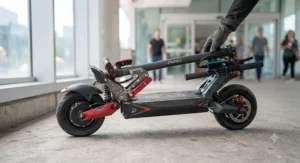
The subtle one is the fold mechanism. It is a convenience feature that can also be the weak point on a fast scooter, so inspect the clamp before every ride. A scooter like the Kaabo Warrior 11 Max, with its dual-stem design, attacks that problem at the source. App locks and proximity unlocking on the Segway GT3 Pro are nice theft deterrents but do not replace a physical lock.
Your First 30 Days: Setup, Break-In and Maintenance Schedule
Day 1: unbox and inspect. Check every bolt, especially stem clamps, and confirm brakes work before powering on. Set tire pressure within the stated range.
Week 1: start slow. Ride in the lowest power mode on open, flat ground. Practice progressive braking, then emergency stops from moderate speed. Bed in brake pads with repeated moderate stops, as the manual advises.
Week 2: build up. Move to higher power modes gradually. If your scooter has a single/dual switch, like the ECOROAD ES6 Dual, spend days in single-motor mode first.
Week 3: check and adjust. Re-torque bolts, recheck pressure and inspect tire wear. Tune suspension if adjustable.
Week 4: establish a routine. Weekly: pressure, bolts, brakes. Monthly: check cables and connectors, clean the deck and inspect the tires for cuts.
Common first-month mistakes: running at full power before mastering braking, ignoring pressure, charging unattended, and skipping gear on “just a short ride.”

Real-World Scenarios: Matching Riders to the Right Scooter
These are illustrative profiles, not reviews.
Scenario 1: the acreage rider. You have a 4 km gravel and grass loop on rural property and a budget near C$1,500. The CIRCOOTER Landturbo Ultra gives dual-motor torque and all-terrain tires at that price. Ride a few times a week and expect to replace tires before brakes.
Scenario 2: the tall, heavier rider. You are around 110 kg and found commuter scooters cramped. The Varla Eagle One V3.0, with its roomy cockpit and 120 kg recommended load, is the fit-first pick. Budget for a ramp, since it is heavy to lift.
Scenario 3: the step-up commuter. You currently ride a 25 km/h scooter and want faster, but you are nervous. The ECOROAD ES6 Dual lets you start in single-motor mode and unlock dual power later.
Scenario 4: the enthusiast with dedicated space. You have a large private lot, quality gear and C$4,000-plus. The Segway GT3 Pro offers the best mix of speed, range and safety features, and the Kaabo Warrior 11 Max suits riders who prize raw torque above all else.
Problem and Solution Guide: Fixing Common Issues
Speed wobble at high speed. Keep knees soft, weight slightly forward and hands loose. Check stem clamps and tire pressure first, and never brake hard mid-wobble.
Range falls in cold weather. Cold reduces battery output, so store and charge indoors and expect shorter rides. Warm the pack before riding.
Repeated flats. Switch to tubeless or self-sealing tires, as on the Segway GT3 Pro, and check pressure weekly.
Power cut on long climbs. Overheating or battery sag can trigger cutouts. Use a lower mode, shorten climbs and avoid full throttle uphill on a low battery.
Rain and splash damage. IP ratings vary and may cover only parts of the scooter, as with the display on the CIRCOOTER Landturbo Ultra. Avoid puddles and dry the scooter after damp rides.
FAQ
❓ How much range does a high speed electric scooter for experienced riders really deliver?
❓ Can I ride a 50 mph electric scooter on Canadian roads?
❓ Is a dual-motor scooter worth the extra money?
❓ How heavy are fast scooters to lift into a car?
❓ Is it safe to charge a high speed electric scooter indoors?
Conclusion
A high speed electric scooter for experienced riders is a thrilling piece of kit, and also a serious one. The best choice depends less on the top-speed number and more on where you will ride, how much torque you can manage and how seriously you take gear. Riders stepping up should look hard at the ECOROAD ES6 Dual and CIRCOOTER Landturbo Pro. Those wanting dual-motor punch should compare the CIRCOOTER Landturbo Ultra and Varla Eagle One V3.0. Riders who value support and polish will like the Segway GT3, and those who want the ceiling will choose the Segway GT3 Pro or the Kaabo Warrior 11 Max.
Whatever you pick, respect the risks. Canadian hospital data reported by CBC News showed e-scooter hospitalizations rising 32% in one year, with physicians warning about serious head and facial injuries. Wear the gear, ride on legal ground and build skill gradually.
✨ Ready to Ride Smarter?
🛴 Click any highlighted product above to check current pricing and availability, then pair your pick with a proper full-face helmet and armour. Speed is a privilege, so ride it well! ⚡💪
Recommended for You
- 7 Best 40 km/h Electric Scooters In Canada 2026 (Dual-Motor Picks)
- 32 km/h vs 40 km/h Electric Scooters: 7 Picks Ranked 2026
- 32 km/h Scooter For City Riding: 7 Top Picks For 2026
Disclaimer: This article contains affiliate links. As an Amazon Associate, I earn from qualifying purchases. If you purchase products through these links, we may earn a small commission at no additional cost to you.
✨ Found this helpful? Share it with your friends! 💬🤗
