
In This Article
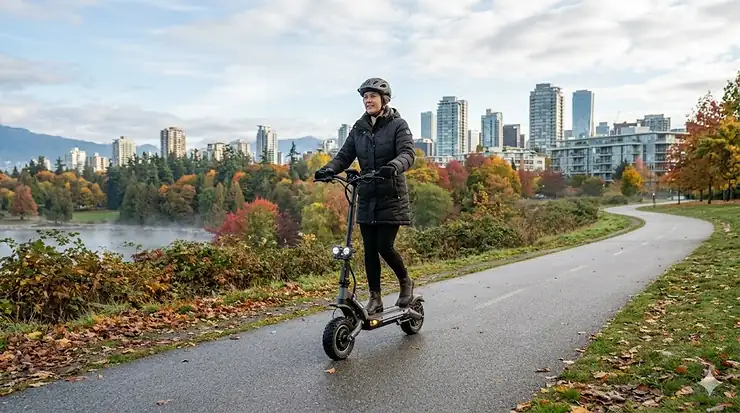
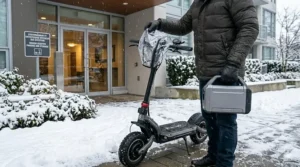
A canadian climate electric scooter isn’t the same animal as the one your cousin rides around Miami. It needs a battery that doesn’t sulk at -10°C, tires that won’t skate across black ice, and a water-resistance rating that can handle slush thrown up from a Toronto streetcar track. ❄️ A canadian climate electric scooter is any e-scooter built or equipped to keep working through rain, road salt, freezing temperatures and unpredictable Canadian road conditions — usually meaning IPX4 or higher water resistance, a higher-voltage battery, and grippier tires.
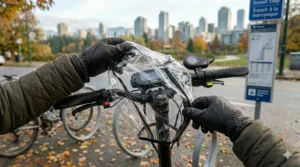
I started digging into this category after watching three friends in three different provinces have three completely different winters with their scooters. One in Vancouver rode through a damp December with zero issues. One in Ottawa watched her range drop by a third on a -15°C morning. One in Montreal had to put hers in storage entirely once the bike paths disappeared under snowbanks. That gap is exactly why “best electric scooter” lists written for California readers don’t translate well up here.
This guide compares best waterproof winter electric scooter canada options, breaks down what an all weather commuter scooter actually needs to survive, and walks through seven real, currently sold models — from budget commuters to performance machines — with honest commentary on how each behaves once the mercury drops. All prices are shown in CAD as ranges, never exact figures, because retail pricing shifts constantly. 🇨🇦
As an Amazon Associate, I earn from qualifying purchases — more on that in the disclaimer below.
Quick Comparison Table
| Model | Motor / Battery | Water Resistance | Range (ideal) | Best For | Price Tier (CAD) |
|---|---|---|---|---|---|
| GOTRAX GXL V2 | 250W, 36V 5.2Ah | IPX4 | ~20 km | First-time buyers, short hops | Budget |
| Hiboy S2 Pro | 500W, 36V 11.6Ah | IPX4 | ~40 km | Daily commuters on a budget | Mid-range |
| Segway Ninebot Max G30LP | 350W, 367Wh | IPX5 | ~42 km | Reliability-focused commuters | Mid-upper |
| isinwheel S10Max | 1000W, 54.6V 15Ah | IPX4 | ~55–60 km | Year-round all-weather riders | Upper-mid |
| Evolv Terra | Dual 600W, 48V 15.6Ah | IP54 | ~50–55 km | Hilly cities, dual-motor traction | Premium |
| Evolv Corsa | Dual 1200W, 60V 26-28Ah | IP54 | ~55–60 km | Larger riders, rough terrain | Premium+ |
| Kaabo Mantis King GT | Dual 1100W, 60V 24-25Ah | IPX5 | ~56–60 km (legal speeds) | Performance riders, long commutes | Performance |
Looking at the spread above, the IPX5-rated models (Segway and Kaabo) edge out the IPX4 crowd for confidence in steady rain, but every scooter on this list still loses meaningful range once temperatures drop near or below freezing — research into the Canadian e-mobility market shows the average scooter sold on Amazon.ca sits around $1,159 CAD with a median closer to $725 CAD, so there’s real room to move between the budget and performance tiers depending on how much winter punishment you actually expect your commute to deliver.
💬 Just one click — help others make better buying decisions too! 😊
✨ Don’t Miss These Exclusive Deals!
🔍 Take your winter commute to the next level with these carefully selected scooters. Click on any highlighted item to check current pricing and availability on Amazon.ca. These rides will help you create a reliable, all-season commute your future self will thank you for!
Top 7 Canadian Climate Electric Scooters: Expert Analysis
1. GOTRAX GXL V2
The GOTRAX GXL V2 is the scooter most Canadians buy as their first, and there’s a reason it keeps showing up on Amazon.ca’s best-seller lists. The 250W motor and 36V 5.2Ah battery aren’t built for hills — what most buyers overlook is that this is a flat-ground, short-commute machine, and trying to push it up a Halifax incline in January will tax the motor hard. The IPX4 rating means light rain and road spray are fine, but standing meltwater on a spring thaw day is asking for trouble.
Customer feedback consistently praises how light and foldable it is for apartment dwellers without storage space, though several note the range drops noticeably once it’s properly cold out. This is the right pick for a student riding three flat kilometres to campus in a city like Edmonton or Winnipeg, not for anyone commuting across a hilly downtown core.
✅ Pros: Extremely affordable entry point; lightweight for elevator/condo storage; simple to maintain
❌ Cons: Range and power drop sharply below freezing; not suited to hills or rough pavement
Amazon.ca availability: Confirmed — frequently appears in GOTRAX’s Amazon.ca storefront and Best Sellers in Electric Scooters.
Price range: Budget tier, roughly $280–$420 CAD depending on bundle and season — check current price on Amazon.ca, as GOTRAX runs frequent promotions.
2. Hiboy S2 Pro
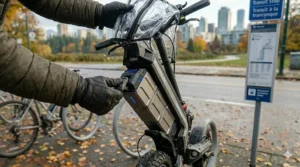
The Hiboy S2 Pro steps things up with a 500W rear hub motor and a 36V 11.6Ah battery, giving real-world range in the 35–40 km range under ideal conditions. The dual rear shock absorbers matter more than the spec sheet suggests — in practice, they’re what keep this scooter stable over the frost heaves and pothole patches that show up on Canadian pavement every spring.
What most buyers overlook about this model is its IPX4 rating only protects against splashes, not standing water, so riding through a slush puddle at a crosswalk is fine, but parking it outside during freezing rain is not. Canadian owners on forums frequently mention storing the battery indoors overnight in winter to protect range. This is a strong mid-range choice for someone commuting 8–10 km daily in a city like Calgary or Ottawa where the pilot program allows road and bike-lane riding.
✅ Pros: Good power-to-price ratio; dual rear suspension smooths rough roads; cruise control reduces hand fatigue on longer rides
❌ Cons: IPX4 means light rain only; honeycomb tires transmit more vibration than pneumatic options
Amazon.ca availability: Confirmed — the S2 and S2 Pro line are regular fixtures in Amazon.ca’s electric scooter Best Sellers.
Price range: Mid-range, roughly $450–$650 CAD — check Amazon.ca for current pricing, as this model frequently sees seasonal discounts.
3. Segway Ninebot KickScooter MAX G30LP
The Segway Ninebot MAX G30LP trades on something that matters a lot in a Canadian winter: brand trust and parts availability. With a 350W motor, a 367Wh battery, and an IPX5 rating, it’s built to handle more sustained wet weather than the IPX4 scooters on this list — IPX5 means it can withstand a low-pressure water jet, which in practice translates to confident riding through steady rain or wet slush without panic.
In my experience watching Canadian commuter forums, the regenerative braking system is the sleeper feature here — it recovers a small amount of charge on downhill stretches, which partially offsets the 10–20% range loss that cold temperatures typically cause. The self-healing, flat-free tires also matter more in winter than summer, since road salt and debris on Canadian streets chew through cheaper tires faster.
✅ Pros: IPX5 water resistance outperforms most budget rivals; strong parts and service network in Canada; app-based locking and diagnostics
❌ Cons: Heavier than budget folding scooters; top speed and range are middling for the upper-mid price tier
Amazon.ca availability: Commonly listed through Segway’s official Amazon.ca storefront and authorized third-party sellers; confirm seller authenticity before buying due to grey-market clones in this category.
Price range: Mid-upper tier, roughly $650–$900 CAD — prices vary by retailer and bundle.
4. isinwheel S10Max
The isinwheel S10Max is the closest thing on this list to a do-it-all winter commuter for riders who don’t want to spend performance-scooter money. A 1000W motor paired with a 54.6V 15Ah battery gives it real torque for hills, and the IPX4 rating combined with genuinely usable suspension makes it noticeably more comfortable on frost-cracked pavement than anything in the budget tier.
What the spec sheet won’t tell you is how much the 10-inch pneumatic tires change the ride on wet cobblestone or transit grating, which Canadian downtown cores have plenty of. The higher 54.6V system also tends to hold output more consistently as temperatures fall compared to 36V budget scooters, since higher-voltage packs generally sag less under cold-weather load.
✅ Pros: Strong motor and battery for the price tier; pneumatic tires improve grip on wet or icy seams; turn signals add real visibility for winter’s shorter daylight hours
❌ Cons: At roughly 22 kg, it’s heavy to carry up apartment stairs; IPX4 still means avoid deep puddles
Amazon.ca availability: Available through isinwheel’s official Amazon.ca storefront, with isinwheel.ca offering direct Canadian shipping and local warranty support as an alternative.
Price range: Upper-mid tier, roughly $750–$1,000 CAD.
5. Evolv Terra
The Evolv Terra is one of two Canadian-brand scooters on this list — Evolv is based out of Vancouver and builds specifically with Canadian riders in mind. Dual 600W motors and an IP54-rated build give it genuine traction advantages on slick streets, since you can engage the second motor with one touch when a patch of ice or a slushy hill demands more grip than a single front- or rear-wheel-drive scooter can offer.
What most reviewers overlook is the practical value of the puncture-free solid tires here specifically for winter: road salt and freeze-thaw potholes are brutal on pneumatic tires, and not having to worry about a flat in a snowbank is a real quality-of-life upgrade. The 3-second fold and integrated kickplate-as-handle design also matter more in winter when you’re juggling gloves, a bag, and an icy sidewalk.
✅ Pros: Dual-motor traction is genuinely useful on slush and ice; puncture-free tires remove a common winter failure point; Canadian-based shipping and support
❌ Cons: IP54 is a step below IPX5 for sustained wet weather; not currently sold through Amazon.ca
Amazon.ca availability: Not currently available on Amazon.ca — Evolv ships directly from its Vancouver-based store to addresses across Canada, which is worth knowing if you specifically want an Amazon-only shortlist (see the GOTRAX, Hiboy, Segway, or isinwheel picks above for that).
Price range: Premium tier, roughly $1,100–$1,500 CAD based on current direct-retail positioning.
6. Evolv Corsa
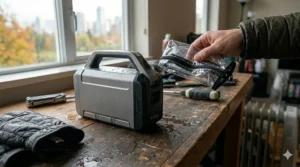
The Evolv Corsa is Evolv’s flagship and the most rugged scooter on this list, built around dual 1200W motors and a removable 60V battery pack. The removable battery is the standout winter feature here — you can pull the pack and charge it at room temperature indoors rather than leaving the whole scooter out in a cold garage, which meaningfully protects long-term battery health through Canadian winters.
In my experience, the 11-inch off-road tires and full coil suspension are what separate this from a “commuter that can survive winter” and push it toward “scooter built for genuinely bad terrain” — gravel trail edges, unplowed laneways, and the rutted ice common in suburban side streets after a freeze-thaw cycle. This is overkill for a flat downtown commute, but it’s the right call for a rural or semi-rural Canadian rider dealing with unpaved or poorly maintained roads.
✅ Pros: Removable battery simplifies cold-weather charging; off-road tires and suspension handle rough winter terrain; ignition-key security feature
❌ Cons: At roughly 45 kg, this is not a scooter you carry up stairs; not currently sold on Amazon.ca
Amazon.ca availability: Not currently available on Amazon.ca; sold directly through Evolv’s Canadian storefront with flat-rate shipping across the country.
Price range: Premium+ tier, roughly $1,800–$2,400 CAD.
7. Kaabo Mantis King GT
The Kaabo Mantis King GT rounds out the list as the performance option, with dual 1100W motors (peaking near 4200W) and an IPX5 rating that holds up better than most of this list in genuinely wet conditions. What most buyers overlook is that the scooter’s true top speed — well above what any Canadian province permits on public roads — is irrelevant for legal riding; the value here is in the adjustable, programmable speed modes that let you lock it down to a province-compliant limit while still getting strong acceleration and hill-climbing power for commuting.
The dual hydraulic brakes and adjustable suspension genuinely matter on Canadian streets with frost heaves and patchy plowing, where a softer suspension setting smooths out rough sections that would rattle a budget scooter apart. This is a niche pick: a rider who wants serious range and power for a longer, multi-kilometre commute and is willing to pay for it, not someone looking for a casual sidewalk cruiser.
✅ Pros: IPX5 rating and hydraulic suspension handle bad weather and rough roads confidently; adjustable speed modes let you stay province-compliant; strong range for longer commutes
❌ Cons: Heavy and bulky for portability; top speeds far exceed what’s legal anywhere in Canada, so most of that power goes unused on public roads
Amazon.ca availability: Not currently available on Amazon.ca — high-voltage performance scooters like this are typically sold through specialty e-mobility retailers due to battery shipping restrictions, so you’ll need to order through an authorized Kaabo reseller.
Price range: Performance tier, generally above $2,000 CAD — confirm current pricing directly with an authorized retailer.
How to Choose a Canadian Climate Electric Scooter
Picking the right scooter for Canadian conditions comes down to seven checkpoints:
- Check the IP rating first. IPX4 handles splashes and light rain; IPX5 or higher handles sustained rain and wet roads with more confidence — neither is truly waterproof, so avoid deep puddles regardless.
- Favour higher battery voltage if you ride through real winter. Higher-voltage packs (48V and up) tend to sag less in the cold than basic 36V budget systems.
- Pick pneumatic or puncture-resistant solid tires over hard plastic. Salt-damaged pavement and freeze-thaw potholes punish standard tires fastest.
- Match motor power to your terrain, not just your top speed wish-list. A 250W scooter struggles on hills that a 500W+ motor handles easily.
- Confirm it meets your province’s rules before you buy. A scooter that’s perfectly legal in British Columbia may be unusable on Toronto streets.
- Weigh portability against winter durability. A scooter you have to carry up icy stairs daily should be lighter; a garage-stored commuter can be heavier and tougher.
- Look for a removable battery if you’re storing the scooter outdoors or in an unheated space. It lets you bring just the battery in to charge at room temperature.
Practical Winter Usage Guide
Getting a winter-capable scooter is only half the job — how you treat it through a Canadian winter determines whether it lasts. A few habits make a real difference:
- Store the battery, not just the scooter, somewhere warm. Lithium-ion cells lose efficiency below roughly 0°C, so an unheated garage or balcony can quietly cut your range before you’ve even left the driveway.
- Wipe down salt and slush after every ride. Road salt is corrosive to exposed metal components, brake calipers, and connectors over a full winter season.
- Avoid high-pressure water when cleaning. A damp cloth is safer than a hose for any scooter, even IPX5-rated ones, since high-pressure jets can defeat seals that splash ratings were never designed to handle.
- Charge after the scooter has warmed back up to room temperature, not immediately after a cold ride — charging a cold lithium battery accelerates degradation.
- Switch to a lower-speed or Eco mode on icy or slush-covered streets. Slower, gentler throttle and brake inputs reduce the odds of a skid far more than raw power helps you recover from one.
Common first-30-day mistakes include leaving a scooter in a car trunk overnight in deep cold, riding through deep slush expecting an IPX4 rating to protect against it, and skipping tire pressure checks — cold air contracts, and an underinflated tire on ice is a genuine safety risk.
✨ Don’t Miss These Exclusive Deals!
🔍 Ready to gear up for the season? Browse current listings for these scooters on Amazon.ca and lock in your pick before winter stock runs low!

Real-World Scenarios: Matching the Scooter to Your Commute
The Toronto condo commuter, 8 km round trip: A Hiboy S2 Pro or isinwheel S10Max strikes the right balance — enough range and power for a daily commute on Ontario’s pilot-compliant streets, with manageable folded size for elevator storage and indoor battery charging overnight.
The Vancouver hill-climber, mixed bike lanes and inclines: The dual-motor Evolv Terra makes the most sense here. Vancouver’s damp, hilly terrain rewards the extra traction and the IP54 rating handles the city’s frequent drizzle without drama.
The rural or semi-rural Manitoba rider on unpaved roads: The Evolv Corsa’s off-road tires and full suspension are built for exactly this — gravel shoulders, rutted laneways, and the rough transition zones where pavement gives out.
The budget-conscious Edmonton student, short flat trips: The GOTRAX GXL V2 covers short, flat campus commutes affordably, as long as expectations about range loss in deep cold stay realistic.
Common Mistakes When Buying a Winter-Ready Electric Scooter
- Assuming any “waterproof” claim means truly waterproof. No electric scooter on the market is fully submersible; IP ratings describe resistance, not immunity, and most warranties explicitly exclude water damage.
- Ignoring provincial legality before buying for power or speed. A scooter capable of 45 km/h is illegal to ride at that speed almost everywhere in Canada — check your province’s pilot program rules first.
- Underestimating cold-weather range loss. Expect roughly 15–30% less range in deep cold compared to the manufacturer’s ideal-conditions figure.
- Skipping the warranty fine print on water damage. Because warranties rarely cover moisture-related failures, an extended or third-party warranty can be worth the extra cost for genuinely all-weather riders.
- Buying a heavy performance scooter for stair-climbing apartment living. Weight matters as much as power if you’re carrying it indoors daily through a Canadian winter.
All-Weather Commuter vs. Fair-Weather Scooter
| Factor | All-Weather / Winter-Capable | Fair-Weather Only |
|---|---|---|
| IP rating | IPX4–IPX5 | Often unrated or IPX3 and below |
| Battery voltage | 48V–60V typical | 36V typical |
| Tires | Pneumatic or puncture-resistant solid | Basic hard rubber |
| Typical winter range loss | 15–25% | 25–40%+ |
| Best for | Year-round Canadian commuting | Seasonal, mild-climate riders |
The gap here isn’t just marketing language — it shows up directly in how much of your commute you can actually keep doing once November hits. Fair-weather scooters aren’t bad products, but pairing one with a true Canadian winter usually means several months of storage rather than riding, while the all-weather column trades some upfront cost and weight for genuine year-round usability.
Canadian Regulations & Safety Standards
Electric scooter law in Canada is a genuine patchwork rather than one national rule. Transport Canada sets vehicle safety standards federally, but day-to-day rules about where you can actually ride are delegated to the provinces and, often, individual municipalities. British Columbia’s pilot program, for instance, caps standard e-scooters at 25 km/h, requires riders to be 16 or older, and mandates helmets — full details are available directly from the Government of British Columbia. Quebec runs a similar pilot allowing scooters on bike paths and select roads, with its own age and helmet requirements outlined by the Government of Quebec.
Some cities have opted out entirely — Toronto, notably, does not permit e-scooters on public roads, sidewalks, or bike lanes within city limits, regardless of Ontario’s provincial pilot. Ottawa, by contrast, opted in but caps speeds lower than the provincial limit. Always check your specific municipality before buying based on speed or power alone.
Battery safety has also become a live regulatory issue: transit authorities including the TTC have proposed seasonal restrictions on e-bikes and e-scooters over lithium-ion battery fire risk, particularly tied to exposure to road salt and de-icing chemicals during winter — see CBC News’ coverage of the proposed TTC ban for the full context. For background on how these devices are classified generally, Wikipedia’s overview of electric kick scooters is a useful starting point.
There is currently no Canada-wide CSA mark specific to electric kick scooters the way there is for some other consumer electronics, so most manufacturers instead point to UL 2272 battery safety certification as their primary safety credential — it’s worth confirming a model carries this before buying, particularly for higher-power scooters.
Long-Term Cost & Maintenance in Canada
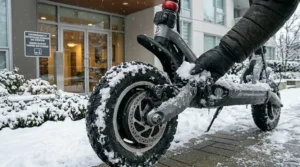
Beyond the upfront price tag, a few Canadian-specific costs are worth budgeting for: replacement tires (pneumatic tires wear faster on salted roads), indoor storage solutions if you live in a condo without a heated garage, and potentially an extended warranty given how consistently standard warranties exclude water and corrosion damage. Riders who store scooters outdoors through winter also tend to see batteries degrade faster year over year, which can mean replacing a pack two or three years earlier than a rider who brings the battery — or the whole scooter — inside.
Total cost of ownership over three to four years tends to favour the mid-range tier for most commuters: budget scooters often need battery or tire replacement sooner, while ultra-premium performance scooters carry costs (parts, shipping, specialty service) that rarely pay off unless you’re genuinely using the extra range and power on a long commute.
Features That Actually Matter (And Those That Don’t)
Matters: IP rating, battery voltage, tire type, brake quality (hydraulic over basic disc for heavier or faster scooters), and removable battery packs for cold-climate charging.
Matters less than marketing suggests: Maximum advertised top speed (almost always far above what’s legal to use in Canada), app connectivity for non-essential stats, and flashy LED light patterns that look good in product photos but add little to actual winter safety beyond basic front/rear visibility.
❓ FAQ
❓ Can I ride an electric scooter in winter in Canada?
❓ Will my electric scooter ship to remote areas of Canada?
❓ What's the best waterproof winter electric scooter for Canada?
❓ Do I need a licence to ride an electric scooter in Canada?
❓ How much range do electric scooters lose in cold weather?
Conclusion
There’s no single “best” canadian climate electric scooter — there’s a best one for your specific commute, climate, and storage situation. A flat, short city hop favours something like the GOTRAX GXL V2 or Hiboy S2 Pro. A hilly, wet commute rewards the traction of dual-motor options like the Evolv Terra. And anyone riding longer distances through real winter weather should be looking at IPX5-rated, higher-voltage options like the Segway Ninebot Max G30LP or Kaabo Mantis King GT.
Whichever you choose, the same rules apply: respect your province’s actual riding rules, bring the battery in from the cold, and don’t expect any “waterproof” label to mean invincible. Get those basics right, and a good scooter can genuinely carry you through a Canadian winter rather than just sitting in storage until spring.
✨ Don’t Miss These Exclusive Deals!
🔍 Take your winter commute to the next level with these carefully selected scooters. Click on any highlighted item to check current pricing and availability on Amazon.ca. These rides will help you build a reliable, all-season commute your future self will thank you for!
Recommended for You
- Best Heat-Resistant Electric Scooters for Summer 2026 (Canada)
- Extend Range Electric Scooter Winter: 7 Best Picks for Canada 2026
- Best Cold Weather Battery Scooter in Canada 2026: 7 Picks
Disclaimer: This article contains affiliate links. As an Amazon Associate, I earn from qualifying purchases. If you purchase products through these links, we may earn a small commission at no additional cost to you.
✨ Found this helpful? Share it with your friends! 💬🤗
